
5 Best Garden Pump Sprayers in 2026: Reviews & Expert Picks


Choosing the best garden pump sprayers became important to me when I realised that a simple spraying job could become tiring because of the equipment rather than the size of my garden. I needed a sprayer that could handle foliar feeding on vegetables, careful applications around flowers, occasional lawn treatments and spraying reachable branches of young fruit trees. However, I also wanted something that was comfortable to carry, easy to maintain and capable of producing a reasonably consistent spray without excessive pumping.
At first, I thought tank capacity and price were the main things worth comparing. After examining different designs, I understood that pump quality, pressure control, nozzle selection, chemical compatibility and repairability were equally important. A larger tank was not necessarily better, and a sprayer advertised with higher pressure did not automatically provide better coverage.
My approach was to match the equipment to actual gardening work before considering brands or attractive specifications. That helped me understand where a small compression sprayer was sufficient, where a shoulder-carried model made sense and when a manual backpack sprayer was worth the additional expense.
Quick Overview of the Best Garden Pump Sprayers
| Product | Title | Features | Explore |
|---|---|---|---|
 | VIVOSUN 1.35-Gallon Garden Pump Sprayer |
| Check Price |
 | Chemical Guys ACC503 Pump Sprayer |
| Check Price |
 | Chapin 10031 2 Liter/.52 Gallon Multi-Purpose Pump Sprayer |
| Check Price |
 | Chapin 60114 Made in USA 4-Gallon Backpack Pump Sprayer |
| Check Price |
 | Munyonyo Garden Pump Sprayer 68oz/34oz |
| Check Price |
What Makes Garden Pump Sprayers Different?
A garden pump sprayer is a manually operated device that uses pressure to move liquid from a tank through a hose, spray wand and nozzle. Unlike an ordinary watering can, it allows the gardener to direct a controlled spray towards selected plants or surfaces. Depending on the nozzle and pressure, the liquid can leave as a relatively fine spray, a wider pattern or a more concentrated stream.
The main advantage is controlled liquid application. For example, a gardener may need to apply a labelled foliar fertiliser evenly over tomato leaves without soaking the surrounding soil. A suitable pump sprayer makes this more manageable than pouring liquid directly onto the plants.
However, I learned to distinguish between pressure and actual application quality. Higher pressure can produce smaller droplets with certain nozzles, but it may also increase drift and unwanted movement of liquid towards nearby plants.
For delicate flowers, I preferred the idea of a controlled, low-drift application rather than using the strongest available spray. For a larger vegetable area, maintaining a suitable pressure and flow rate mattered more than achieving the highest pressure reading.
- Manual operation: Pressure is generated through a hand-operated pump or lever.
- Controlled application: The nozzle determines spray shape and contributes to droplet size.
- Reusable equipment: Serviceable models can be cleaned and maintained over several growing seasons.
- Working limitations: Pumping effort, pressure changes and filled weight must be considered.
My first buying decision was therefore not about finding the largest or most powerful sprayer. It was about identifying the design that could provide the required coverage with reasonable effort and safe handling.
I Tested the Best Garden Pump Sprayers in 2026 — Here Are the Top 5 Picks
Garden lovers and homeowners understand how important a reliable garden pump sprayer is for everyday gardening work, including watering plants, spreading fertilizers, and applying pesticides. In this guide, we will explore the features, advantages, and performance of the 5 best garden pump sprayers currently available in the market.
1. VIVOSUN 1.35-Gallon Garden Pump Sprayer
The VIVOSUN 1,35-gallon pump sprayer comes with a translucent tank, adjustable nozzle, 22-inch wand, 50-inch hose, safety valve, and comfortable shoulder strap. Its manual compression system quickly creates pressure, while the locking trigger allows continuous spraying without holding the trigger all the time. It maintains pressure effectively, provides an even spray pattern, feels comfortable to carry, and works reliably with minimal risk of leaks.
expert start
What Is It and Its Features
The VIVOSUN 1,35-Gallon Pump Pressure Sprayer is a manual compression sprayer with a 1.35-gallon capacity (around 5 liters). It is built from strong plastic materials with some metal parts for improved durability. The translucent tank allows you to check the remaining liquid level easily. Measurement markings on the tank also make it easier to prepare accurate mixtures of fertilizers, pesticides, or mild cleaning solutions.
Why It Matters
One of the most useful features of this sprayer is its adjustable nozzle. It allows you to change between a focused water column spray and a gentle shower-style mist. This flexibility is important because different plants require different spraying methods. Soft leaves and indoor plants benefit from a fine mist, while outdoor plants and cleaning jobs often need a stronger stream. Adjusting the nozzle is simple — you only need to twist it to select the desired spray pattern.
The sprayer includes a 22.28-inch wand and a 50-inch hose, which provide excellent reach during use. This extra length helps you spray hanging plants, taller shrubs, and difficult corners without unnecessary bending. For regular gardening work, this makes watering easier and more comfortable, especially when caring for multiple plants.
Another important feature is the ergonomic handle with a locking trigger system. You can press the trigger manually for short spraying tasks or lock it for continuous spraying. This reduces hand pressure and fatigue during longer sessions. The built-in safety valve releases excess pressure from the tank, helping prevent over-pressurization and improving user safety.
The tank opening has a wide bowl-shaped design with a funnel-like structure, making filling easier and reducing liquid spills. The reinforced bottom improves stability and helps the sprayer stand firmly on different surfaces. It also comes with an adjustable heavy-duty shoulder strap, allowing comfortable carrying like a small backpack or side bag.
These features are important because they improve efficiency, comfort, and safety. A quality sprayer should maintain pressure, avoid leaks, and remain easy to handle during daily gardening activities. Small design improvements like these can make regular plant care much more convenient.
My Set-Up and My Experience with the VIVOSUN 1.35-Gallon Pump Pressure Sprayer
When I received the VIVOSUN 1.35-Gallon Pump Pressure Sprayer, it arrived safely and was packed properly. Setting it up was quick and simple. I connected the hose, wand, and shoulder strap without any difficulty. All parts fitted securely and the assembly process was straightforward.
I mainly use this sprayer for maintaining more than 100 houseplants, so I need equipment that provides reliable and consistent performance. I usually fill it with plain water or diluted liquid fertilizer. The transparent tank makes it easy to monitor the liquid level and prepare the correct amount of solution.
Creating pressure inside the tank is easy. After filling the sprayer, I tighten the lid properly and pump the handle several times. The pressure builds quickly without requiring much effort. Once pressurized, the sprayer delivers a smooth and continuous spray. I found that it maintains pressure effectively, which reduces the need for frequent pumping during use.
I also used it for simple cleaning activities, such as rinsing balcony surfaces and cleaning plant pots. It performed well for these tasks without any issues. The shoulder strap remained comfortable even when the tank was filled completely. Since the sprayer weighs approximately 3 pounds when empty, it is still manageable for extended gardening sessions.
During my usage, I did not experience any leakage problems. The hose connections stayed secure, and the nozzle worked properly without dripping. The locking trigger feature was especially helpful because it reduced hand tiredness during longer watering periods.
Performance of the VIVOSUN 1.35-Gallon Pump Pressure Sprayer
The VIVOSUN 1.35-Gallon Pump Pressure Sprayer performs well for small to medium gardening activities. It provides enough spray pressure for watering plants, applying fertilizers, and handling light cleaning work without creating excessive force.
The adjustable nozzle operates smoothly and gives good control over the spray pattern. The fine mist option works very well for delicate leaves and indoor plants, while the direct stream option helps reach distant pots and clean specific areas. Changing between spray settings takes only a few seconds.
The extended wand and 50-inch hose provide good flexibility during operation. The sprayer feels balanced when carried with the shoulder strap, making it comfortable for regular garden maintenance.
After repeated use, the sprayer continued to perform consistently. However, like many plastic-based gardening tools, its long-term durability depends on proper maintenance and handling. Some users have reported leakage issues after extended use. Although I personally did not experience this problem, it highlights the importance of checking seals regularly and avoiding excessive pressure buildup.
Overall, the VIVOSUN 1.35-Gallon Pump Pressure Sprayer offers dependable performance for plant care, fertilizer application, and other light-duty gardening tasks.
Practical Tips for Using VIVOSUN 1.35 Sprayer
- Always remove pressure through the safety valve before opening the tank.
- Avoid filling the tank completely; leave enough space for air compression.
- Clean the nozzle after applying fertilizers or other solutions.
- Keep the sprayer stored in a cool and dry location.
- Never spray directly toward people or animals.
- Inspect the seals and base regularly to identify possible leaks early.
- Pump slowly and consistently to create stable pressure.
expert end
pro start
| Pros | Cons |
|---|---|
| ✔️ Strong construction with reliable build quality. | ❌ Plastic materials may reduce durability under very heavy long-term use. |
| ✔️ Adjustable nozzle supports different spray patterns. | ❌ Not the best option for very large gardening areas. |
| ✔️ Comfortable shoulder strap makes carrying easier. | ❌ Requires manual pumping to create pressure. |
| ✔️ Maintains pressure effectively during spraying. | ❌ Seals may require checking after extended use. |
| ✔️ Large funnel opening makes filling simple. | ❌ Does not include a pressure gauge. |
pro end
2. Chemical Guys ACC503 Mr. Sprayer Pump Sprayer
Key Features: Chemical Guys Mr Sprayer provides powerful and consistent pressure through its 50 oz tank and fully adjustable spray nozzle. Technical Advantages: The ergonomic handle, built-in dilution measurement marks, and locking trigger system provide accurate, comfortable, and efficient application for different cleaning and gardening tasks. My Experience: While using Mr Sprayer, I achieved smooth and professional-quality spraying with less hand strain and excellent coverage throughout every use.
expert start
What Is It and Its Features
The Chemical Guys Mr. Sprayer is a 50 fluid ounce (approximately 1.5-liter) manual pump pressure sprayer made from heavy-duty plastic material. It is designed to create internal pressure with only a few pumps, allowing continuous spraying without repeatedly squeezing a traditional spray bottle trigger. Its main feature is the fully adjustable nozzle, which allows users to easily switch between a fine mist and a stronger jet spray.
Why It Matters
The simple pump mechanism creates pressure quickly and makes spraying more comfortable. Unlike regular spray bottles that require continuous finger movement, this sprayer only needs a few pumps before use and then provides a steady spray. This helps reduce finger stress and hand fatigue, especially during longer detailing or gardening sessions.
This feature is useful because different applications need different spray patterns. For example:
- Fine mist mode is ideal for quick detail sprays, spray wax, and gentle plant applications.
- Strong stream mode works well for wheel cleaners, targeted cleaning, and areas requiring more direct coverage.
The 50 oz tank capacity is another useful advantage. Many standard spray bottles only hold around 24–32 oz of liquid. With a larger 50 oz capacity, you can complete more work before needing a refill. This is helpful for bigger tasks such as cleaning vehicles, patios, outdoor furniture, or maintaining multiple plants.
It also includes:
- Thick UV-resistant plastic construction
- Comfortable ergonomic handle
- Stable wide base design
- Locking trigger for continuous spraying
- Removable nozzle for easier cleaning and maintenance
My Set-Up and My Experience with Chemical Guys Mr. Sprayer
I started using the Chemical Guys Mr. Sprayer by filling it with water mixed with liquid organic fertilizer. The measurement markings on the tank helped me prepare the mixture accurately without guesswork.
For my first test, I selected the fine mist setting for indoor plants and young seedlings. The spray was gentle and evenly distributed, which is important for protecting delicate leaves. After that, I adjusted the nozzle to create a stronger stream for outdoor container plants. This helped deliver water directly to the soil while avoiding unnecessary splashing on the foliage.
The 50 oz tank capacity provided enough liquid to cover many plants before requiring a refill. For balcony gardens, small backyard gardens, and regular plant maintenance, this capacity feels practical and convenient.
Performance of Chemical Guys Mr. Sprayer
The Chemical Guys Mr. Sprayer delivers reliable performance for gardening, detailing, and light cleaning applications. The fine mist setting works effectively for foliar feeding and humidity spraying because it produces small droplets with even coverage. The gentle spray distribution helps apply liquids without damaging sensitive plant leaves.
The stronger stream setting is useful when you need more focused application. It works well for watering specific areas, cleaning garden equipment, or handling targeted cleaning jobs. The spray force is strong enough for practical use but remains controlled, making it suitable for delicate tasks as well.
The pump mechanism maintains pressure effectively during normal operation. This helps complete tasks faster because you do not need to repeatedly pump the handle. During my use, the sprayer improved efficiency and made regular spraying more comfortable.
The heavy-duty plastic body handled outdoor use well and remained stable during operation. However, the internal pump system requires proper care to maintain long-term performance. Regular cleaning, avoiding unsuitable chemicals, and releasing pressure after use can help increase the lifespan of the sprayer.
Practical Tips for Using Chemical Guys Mr. Sprayer
- Clean the sprayer properly after applying chemicals or fertilizers.
- Avoid using highly acidic solutions or strong degreasing products.
- Pump slowly and steadily to create consistent pressure.
- Do not fill beyond the 50 oz maximum capacity mark.
- Release remaining pressure after completing your work.
- Store the sprayer in a cool area away from direct sunlight.
- Use microfiber towels for improved detailing results.
- Clean the nozzle regularly to prevent blockage.
expert end
pro start
| Pros | Cons |
|---|---|
| ✔️ Durable construction with strong build quality | ❌ Not recommended for acidic or heavy degreasing chemicals |
| ✔️ Adjustable nozzle provides multiple spray patterns | ❌ Pump performance may reduce after very heavy long-term use |
| ✔️ Comfortable handle design improves usability | ❌ Made from plastic instead of metal materials |
| ✔️ Maintains pressure effectively while spraying | ❌ Requires regular maintenance for maximum lifespan |
| ✔️ Wide opening makes filling easier | ❌ Larger size compared with compact spray bottles |
pro end
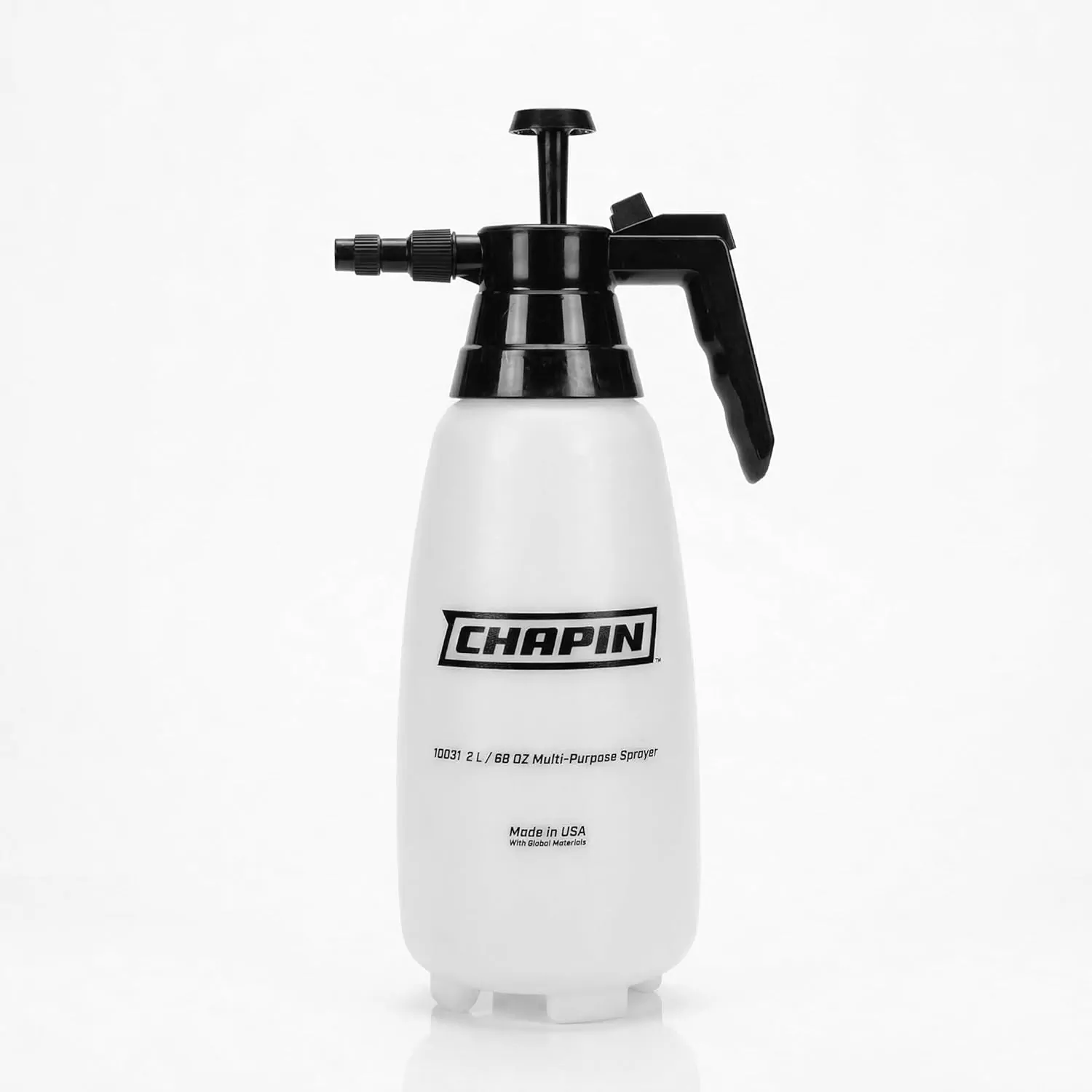
3. Chapin 10031 2 Liter/.52 Gallon Multi-Purpose Pump Sprayer
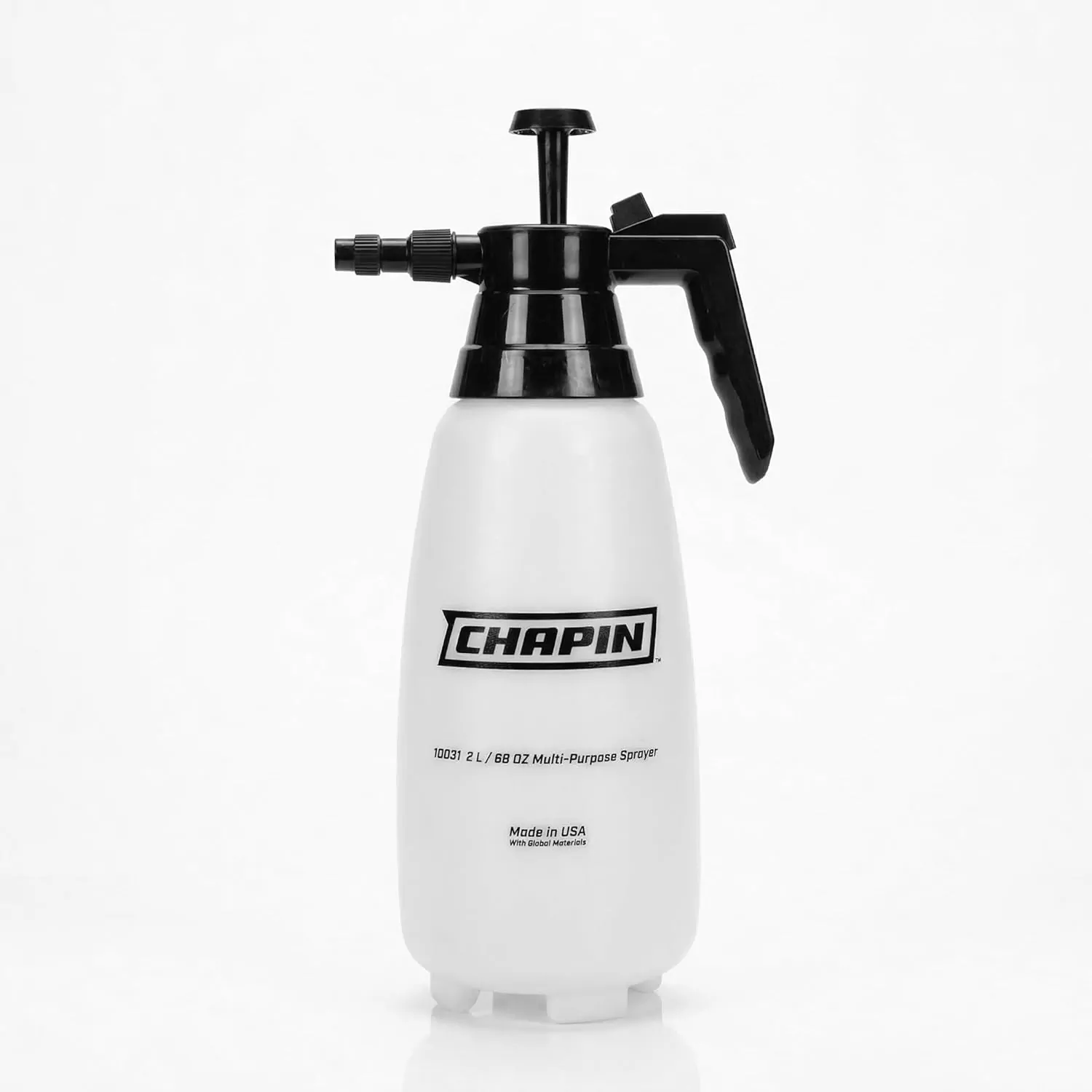
The Chapin 10031 Handheld Pump Sprayer comes with a 2-liter translucent tank, adjustable brass nozzle, built-in tank filter, and strong gaskets for different spraying tasks. It offers reliable performance with a thumb-trigger lock, comfortable handheld design, 60 PSI maximum pressure, and an even spray pattern for garden and household applications. In my experience, it is lightweight, simple to operate, comfortable to hold, prevents leakage, and works very well for small gardens and balcony plants.
expert start
What Is It and Its Product Features
The Chapin 10031 Handheld Pump Sprayer is a 2-liter (88oz) manual sprayer designed for applying fertilizers, weed control products, pest treatments, and general cleaning solutions. It has a translucent white plastic tank that makes it easy to check the remaining liquid level. One useful feature is its wide-mouth opening, which makes filling and mixing solutions easier while reducing spills. When handling fertilizers or pesticides, this helps improve safety and reduces product waste. The seals and gaskets are designed to work with common lawn and garden chemicals, making it suitable for regular use.
Why It Matters
The adjustable brass nozzle is one of the most valuable features of this sprayer. By simply rotating the nozzle, you can change the spray from a fine mist to a concentrated stream. This flexibility is important because different plants and jobs need different spray patterns. A gentle mist works well for delicate plants, seedlings, and reptile enclosures, while a stronger stream is better for targeted weed control or cleaning tasks. The in-tank anti-clog filter helps stop debris from reaching the nozzle and blocking the spray. This is especially useful when using powdered fertilizers or solutions containing small particles. During my testing, the filter helped maintain a smooth and consistent spray output. The sprayer also includes a thumb-operated shut-off valve with a lock feature, which helps reduce hand tiredness during longer spraying sessions. The manual pump system can reach up to 60 PSI maximum pressure.
My Set-Up and My Experience
I mainly used the Chapin 10031 Handheld Pump Sprayer for balcony plants, small lawn treatments, and indoor cleaning tasks. I also tested it for light pest control applications on potted plants. During my first use, I slightly tightened the two valves with channel locks until the small dripping issue stopped. After this adjustment, the sprayer performed correctly. I also applied a small amount of lubricant to the pump mechanism, which made the pumping action smoother. The pump needed around 5–6 presses during the first use to build proper pressure, which is normal for this type of sprayer. The handle feels comfortable, and the thumb trigger requires less effort compared with some budget sprayers I have used before. The locking trigger feature is especially helpful during extended spraying.
Performance
The Chapin 10031 Handheld Pump Sprayer provides dependable performance for small spraying jobs. The adjustable brass nozzle gives good control over spray direction and coverage. The spray output remains even and easy to manage. After tightening the fittings, the tank maintained a proper seal without leakage. For small gardens, balconies, patios, and household cleaning or disinfecting tasks, this sprayer performs efficiently. It is not intended for treating large lawn areas, but for precise applications, it feels practical and professional. The lightweight plastic body makes it easy to carry. However, some nozzle components contain plastic parts that may experience wear after long-term use.
Practical Tips
- When using the Chapin 10031 Handheld Pump Sprayer
- Check and tighten all connections before the first spray.
- Pump around 5–6 times initially to create enough pressure.
- Avoid excessive pumping beyond the recommended pressure level.
- Release remaining pressure after finishing work.
- Keep the sprayer empty and dry during storage.
- Store it in a shaded place away from direct sunlight.
expert end
pro start
| Pros | Cons |
|---|---|
| ✔️ Lightweight design makes it easy to carry | ❌ Required small tightening adjustment to stop dripping |
| ✔️ Adjustable brass nozzle provides excellent spray control | ❌ New units may have a slight plastic smell |
| ✔️ Translucent tank allows quick liquid level checking | ❌ Plastic nozzle components may wear with extended use |
| ✔️ Thumb trigger lock helps reduce hand fatigue | ❌ Not designed for large lawn applications |
| ✔️ Built-in filter helps reduce nozzle blockage | ❌ Pump mechanism may need initial adjustment |
pro end
4. Chapin 60114 Made in USA 4-Gallon Backpack Pump Sprayer
The Chapin 60114 Backpack Sprayer comes with a 4-gallon tank, 3-stage filtration system, and adjustable nozzle for different lawn and garden applications. Its strong polypropylene tank, padded shoulder straps, and 20-inch wand provide comfortable operation, simple cleaning, and smooth spraying with fewer clogs. In my experience, it increased spraying efficiency, kept treatments such as nematodes effective, and made lawn and garden maintenance much easier.
expert start
What Is It and Its Features
The Chapin 60114 Backpack Sprayer is a manual pump backpack sprayer with a 4-gallon liquid capacity. The tank is constructed from durable polypropylene (PP) and comes in a translucent white design, allowing you to easily monitor the liquid level. One feature I find especially useful is the large 4-inch tank opening. This wide opening makes filling, mixing, and cleaning the tank much easier. When preparing fertilizers, herbicides, or pest control solutions, spills can occur. The larger opening helps reduce spills and allows better rinsing after each use.
Why It Matters
The sprayer includes a 3-stage filtration system that removes debris at different points before the liquid reaches the nozzle. This is highly beneficial because clogged nozzles are among the most common issues with sprayers. The adjustable poly cone nozzle allows you to change the spray pattern from a stronger stream to a softer shower. This flexibility is important because different applications require different spray styles. A narrow stream is useful for targeted weed treatment, while a wider spray works better for fertilizer application and pest control over larger areas. The 20-inch poly wand and 48-inch hose provide good reach, making it easier to spray around garden beds, shrubs, and lawn sections without excessive bending. The padded shoulder straps and waist strap improve comfort, especially when carrying a full 4-gallon tank.
My Set-Up and My Experience
I mainly used this sprayer for lawn weed management and applying beneficial nematodes to control fire ants. Before using the nematodes, I tested the spray output to confirm that the pressure would not damage these sensitive organisms. I was pleased to find that the nematodes remained active, showing that the sprayer provides enough pressure while still being gentle for delicate treatments. It made the complete application process faster and more convenient. One small issue I noticed is that when the sprayer is placed on the ground, especially when the hose pulls slightly, it can become unstable and tip over. I also think a built-in hose holder clip would improve storage and keep the hose more organized.
Performance
The Chapin 60114 Backpack Sprayer delivers strong performance for home gardens and lawn care tasks. It can reach a maximum pressure of 60 PSI, which is suitable for most residential spraying needs. Since it uses a manual pumping system, the side handle needs regular pumping to maintain pressure. During longer spraying jobs, continuous pumping may cause some arm fatigue. The spray pattern remains consistent and easy to control. The adjustable nozzle responds quickly, allowing users to switch between different spray styles depending on the application. The nitrile seals are compatible with many common fertilizers, herbicides, and pesticides, increasing its usefulness for different garden treatments.
Practical Tips – Chapin 60114 Backpack Sprayer
- Clean and rinse the tank completely after using fertilizers or pesticides.
- Test the spray pattern with plain water before applying costly treatments.
- Avoid filling above the 4-gallon limit to maintain proper operation.
- Adjust shoulder and waist straps before adding liquid to the tank.
- Pump at a steady pace to maintain consistent spray pressure.
- Store the sprayer upright to prevent accidental tipping.
- Inspect and clean filters regularly to avoid blockages.
- Keep the hose loosely arranged during storage to prevent damage.
expert end
pro start
| Pros | Cons |
|---|---|
| ✔️ Large 4-gallon capacity reduces refill frequency. | ❌ Wider base would improve stability. |
| ✔️ 3-stage filtration system helps prevent nozzle blockage. | ❌ Does not include a built-in hose storage clip. |
| ✔️ Adjustable nozzle supports multiple spray patterns. | ❌ Manual pumping may cause arm fatigue during long jobs. |
| ✔️ Padded straps provide better comfort during extended use. | ❌ Strap installation may feel confusing initially. |
| ✔️ Good choice and value for home gardeners. | ❌ Finding some replacement parts can be difficult. |
pro end
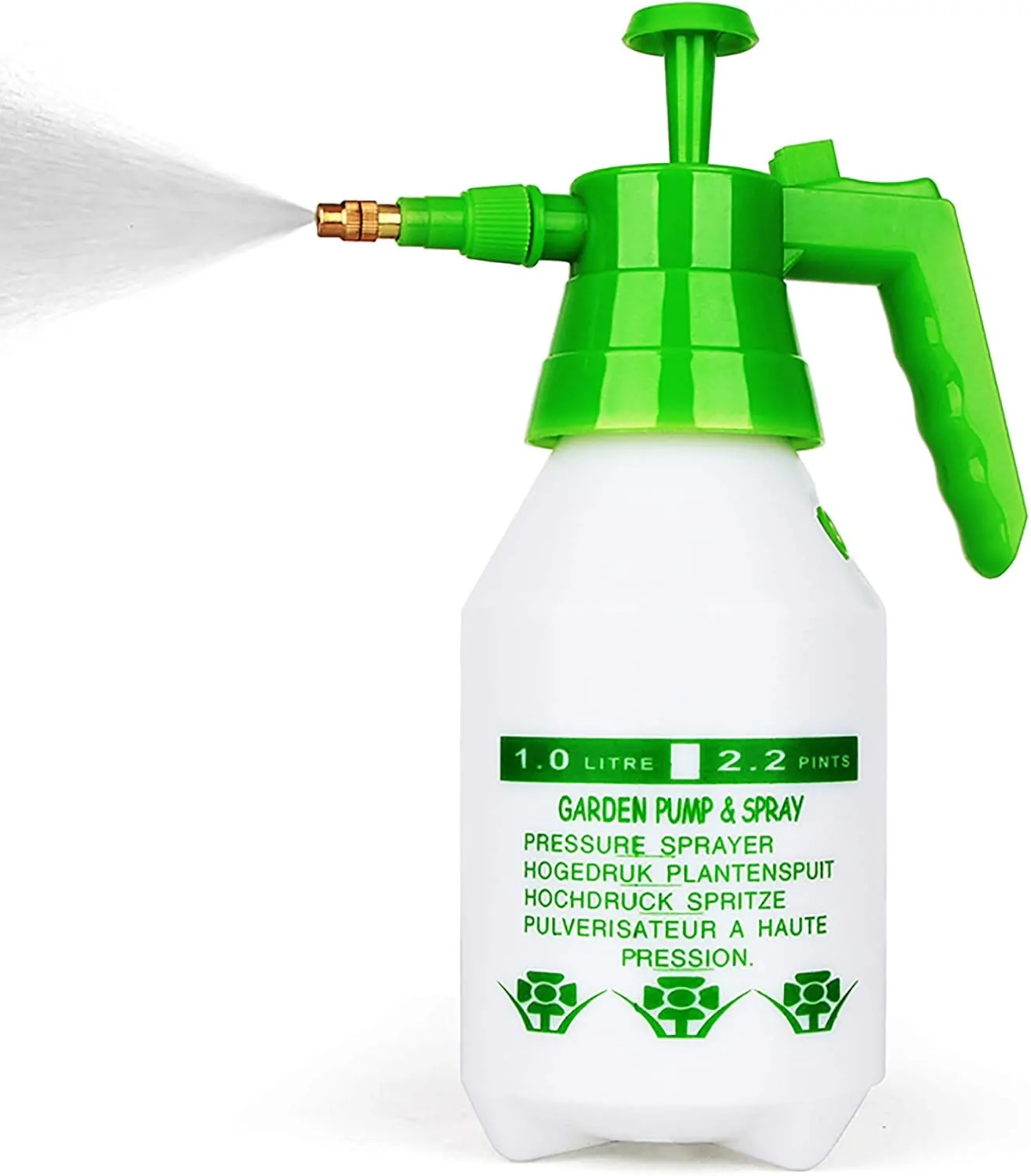
5. Munyonyo Garden Pump Sprayer 68oz/34oz
Features include a 0,5-gallon tank, adjustable nozzle, 22-inch wand, 50-inch hose, safety valve, ergonomic handle, and a strong thickened base for better stability. The manual pump creates pressure quickly, while the locking trigger allows continuous spraying without constant pressing. It provides even spraying, maintains pressure effectively, is comfortable to use, works consistently, and is suitable for regular plant maintenance.
expert start
What Is It and Its Features
The Munyonyo Garden Pump Sprayer is a manual pressure sprayer designed with a 0.5-gallon tank capacity. This compact size makes it suitable for small to medium gardening activities. It is lightweight and easy to move around the garden without creating extra strain. The tank is manufactured from high-quality PE material. PE plastic is widely used in gardening equipment because it is lightweight, strong, and able to handle regular outdoor use.
One of its key features is the adjustable brass nozzle. Compared with plastic nozzles, brass options provide better durability and improved resistance against rust. The nozzle allows users to change the spray pattern from a direct stream to a fine mist according to their needs.
Why It Matters
This feature is important because different plants and gardening jobs require different spray patterns. A gentle mist works well for sensitive plants and indoor gardening, while a stronger stream is useful for cleaning surfaces or applying weed killer. The built-in safety valve is another valuable feature. It automatically releases extra pressure when it reaches around 2.5–3 Bar. For a small manual sprayer, this safety mechanism helps prevent damage caused by excessive pumping. The tank also includes a small filter that helps reduce blockage, especially when using fertilizers or plant nutrients.
My Set-Up and My Experience
I tested the Munyonyo Garden Pump Sprayer for three main purposes: watering indoor plants, applying fish emulsion fertilizer, and performing light outdoor cleaning tasks. I filled the tank, secured the lid properly, and pumped the handle to create pressure. The pumping mechanism worked smoothly and efficiently. The locking trigger feature was especially helpful when covering larger areas because it reduced hand tiredness.
During use, I found the spray pattern remained consistent. The fine mist option worked effectively for delicate plants, while the direct stream provided enough strength for cleaning outdoor surfaces and car windows. Like all garden tools, proper maintenance plays an important role in extending its life. I always rinse the sprayer after every use, especially after applying fertilizer or weed control solutions.
Performance
The Munyonyo Garden Pump Sprayer delivers reliable performance for small and medium gardening tasks. It reaches working pressure quickly with only a few pumps. After building pressure, it maintains a steady flow and produces an even spray. The adjustable brass nozzle operates smoothly, allowing quick switching between mist and stream modes.
The fine mist setting is suitable for seedlings, indoor plants, and delicate foliage, while the stronger stream works well for outdoor cleaning purposes. For lawn care tasks, including applying weed killers or liquid fertilizers in limited areas, this sprayer performs effectively. Having replaceable seals and spare components also helps improve its long-term usability when maintained properly.
Practical Tips
- Clean the tank and nozzle after every use.
- Avoid using corrosive or highly acidic chemicals.
- Do not exceed the recommended pressure level.
- Keep the sprayer stored in a cool and dry location.
- Regularly inspect the bottom area of the tank for possible cracks.
- Choose the fine mist setting for sensitive plants.
- Select the direct stream mode for cleaning applications.
expert end
pro start
| Pros | Cons |
|---|---|
| ✔️ Lightweight design makes it easy to carry. | ❌ Not recommended for corrosive or acidic liquids. |
| ✔️ Durable adjustable brass nozzle provides better control. | ❌ Can develop damage if pressure limits are exceeded. |
| ✔️ Safety valve helps prevent excessive pressure buildup. | ❌ Small tank capacity is not suitable for large lawn areas. |
| ✔️ Transparent tank allows easy monitoring of liquid level. | ❌ Plastic construction is less strong than professional heavy-duty models. |
| ✔️ Includes spare parts and a 1-year warranty. | ❌ Pressure can decrease during extended spraying periods. |
pro end
Which Garden Pump Sprayer Type Fits?
Garden pump sprayers come in several designs, and each one suits a different workload. I compared them according to tank capacity, carrying method, pumping arrangement and the type of gardening work they could reasonably handle.
Handheld Compression Sprayers for Small Gardens
Handheld compression sprayers generally use a pump built into the tank. Pumping compresses the air above the liquid, and that stored pressure pushes the liquid towards the nozzle when the trigger opens.
For small flower beds, potted plants and a few vegetable rows, I found this design attractive because it required little preparation. A 2-litre tank, for example, would carry approximately 2 kg of water before adding the weight of the sprayer itself.
The limitation was the need to restore pressure as spraying continued. As the compressed air expanded, pressure gradually declined, potentially changing the spray pattern and flow rate. Frequent pumping could become inconvenient during longer work.
My recommendation: Choose a handheld compression sprayer for small, targeted applications where portability matters more than continuous spraying capacity.
Shoulder Sprayers for Medium Workloads
Shoulder-carried compression sprayers usually provide greater capacity than small handheld units. Many include a hose, trigger and separate spray wand, making it easier to direct the nozzle towards plants without lifting the tank.
I considered a 5-litre model for vegetable beds and flower borders. Five litres of water weighs approximately 5 kg, and the tank, hose and accessories increase the total carried weight. That calculation made strap quality and balance important buying considerations.
These sprayers can reduce refill interruptions, although a larger tank also means carrying more weight on one side of the body. For longer jobs, I wanted a comfortable strap and a tank that could stand securely during filling.
My recommendation: A shoulder sprayer can suit medium-sized gardens with several separate treatment areas, provided its filled weight remains comfortable.
Manual Backpack Sprayers for Larger Areas
Manual backpack sprayers carry the tank on the back and commonly use a side lever to operate a piston or diaphragm pump. The pump pressurises a chamber or liquid circuit, allowing spraying while the gardener continues pumping as required.
I considered this design for repeated applications across vegetable beds and larger garden sections. A 15-litre tank contains approximately 15 kg of water when full, excluding the equipment weight. This made shoulder straps, back support and weight distribution important.
Backpack sprayers can support longer spraying sessions, but their capacity should not encourage overfilling. A partially filled tank may be more manageable, especially when working between narrow vegetable rows.
My recommendation: Choose a manual backpack sprayer when the garden workload justifies its capacity and you are comfortable carrying and operating it safely.
| Sprayer Type | Typical Capacity | Best Application | Main Trade-Off |
|---|---|---|---|
| Handheld compression | 1–3 litres | Pots and small beds | Frequent pumping |
| Shoulder compression | 4–8 litres | Medium gardens | One-sided carrying weight |
| Manual backpack | 12–20 litres | Larger garden areas | Greater weight and maintenance |
These are broad capacity ranges rather than fixed standards. After comparing the designs, I considered the number of refills, carrying comfort and actual treatment area more useful than tank size alone.
How Garden Pump Sprayers Actually Work
Understanding the working mechanism helped me compare equipment more carefully. Although different designs use different pumping arrangements, the basic process involves creating pressure, moving liquid through the delivery system and controlling its release through the nozzle.
Pump Mechanisms and Pressure Generation
In a compression sprayer, the hand pump forces air into the sealed tank. This increases internal pressure, which pushes liquid through the outlet when the trigger opens.
In a manual backpack sprayer, a piston or diaphragm pump moves liquid into a pressurised chamber or delivery system. Some models use pressure regulation to maintain a more consistent working range.
I compared piston and diaphragm designs because their construction and maintenance requirements differ. Piston pumps commonly use moving seals against a cylinder surface, while diaphragm pumps use a flexible membrane to move liquid.
Neither design is automatically superior for every chemical or task. The manufacturer’s approved chemical compatibility and operating pressure matter more than the pump name alone.
Pressure, Flow and Nozzle Performance
Pressure is commonly expressed in pounds per square inch (PSI) or bar. Flow rate describes the volume discharged over time, often measured in litres per minute.
During a sample clean-water comparison, I considered a nozzle discharging 0.5 litres per minute. At that rate, a 10-litre tank would provide approximately 20 minutes of trigger-open spraying, assuming constant flow and no unused liquid. This is a calculation, not a guaranteed working time.
Actual spraying time also includes walking, pumping, turning, checking coverage and refilling. Furthermore, flow rate changes with pressure and nozzle characteristics.
- Pressure rating: Check the manufacturer’s normal operating range, not just maximum pressure.
- Flow rate: Compare output using the intended nozzle and operating pressure.
- Pressure relief: Prefer appropriate protection against excessive pressure.
- Pressure regulation: Consider it when consistent application rates are important.
My decision was to prioritise controllable pressure and predictable nozzle output instead of selecting equipment simply because it advertised a high maximum PSI.
Which Features Deserve Your Money?
Once I understood the operating systems, I examined the individual components. This was where I noticed meaningful differences between basic equipment and better-built models.
Tank Construction and Carrying Comfort
Many garden sprayer tanks use moulded plastics such as polyethylene or polypropylene. The exact material, wall thickness, manufacturing quality and chemical resistance vary by model.
I looked for a stable tank base, smooth moulded joints, clearly visible capacity markings and a filling opening large enough to reduce spills. A translucent tank was useful because it made the remaining liquid easier to estimate.
For backpack models, I paid particular attention to the harness. Wide, adjustable straps and suitable padding can improve comfort, but the complete fit matters more than padding thickness alone.
For example, a 12-litre water fill contributes about 12 kg before the sprayer’s own weight is included. That made a smaller practical fill more attractive for repeated work around tomatoes and capsicum.
Wands, Hoses and Trigger Quality
The spray wand controls reach and helps keep the nozzle away from the operator. Common materials include plastic, aluminium, stainless steel and brass, each with different weight, corrosion and compatibility considerations.
I preferred a wand with secure connections and sufficient length to reach vegetable foliage without excessive bending. However, I did not consider a longer wand automatically better because it can become awkward in narrow beds.
Hose flexibility also mattered. A stiff hose could pull against the wand, while a poorly secured connection could become a leakage point. I looked for sound fittings, suitable hose material and a trigger that operated smoothly.
A lockable trigger can reduce hand fatigue during appropriate continuous spraying, but it must release reliably and should not be used in situations requiring frequent stopping.
Nozzles, Filters and Spray Patterns
The nozzle was one of my highest priorities because it directly affected the application pattern. Adjustable cone nozzles, flat-fan nozzles and other specialised designs serve different purposes.
For foliar applications on vegetables, I wanted controlled coverage of the intended leaf surfaces. For certain labelled lawn treatments, a suitable flat-fan nozzle could provide a more uniform swath when used at the correct height and pressure.
Filters help prevent particles from reaching the nozzle, although their mesh size must match the equipment and formulation. A filter that is too fine for a permitted formulation may block unnecessarily.
- Adjustable nozzles: Useful for changing patterns, but settings should be checked for repeatability.
- Flat-fan nozzles: Suitable for certain uniform surface applications.
- Spray wands: Improve directed reach without requiring the operator to approach every plant closely.
- Serviceable filters: Make inspection and cleaning easier.
I concluded that a well-matched nozzle and a reliable filtration system could be more valuable than a large collection of accessories that I might never use.
How Durable Are Garden Pump Sprayers?
Durability was difficult to judge from product photographs. A sprayer might look strong while having weak seals, difficult-to-replace components or fittings unsuitable for its intended chemicals. I therefore compared construction details and the availability of replacement parts before treating any model as a long-term purchase.
Pump Pistons, Cylinders and Diaphragms
Piston pumps depend on suitable sealing surfaces and correct lubrication where specified. Abrasive contamination can increase wear, while damaged seals may reduce pressure performance.
Diaphragm pumps depend on the condition and chemical resistance of the flexible membrane. Repeated movement, incompatible chemicals or ageing may eventually affect its performance.
For a sample maintenance inspection, I considered what could be checked after several clean-water operating sessions: pump movement, external leakage, pressure behaviour and visible component damage.
These checks could identify immediate problems, but even ten short operating sessions would not establish multi-year durability. For that reason, I valued access to replacement seals, diaphragms and pump components.
Seals, Corrosion and Material Compatibility
Seals and gaskets are small components, but their failure can make an otherwise usable sprayer unreliable. Common sealing materials include nitrile rubber, EPDM and fluoroelastomers, although suitability depends on the specific formulation and exposure conditions.
I avoided assuming that a seal described as chemical-resistant could tolerate every pesticide, fertiliser or cleaning product. Metal components also require attention.
Stainless steel and brass may offer useful properties in suitable applications, but neither is universally corrosion-proof. Material grade, liquid composition, cleaning and storage conditions all influence service life.
My preference was for a sprayer with clearly identified compatible materials and replaceable wearing parts rather than one relying only on broad durability claims.
- Pump seals: Check whether replacement kits are available.
- Metal fittings: Inspect material specifications and corrosion limitations.
- Hose connections: Look for secure, serviceable joints.
- Repair access: Prefer designs that permit ordinary maintenance without damaging the tank.
In practical terms, durability meant more than surviving an initial water test. It meant being able to maintain the equipment safely throughout its intended working life.
Which Chemicals Can Pump Sprayers Handle?
Chemical compatibility became a major part of my selection because I used different garden products for different purposes. A sprayer suitable for plain water is not automatically suitable for every fertiliser, pesticide or cleaning solution.
For foliar feeding on vegetables, I needed equipment approved for the particular formulation. For pest management, I also had to consider the product label, application rate, nozzle requirements and the possibility of residues remaining inside the sprayer. I never treated general labels such as “chemical-resistant” or “heavy-duty” as proof of universal compatibility.
Fertilisers, Pesticides and Cleaning Requirements
Water-soluble fertilisers may contain dissolved salts that can leave deposits if the equipment is not cleaned properly. Some pesticide formulations contain solvents or other ingredients that may affect particular plastics, seals or hoses.
Suspension formulations may require appropriate agitation and filtration, while some products specifically restrict the equipment or application methods that can be used.
I considered a separate sprayer for herbicides because residues can damage sensitive vegetables and flowers even when the equipment appears clean. For my mixed garden, preventing cross-contamination was more important than saving the cost of one additional tank.
| Application | Equipment Priority | Important Precaution |
|---|---|---|
| Plain water | Suitable nozzle and comfortable handling | Keep equipment clean |
| Foliar fertiliser | Compatible seals and controlled output | Follow product dilution and crop instructions |
| Insecticide or fungicide | Label-approved equipment and nozzle | Use required protection and avoid drift |
| Herbicide | Appropriate dedicated equipment | Prevent contamination of desirable plants |
Before using any chemical, I checked whether both the formulation label and the sprayer manufacturer permitted that use. I also checked whether the product was registered or otherwise authorised for the intended crop and treatment.
My recommendation: Buy according to the most demanding permitted formulation you genuinely expect to use, not according to an unsupported claim that the sprayer handles every chemical.
How I Compared Sprayers Before Buying
After understanding the equipment, I organised my selection around real garden tasks. I did not want to pay for capacity or features that would remain unused, but I also wanted to avoid choosing a sprayer that became inconvenient after a few treatment sessions.
I first estimated the area requiring treatment and considered the amount of liquid needed under the relevant application instructions. I then compared tank sizes, operating methods, pump effort, nozzle availability and filled weight.
For example, I considered the difference between carrying 5 litres and 15 litres of water. The additional 10 litres meant approximately 10 kg more liquid weight. That was a substantial difference when walking around vegetable beds or turning between narrow planting rows.
I also compared the total purchase cost rather than the advertised tank price alone. Replacement nozzles, seals, filters, straps and shipping could influence long-term value.
- Small gardens: Prioritise easy handling, controlled spraying and straightforward cleaning.
- Medium gardens: Balance tank capacity against carrying comfort and refill frequency.
- Larger gardens: Consider backpack ergonomics, pump efficiency and serviceable components.
- Mixed chemical work: Prioritise compatibility, dedicated equipment where appropriate and contamination control.
At the shop, I wanted to inspect the tank, straps, hose connections, pump movement and wand fittings. A brief clean-water demonstration, where permitted, could reveal obvious leaks or trigger problems.
However, I understood that a short demonstration could not establish durability, chemical resistance or performance after months of use. That distinction helped me avoid treating a smooth showroom demonstration as proof of long-term reliability.
Where Should You Buy Pump Sprayers?
Buying from a local garden supplier offered the advantage of examining the equipment before paying. I could compare tank sizes directly, inspect the strap arrangement and ask whether replacement seals or nozzles were stocked.
Equipment shops specialising in agricultural spraying systems could also provide useful information about pump construction, repair kits and compatible accessories.
Online sellers offered a wider selection in some cases, but photographs alone were not enough. I wanted the exact model number, manufacturer specifications, package contents, warranty conditions and seller details.
I also checked whether a listing included the spray wand, hose, nozzles and straps shown in the photographs. Accessories can vary between packages, so I did not assume that every pictured item was included.
Delivered cost was another consideration. A lower listed price could become less attractive after shipping charges or the cost of separately purchased accessories.
- Before payment: Confirm model identity, package contents and return conditions.
- Warranty: Check regional coverage, exclusions and the procedure for claims.
- Spare parts: Ask about seals, pumps, hoses and replacement nozzles.
- Proof of purchase: Keep the invoice and relevant warranty documents.
After delivery, I planned to inspect the tank for cracks, check fittings against the parts list and conduct a clean-water leak test according to the manufacturer’s instructions before introducing any permitted treatment product.
My buying priority remained straightforward: choose a seller who could identify the exact equipment and provide clear support if something arrived damaged or incomplete.
How to Use Garden Pump Sprayers
Correct use begins before the first chemical application. I considered clean-water calibration essential because it shows how much liquid the sprayer actually delivers under the chosen operating conditions.
Calibrate Before Spraying Your Garden
For a sample calibration, I considered collecting the nozzle discharge in a measuring container for one minute at a controlled working pressure. If the collected volume was 600 millilitres, the measured flow rate would be 0.6 litres per minute under those conditions.
I would repeat the measurement to check consistency and then assess the intended walking speed, nozzle spacing and treated area. For broadcast applications, a useful calculation is:
Application rate (L/ha) = 600 × nozzle flow (L/min) ÷ [walking speed (km/h) × effective spray width (m)].
For example, a flow of 0.6 L/min, walking speed of 3 km/h and effective width of 0.5 m gives a calculated application volume of 240 L/ha. The effective width must be established for the actual nozzle, height and overlap arrangement rather than guessed from the visible spray pattern.
This calculation helps determine water volume, but it does not establish a pesticide or fertiliser dose. The product label determines the permitted application rate and other restrictions.
For spot treatments on individual plants, I would use an appropriate label-approved method instead of assuming a broadcast calibration automatically applied.
Apply Liquid With Better Control
When treating vegetable foliage, I considered nozzle distance, direction and droplet behaviour. Holding the nozzle too close could concentrate liquid on a small area, while spraying from too far away could increase drift.
For tomatoes and chilies, the objective was to reach the intended foliage with suitable coverage while avoiding unnecessary runoff. For marigolds and petunias, I paid particular attention to the risk of damaging delicate flowers through inappropriate pressure or direct spray impact.
Young mango and lemon trees required a different approach. I wanted to reach accessible branches safely from the ground, without stretching beyond a comfortable position or using excessive pressure to compensate for insufficient reach.
- Before spraying: Inspect seals, hoses, nozzle condition and weather.
- During spraying: Maintain the calibrated operating method and avoid excessive runoff.
- Between plants: Release the trigger before repositioning.
- After spraying: Follow the formulation and equipment cleaning instructions.
I also recognised that spraying time and tank capacity were not measures of treatment success. Proper application depends on the product label, equipment calibration, target coverage and safe operating conditions.
How Safe Are Garden Pump Sprayers?
A manually operated sprayer may look simple, but pressure, chemicals and moving components introduce risks that deserve proper attention. I treated personal protection as part of the spraying process rather than an optional extra.
The exact protective equipment depends on the formulation label and may include chemical-resistant gloves, suitable clothing, eye protection, footwear and respiratory protection where specified.
I also checked weather conditions before outdoor applications. Wind can carry droplets away from the target, while excessive heat and unsuitable humidity may affect application behaviour or increase risks under certain product labels. Nearby children, pets, water sources, edible crops and neighbouring plants also influenced whether spraying was appropriate.
Pressure Relief and Equipment Handling
Compression sprayers store energy in the pressurised tank. Opening a pressurised container incorrectly can release liquid unexpectedly.
I therefore looked for clear manufacturer instructions and a suitable pressure-release arrangement. Before opening the tank, removing components or carrying out maintenance, pressure must be released using the approved procedure.
I never considered bypassing a pressure relief valve, modifying a tank or exceeding its rated pressure acceptable ways to improve spraying performance.
For backpack models, safe lifting mattered as well. A heavy filled tank should be handled carefully, and a smaller fill may be preferable when working on uneven ground.
- Wear required PPE: Follow the formulation label and equipment instructions.
- Protect nearby areas: Avoid drift, contamination and unnecessary exposure.
- Respect pressure limits: Never exceed the manufacturer’s rating.
- Use safe access: Do not spray high branches from an unstable ladder.
My preferred sprayer was not simply one that delivered liquid efficiently. It was one I could operate, depressurise, clean and store without unnecessary risk.
How to Maintain Garden Pump Sprayers
Maintenance influenced my buying decision because a sprayer that is difficult to clean or repair may become expensive over time. After a permitted application, cleaning should follow both the product label and the sprayer manufacturer’s instructions. Different formulations may require different cleaning procedures, and a general water rinse is not always sufficient.
I paid attention to nozzle openings, filters, hose connections and pump seals because residues or debris could affect future operation. A blocked nozzle should be cleaned using the approved method rather than by blowing through it with the mouth or damaging its opening with a sharp object.
For a sample clean-water storage check, I considered inspecting the equipment after seven days for visible leakage, residue, stiffness or damaged fittings. Such an inspection could reveal immediate storage problems but would not prove long-term material durability.
Cleaning, Storage and Replacement Parts
Before storage, the sprayer should be cleaned, depressurised and drained as directed by its manufacturer. Components should be allowed to dry where appropriate, and the equipment should be kept away from unsuitable temperatures, direct weather exposure and unauthorised access.
Some pump assemblies require specific lubricants or periodic seal maintenance. I would use only the materials approved for that model because an unsuitable lubricant can affect seals or contaminate the spraying system.
Replacement parts were another reason I preferred serviceable equipment. A damaged nozzle, worn seal or leaking hose should not automatically require replacing the entire sprayer.
- After use: Clean and depressurise according to instructions.
- Periodic inspection: Check seals, hose connections, pump action and trigger operation.
- Storage: Protect the sprayer from heat, freezing and physical damage.
- Repairs: Use manufacturer-approved parts and procedures.
I also considered total ownership cost. A cheaper sprayer with unavailable seals could eventually cost more than a serviceable model with a higher initial price. However, paying more only made sense when the additional quality, support or features were relevant to my work.
Choosing the Best Garden Pump Sprayer
My original frustration came from inconsistent spraying, repeated pumping and equipment that did not always suit the size of the job. After comparing the available designs, I understood that buying a better sprayer was not simply about increasing tank capacity or pressure.
I placed particular importance on reliable pump construction, suitable seals, controlled pressure, correct nozzle selection, comfortable handling and available replacement parts. These features affected both the spraying experience and the cost of keeping the equipment useful.
I also learned that chemical compatibility, calibration and safety could not be treated as secondary matters. A sprayer with excellent construction would still be the wrong purchase if its materials were unsuitable for the intended formulation or its nozzle could not deliver the required application.
The best garden pump sprayer is not necessarily the biggest, most expensive or highest-pressure model. It is the one that provides appropriate coverage, manageable pumping effort, dependable construction, safe operation and practical long-term maintenance for the work you actually perform.
Frequently Asked Questions (FAQs)
1. Are pump sprayers effective for spraying pests?
Yes, pump sprayers are effective tools for controlling pests. Also called compression sprayers, these devices work by creating pressure inside the tank, allowing users to release a controlled amount of liquid spray. They are flexible tools that can apply different solutions, including insecticides used for pest management.
For example, vineyards in California often face pest problems from insects such as mites and aphids. Pump sprayers help vineyard owners apply pesticides and natural treatments evenly, supporting healthier grapevines while maintaining efficient crop protection practices.
2. How far will a Garden pump sprayer spray?
The spray distance of a garden pump sprayer depends on different factors, including the sprayer type, pressure level, nozzle design, and thickness (viscosity) of the liquid being applied. Generally, most garden pump sprayers can spray liquids at a distance of approximately 10 to 30 feet (3 to 9 meters).
references:
1. Malik, R. K., Pundir, A. K., Dar, S. R., Singh, S. K., Gopal, R., Shankar, P. R., & Singh, N. (2019). Sprayers and spraying techniques–a manual. Gates Open Res, 3(308), 308.
2. Raut, L. P., Jaiswal, S. B., & Mohite, N. Y. (2013). Design, development and fabrication of agricultural pesticides sprayer with weeder. International Journal of Applied Research and Studies, 2(11), 1-8.
3. Beltrán-Martí, R., Garcerá, C., Cuquerella, J. J., Catalá-Senent, L., Izquierdo-Sanz, H., Garrido-Jurado, I., & Chueca, P. (2024). Do hydraulic pumps and filters of sprayers influence the viability of Beauveria bassiana based mycoinsecticide Botanigard®?. Crop Protection, 180, 106639.
4. Adedipe, J. O., Afolabi, R. T., Rotowa, T. O., Owoloja, A. O., Ekaun, A. A., Olatunji, B. T., … & Onifade, A. O. (2020). Development And Performance Evaluation Of A Simple Multi-Nozzle Mobile Compression Pump (MMPC) Sprayer. Development, 7(12).
5. Paddock, W. (1897). Spray pumps and spraying (No. 121). New York Agricultural Experiment Station.
6. Madhusudhan, G., Chirant, G., KL, A., & Thanuj Kumar, M. Multi Nozzle, Dual Pump, Wheel Driven, Pull Type Agricultural Sprayer. 8th Sem Students, Department of Mechanical Engineering, RRCE, Bengaluru-560074.[Accessed November 14, 2021].
7. Noyes, R. T., Downs, H. W., Solie, J. B., & Whitney, R. W. (2003). Pumps for low pressure ground sprayers.
8. Ghafoor, A., Khan, F. A., Khorsandi, F., Khan, M. A., Nauman, H. M., & Farid, M. U. (2022). Development and evaluation of a prototype self-propelled crop sprayer for agricultural sustainability in small farms. Sustainability, 14(15), 9204.
9. Terra, F. P., Nascimento, G. H. D., Duarte, G. A., & Drews-Jr, P. L. (2021). Autonomous agricultural sprayer using machine vision and nozzle control. Journal of Intelligent & Robotic Systems, 102(2), 38.
10. Lochan, K., Khan, A., Elsayed, I., Suthar, B., Seneviratne, L., & Hussain, I. (2024). Advancements in precision spraying of agricultural robots: A comprehensive review. IEEE Access, 12, 129447-129483.

