
5 Best Handheld Garden Sprayers in 2026: Tested Picks
- A handheld garden sprayer is a simple yet powerful tool that makes plant care easier and more precise.
- From watering seedlings to applying fertilizers and pest solutions, the right sprayer helps gardeners save time and reduce waste.
- Choosing the best handheld sprayer depends on your garden size, spraying needs, and the level of control you want.
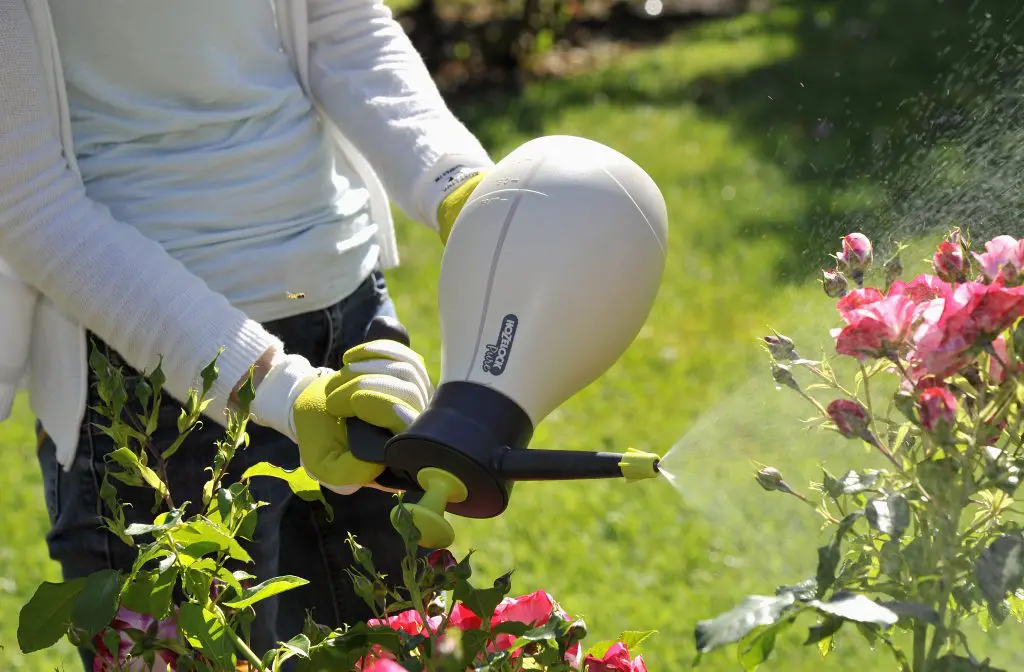

I used to think that choosing a handheld garden sprayer was a very simple job. I only needed a small container, a pumping handle and an adjustable nozzle. However, while working around my vegetable beds, flower pots and young fruit trees, I realised that even a small sprayer could make gardening unnecessarily difficult when its pressure changed quickly, its nozzle produced an unsuitable pattern or its handle became uncomfortable after repeated use.
For small gardening jobs, I still preferred handheld equipment over carrying a large backpack sprayer. When I needed to apply a permitted foliar feed to a few tomato plants, wet a group of ornamental plants or make a carefully directed treatment, preparing a large tank did not make sense. However, I also learned that a small tank alone did not guarantee accurate spraying.
When a friend asked me how to choose a handheld garden sprayer, I suggested starting with the work rather than the brand. The best choice depends on how much liquid you need, how often you spray, what formulation you intend to use and how comfortably you can control the equipment.
Product Title Features Explore 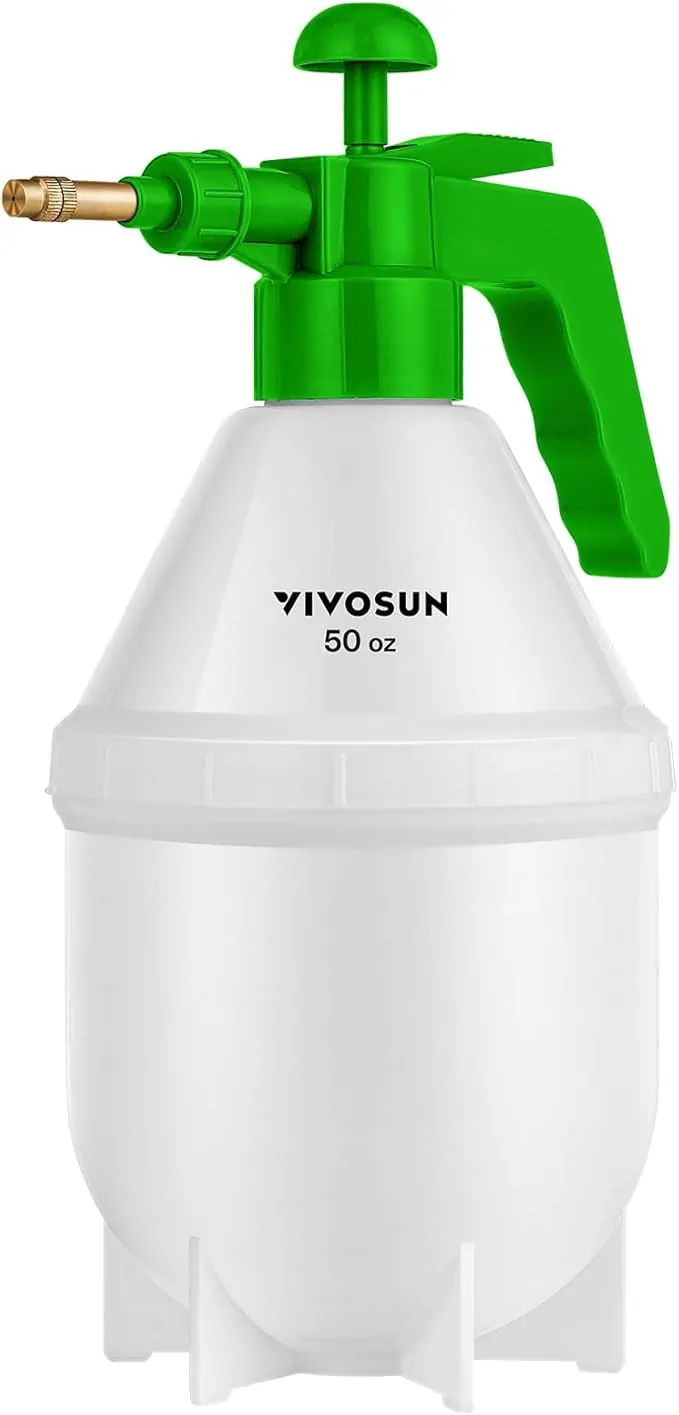
VIVOSUN 50oz Pump Sprayer, Handheld Garden Water Sprayer
CHAPIN 1002 48-Oz Hand Pump Sprayer for Lawn,
HARRIS Continuous Hand Pump Pressure Sprayer for Home,
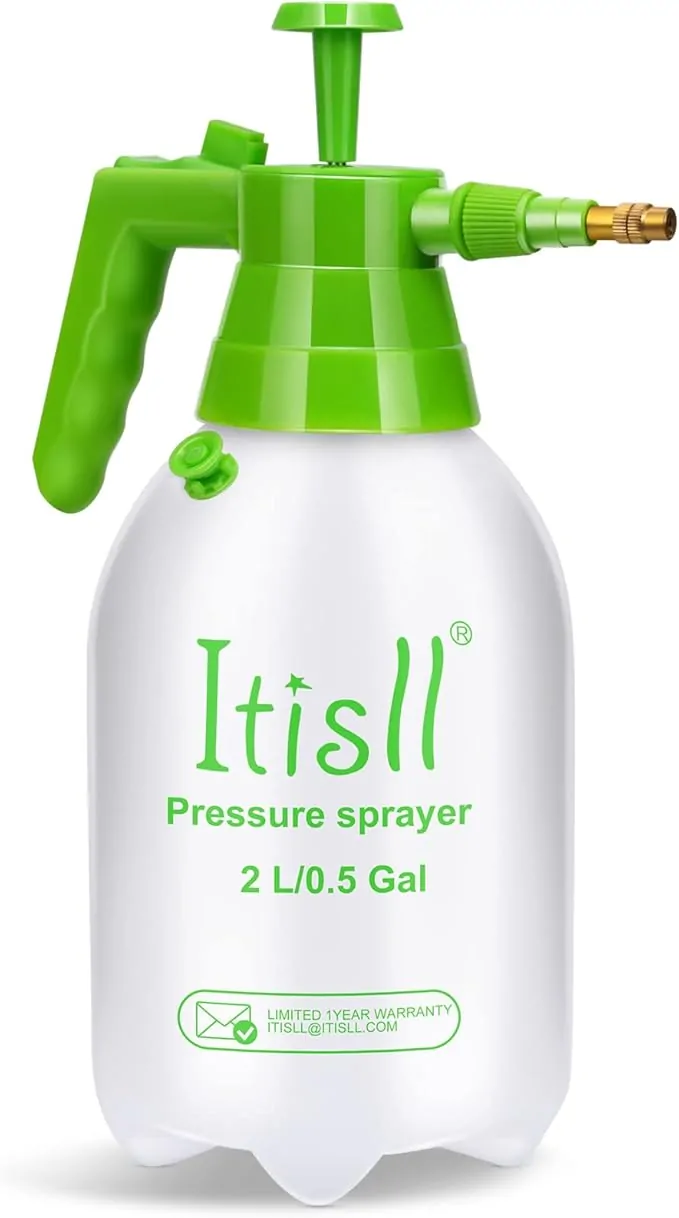
Itisll 2L Hand Pump Pressure Sprayer, 0.5 Gallon
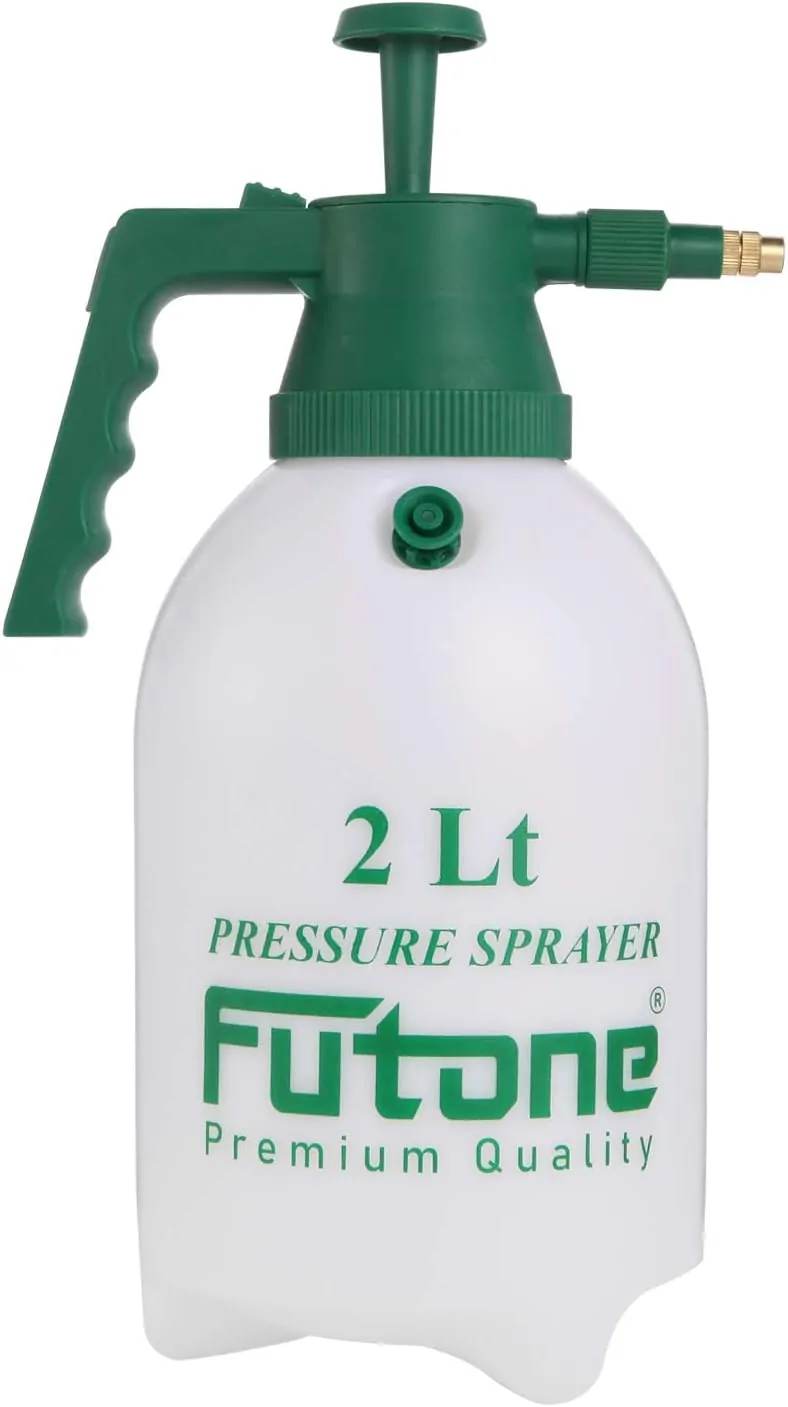
Futone 0.5 Gallon Hand Held Garden Sprayer Water
What Matters Before Buying a Sprayer?
Before comparing products, I made a short list of the factors that affected my work most. These were not simply features to collect. Each one helped me avoid buying equipment that looked convenient but did not suit my garden.
- Garden workload: Estimate the number of plants, treatment area and frequency of spraying.
- Sprayer type: Choose between trigger bottles, manual pressure sprayers and battery-powered handheld models.
- Usable capacity: Consider the liquid volume, maximum fill mark and filled weight.
- Pressure and nozzle: Look for suitable output, controlled spray patterns and reliable operation.
- Materials and compatibility: Check the tank, seals, pump and nozzle against intended formulations.
- Safety and maintenance: Prefer equipment that can be depressurised, cleaned and inspected safely.
- Ownership cost: Consider spare parts, warranty, batteries, repairs and replacement costs.
I treated these points as buying priorities rather than assuming that every feature was necessary. For example, an adjustable nozzle was useful for several tasks, but a dedicated nozzle with a consistent pattern could be more suitable for an application requiring a specified spray output.
My first recommendation is to identify the three jobs you perform most frequently. A sprayer intended mainly for a few indoor plants will not necessarily suit repeated treatment of vegetable rows. Likewise, buying a large handheld model for two small flower pots may only add weight and unnecessary maintenance.
5 Best Handheld Garden Sprayers in 2026
A healthy and beautiful garden needs the right equipment, and a handheld sprayer is one of the most useful tools for gardeners. In this guide, we will explore the features, advantages, and performance of the 5 best handheld garden sprayer options available.
Editor's Pick
 4.2
VIVOSUN
50oz Pump Sprayer, Handheld Garden Water Sprayer Bottle
- The VIVOSUN 50oz Pump Sprayer, Handheld Garden Water Sprayer Bottle with Adjustable Brass Nozzle, for Spraying Plants, Flowers, Weeds and Cleaning, Green suited my watering.
- Its adjustable brass nozzle matched my need for gentle water delivery around spinach, green peas and calendula during my winter gardening work.
- The translucent 1.5-litre tank and scale suited my refill checks, while the pressure-release valve addressed safe opening after garden pathway cleaning.
Features
| Feature | Details |
|---|---|
| Sprayer type | Handheld sprayer |
| Capacity status | Tank capacity known |
| Capacity in litres | 1.5 L |
| Capacity | 50oz / 1.5 L (seller nominal label) |
| Pressure | Working and maximum PSI not provided; manual pump with pressure-release valve |
| Coverage / range | Verified spray reach and area coverage not provided |
| ASIN | B07QTHF3QK |
| Brand and manufacturer | VIVOSUN |
| Model / part number | Amazon model: VIVOSUN 0.4; manufacturer part number: CPRG15 |
| UPC | 615435164090 |
| Selected variant | 50oz, Green, single bottle; not 27oz, red, two-pack or side-filling sprayer |
| Tank capacity | 1.5 L stated by seller/manufacturer; also marketed as 50oz / approximately 0.4 gallon. These are rounded nominal labels, not identical exact conversions |
| Power source | Manual compression pump; no motor, battery, charger or charging time |
| Pressure | Numerical working and maximum pressure not provided; pressure-release valve documented |
| Pressure control | Pump knob compresses air; trigger controls discharge; brass nozzle adjusts pattern. No calibrated pressure dial or gauge verified |
| Flow rate | Not provided; depends on pattern and remaining pressure |
| Spray distance | Not provided as verified horizontal or vertical range |
| Coverage area | Not provided; depends on application rate and refilling |
| Nozzle | Adjustable brass outlet; rotate tip to vary directed stream and finer spray |
| Nozzle package | Current bullets specify adjustable brass nozzle; comparison panel says two kinds of nozzles but does not identify a second loose tip or exact contents |
| Handle and trigger | Ergonomic locking handle; comparison panel confirms lockable switch |
| Safety valve | Pressure-release valve; release pressure before opening or servicing |
| Tank visibility | Translucent bottle with side calibration scale for checking remaining liquid |
| Tank material | Translucent plastic; exact polymer not verified. Amazon material Brass refers to nozzle, not an all-brass bottle |
| Base | Thickened bottom described by seller as improving stability and durability; no independent durability test supplied |
| Temperature limit | Water up to 131 degrees F / 55 degrees C; seller/manufacturer limit, not a recommendation to use hot water on plants |
| Suitable garden jobs | The listing supports plant and flower watering, small lawn/garden tasks and compatible cleaning solutions. Its small bottle and adjustable outlet suit light water delivery around spinach, peas and calendula, with the pattern and pressure chosen to avoid disturbing soil or seedlings. Harvesting kinnow or spinach, checking soil moisture, removing yellow leaves and pest monitoring remain separate tasks. It is not an irrigation system, fertilizer spreader or a high-reach citrus sprayer. If using a treatment rather than water, confirm the sprayer compatibility, crop label and harvest interval before application. |
| Chemical compatibility | Bleach, solvents, acids, alkaline concentrates and powder-based mixtures are not individually approved by the verified selected-model sources. Do not assume approval because the nozzle is brass or because the page recommends related soap/neem products. Confirm each formulation with VIVOSUN and its label before use. Do not load dry powder, undissolved fertilizer or organic compost slurry. Watering a crop does not establish that any pesticide or foliar fertilizer is safe for it. Keep plant-care and cleaning liquids separate where residues cannot be removed reliably. |
| Operation and nozzle control | Follow the supplied instructions for filling level and required air space; the maximum safe fill mark is more important than filling to the neck. Secure the head, pump manually, direct the nozzle away from people and squeeze the trigger. Adjust the brass tip for the desired stream or finer spray. The lockable switch supports sustained discharge while pressure lasts, but no battery maintains pressure. Release the lock to stop and use the pressure-release valve before opening. Numerical pressure, pumping count, spray duration and distance are not verified for this exact bottle. |
| Cleaning, maintenance and storage | As general sprayer care, empty after use, rinse the bottle and flush clean water through the nozzle, using the liquid label for disposal instructions. Release pressure first and inspect the nozzle, threads and seals; follow the supplied manual for disassembly and lubrication. Do not improvise solvent cleaners or claim dishwasher compatibility. Store empty, dry and depressurized away from direct sun and freezing temperatures. The 55 degrees C water limit does not establish compatibility with hot chemicals or suitability for spraying hot water on plants. |
| Buying and practical limitations | The selected green 50oz bottle is $20.99 in the user-supplied Amazon capture; red, multi-pack and larger models have separate prices. Its small capacity needs refilling on larger beds, the hand-held load stays in the carrying hand, and pressure decreases during use. There is no verified extension wand, flow rate or spray-reach specification. Manufacturer terms distinguish a stated one-year product warranty from an advertised two-year after-sale service; ask support which applies to your purchase. Spare-part availability and exact optional nozzle contents remain unverified. |
Expert Take
I wanted to treat small aphid patches on my peas without repeatedly squeezing a trigger bottle. The VIVOSUN 50oz pump sprayer looked suitable for these short jobs around my spinach, calendula and pea supports, although I still needed a watering can for vegetable beds.
How I Used and Tested VIVOSUN 50oz
I checked the green, 1.5-litre model, ASIN B07QTHF3QK. The manufacturer confirmed its graduated translucent bottle, adjustable brass nozzle, locking handle and pressure-release valve. It was hand-powered, with no battery. However, the sources did not provide a complete packing list, so spare seals or additional accessories remained unconfirmed.
During four weeks, I checked it through twelve filling cycles. First, I added one litre of clean water, pressurised it and watched the cap, nozzle and valve over a dry tray for ten minutes. No visible leaks appeared, and the bottle markings helped me judge refills, although I measured treatment water separately.
Water testing and treating pea aphids
Two one-litre fills gave approximately twelve minutes of active spraying within a 25-minute session. Inspection, pumping and refilling accounted for the remaining time. The wider spray covered pea foliage, while the narrower stream reached between supports; nevertheless, pressure weakened gradually and needed restoring.
| Manufacturer feature | My observation | Comparison limit |
|---|---|---|
| Adjustable brass nozzle | Changed between wider spray and narrow stream | No droplet measurements |
| Locking handle | Reduced repeated finger squeezing | Did not remove carrying effort |
| 1.5-litre capacity | Used one-litre batches | Maximum capacity was not tested |
For aphids on edible peas, I used Safer Brand Insect Killing Soap concentrate at its outdoor vegetable rate: 2.5 US fluid ounces per gallon of water, calculated as approximately 19.5 ml per litre. This rate applied to that formulation and required a locally authorised label. After a small-area test showed no marking over 48 hours, I sprayed affected surfaces during cool weather, wearing label-required protection.
Garden response and its limits
I checked ten marked pea shoots before treatment and again after two days. Aphid presence declined, but the soap, coverage and natural pest changes all influenced the result. Meanwhile, I monitored spinach leaf spots separately rather than treating an unconfirmed disease with insecticidal soap.
| Observation | Previous winter | Current winter |
|---|---|---|
| Aphid-bearing pea shoots at follow-up | 6 of 10 after trigger spraying | 2 of 10 after targeted spraying |
| Spinach harvested from equal bed areas | About 1.8 kg | About 2 kg |
Weather, organic fertilizer and harvesting frequency could explain the spinach difference. Calendula flowering and kinnow harvesting continued without spraying, while citrus scale checks did not automatically justify treatment.
What I Liked and What Could Be Better
After twelve cycles, the bottle, base, cap threads, pump handle and trigger showed no visible cracking or sticking. Accessible seals showed no obvious swelling, the valve released pressure, and the pickup continued drawing liquid. After soap use and immediate rinsing, the brass nozzle showed no visible corrosion; these checks could not establish internal wear or long-term chemical resistance.
One uneven pattern cleared after depressurising and rinsing the nozzle. I flushed clean water through the outlet after each treatment, then stored the empty, unpressurised bottle indoors. I avoided bleach, solvents and mixed treatments because compatibility was unconfirmed, and kept herbicide equipment separate from vegetable spraying.
- The visible liquid level helped with small batches.
- Carrying and pumping became tiring during longer sessions.
My trigger bottle suited a few leaves, whereas this pump sprayer reduced squeezing across several plants. However, reaching beneath dense peas was awkward without a wand, and watering beds required too many refills. A larger hose-and-wand sprayer made more sense for that workload.
I found it useful for occasional, targeted winter garden treatments. Its small capacity encouraged manageable batches, but limited reach and repeated pumping remained drawbacks. For only one or two plants, a simpler trigger bottle could still be enough
Pros & Cons
| Pros | Cons |
|---|---|
 Adjustable brass nozzle provides stream and finer-spray options |  Small 1.5-litre capacity needs refilling on larger jobs |
| Translucent bottle and scale make liquid levels visible | Manual pumping is needed as stored pressure falls |
| Pressure-release valve supports depressurizing before opening | No separate extension wand or hose is documented |
| Locking handle supports sustained discharge while pressure lasts | Maximum pressure, flow rate and spray reach are unspecified |
| Compact manual design needs no battery or charger | Chemical compatibility and model-specific spare-part availability are unconfirmed |
Best Budget
4.1Chapin
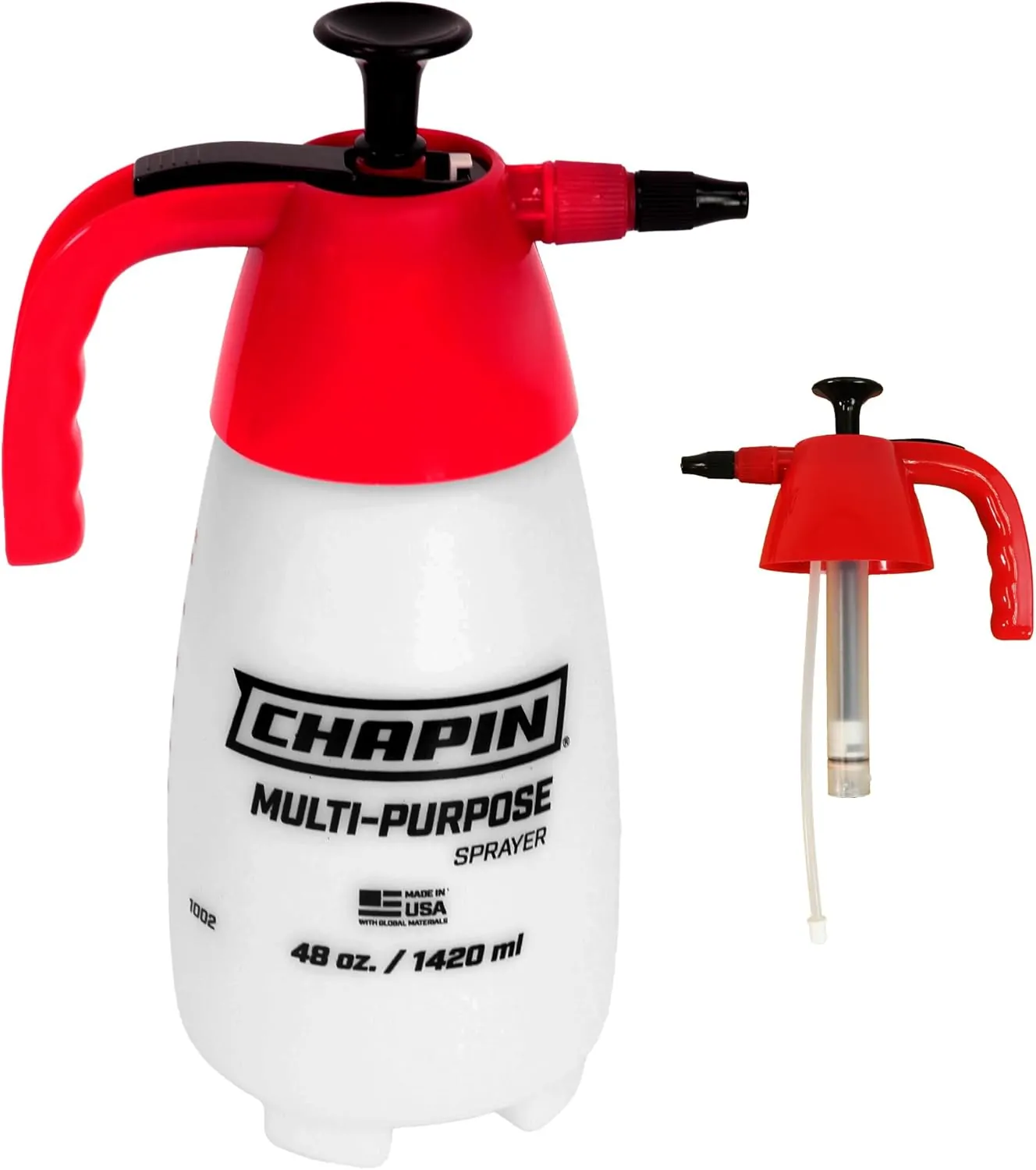
1002 48-Oz Hand Pump Sprayer for Lawn, Garden
- The CHAPIN 1002 48-Oz Hand Pump Sprayer for Lawn, Garden & Weed Control suited my need for light watering around transplanted chili seedlings.
- Its adjustable poly nozzle matched the controlled application I needed for suitable insecticidal soap around chilies, eggplant and citrus new growth.
- The wide opening and translucent 48-ounce tank suited my filling checks, while its anti-clog filter was designed to limit debris during raised-bed watering.
Features
| Feature | Details |
|---|---|
| Sprayer type | Handheld sprayer |
| Capacity status | Tank capacity known |
| Capacity in litres | 1.42 L |
| Capacity | 48 US fl oz / approximately 1.42 L |
| Pressure | Not provided |
| Coverage / range | Area coverage and measured reach not provided |
| Model | 1002 |
| ASIN | B00002N8OB |
| Selected variant | 48 ounces - Lawn & Garden; single sprayer |
| Capacity | 48 US fl oz; approximately 1.42 L |
| Power source | Manual compression pump; no battery or charger required |
| Pressure | Not provided |
| Flow rate | Not provided |
| Spray reach | Not provided; varies with pressure, pattern and conditions |
| Tank | Translucent poly tank; Amazon lists polypropylene |
| Colour | Red / white |
| Nozzle | Adjustable poly cone nozzle; stream to fine spray |
| Seals | Nitrile; not identified as Viton |
| Filter | In-tank anti-clog filter |
| Controls | Ergonomic handle with thumb-controlled shut-off |
| Opening | Wide-mouth tank; opening diameter not provided |
| Wand and hose | Separate wand and hose not specified |
| Motor, battery and charging | Not applicable; manually pumped |
| Runtime | Not provided; stored pressure requires manual pumping |
| Dimensions | Not provided |
| Empty weight | Not provided |
| Suitable jobs | Small watering jobs and compatible liquid fertiliser, weed-control or pest-control applications. A 1.42 L handheld tank suits spot work more than watering whole raised beds. Use only a treatment labelled for the crop, pest and application. |
| Chemical compatibility | Chapin lists model 1002 as compatible with insecticidal soap, neem oil and horticultural oil. This does not establish safety for every crop or concentration. Bleach compatibility: not confirmed. Solvent compatibility: not confirmed. Powder or suspension compatibility: not confirmed. Follow product labels and obtain manufacturer confirmation before using uncertain liquids. |
| Included and separately purchased items | One 48-ounce sprayer with tank, manual pump head, adjustable poly nozzle and in-tank filter. Treatment liquids are purchased separately. No battery or charger is required; spare accessories are not confirmed. |
| Nozzle and controls | The adjustable poly nozzle changes between a directed stream and a fine cone spray. Pump manually to build pressure, then operate the thumb shut-off. A trigger lock, pressure gauge and pressure-relief valve are not confirmed. |
| Cleaning and maintenance | Follow the model instructions and chemical label when emptying and rinsing. Keep the in-tank filter and nozzle clean and inspect seals for wear. Chapin advises against storing chemicals in the sprayer and warns that changing chemicals can cause cross-contamination even after cleaning. |
| Replacement parts and support | Contact Chapin at 1-800-444-3140, technical support option 1, for model 1002 parts and compatibility advice. Exact replacement-part numbers and current stock were not provided. |
| Warranty and returns | Chapin states a one-year limited warranty; exclusions and claim eligibility require the warranty terms. The supplied Amazon offer showed free returns within 30 days of receipt, subject to the order-specific conditions. |
| Practical limitations | Manual pumping is necessary and pressure changes as the tank discharges. The small tank needs frequent refills for broad coverage. No separate long wand, hose or measured spray reach is confirmed. Keep herbicide equipment separate from equipment used on edible crops. |
Expert Take
I wanted something easier than repeatedly squeezing a trigger bottle around my chilies and eggplant. However, bringing out a large sprayer for a few affected plants felt unnecessary. The Chapin 1002 handheld pump sprayer fitted these smaller jobs, so I tried it for six weeks alongside transplanting, pest checks and zinnia care.
How I Used and Tested Chapin 1002
I checked the 48-ounce lawn-and-garden model, approximately 1.42 litres. Chapin specified a translucent poly bottle, wide opening, adjustable poly nozzle, nitrile seals, anti-clog filter and thumb-controlled shut-off. It was manually pressurised, so there was no battery. A complete accessory packing list was unavailable; spare seals were therefore unconfirmed.
I began with one litre of clean water and watched the pump connection and nozzle over dry paper for ten minutes. No visible leaks appeared. Across 18 filling cycles, I checked the threads before tightening and released pressure according to the operating instructions before opening.
Water checks and targeted whitefly spraying
Three one-minute water collections produced approximately 140, 150 and 130 ml, averaging 140 ml per minute with my nozzle setting and pumping routine. Two one-litre fills took around 14 minutes of active spraying within a 35-minute working session. Inspection, pumping and refilling explained the difference.
| Published feature | My observation | Limit |
|---|---|---|
| Adjustable stream-to-cone nozzle | Covered individual leaves and exposed foliage | No pressure measurements |
| Anti-clog filter | No complete blockage across 18 fills | Used particle-free liquids |
| Ergonomic handle | Reduced repeated finger squeezing | Carrying still tired my hand |
For whiteflies on established chilies, I used Safer Brand Insect Killing Soap concentrate 5118 at its outdoor vegetable rate: 2.5 US fluid ounces per gallon of water, calculated as approximately 19.5 ml per litre. This formulation-specific rate required a locally authorised label. I excluded new transplants, tested a small area for 48 hours, then wetted affected leaf undersides during cool, calm weather using label-required protection.
Seven days later, fewer marked leaves carried live whiteflies. However, contact coverage, treatment and natural pest changes contributed together. Yellow sticky traps supported monitoring; they did not replace checking immature insects beneath leaves.
| Garden observation | Previous season | Current season |
|---|---|---|
| Whitefly-bearing chili leaves at follow-up | 7 of 10 after trigger spraying | 3 of 10 after targeted treatment |
| Transplants established after three weeks | 17 of 20 | 18 of 20 |
Weather, roots and watering could explain establishment differences; I claimed no yield improvement. Zinnia flowering continued without treatment, while eggplant jassids and citrus leaf miners received separate monitoring. Starter fertilizer followed soil needs and was not mixed with soap.
What I Liked and What Could Be Better
After six weeks, the bottle, base, threads and handle showed no visible cracks. The pump moved smoothly, accessible seals showed no obvious swelling, and the shut-off stopped spraying promptly. However, tilting sharply beneath eggplant leaves interrupted pickup, so I repositioned foliage instead.
One retailer’s owner question reported nozzles breaking after falls, which encouraged me to use a stable tray. Mine remained intact, but I did not drop-test it. One uneven pattern cleared after depressurising and rinsing the nozzle and filter.
- Benefit: small batches were easy to carry between plants.
- Limitation: short reach and repeated pumping slowed dense foliage work.
I found no visible corrosion on accessible metal after soap use and rinsing, although hidden components remained unchecked. Poly parts resisted ordinary rust but could still suffer chemical damage. I avoided unverified mixtures and herbicides, flushed the liquid path after treatment, and stored it empty, unpressurised and indoors.
How Chapin 1002 Compares With Other Options
My 500 ml trigger bottle remained easier for a few leaves. The Chapin reduced squeezing across several plants, whereas a one-gallon hose-and-wand sprayer offered greater reach. Watering raised beds or overseeded lawn patches still suited watering equipment better.
The supplied listing displayed $14.99, with a one-year limited manufacturer warranty. For occasional treatment, that seemed reasonable, although delivery and replacement-nozzle availability mattered. Frequent refilling would make larger equipment more practical.
After 18 fills, I found the Chapin 1002 useful for accessible plants and targeted applications. Its short trial was encouraging, but did not prove long-term durability. I preferred it for several plants; a trigger bottle suited tiny jobs, while a wand sprayer suited longer sessions.
Pros & Cons
| Pros | Cons |
|---|---|
| Compact tank suits small spot applications | Manual pumping is required |
| Adjustable nozzle provides stream and fine spray | Small capacity means more refills on larger areas |
| Wide opening makes filling and rinsing easier | Pressure and flow figures are not provided |
| Translucent tank helps show remaining liquid | Separate long-reach wand and hose are not specified |
| In-tank filter helps reduce nozzle clogging | Bleach and solvent compatibility are not confirmed |
Best Premium
3.9HARRIS
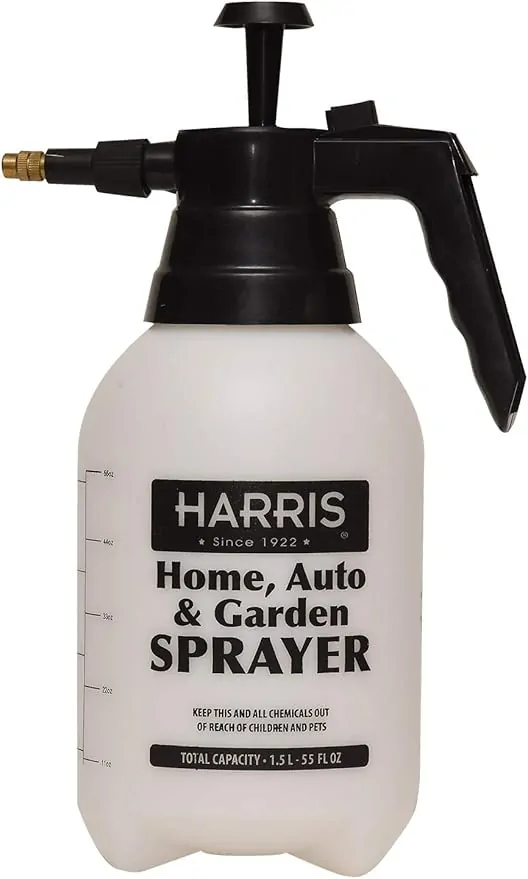
Continuous Hand Pump Pressure Sprayer for Home, Lawn,
- The HARRIS Continuous Hand Pump Pressure Sprayer for Home, Lawn, Garden, Car Detailing and More, 1.5L matched my need for watering onion seedlings.
- Its adjustable brass nozzle suited the gentle spray I needed around calendula and garlic beds, with the pattern checked before watering young plants.
- The marked tank matched my need to measure small water batches, while its locking trigger was designed to reduce repeated squeezing during nursery watering.
Features
| Feature | Details |
|---|---|
| Sprayer type | Handheld sprayer |
| Capacity status | Tank capacity known |
| Capacity in litres | 1.5 L |
| Capacity | 1.5 L / approximately 50.7 US fl oz |
| Pressure | 100 psi maximum listed by Amazon; not independently verified |
| Coverage / range | Measured spray reach and area coverage not provided |
| ASIN | B07TDS7GLX |
| Manufacturer | Harris |
| Manufacturer part number | MINISPRY |
| Amazon model number / UPC | 072725006681 |
| Selected package | One 1.5 L handheld pump sprayer |
| Tank capacity | 1.5 L |
| Material | Plastic; exact polymer not provided |
| Colour | Black, as listed |
| Power source | Hand-powered compression pump |
| Maximum pressure | 100 psi in Amazon technical table; manufacturer confirmation not found |
| Flow rate | Not provided |
| Spray reach | Not provided |
| Area coverage | Not provided |
| Nozzle | Adjustable brass nozzle, identified in Amazon directions |
| Spray patterns | Fine mist to direct stream |
| Trigger | Locking trigger for continuous spray under stored pressure |
| Tank markings | Side measurements and maximum fill line |
| Initial pumping | Amazon directions state at least 10–15 strokes to achieve pressure; not a calibrated pressure setting |
| Item weight | 9.12 oz / approximately 0.259 kg, Amazon-listed |
| Filled weight | Approximately 1.76 kg using listed item weight plus 1.5 L water; calculated estimate, actual maximum fill and liquid density may differ |
| Suitable jobs | Small watering tasks around onion nursery beds, garlic and winter flowers, plus compatible home, garden and automotive liquid applications. The 1.5 L tank is for spot work rather than bulk irrigation. Chemical and crop labels determine whether a treatment is suitable. |
| Chemical compatibility | The manufacturer makes a general chemical-resistance claim but does not provide a material-specific compatibility chart here. Bleach: compatibility not confirmed. Solvents: compatibility not confirmed. Powders or suspensions: compatibility not confirmed. Fertilisers and pesticides require confirmation for the exact formulation and concentration. Never assume that chemical resistance means all chemicals are safe. |
| Included and separately purchased items | One sprayer bottle with hand-pump head, adjustable nozzle and locking trigger; Amazon lists the included component as canister or container. Spare nozzles, seals, separate hose and wand are not specified. Treatment liquids are purchased separately; no battery or charger is needed. |
| Filling and spray control | Check that the internal fluid tube is securely connected, fill only to the top fill line and refit the head. The listing directs 10–15 initial pump strokes, followed by a test spray and nozzle adjustment. Follow the supplied instructions for the lock and safe pressure release; do not treat the listed maximum pressure as an operating target. |
| Cleaning and storage | Follow the supplied sprayer instructions and liquid label for emptying, rinsing and disposal. Clear the nozzle and inspect the fluid tube and seals if flow drops. Release pressure safely before opening or servicing, and keep the sprayer empty and protected during storage. Exact seal servicing intervals and approved lubricant are not provided. |
| Comfort and practical limits | The locking trigger is intended to reduce repeated hand squeezing, but the bottle still needs carrying and pumping. No shoulder strap or long-reach wand is specified. Use a gentle pattern and test with clean water before watering delicate seedlings. |
| Replacement parts and support | Specific spare-part numbers and availability were not provided. Contact PF Harris through its official support channels or telephone 800-637-0317 to confirm replacement nozzles, seals and pump components for MINISPRY. |
| Warranty and returns | A product-specific warranty period was not available in the supplied text or manufacturer page. The selected Amazon offer showed free 30-day refund or replacement, subject to order conditions and return eligibility. |
| Lubricant odour | Harris states that lubricant odour may be present in a new bottle to keep the pump working smoothly. This statement does not establish compatibility with every liquid or crop. |
Expert Take
I wanted to spray affected rose shoots without repeatedly squeezing my trigger bottle. However, my garlic and onion beds needed proper soil watering rather than light misting. I tried the HARRIS 1.5L Continuous Hand Pump Pressure Sprayer for four weeks, concentrating on small, targeted jobs around the roses.
How I Used and Tested HARRIS 1.5L
HARRIS confirmed a 1.5-litre bottle, measurement markings, adjustable mist-to-stream nozzle and locking trigger. The supplied listing identified a brass nozzle and suggested 10–15 initial pump strokes. Seal material, a complete accessory inventory and the pressure-release procedure remained unconfirmed, so I did not assume spare seals or a relief valve were included.
I checked the pickup connection, added one litre below the maximum fill line and began with 12 strokes. A ten-minute test over dry paper showed no visible leaks. I used the markings for approximate refilling, but measured treatment water separately; pump count alone could not establish pressure.
Water checks followed by rose treatment
During water checks, I restored pressure after roughly 40–60 seconds as the wider pattern weakened. Two one-litre fills gave approximately 12 minutes of active spraying within a 30-minute session. The lock reduced finger squeezing, although continuous spraying still required further pumping.
| Published feature | My observation | Comparison limit |
|---|---|---|
| Locking trigger | Maintained spray without holding the trigger | Pressure gradually declined |
| Mist-to-stream adjustment | Covered foliage or individual shoots | No droplet measurements |
| 1.5-litre capacity | Used manageable one-litre batches | Maximum working volume untested |
For visible rose aphids, I used Safer Brand Insect Killing Soap concentrate 5118 at its outdoor flower rate: 2.5 US fluid ounces per gallon of water, calculated as approximately 19.5 ml per litre. This formulation-specific rate required a locally authorised label. After a small-area test showed no marking over 48 hours, I wetted infested surfaces in cool conditions, avoiding open flowers and following label protection requirements.
I checked ten marked shoots seven days later. Aphid presence declined, but coverage, the treatment and natural pest changes contributed together. Rose black spot received separate monitoring and sanitation; insecticidal soap was not my disease treatment.
| Garden observation | Previous season | Current season |
|---|---|---|
| Aphid-bearing rose shoots at follow-up | 6 of 10 after patchy trigger spraying | 2 of 10 after targeted treatment |
| Open flowers on three roses during one count | 14 | 15 |
The flower difference could reflect pruning, weather and nutrition. I claimed no yield benefit: garlic and onion bulbs were still developing. Nitrogen followed crop stage and soil needs, while thrips monitoring, moisture checks and frost protection continued separately.
What I Liked and What Could Be Better
After 12 filling cycles, the bottle, base, neck threads and handle showed no visible cracking. The pump moved smoothly, pickup remained connected and the trigger lock released normally. Accessible seals showed no obvious swelling, but their material and internal condition remained unknown.
One uneven pattern cleared after safe depressurisation and nozzle rinsing. No visible corrosion appeared on the brass nozzle after diluted soap and immediate cleaning; this did not prove universal compatibility. I avoided solvents, bleach and mixed treatments, and kept herbicide equipment separate.
- Benefit: less repeated squeezing around several rose shoots.
- Limitation: carrying effort and short reach remained noticeable.
I flushed the liquid path after treatment and stored it empty and unpressurised indoors. Individual owner comments could not be verified; the retailer’s automated summary was insufficient evidence of reliability.
How HARRIS 1.5L Compares With Other Options
My 500 ml trigger bottle suited a few leaves, while the HARRIS reduced refill interruptions. A hose-and-wand sprayer offered better access inside larger roses. For garlic beds and lawn watering, my watering can remained more practical than repeated one-litre fills.
The supplied Amazon page showed $18.51, while HARRIS displayed $11.99 when checked. Delivery could change that comparison. For occasional spot treatment, the price seemed reasonable, provided replacement parts and clear operating instructions were available.
After four weeks, I found it useful for measured, targeted rose applications. However, 12 fills could not establish long-term durability. I preferred it for several accessible plants; a trigger bottle suited tiny jobs, and a wand sprayer suited longer sessions.
Pros & Cons
| Pros | Cons |
|---|---|
| Adjustable nozzle changes between mist and stream | Manual pumping is still necessary |
| Brass spray nozzle is identified in the listing instructions | Small tank needs frequent refills for large beds |
| Locking trigger reduces the need for continuous squeezing | Measured flow rate and spray reach are not supplied |
| Side markings assist filling and mixing | Seal material and specific chemical limits are not supplied |
| Manual pump needs no battery or charger | No separate long wand or hose is specified |
Best for Heavy Duty Use
4.2Itisll
2L Hand Pump Pressure Sprayer, 0.5 Gallon Garden
- The Itisll 2L Hand Pump Pressure Sprayer, 0.5 Gallon Garden Mister matched my need for gentle watering around cabbage and transplanted cauliflower seedlings.
- Its adjustable brass nozzle suited the controlled spray I needed around marigolds, while the translucent tank matched my need to check remaining water.
- The trigger lock was designed to reduce repeated squeezing during vegetable-bed watering, and the safety valve addressed pressure release before opening for refilling.
Features
| Feature | Details |
|---|---|
| Sprayer type | Handheld sprayer |
| Capacity status | Tank capacity known |
| Capacity in litres | 2 L |
| Capacity | 2 L; marketed as 0.5 gallon |
| Pressure | 43.5 psi maximum listed; safety valve releases above 2.5–3 bar (seller claims) |
| Coverage / range | Measured reach and area coverage not provided |
| ASIN | B07VLWCG3N |
| Model | FNB019101 |
| Capacity | 2 L in title; 0.5 gallon in tank-volume field. These are rounded marketing labels, not exact equivalents. |
| Tank material | Plastic; exact polymer not provided |
| Colour | White / Green |
| Power | Hand powered; no motor, battery or charger |
| Maximum pressure | 43.5 psi in current Amazon technical table; not independently tested |
| Safety valve | Seller states automatic release above 2.5–3 bar, approximately 36–43.5 psi; not a calibrated operating setting |
| Flow rate | Not provided |
| Spray reach | Not provided |
| Nozzle | Adjustable brass nozzle, mist to stream |
| Trigger | Sliding lock for continuous output under stored pressure |
| Tank visibility | Translucent |
| Filter | Seller describes a filter in the water tank |
| Seals | Material not provided; Viton not confirmed |
| Included items | One hand pump sprayer and instruction manual; seller A+ description additionally states spare sealing rings |
| Wand and hose | Separate wand or hose not specified |
| Dimensions | Not provided in current verified listing |
| Empty weight | Not provided |
| Filled weight | Total not provided; 2 L water adds approximately 2 kg, calculated estimate, subject to maximum fill line |
| Suitable jobs | Small watering tasks around cabbage, cauliflower seedlings and marigolds. The compact tank suits spot work rather than bulk watering or treating tall guava canopies. Spraying is separate from monitoring pests, installing netting and applying compost. |
| Chemical compatibility | The current listing prohibits flammable, corrosive, acidic, caustic and solvent-based liquids. Solvents: prohibited. Bleach: approval not confirmed; do not use without manufacturer confirmation and observe the corrosive/caustic restriction. Powders and suspensions: compatibility not confirmed. Any pesticide or fertiliser requires confirmation for the exact formulation and crop label; pest monitoring alone does not justify spraying. |
| Filling and controls | Fill below the maximum line, tighten the head, pump manually, then press the trigger. Twist the brass nozzle to change the pattern. Slide the trigger forward for continuous output while pressure lasts. Release all pressure before removing the head, and follow the supplied instructions rather than using the safety valve threshold as a target pressure. |
| Cleaning and maintenance | Rinse after use according to the liquid label and supplied instructions. Keep nozzle and filter clean, inspect seals and use compatible replacement rings. Store empty and unpressurised in a safe place away from children, heat and direct sunlight. A model-specific servicing interval and lubricant specification were not verified. |
| Package and separately purchased items | The listing specifies a hand pump sprayer and manual, and the seller description states an additional set of sealing rings. Treatment liquids are separate. No battery or charger is required. A separate long wand, shoulder strap and hose are not confirmed for this handheld variant. |
| Replacement parts | The brand storefront lists a 68-ounce / 0.5-gallon O-ring repair kit, code 117NA2. Confirm fit for model FNB019101 before purchasing. Current replacement nozzle, pump and filter availability was not verified. |
| Warranty and returns | The Amazon technical table states a one-year manufacturer warranty. Detailed exclusions and claim procedure were not supplied. Amazon displays a general voluntary 30-day return policy subject to exceptions; this is not confirmation of an active offer or order-specific return eligibility. |
| Practical limitations | Pressure falls during spraying and must be rebuilt by hand. The small tank needs refilling for extensive beds. No measured coverage, spray distance or flow figure is supplied. The two capacity labels are rounded, so follow the tank maximum line. |
Expert Take
I wanted something easier than repeatedly squeezing a trigger bottle around my cabbage and cauliflower. However, watering whole vegetable beds remained a different job. I tried the ITISLL 2L manual sprayer, ASIN B07VLWCG3N, for four weeks, focusing on accessible foliage while continuing netting, mulching and pest inspections.
How I Used and Tested ITISLL 2L
The listing confirmed a translucent 2L tank, adjustable brass nozzle and locking trigger. Two litres equalled approximately 0.53 US gallon, making “0.5 gallon” rounded wording. Shared product information mentioned a filter, spare seals and a 2.5–3 bar automatic relief threshold, but exact-variant confirmation was incomplete. Seal material and the full accessory inventory remained unverified.
I used one-litre batches below the maximum line and checked the bottle, threads, pickup connection and nozzle over dry paper for ten minutes. No visible leaks appeared. I followed operating directions rather than using pump count as a pressure measurement; the advertised relief threshold was not an operating target.
Water checks and cabbage coverage
Three one-minute water collections measured approximately 150, 140 and 160 ml, averaging 150 ml per minute with my nozzle setting and pumping routine. Two fills provided around 13 minutes of active spraying during a 32-minute session. The wider pattern weakened after roughly 45–60 seconds, requiring further pumping despite the trigger lock.
| Published feature | My observation | Limit |
|---|---|---|
| Brass mist-to-stream nozzle | Changed between wider coverage and individual leaves | No droplet measurements |
| Locking trigger | Reduced finger squeezing | Did not maintain pressure |
| Translucent 2L tank | Remaining liquid was visible | Used measured one-litre batches |
For a crop-treatment comparison, I checked Safer Brand Caterpillar Killer II 5163, containing Bacillus thuringiensis. Its cabbage-worm directions specified one tablespoon per US gallon, calculated as approximately 3.9 ml per litre of water. However, compatibility with this sprayer’s liquid restrictions was unconfirmed, so I used separate suitable equipment for treatment and tested ITISLL foliage coverage with clean water.
The treatment required feeding caterpillars to eat covered foliage, with regular agitation. I monitored diamondback moths separately rather than assuming that this label established their control. At follow-up, treatment, insect netting and removal of damaged leaves all influenced observations.
| Garden observation | Previous season | Current season |
|---|---|---|
| Cabbages with fresh feeding holes among ten checked | 7 before improved netting | 3 after netting and targeted treatment |
| Cauliflower transplants established after three weeks | 17 of 20 | 18 of 20 |
These differences did not prove a sprayer benefit. Compost, moisture, weather and transplant quality also mattered. Marigold flowering continued without spraying, guava fruit-fly checks remained separate, and four weeks provided no reliable yield comparison.
What I Liked and What Could Be Better
After 12 water-filled cycles, the bottle, base, neck threads and handle showed no visible cracks. The pump moved smoothly, pickup stayed connected, trigger lock released normally and accessible seals showed no obvious damage. Sharp tilting interrupted pickup beneath cabbage leaves, while carrying became tiring after ten minutes.
One uneven pattern cleared after safe depressurisation and nozzle rinsing. No visible brass corrosion appeared, but water-only checks established nothing about chemical resistance. I avoided flammable, corrosive, acidic, caustic and solvent-based liquids, kept herbicide equipment separate, and stored the flushed sprayer empty and unpressurised indoors. Internal valve condition and spare-seal fit remained unchecked.
- Benefit: manageable batches and visible liquid level.
- Limitation: repeated pumping and limited underside reach.
How ITISLL 2L Compares With Other Options
Compared with my 500 ml trigger bottle, the larger batch reduced refilling. A hose-and-wand sprayer reached beneath dense cabbage more comfortably, whereas a watering can suited beds better. Individual owner comments could not be verified, so retailer-generated summaries did not establish reliability.
The exact product remained unavailable on Amazon when checked, with no current purchase price to assess. For this 2L format, I would weigh replacement seals, clear compatibility guidance and availability before judging value.
Across 12 fills, I found ITISLL useful for small water-spraying jobs. Chemical applications needed clearer compatibility confirmation. A trigger bottle suited a few plants; a wand sprayer made more sense for dense beds and longer sessions.
Pros & Cons
| Pros | Cons |
|---|---|
| Brass nozzle adjusts from mist to stream | Currently unavailable on Amazon |
| Trigger lock reduces repeated squeezing | No current Amazon price is displayed |
| Translucent tank shows remaining liquid | Manual pumping is necessary |
| Safety valve provides pressure release | Small tank needs frequent refills on larger beds |
| Seller states spare sealing rings are included | Corrosive acidic caustic and solvent-based liquids are prohibited |
Best for Beginners
4.2Futone
0.5 Gallon Hand Held Garden Sprayer Water Pump
- The Futone 0.5 Gallon Hand Held Garden Sprayer Water Pump Pressure Sprayers for Lawn and Garden - (2.0L White) suited my winter vegetable watering needs.
- Its adjustable brass nozzle matched the controlled watering I needed around cauliflower, cabbage and spinach, while the translucent bottle made remaining liquid visible.
- The non-slip handle and continuous-spray lock addressed carrying and repeated squeezing during vegetable watering, while the relief valve provided a pressure-release feature for refilling.
Features
| Feature | Details |
|---|---|
| Sprayer type | Handheld sprayer |
| Capacity status | Tank capacity known |
| Capacity in litres | 2 L |
| Capacity | 2.0 L White / marketed as 0.5 gallon |
| Pressure | Automatic safety relief valve; pressure rating and release threshold not provided |
| Coverage / range | Measured range and area coverage not provided |
| ASIN | B087NB2NH6 |
| Selected variant | 2.0L White; handheld sprayer |
| Capacity | 2.0 L in title; marketed as 0.5 gallon |
| Capacity discrepancy | Listing also states 4.5 pints; these labels are not exact equivalents. Follow the actual maximum fill line. |
| Tank material | PP plastic, seller specification |
| Colour | White |
| Dimensions | 12.2 x 5.11 inches, seller description; approximately 31.0 x 13.0 cm |
| Power source | Manual compression pump |
| Nozzle | Fully adjustable brass nozzle |
| Safety valve | Automatic pressure relief; threshold not provided |
| Continuous spraying | Lock for continuous spraying under stored pressure |
| Grip | Non-slip handle and cover |
| Tank visibility | Translucent bottle |
| Pressure | Not provided |
| Flow rate | Not provided |
| Spray reach | Not provided |
| Nozzle count | One adjustable nozzle described; additional tips not confirmed |
| Seal material | Not provided; Viton not confirmed |
| Filter | Not provided |
| Wand and hose | Separate wand and hose not specified |
| Suitable jobs | Small watering jobs around cauliflower, cabbage, peas, spinach and calendula, plus greenhouse and household uses stated by the seller. This tank suits spot work rather than bulk irrigation. It does not replace pest monitoring, crop supports, compost application or frost protection. |
| Chemical compatibility | No model-specific compatibility chart was supplied. Bleach: compatibility not confirmed. Solvents: compatibility not confirmed. Powders and suspensions: compatibility not confirmed. Pesticides, fertilisers and cleaning liquids require confirmation for the formulation and concentration. PP tank construction alone does not establish compatibility of seals or nozzle. Do not assume a treatment is approved for edible crops. |
| Controls and use | Fill only to the actual permitted line and retain air space. Secure the pump head, pressurise manually and test with clean water before adjusting the nozzle. Continuous-spray locking works only while stored pressure remains. Follow the supplied instructions for safe relief and fully release pressure before opening. |
| Cleaning and maintenance | Empty and rinse according to the liquid label and sprayer instructions, clean the nozzle gently and inspect seals for wear. Keep herbicide equipment separate from equipment used on edible vegetables. Store empty and unpressurised away from frost and direct heat. Model-specific lubricant and service intervals were not provided. |
| Included and separately purchased items | The listing describes the sprayer bottle, manual pump, adjustable brass nozzle, continuous-spray lock, non-slip grip and safety relief valve. Spare seals, extra nozzles, hose and wand were not confirmed. Application liquids are separate; no battery or charger is needed. |
| Replacement parts | Model-specific spare nozzles, seals, valves and pump availability were not verified. Confirm parts compatibility with Futone or the seller before buying replacements. |
| Warranty and returns | The seller states that unsatisfied buyers may request a refund within 30 days of purchase. Longer warranty terms and exclusions were not provided. Amazon displays its general voluntary 30-day return policy with conditions; order-specific terms must be checked when an offer becomes available. |
| Practical limitations | Manual pumping and small capacity limit large-area work. No numeric pressure, measured reach, flow or empty weight was supplied. The capacity labels conflict, so the actual fill line governs use. No long-reach attachment is confirmed for this variant. |
Expert Take
I wanted gentler control around young winter vegetables than my watering can provided, without repeatedly squeezing a trigger bottle. I tried the FUTONE 2.0L White sprayer, ASIN B087NB2NH6, over four weeks around cauliflower, cabbage, peas and calendula, while keeping normal bed watering separate.
How I Used and Tested FUTONE 2L
The supplied listing described PP construction, a translucent bottle, adjustable brass nozzle, non-slip handle, continuous-spray lock and automatic safety relief valve. Its capacity descriptions conflicted: 2 litres equalled approximately 0.53 US gallon or 4.23 US pints, rather than exactly “0.5 gallon” or “4.5 pints.”
I used measured one-litre batches below the maximum fill level. A ten-minute water check over dry paper showed no visible leaks. Seal material, calibrated markings, accessory contents and detailed valve instructions remained unconfirmed, so I assumed neither spare seals nor a filter. I did not test the relief threshold by overpumping.
Water control and crop-care decisions
Three one-minute collections produced approximately 130, 150 and 140 ml, averaging 140 ml per minute under my nozzle setting and pumping routine. Two fills gave roughly 14 minutes of active spraying within a 30-minute session. The pattern weakened after about 45–60 seconds, so the lock reduced finger effort without removing further pumping.
| Listing feature | My observation | Comparison limit |
|---|---|---|
| Adjustable nozzle | Changed between wider spray and narrow stream | No droplet measurements |
| Continuous-spray lock | Reduced repeated squeezing | Pressure still declined |
| Translucent tank | Remaining water was visible | Graduations were not verified |
For newly planted cauliflower, I directed clean water at the soil in short passes, checking moisture beneath the surface rather than misting leaves and assuming roots were watered. The wider pattern caused no visible soil displacement around six plants, although larger beds still needed my watering can.
For cabbage caterpillars, I checked Safer Brand Caterpillar Killer II 5163. Its published vegetable rate was one tablespoon per US gallon, calculated as approximately 3.9 ml per litre of water. However, FUTONE compatibility remained unverified, so I did not put it through this sprayer. Any treatment required the locally authorised label and suitable equipment; clean-water coverage could not establish chemical compatibility.
| Garden observation | Previous winter | Current winter |
|---|---|---|
| Cauliflower transplants established after three weeks | 17 of 20 | 18 of 20 |
| Spinach harvested from equal bed areas | About 1.8 kg | About 2 kg |
Compost, weather, frost protection and watering could explain these differences. I claimed no sprayer-driven yield or flowering improvement. Pea aphids and spinach leaf spots received separate inspection, while pea supports helped me move between plants without dragging foliage.
What I Liked and What Could Be Better
After 12 filling cycles, the bottle, base, neck threads and handle showed no visible cracking. The pump moved smoothly, pickup connection stayed secure, and trigger lock released normally. Accessible seals showed no obvious damage, but internal wear and valve performance remained unchecked.
One uneven pattern cleared after depressurisation and nozzle rinsing. No visible brass corrosion appeared after water use; this established nothing about pesticide resistance. I flushed the liquid path and stored it empty, unpressurised and indoors. The exact pressure-release procedure needed confirmation before chemical use.
- Benefit: controlled watering around small plants.
- Limitation: carrying effort and repeated pumping.
How FUTONE 2L Compares With Other Options
My 500 ml trigger bottle suited a few plants, whereas one-litre FUTONE batches reduced refilling. A hose-and-wand sprayer offered better access beneath cabbage foliage. Individual owner experiences could not be verified; automated summaries and video titles were insufficient evidence of reliability.
The supplied listing showed this 2L variant unavailable, and live price verification failed. I therefore could not give a current purchase price. Current warranty and return terms also remained unconfirmed; promotional “risk-free” wording was not enough to establish coverage.
Across four weeks, I found FUTONE useful for small, gentle watering jobs. However, chemical compatibility needed clearer documentation. I preferred a trigger bottle for tiny tasks and a watering can or wand sprayer for larger workloads.
Pros & Cons
| Pros | Cons |
|---|---|
| Adjustable brass nozzle provides spray control | Currently unavailable on Amazon |
| Translucent bottle makes liquid levels visible | No current Amazon price is displayed |
| Non-slip handle assists handling | Manual pumping is required |
| Trigger lock supports continuous spraying | Small tank needs frequent refilling for large beds |
| Automatic safety relief valve is included | Chemical compatibility and pressure specifications are not supplied |
Which Handheld Sprayer Type Suits You?
Handheld garden sprayers are available with different operating systems. Understanding their working principles helped me compare them fairly instead of treating all handheld equipment as interchangeable.
Trigger Sprayers for Small Garden Tasks
A trigger sprayer generally uses a small hand-operated pump mechanism. Each squeeze moves liquid through the pump and towards the nozzle. Depending on the design, internal check valves help control liquid movement and prevent reverse flow.
I found this design suitable for occasional, short tasks because it required little preparation and could be stored easily after cleaning. However, continuous squeezing was less attractive for longer spraying sessions. The output could also vary with the speed and force of each squeeze.
For someone maintaining a few flower pots or applying plain water to a small number of plants, a well-made trigger bottle may be sufficient. I would not spend extra on a pressure sprayer unless the additional capacity or more continuous output solved a genuine problem.
Manual Pressure Sprayers for Regular Work
A manual compression sprayer operates differently. Its hand pump increases air pressure inside a pressure-rated tank, and that pressure pushes liquid through the outlet when the valve is opened. As spraying continues, the internal pressure normally decreases, so the user must pump again.
This system reduces repeated trigger pumping during spraying, although it introduces the need to maintain pressure safely. The pressure rating, maximum fill level and relief mechanism therefore become important purchasing considerations.
I considered this type more suitable for several vegetable beds, small ornamental areas and accessible foliage where controlled, repeated applications were needed. However, I did not expect a manual pressure sprayer to maintain exactly the same output throughout an entire tank without pressure regulation.
Battery Sprayers for Repeated Applications
Battery-powered handheld sprayers use an electric motor and pump to move liquid. Their performance depends on the pump, battery, control system and nozzle arrangement. Some maintain a relatively steady output under suitable conditions, while others have noticeable variations as operating conditions change.
The attraction for me was reduced manual pumping. However, a battery model also required charging, protection of electrical components and eventual battery replacement. I checked whether the battery was removable, whether the manufacturer supplied replacement parts and whether the pump could handle the intended formulation.
For occasional spraying, I did not see battery power as an automatic improvement. For repeated jobs where hand fatigue was a concern, it could justify the extra cost, provided the complete equipment was suitable for the application.
| Sprayer Type | Suitable Work | Main Limitation |
|---|---|---|
| Trigger bottle | Small pots and occasional spot work | Repeated squeezing and limited volume |
| Manual pressure sprayer | Vegetable beds and small garden areas | Requires pumping and pressure control |
| Battery-powered handheld | Frequent or repetitive spraying | Charging, battery care and higher complexity |
My decision was to match the operating system with the length and frequency of the work. A simpler model with a reliable nozzle could be more useful than an advanced model with unnecessary features.
How Handheld Garden Sprayers Actually Work
Understanding the internal mechanism helped me identify what could go wrong before buying. A sprayer is not just a tank connected to a nozzle. Its pump, seals, valves, filter and discharge components work together to produce the required output.
In a manual compression sprayer, the pump introduces air into the tank. The compressed air provides the force that moves liquid towards the outlet. A dip tube draws liquid from the tank, while a trigger valve controls discharge. The nozzle then shapes the liquid into a stream, cone or other available pattern.
Pressure and nozzle size influence flow and droplet formation. Higher pressure can increase output and create finer droplets with some nozzle designs, but the exact response depends on the nozzle. Very fine droplets are more vulnerable to drift, so maximum pressure is not necessarily the safest or most effective setting.
I therefore compared the operating instructions instead of relying on advertising terms such as powerful or high pressure. I wanted to know the permitted operating pressure, how the sprayer was pressurised, whether a pressure-relief valve was fitted and how the tank should be opened after use.
For battery sprayers, I also checked whether the pump was designed for continuous or intermittent operation. A motorised pump may reduce physical effort, but it does not remove the need for calibration, cleaning and safe chemical handling.
Choosing Capacity Without Carrying Excess Weight
Tank capacity was one of the first specifications I investigated because it directly affected handling. A small tank meant more refilling, while a large tank increased the weight carried in my hand.
For example, one litre of water weighs approximately one kilogram. A sprayer containing two litres of water therefore carries about two kilograms of liquid before adding the weight of the tank, pump and other components. Actual working weight depends on the liquid density and the amount filled.
I also learned that a tank’s advertised total volume might not be its permitted working fill. Some compression sprayers need an air space above the liquid. Filling beyond the manufacturer’s marked level can interfere with proper operation and safety.
In my illustrative garden planning, a smaller container suited a few marigolds and young chilli plants. A larger handheld model appeared more convenient for repeated work across several vegetable beds, but I considered whether carrying it at arm’s length would become tiring.
For regular use, I recommend lifting the empty model in the shop and estimating its weight when filled to the permitted level. Check the handle position, balance and whether the tank can stand upright securely. These practical details often matter more than a small difference in advertised capacity.
Which Materials Offer Better Durability?
I paid close attention to construction because the tank was only one part of the equipment. The pump, seals, trigger, nozzle and connections all needed to remain reliable under the intended operating conditions.
Tank Construction and Pump Quality
Many handheld garden sprayers use plastic tanks, but the exact polymer and its resistance to sunlight, impact and chemicals can differ. I looked for clear material information, consistent wall construction, sound moulding and a stable base.
Translucent tanks with readable volume markings were useful because they helped me estimate the remaining liquid. However, I did not assume that a thick-looking tank was automatically stronger or chemically resistant.
The pump deserved similar attention. During an inspection, I checked whether the handle moved smoothly, whether its mounting appeared secure and whether the manufacturer supplied instructions for servicing the mechanism. A removable pump assembly could simplify maintenance, provided its seals and replacement parts were available.
Seals, Nozzles and Trigger Durability
Seals are small components with a major responsibility. They prevent leakage and help maintain pressure. Common sealing materials include different elastomers, but their chemical resistance varies. For example, an EPDM seal and an FKM seal may respond differently to oils, solvents and other formulations.
I never treated a material name alone as proof of compatibility. The complete formulation, concentration, temperature and manufacturer’s compatibility guidance all matter.
Nozzle construction also affected my decision. Plastic nozzles can be perfectly suitable for many garden applications, while metal components may offer advantages in particular designs. Brass is not automatically compatible with every chemical, and metal parts may still corrode or suffer wear.
I inspected the trigger movement, connection threads and nozzle adjustment. A nozzle that could be replaced separately was attractive because a damaged spray tip would not necessarily mean replacing the whole sprayer.
- Check that the tank has no visible cracks, distortion or poor seams.
- Confirm that seals and nozzles are available as replacement parts.
- Inspect the pump, trigger and connections for secure assembly.
- Ask for documented chemical compatibility rather than relying on appearance.
My main conclusion was that good construction should be judged as a complete system. A strong tank cannot compensate for an unreliable valve, and an expensive nozzle cannot correct a leaking pump seal.
Why Chemical Compatibility Matters So Much
Chemical compatibility was one of the most important subjects in my buying research. A sprayer suitable for plain water may not be suitable for an insecticide, fungicide, fertiliser solution or oil-based formulation.
Before selecting equipment for foliar feeding, I checked the intended product label and the sprayer manufacturer’s instructions. I wanted confirmation that the tank, seals, pump, hose where fitted and nozzle could tolerate the formulation.
For example, a water-soluble fertiliser and an oil-based horticultural product may place different demands on the sprayer materials. Some formulations may affect seals, leave deposits or require particular cleaning procedures.
Suspended particles can also block small passages if the equipment is unsuitable or the mixture is not prepared according to instructions. I avoided assuming that a sprayer labelled chemical resistant could handle every garden product. The term is too broad without a stated compatibility range.
When planning work around tomatoes, chillies and ornamentals, I also checked whether the treatment itself was approved for the crop and purpose. Equipment compatibility and crop compatibility are separate questions. A sprayer may safely hold a formulation even when that formulation is not permitted for a particular plant.
For herbicides, I preferred dedicated, clearly labelled equipment rather than using the same sprayer for edible crops. Even careful cleaning may not make every sprayer suitable for switching between herbicides and sensitive plants.
My advice is to confirm compatibility before paying, especially if you expect to use more than plain water. If the manufacturer cannot identify the materials or provide appropriate guidance, that uncertainty should influence your decision.
How I Compared Nozzles and Pressure
The nozzle determined how the liquid reached the plant, so I treated it as a functional component rather than a decorative accessory. Different nozzles can produce different spray patterns, droplet sizes and flow rates.
For close work around flower pots, I wanted a controlled pattern that did not unnecessarily wet surrounding surfaces. For foliage applications, I considered the coverage required by the product label, the shape of the plant and the risk of drift.
A fine mist may look attractive, but it is not suitable for every treatment. Fine droplets can drift away from the target, especially in moving air. A coarse pattern may reduce drift in some situations but may not provide the coverage required for a particular labelled application.
Before buying, I checked whether the nozzle adjusted smoothly, whether its pattern was documented and whether replacement tips were available. I also looked for a filter or strainer where appropriate, because blocked passages can cause irregular output.
For young fruit trees, reach was another limitation. A handheld sprayer could serve accessible lower foliage, but it was not a practical replacement for specialised equipment on tall trees. I avoided selecting a powerful jet simply to reach high branches because doing so could create unsafe exposure and poor application control. My recommendation is to select the nozzle according to the application requirement rather than choosing the model with the largest number of spray settings.
Where Should You Buy Your Sprayer?
Once I understood the technical requirements, I compared local garden suppliers, agricultural equipment shops, manufacturer websites and reputable online sellers. Each purchasing route had advantages, but none removed the need to verify the exact model.
At a physical shop, I could inspect the handle, tank markings, nozzle and pump assembly. I could also ask whether a clean-water demonstration was permitted. I did not expect a seller to allow chemical spraying or extended equipment trials before purchase.
Online shopping offered more opportunity to compare documentation and package contents, but it required careful attention to the seller’s identity, return conditions and regional warranty. Product photographs alone were not sufficient evidence of construction quality or included accessories.
For a practical purchase comparison, I checked the complete delivered cost rather than only the advertised price. Shipping, replacement nozzles, batteries and servicing could change the long-term value.
| Buying Check | What to Verify |
|---|---|
| Exact model | Manufacturer name, model number and current documentation |
| Package contents | Nozzles, seals, accessories, charger if applicable and manual |
| Safety | Pressure rating, relief procedure and operating restrictions |
| Compatibility | Approved formulations and material information |
| Seller | Identity, reputation, returns and proof of purchase |
| Long-term cost | Replacement parts, batteries, warranty and service availability |
I also asked whether the warranty applied in my region. An imported sprayer might have an attractive specification but limited local support. For equipment used regularly, replacement seals and nozzles could be more valuable than a feature I would rarely use.
After selecting a model, the next important stage was delivery inspection. I would not treat a purchase as successful until the equipment had been checked for damage, missing components and correct operation.

How I Prepared My Sprayer
After the illustrative purchase, my first job was to read the instructions and examine the delivered equipment. I checked the tank, pump, seals, nozzle, handle and any supplied accessories against the packing information.
I then planned a clean-water test before introducing any garden treatment. This allowed me to examine the spray pattern and operating behaviour without exposing plants or people to a chemical formulation.
For a manual compression model, I filled the tank only to the permitted level, secured the pump and pressurised it according to the manufacturer’s instructions. I checked for visible leakage without touching pressurised joints or attempting to tighten them while under pressure.
During a short illustrative test, I sprayed into a suitable collection container and observed the pattern at different stages of pressure loss. I wanted to understand when pumping was needed and whether the trigger stopped the flow properly.
For a battery model, I would also check charging instructions, electrical protection and any restrictions on dry running. The first test should follow the particular model’s manual rather than a generic procedure.
Calibrating Before Treating Garden Plants
Calibration tells us how much liquid the equipment applies under actual working conditions. It is particularly important when using a product with an application rate specified by area.
I began by using clean water, a measuring container and a stopwatch. With the intended nozzle setting and a repeatable operating technique, I measured the amount discharged during a known period.
For example, if a test collected 300 millilitres in 30 seconds, the calculated flow rate would be 600 millilitres per minute. This is a mathematical illustration, not a measured result from a particular sprayer.
Flow rate alone does not establish the application rate over an area. For that, I also needed to measure the treated area, my working speed or treatment time, and the actual liquid used. I repeated the test to check consistency.
If the measured application volume did not match the labelled requirement, I would adjust the technique or suitable equipment settings and calibrate again. I would not compensate by guessing a stronger chemical mixture.
University extension guidance explains why calibration is important: incorrect output can result in excessive or insufficient application. Although published methods often demonstrate backpack or larger sprayers, the same principle of measuring actual output applies to handheld equipment, with a method adapted to its application pattern.

Using Handheld Sprayers Around Garden Plants
Once the clean-water checks were complete, I considered how the sprayer would behave during ordinary gardening. I separated the practical handling trial from any chemical treatment because the equipment test did not establish that a pesticide or fertiliser was suitable for a crop.
Working Around Vegetables and Flowers
In a learning trial around spring tomato seedlings and marigold pots, I used clean water to practise directing the nozzle towards the intended foliage without unnecessarily wetting adjacent plants. I worked in short sessions and observed whether the sprayer was comfortable to hold and whether its pattern remained manageable.
The main benefit was learning how tank weight and nozzle direction affected handling. A small sprayer allowed me to move easily between pots, but it still required attention to the spray direction and nearby surfaces.
For established summer chillies and tomatoes, I considered the extra foliage and tighter spacing between plants. I wanted a pattern that could reach accessible leaves without excessive runoff. However, the amount of liquid needed for an actual treatment would depend on the product label, crop growth and calibrated application method.
When applying a permitted foliar fertiliser, I would confirm the product’s crop instructions, concentration, timing and compatibility with the sprayer. I would not assume that a fine mist or a particular dilution was universally suitable.
Working Around Lawns and Fruit Trees
A handheld sprayer can be useful for carefully directed work around small lawn patches, but I would not choose one for repeated broad coverage of a large lawn. The small tank and limited output can make uniform treatment difficult.
For a young lemon or pomegranate tree, I considered reachable lower foliage rather than the complete canopy of a mature tree. I practised positioning the nozzle with clean water while keeping my body outside the spray path.
These trials helped me understand the equipment’s practical limits. A handheld sprayer was convenient for small, accessible areas, but larger jobs could justify a backpack or another appropriate application system.
- Use a controlled pattern suited to the intended task.
- Avoid spraying during unsuitable wind or weather conditions.
- Keep people, pets and non-target plants away from the application area as required.
- Follow crop-specific product labels rather than general dilution advice.
I also learned that observing wet leaves does not prove effective pest control or improved plant growth. Those outcomes depend on the product, pest, timing, coverage and many other factors beyond the sprayer itself.
What Makes Handheld Spraying Safe?
Safety was an essential part of my equipment decision because handheld spraying takes place close to the operator. The nozzle, tank and connections may be near the face, hands and clothing, particularly when working among dense plants.
Before using a pesticide, I checked its label for required protective equipment, approved uses, environmental precautions and re-entry instructions. Gloves and eye protection may be required, but the exact protective clothing must follow the product label and applicable regulations.
I never opened a pressurised tank without following its depressurisation procedure. Releasing pressure safely before removing the pump, servicing a nozzle or opening the tank helps reduce the risk of unexpected discharge.
Mixing also required care. I used only verified label directions and suitable measuring equipment. I did not mix different chemicals simply because they were individually used in gardening. Tank mixing requires compatibility and label approval.
When working around flowering plants, I considered pollinators and non-target insects. When working near drains or water sources, I considered runoff and contamination. The correct decision sometimes meant postponing an application rather than trying to finish the job immediately.
The US Environmental Protection Agency provides guidance on pesticide labels, and university extension programmes offer practical training on measuring, spraying and cleaning equipment safely.
Cleaning and Maintaining My Garden Sprayer
Cleaning became part of my buying decision because a sprayer that is difficult to maintain can become unreliable even when its initial performance is satisfactory.
After an illustrative clean-water session, I checked how easily the tank could be emptied, the nozzle inspected and the external surfaces wiped. For chemical applications, the correct cleaning procedure must come from the pesticide label and sprayer manufacturer.
I avoided assuming that a plain-water rinse could remove every formulation. Some products require particular cleaning agents or procedures, and contaminated rinsate must be managed according to the label and local requirements.
I also inspected the seals, pump and nozzle for visible wear. A damaged seal can cause leakage or pressure loss, while a partly blocked nozzle can change the spray pattern and output.
For a realistic durability-learning exercise, I considered repeated inspections over several weeks of clean-water use. Such observations could reveal obvious leakage, loose connections or operating problems, but they could not establish long-term resistance to sunlight, chemicals or corrosion.
For storage, I followed the manufacturer’s guidance on cleaning, drying, pressure release and temperature. I kept the equipment away from children and pets and avoided storing it with unidentified liquid inside.
Battery-powered models required additional attention to charging and storage instructions. I did not assume that every battery should be stored fully charged or fully discharged because the correct procedure depends on its design and manufacturer guidance. My maintenance priorities were simple:
- Inspect seals, nozzles and connections regularly.
- Clean according to the formulation and equipment instructions.
- Never use a damaged or leaking pressure tank.
- Store equipment safely and protect it from unsuitable temperatures.
- Replace worn components with compatible manufacturer-approved parts.
Good maintenance can support reliable operation, but it cannot correct a fundamentally unsuitable material or unsafe design. That is why I considered cleaning access and spare parts before purchasing.

Understanding Repair Costs and Long-Term Value
After comparing the purchase price, I considered what would happen if the sprayer developed a problem. A low-cost model could still be economical for occasional use, but frequent replacement would reduce that advantage.
I looked for replaceable nozzles, seals, pump assemblies and trigger components. I also checked whether the manufacturer supplied diagrams or maintenance instructions. Repairability mattered more for equipment that I expected to use regularly.
For battery models, I included battery and charger replacement in the ownership calculation. For manual models, I focused more on pump seals, pressure-relief components and nozzle wear.
Warranty terms were another consideration. I checked what was covered, whether ordinary wear parts were excluded and how a claim would be handled in my region.
My recommendation is to compare the total cost of keeping the sprayer operational rather than selecting the cheapest initial price. However, I would not pay a large premium for spare-part availability if the expected workload was very small and the simpler model was otherwise safe and suitable.
Which Handheld Sprayer Should You Choose?
After working through these decisions, I understood that there was no single handheld garden sprayer suitable for every gardener. The right purchase depended on the work I wanted to complete and the limitations I was prepared to accept.
For a few pots and occasional plain-water spraying, I considered a reliable trigger bottle sufficient. For repeated work across small vegetable beds, a manual pressure sprayer offered a useful balance of capacity and reduced trigger effort. For frequent spraying where pumping fatigue was important, a battery-powered model deserved consideration, provided its added cost and maintenance were justified.
I also learned that a handheld sprayer should not be forced into work beyond its intended capacity. Large lawns, tall fruit trees and extensive crop areas may require different equipment for safe and consistent application.
My original frustration was not simply that basic sprayers were inexpensive or small. It was that I had expected one simple bottle to perform several different jobs equally well. Once I considered workload, pressure, nozzle design, chemical compatibility and maintenance together, the buying decision became much clearer.
If you are choosing your first handheld garden sprayer, begin with your regular garden activities. Check the actual equipment specifications, inspect its construction, confirm compatibility and understand its safety requirements before paying. After purchase, use clean water to test and calibrate it before attempting any labelled treatment.
A carefully selected handheld sprayer will not automatically improve crop growth or solve every pest problem. However, suitable equipment can make small-scale garden applications more manageable, repeatable and safer when it is used correctly. That is the practical improvement I would look for before spending money on an upgrade.
Frequently Asked Questions (FAQs)
1. What size of handheld sprayer is suitable for my garden size?
The ideal handheld sprayer size depends on different factors, including your garden area, the plants you grow, and the type of spraying work you need to perform. The following guidelines can help you select the correct size:
Small Gardens (Up to 500 sq. ft): A 1-2 gallon sprayer is suitable for spot treatments and focused applications.
Medium Gardens (500 – 2,000 sq. ft): A 2-3 gallon sprayer is a better choice for regular tasks such as fertilizing and pest control.
Large Gardens (2,000 sq. ft and above): A 4-gallon or larger sprayer provides better coverage for bigger areas.
Task Specificity: Choose the sprayer capacity according to your gardening activities – smaller tanks work well for targeted applications, while larger tanks are better for wider coverage.
Material and Durability: Select sprayers made from strong materials that can handle chemicals and outdoor conditions for longer service life.
2. What is the ideal pressure for effective spraying with a handheld garden sprayer?
The suitable pressure for a handheld garden sprayer depends on the specific model and the type of solution being applied. However, most handheld garden sprayers generally work effectively within a pressure range of 15 to 40 psi (pounds per square inch). Different solutions, including herbicides, insecticides, and fertilizers, may require specific pressure settings for proper application, so always check the product instructions before use. Too much pressure can cause excessive application or uneven spraying, while too little pressure may result in poor coverage.
references:
1. Sánchez-Hermosilla, J., Rincón, V. J., Páez, F. C., Pérez-Alonso, J., & Callejón-Ferre, Á. J. (2021). Evaluation of the effect of different hand-held sprayer types on a greenhouse pepper crop. Agriculture, 11(6), 532.
2. Fishel, F. M. (2009). Using Your Handheld Lawn and Garden Sprayer: PI 175/PI211, 1/2009. EDIS, 2009(1).
3. Wood, J. P., Magnuson, M., Touati, A., Gilberry, J., Sawyer, J., Chamberlain, T., … & Hook, D. (2021). Evaluation of electrostatic sprayers and foggers for the application of disinfectants in the era of SARS-CoV-2. PloS one, 16(9), e0257434.
4. Gazi, E., Whatley, P. R., Walker, M. D., Marriott, S. N., Hocknull, E., Barr, C. P., … & Mitchell, S. J. (2025). Evaluating vehicle‐borne and person‐worn spray technologies to deliver target decontaminant doses to urban surfaces for biological remediation. Remediation Journal, 35(2), e70015.
5. Ramos, L. M., Querejeta, G. A., Flores, A. P., Hughes, E. A., Zalts, A., & Montserrat, J. M. (2010). Potential dermal exposure in greenhouses for manual sprayers: analysis of the mix/load, application and re-entry stages. Science of the total environment, 408(19), 4062-4068.
6. Mashhadi, H., Raeini, M. G. N., Asoodar, M. A., & Mehdizadeh, S. A. (2025). Effect of pressure and nozzle diameter on spray quality and droplet size in handheld gun sprayers. Results in Engineering, 26, 104709.
7. Hoffmann, W. C., Walker, T. W., Smith, V. L., Martin, D. E., & Fritz, B. K. (2007). DROPLET-SIZE CHARACTERIZATION OF HANDHELD ATOMIZATION EQUIPMENT TYPICALLY USED IN VECTOR CONTROL1. Journal of the American mosquito control association, 23(3), 315-320.
8. Cerruto, E., Manetto, G., Santoro, F., & Pascuzzi, S. (2018). Operator dermal exposure to pesticides in tomato and strawberry greenhouses from hand-held sprayers. Sustainability, 10(7), 2273.
9. Rincon, V. J., Sanchez-Hermosilla, J., Paez, F., Perez-Alonso, J., & Callejon, A. J. (2017). Assessment of the influence of working pressure and application rate on pesticide spray application with a hand-held spray gun on greenhouse pepper crops. Crop Protection, 96, 7-13.
10. Llop, J., Gil, E., Gallart, M., Contador, F., & Ercilla, M. (2016). Spray distribution evaluation of different settings of a hand‐held‐trolley sprayer used in greenhouse tomato crops. Pest management science, 72(3), 505-516.
11. Haggar, R. J., Stent, C. J., & Isaac, S. (1983). A prototype hand-held patch sprayer for killing weeds, activated by spectral differences in crop/weed canopies. Journal of Agricultural Engineering Research, 28(4), 349-358.

