
6 Best Garden Sprayer Sprinkler Combos In 2026 We’ve Loved
- A garden sprayer-sprinkler combo combines a handheld sprayer and sprinkler in one tool, helping gardeners save time, storage space, and money.
- With multiple spray patterns and adjustable water pressure, it allows gentle watering for seedlings, precise irrigation for plants, and powerful cleaning tasks.
- A quality sprayer-sprinkler combo offers strong construction, comfortable handling, and better water efficiency, making garden maintenance easier for beginners and experienced gardeners.


When I started improving the watering arrangements in my garden, I realised that using one ordinary hose nozzle for every plant was not particularly convenient. My chilies and tomatoes needed controlled watering around their roots, marigolds and petunias required a gentle flow, and the lawn needed wider coverage. I could manage these jobs separately, but changing equipment, moving hoses and adjusting the water repeatedly made the work more demanding than necessary.
My biggest concern was not simply finishing the watering quickly. I wanted water to reach the correct areas without disturbing young plants, creating puddles or unnecessarily wetting pathways. A strong hose stream sometimes disturbed loose soil, while a basic sprinkler could distribute water beyond the intended lawn. During warmer months, when vegetable beds required closer moisture monitoring, these limitations became more noticeable.
That was why I became interested in garden sprayer sprinkler combos. I wanted to understand whether one compatible watering arrangement could handle targeted spraying and wider sprinkler coverage without compromising either function. However, I soon recognised that not every product advertised as a combination system worked in the same way. Some were complete watering kits, while others were adjustable sprinkler heads or multifunction hose attachments.
An Overview Of Garden Sprayer-Sprinkler Combo
| Product | Title | Features | Explore |
|---|---|---|---|
 | Radius Garden 45001 Transformers Butterfly Mini Watering Tool |
| Check Price |
 | Orbit 58322 Traveling Tractor Water Sprinkler |
| Check Price |
 | RESTMO Multi-Angle Hose Nozzle Water Hose Sprayer |
| Check Price |
 | RESTMO Hose Nozzle Water Hose Sprayer |
| Check Price |
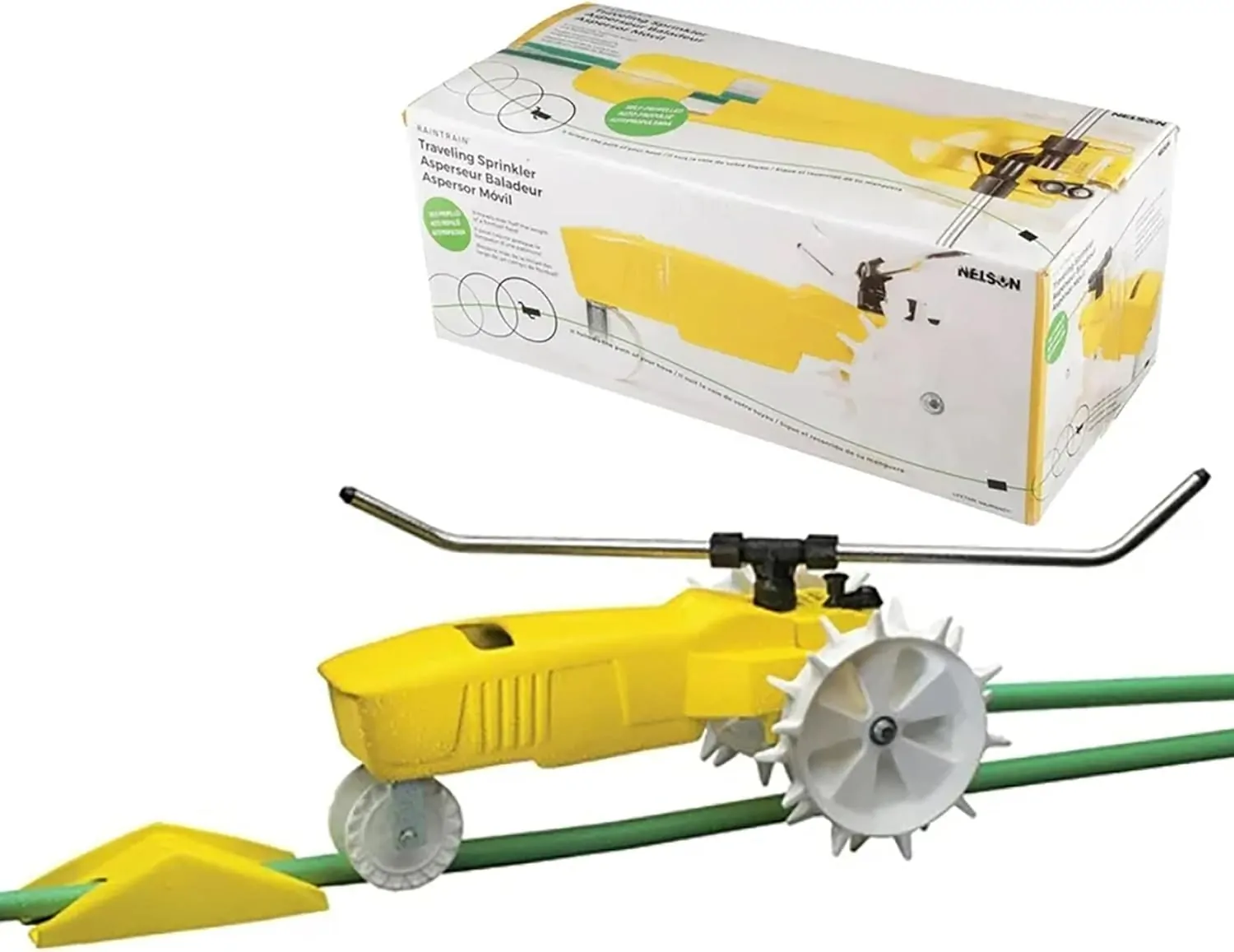 | Nelson Rain Train Lawn Traveling Water Sprinkler |
| Check Price |
 | WOVUU Upgrade Auto 360 Degree Rotating Garden Sprinkler |
| Check Price |
What Are Garden Sprayer Sprinkler Combos?
A garden sprayer sprinkler combo is a watering arrangement that combines or provides access to different water delivery functions, typically a directed spray for individual plants and a sprinkler pattern for covering a larger area. Depending on the design, these functions may be built into one adjustable device or provided through separate attachments connected to the same hose system.
Unlike a conventional single-pattern nozzle, a combination system can offer different ways to distribute water. A handheld spray gun may provide a shower, jet or mist setting, while a compatible sprinkler attachment can distribute water across a lawn or planting area.
However, the term does not describe one universal equipment standard. A product advertised as a sprayer sprinkler combo might contain a spray gun, rotating sprinkler, hose connectors and adapters. Another might be a single multifunction sprinkler with adjustable outlets. Therefore, the actual package contents and working functions must be checked before buying.
These systems are primarily designed for watering. The word “sprayer” does not automatically mean that the equipment can safely apply pesticides, fungicides or liquid fertilisers. Chemical application requires equipment specifically approved for the intended formulation and method.
For a gardener maintaining vegetables, flowers and a lawn, the main advantage of a suitable combo is flexibility. The limitation is that combining functions does not guarantee that every function performs as well as dedicated equipment.
6 Best Garden Sprayer Sprinkler Combos That Make Watering Easier
Selecting the right sprayer-sprinkler combo can make garden watering quicker, easier, and more effective. The best models offer multiple spray patterns, strong construction, and a simple transition between handheld sprayer mode and sprinkler mode. Below are five reliable products commonly used by gardeners for watering plants, lawns, flower beds, and vegetable gardens.
Radius Garden 45001 Transformers Butterfly Mini Watering Tool
The Radius Garden Butterfly watering tool combines a handheld nozzle and sprinkler in one design. It features nine spray patterns, a comfortable ergonomic grip, and easy thumb control. Its transforming butterfly wings allow the nozzle to convert into a sprinkler that can cover up to 870 square feet, making it useful for garden beds. From my experience, it makes regular watering more convenient because switching between spray and sprinkler modes is quick and helps save time.
expert start
What Is It and Its Features
The Radius Garden 45001 Butterfly & Butterfly Mini Watering Tool Set is a 2-in-1 hose nozzle and sprinkler system designed for flexible garden watering. The tool works as a standard handheld sprayer and can be quickly changed into a ground sprinkler by opening the side “butterfly wings.”
One feature that I found especially useful is the thumb control lever located on the top of the nozzle. Instead of continuously pressing a trigger, users can slide the thumb switch to control water pressure easily. This reduces hand fatigue, especially during longer watering sessions. The ergonomic grip also adds comfort because the handle design supports easy single-handed operation without feeling uncomfortable or heavy.
Why It Matters
This design is valuable because most gardeners usually require different tools for different watering tasks. For example, a sprayer is useful for watering specific plants, while a sprinkler is better for covering larger areas. This product combines both functions into one compact gardening tool.
The full-size Butterfly nozzle provides nine spray settings, while the Mini version includes five useful spray patterns. These settings include a powerful jet for cleaning, a gentle shower for plants, a wider spray for garden beds, and other options for different watering requirements.
When the wings are opened and the tool is placed on the ground, it can cover an area of around 870 square feet depending on water pressure and selected spray mode. This makes it a practical option for small lawns, flower beds, and vegetable gardens.
My Set-Up and My Experience
I tested the Radius Garden Butterfly watering tool mainly in my backyard garden and occasionally around patio plants. When using it for the first time, I noticed that it felt lightweight while still being strong enough for normal gardening activities.
The plastic body feels durable, and the wings open and close smoothly when converting the nozzle into sprinkler mode. I tested different spray settings according to various watering needs. The gentle shower setting worked well for young plants and sensitive seedlings because it delivered water softly.
For cleaning garden equipment and removing dirt from outdoor surfaces, the jet spray provided stronger water pressure. After opening the wings and placing the tool on the ground, it worked effectively as a small sprinkler. It covered part of my garden bed and nearby lawn without requiring me to hold the hose.
The Butterfly Mini model was also convenient because of its smaller size and lighter weight. I found it useful for watering potted plants, hanging baskets, and quick daily watering jobs.
Performance
The Radius Garden 45001 Butterfly watering tool performs effectively for small and medium watering requirements. The spray patterns provide consistent water distribution, which is important for protecting delicate plants.
The gentle shower mode applies water carefully without harming leaves or disturbing the soil. The sprinkler function also performs better than expected for such a compact tool. When placed on the ground with the wings extended, it provides even watering across a limited area.
I found it especially helpful for watering specific garden sections while completing other gardening activities. The thumb control valve is another strong feature because it allows quick water flow adjustment. This helps reduce water waste and makes switching between gentle watering and stronger pressure easier.
Overall, the tool works efficiently as both a sprayer and sprinkler, reducing the need to purchase separate watering equipment.
Practical Tips
- Use the gentle shower spray setting for fragile plants and young seedlings.
- Fully open the butterfly wings before placing the nozzle on the ground for sprinkler operation.
- Control water pressure with the thumb control lever instead of adjusting the faucet repeatedly.
- Select the jet spray setting for cleaning garden tools and outdoor surfaces.
- Avoid dropping the tool on hard surfaces because it may cause damage.
expert end
pro start
| Pros | Cons |
|---|---|
| ✔️ Two-in-one nozzle and sprinkler design | ❌ Plastic construction may get damaged if dropped |
| ✔️ Several spray patterns for different gardening tasks | ❌ Butterfly wings may feel stiff for some users |
| ✔️ Comfortable ergonomic handle design | ❌ Sprinkler coverage is not ideal for very large lawns |
| ✔️ Simple thumb control for adjusting water pressure | ❌ More bulky than standard hose nozzles |
| ✔️ Suitable for flower beds and container plants | ❌ Warranty replacement may include shipping costs |
pro end
Orbit 58322 Traveling Tractor Water Sprinkler
A strong cast-iron traveling sprinkler with rotating spray arms, adjustable watering coverage from 15–55 ft, and the ability to cover areas up to 13,500 sq ft. It includes three speed options, an automatic shut-off ramp, traction wheels with spikes, and smooth self-moving operation using water pressure. In my experience, it moved along the hose path effectively, provided even lawn watering, and reduced the need to manually move the sprinkler again and again.
expert start
What Is It and Its Features
The Orbit 58322 Traveling Tractor Water Sprinkler is a self-moving lawn sprinkler that travels along a garden hose while watering the grass. It uses water pressure to move, so it does not require electricity, batteries, or any additional power source. As it slowly moves over the hose path, it sprays water across the lawn. One of its main features is the heavy-duty cast-iron body. This solid metal construction makes the sprinkler heavier than many other models, but the extra weight helps improve stability during movement. Unlike lightweight sprinklers that may easily move out of position or fall over, this model stays firmly on the ground. Another useful feature is the adjustable rotary spray arms. These arms allow you to change the spray pattern and set the watering diameter between 15 feet and 55 feet. The sprinkler also offers three speed settings — high, low, and neutral.
Why It Matters
The speed setting gives you better control over watering time and coverage. A slower speed allows more water to reach one specific area, while a faster speed helps cover a larger lawn section in less time. The automatic shut-off ramp is another feature that makes this sprinkler more convenient. When the sprinkler reaches the end of the hose route, it contacts the ramp and automatically stops working. This helps avoid unnecessary water usage and makes lawn watering easier to manage. These features are important because they transform a normal sprinkler into a more automatic watering solution. You can set it up, turn on the water, and allow it to complete the watering job without constant supervision.
My Set-Up and My Experience
The sprinkler follows the route created by the garden hose, meaning the hose layout controls its travel direction. During my first setup, I tested some tight hose turns, but I found that smooth and gentle curves worked much better. Sharp bends can make it difficult for the sprinkler to move properly along the path. I attached the sprinkler to a regular garden hose and turned on the water supply. After starting, it slowly moved forward while spraying water in a circular pattern across the lawn. I adjusted the spray arm position several times to change the watering distance and match different lawn areas. This adjustment helped me control where the water was distributed and allowed better coverage based on the sprinkler’s location.
Performance
The Orbit 58322 can travel up to 200 feet along a garden hose, allowing it to water large lawn spaces with one setup. The manufacturer states that it can cover up to 13,500 square feet, which is a large coverage area for a single sprinkler. The spiked traction wheels provide strong grip and help the sprinkler move across grass and slightly uneven surfaces. In my testing, the wheels maintained good contact with the ground and helped the sprinkler move consistently. Water distribution was also impressive. The rotating spray arms spread water over a wide area, and adjusting the spray angle allowed me to direct coverage where needed. The movement speed is slow by design, but this works as an advantage because each lawn section receives enough water before the sprinkler moves forward.
Practical Tips
- Create smooth hose curves so the sprinkler can follow the path without difficulty.
- Avoid placing the hose on muddy areas or freshly seeded sections.
- Use a high-quality garden hose to improve movement performance.
- Adjust the spray arm position to control the watering distance.
- Start watering earlier because the sprinkler moves at a slow speed.
- Check the sprinkler occasionally to ensure it continues moving correctly.
expert end
pro start
| Pros | Cons |
|---|---|
| ✔️ Durable cast-iron construction provides long-lasting performance | ❌ Heavier than standard lightweight sprinklers |
| ✔️ Automatically waters large lawn areas without manual movement | ❌ Slow movement means longer watering time |
| ✔️ Adjustable spray diameter provides flexible coverage options | ❌ Requires correct hose placement for smooth operation |
| ✔️ Three speed settings allow better watering control | ❌ May perform poorly on very soft or muddy ground |
| ✔️ Automatic shut-off feature helps reduce water waste | ❌ Works best with sufficient water pressure |
pro end
RESTMO Multi-Angle Garden Hose Nozzle with Sprinkler
The RESTMO nozzle is made with durable zinc-alloy construction and offers four spray patterns with easy thumb flow control for different gardening and cleaning needs. Its magic twist design provides shower, mist, jet, and sprinkler modes, while the standard hose connection ensures simple installation with leak-free performance. In my experience, this nozzle works smoothly, feels comfortable to use, and the sprinkler mode makes lawn watering easier without continuous hand operation.
expert start
What Is It and Its Features
The RESTMO Multi-Angle Garden Hose Nozzle is a strong zinc-alloy metal hose nozzle designed for reliable and long-term use. It comes with four different spray patterns: Shower, Mist, Jet, and Sprinkler, which makes it suitable for various watering and cleaning tasks. The shower mode provides gentle water flow for flowers and delicate plants, while the mist mode produces a fine spray that works well for seedlings and young plants. The jet mode delivers a powerful stream that can help clean patios, driveways, and outdoor surfaces. The sprinkler mode allows hands-free lawn watering by spreading water across the grass area.
Why It Matters
One of the most useful features of this nozzle is the thumb flow control, which allows quick and easy water adjustment using one finger. You do not need to press a hard trigger or handle uncomfortable levers because the control system provides smooth water flow management. The ergonomic handle includes a soft TPU rubber coating that improves grip and prevents slipping, even when your hands are wet. This makes longer watering sessions more comfortable and reduces hand fatigue. The nozzle also works with standard garden hoses using a 3/4” threaded connection and includes a rubber gasket to help prevent leaks. These features are important because they improve convenience, reduce water loss, and make regular garden maintenance easier.
My Set-Up and Experience
I attached the nozzle to my regular garden hose and checked that the rubber gasket was correctly positioned. The connection was secure and created a tight seal without unwanted water leakage. I mainly used it for watering flower beds, vegetable areas, and sometimes for cleaning my vehicle. Changing between spray modes was simple because of the magic twist nozzle design. The sprinkler mode was especially useful because I could place the nozzle down and allow it to water the lawn without holding it continuously. I also liked the thumb flow control because it allowed me to quickly change the water pressure from a soft mist to a stronger jet. The black side part of the nozzle came loose during use, which caused water to spray from that area. After fixing it, the nozzle continued working properly without further problems.
Performance
Each spray mode performs effectively for its intended purpose: Shower mode: Provides gentle and balanced water flow for flowers, potted plants, and garden beds without disturbing the soil. Mist mode: Creates a fine water spray that is suitable for seedlings and young plants. Jet mode: Produces a strong concentrated stream for cleaning outdoor surfaces, garden tools, and other areas. Sprinkler mode: Allows hands-free lawn watering by letting you place the nozzle down while the grass receives water evenly. The zinc-alloy body gives the nozzle a strong and durable feel, while the rubberized bezel and ergonomic handle improve comfort and protection against everyday use. Although it includes some plastic parts, I recommend storing it indoors during winter to protect it from possible freezing damage.
Practical Tips
- Make sure the rubber gasket is correctly placed to avoid water leakage.
- Use the mist mode for delicate seedlings to protect the soil structure.
- Store the nozzle indoors during freezing weather to prevent damage.
- Increase water pressure slowly using the thumb flow control.
- Clean the nozzle regularly to reduce mineral buildup caused by hard water.
expert end
pro start
| Pros | Cons |
|---|---|
| ✔️ Strong zinc-alloy construction provides durability and rust resistance. | ❌ Small plastic parts may break if dropped. |
| ✔️ Four spray patterns provide multiple watering and cleaning options. | ❌ Slightly heavier than common plastic nozzles. |
| ✔️ Thumb flow control allows simple water adjustment. | ❌ Should not be left outside in freezing temperatures. |
| ✔️ Sprinkler mode provides convenient hands-free lawn watering. | ❌ Nozzle head rotation may become difficult when wet. |
| ✔️ Comfortable non-slip ergonomic handle reduces hand strain. | ❌ Black side component requires careful handling. |
pro end
RESTMO Hose Nozzle Water Hose Sprayer
The RESTMO Hose Nozzle is made with strong metal construction using zinc alloy, providing excellent durability for regular outdoor use. Its comfortable ergonomic design makes watering and cleaning easier, while the nine spray patterns and thumb flow control give you better control over water pressure. Whether you are watering plants, maintaining your lawn, washing your car, or cleaning your patio, this nozzle provides reliable performance. In my experience, it feels strong, reduces leakage problems, and makes everyday outdoor tasks much more convenient.
expert start
What is it and Its Features
The RESTMO Hose Nozzle is a durable, heavy-duty metal hose sprayer designed for gardening, lawn care, and outdoor cleaning tasks. It is made from high-quality zinc alloy with a bronze powder finish, which helps it resist damage from drops, impacts, and frequent use. The rubberized bezel dial and TPU-coated handle improve both strength and user comfort. One of its most useful features is the thumb flow control, which allows you to turn water on, stop it, or adjust the flow using only one hand. This design provides better convenience compared with traditional sprayers that require continuous handle squeezing.
Why It Matters
This nozzle includes nine different spray patterns: Shower, Flat, Full, Mist, Jet, Center, Cone, Angle, and Vertical. Each pattern is designed for a different purpose, such as gentle watering for flowers or stronger water pressure for cleaning outdoor surfaces. The ergonomic handle fits comfortably in different hand sizes and helps reduce tiredness during longer use. Its 3/4” NH threaded connection works with standard garden hoses, while the rubber gasket helps create a secure, leak-resistant connection. These features make the RESTMO nozzle a useful tool for both gardening and cleaning activities.
My Set-Up and Experience
The solid metal body gives this nozzle better strength compared with low-cost plastic models that can crack easily. I especially liked the thumb flow control because it made water adjustment much easier. In the past, I used sprayers that required constant squeezing, which became uncomfortable after some time. With the RESTMO nozzle, I can adjust the water flow quickly with a simple thumb movement. The nine spray options cover different needs: I use Mist for delicate plants, Shower for lawn watering, and Jet for cleaning my driveway. After repeated use, the sprayer still feels strong and well-built. I noticed small leaks near the metal connection points occasionally, but checking and replacing washers solved the issue easily.
Performance
The performance of this nozzle is one of its strongest points. Water pressure remains powerful, and changing between spray patterns is quick and smooth. The comfortable grip makes it easy to use for longer periods, and the balanced design helps prevent hand strain. Strong patterns like Jet and Angle work well for removing dirt from patios and driveways, while softer settings like Mist and Shower are suitable for sensitive plants. The thumb flow control allows accurate water adjustment, helping save water and preventing excessive watering. When connected properly, the nozzle provides a secure, leak-resistant fit. Its metal construction handles accidental drops well, and the non-slip handle provides a firm grip even when wet.
Practical Tips
- Keep the nozzle stored indoors during freezing weather to protect it from cold damage.
- Inspect washers regularly and replace them if water leakage appears around connections.
- Clean the spray head from time to time to prevent mineral deposits from blocking spray patterns.
- Select the correct spray pattern according to your task—soft settings for plants and stronger settings for cleaning.
- Use the thumb flow control properly to reduce water waste and avoid hand tiredness.
expert end
pro start
| Pros | Cons |
|---|---|
| ✔️ Strong metal construction provides excellent durability | ❌ The metal body can feel heavy during extended use |
| ✔️ Thumb flow control makes water adjustment simple | ❌ Small leaks can happen if washers are not properly maintained |
| ✔️ Nine spray patterns support different watering and cleaning jobs | ❌ Costs more than basic plastic hose nozzles |
| ✔️ Comfortable non-slip handle reduces hand fatigue | ❌ Metal parts require proper storage to avoid corrosion |
| ✔️ Secure connection with standard 3/4” garden hoses | ❌ Extra replacement washers may need to be purchased separately |
pro end
Nelson Rain Train Lawn Traveling Water Sprinkler
The Nelson Rain Train Traveling Water Sprinkler can cover up to 13,500 sq. ft. while moving along a 200-foot path, providing even and consistent watering for large lawns. Its durable cast iron construction, adjustable speed settings, and customizable spray patterns make lawn irrigation simple and efficient. From my experience, it saves time and effort because it automatically moves across the yard while delivering water where it is needed most.
expert start
What is it and its Features
The Nelson Rain Train Traveling Sprinkler is a heavy-duty, self-propelled lawn sprinkler designed for watering large outdoor areas. Unlike fixed sprinklers or oscillating models, this sprinkler moves along a hose path placed across your lawn and distributes water as it travels. It features adjustable spray arms that provide coverage from 15 to 55 feet in diameter, allowing you to adjust watering according to your lawn size and requirements.
Why It Matters
The sprinkler includes three speed settings—high, low, and neutral—which allow you to control the movement speed and water application rate. It also features an automatic shut-off valve that helps prevent unnecessary watering and water waste. The ramp trip lever makes it easy to stop the sprinkler at a specific location. These features are important because they provide better control, save water, and ensure your lawn receives consistent moisture without constant monitoring.
My Set-Up and Experience
Setting up the Nelson Rain Train is simple when you plan the hose route properly. I used a 5/8-inch hose to maintain good water pressure, especially because the sprinkler can travel up to 200 feet. After placing the sprinkler at the starting point, I adjusted the rotor head to achieve the desired spray direction. During use, I found that creating smooth and wide hose curves helped the sprinkler move correctly around the lawn.
The sprinkler weighs around 19 pounds, which provides stability while moving, and the cast iron construction gives it a strong and durable feel. After using it several times, I learned the best hose patterns for my yard. Gradual turns worked better than sharp corners, and the sprinkler was able to cover my 17,000 sq. ft. lawn with minimal supervision.
Performance
The Nelson Rain Train Traveling Sprinkler delivers excellent performance for large lawn areas. Unlike oscillating sprinklers that may distribute water unevenly or rotary sprinklers that can lose water due to wind, the Rain Train produces larger water drops that reach the soil effectively. The adjustable speed options help control watering intensity, while the automatic shut-off feature reduces water waste.
It moves smoothly along the hose path and provides wide coverage without leaving many dry areas. I was able to leave it operating while completing other outdoor tasks, and it continued watering the lawn evenly. Even during hot and windy conditions, the horizontal spray pattern helped maintain good coverage with less water loss.
Practical Tips
- Use a 5/8-inch hose to maintain better water pressure and smooth movement.
- Create wide and gradual hose turns so the sprinkler can follow the path easily.
- Adjust the rotor spray heads to control water direction and height, especially during windy weather.
- Place the stop bumper at the desired stopping point for automatic operation.
- Choose slow speed for deep watering of established lawns and avoid using it on newly seeded grass.
expert end
pro start
| Pros | Cons |
|---|---|
| ✔️ Covers large lawn areas up to 13,500 sq. ft. | ❌ Heavy weight makes manual movement difficult |
| ✔️ Automatically travels up to 200 feet while watering | ❌ Requires careful hose positioning for smooth operation |
| ✔️ Strong cast iron construction improves durability | ❌ May not perform well with extremely long or heavy hoses |
| ✔️ Adjustable spray settings provide better watering control | ❌ Not recommended for newly seeded lawns |
| ✔️ Automatic shut-off helps prevent overwatering | ❌ Learning the best setup may require some initial practice |
pro end
WOVUU Upgrade Auto 360 Degree Rotating Lawn Sprinkler
WOVUU Garden Sprinkler provides automatic 360-degree rotation with 36 adjustable nozzles that help create different spray patterns and cover a large lawn area. Made with durable ABS plastic, it offers efficient water use and supports two hose connection types for convenient installation. After using this sprinkler, I experienced balanced watering, reduced water wastage, and found it quiet, dependable, and simple to install.
expert start
What is it & its Features
The WOVUU Garden Sprinkler is a 360-degree rotating irrigation system made to provide efficient watering for lawns. It includes 36 built-in spray nozzles, which are 24 more than the previous model. Each arm features three adjustable spray patterns, helping users customize the water coverage according to their lawn size and irrigation requirements. The sprinkler is manufactured with strong ABS plastic, providing better durability and stability. It supports two hose connection options: standard rubber hoses with a quick connector and screw-thread hoses that connect directly.
Why It Matters
This sprinkler is important because many regular sprinklers either provide too much water in some areas or leave dry spots due to uneven coverage. The WOVUU sprinkler distributes water more evenly across the lawn, helping avoid water pooling and reducing unnecessary water usage. Its automatic rotation and adjustable nozzles improve efficiency, saving gardeners time and effort.
My Set-Up and Experience
The package includes the sprinkler, quick connectors, a black nipple, waterproof tape, and a user manual. Setting it up was quick and took only a few minutes. I attached it to my hose with the included quick connector, adjusted the nozzle arms according to my preferred spray pattern, and started the water supply. The sprinkler rotated smoothly and covered a large area without putting extra pressure on my well water system. In my experience, the small jets provide better control over water distribution. Compared with other sprinklers I have used, this model produces less mist and noise while using water efficiently. Even with medium water pressure, it rotates consistently and covers around a 32-49 feet diameter area depending on the nozzle settings. After several seasons of use, it has remained strong, reliable, and long-lasting.
Performance
The sprinkler provides automatic 360-degree rotation, while the three adjustable nozzle settings allow control over spray distance and water output. With 80 PSI water pressure, it can cover up to 49.2 feet when fewer nozzles are being used. For wider lawn coverage, multiple sprinklers can be connected together with a small increase in water pressure. During my testing, it watered each lawn section evenly within 10-15 minutes. The larger water droplets help moisture reach the soil properly, unlike some sprinklers that create a light mist that does not soak deeply. The ABS plastic body remains stable even after repeated usage. Its lightweight construction also allows easy movement around the garden for specific watering areas.
Practical Tips
- Make sure the water pressure is at least 28.4 PSI so the sprinkler can rotate properly.
- Change the nozzle arm positions based on your lawn size to achieve balanced coverage.
- When connecting multiple sprinklers together, increase water pressure slightly to maintain spray range.
- Avoid tightening the nozzle body too much during installation to prevent damage.
- Apply additional waterproof tape if you notice small leaks around the hose connection.
expert end
pro start
| Pros | Cons |
|---|---|
| ✔️ 360° rotation provides complete lawn coverage. | ❌ Lightweight plastic construction may be less resistant to damage. |
| ✔️ 36 adjustable nozzles offer different spray options. | ❌ Requires at least 28.4 PSI water pressure. |
| ✔️ Strong ABS plastic body improves durability. | ❌ Performance may decrease on uneven surfaces. |
| ✔️ Compatible with rubber and screw-thread hoses. | ❌ Spray range depends on available water pressure. |
| ✔️ Helps save water and reduces watering time. | ❌ Available only in orange color. |
pro end
Different Types of Sprayer Sprinkler Combos
When I compared the available designs, I found it useful to classify them according to how they delivered water rather than relying on product names. The main difference was whether the equipment changed the spray pattern directly, switched between attachments or operated as a dedicated sprinkler within a larger watering kit.
Handheld Sprayer and Sprinkler Kits
These kits generally combine an adjustable handheld hose nozzle with a separate sprinkler attachment. The gardener uses the handheld nozzle for targeted watering and connects the sprinkler when broader coverage is required.
I considered this arrangement suitable for a mixed garden because individual vegetable beds could be watered with greater control, while a small lawn could receive water through the sprinkler attachment. The main inconvenience was switching attachments and positioning the sprinkler correctly.
For a compact garden where the same hose serves several areas, I recommend checking whether the connectors allow convenient changes without leakage. If the garden requires frequent switching, the quality of those fittings becomes especially important.
Multi-Pattern Sprayer Sprinkler Heads
Some products use one adjustable head to provide several water distribution patterns. Depending on the design, the available settings may include concentrated streams, showers, fan-shaped sprays or broader sprinkler patterns.
The attraction is convenience because the gardener can change the discharge pattern without replacing the entire attachment. However, I would not assume that every setting is equally useful. A pattern that looks attractive during a demonstration may distribute water unevenly or require more pressure than the garden supply provides.
These designs are worth considering for smaller spaces, but their actual coverage and operating requirements should be verified.
Rotating and Oscillating Sprinkler Combos
Rotating sprinklers distribute water through moving arms or rotating outlets, often creating circular or sector-shaped coverage. Oscillating sprinklers generally move a perforated spray bar back and forth, producing coverage that can suit rectangular lawns.
When considering my lawn, I paid more attention to its shape than the maximum advertised spray distance. A rotating sprinkler could suit an open area, but it might wet nearby pathways if the lawn was narrow. An adjustable oscillating sprinkler could provide a better match for a rectangular section, although its coverage would still depend on pressure and flow.
For gardens with irregular boundaries, I recommend adjustable coverage controls or dividing the lawn into smaller watering zones rather than choosing equipment solely for maximum reach.
Modular Garden Watering Systems
Modular systems use compatible hoses, connectors, spray guns and sprinkler attachments that can be changed according to the task. Their main advantage is flexibility, particularly when a gardener wants to expand the watering arrangement later.
However, I considered replacement-part availability before choosing such a system. A proprietary connector may work conveniently until it breaks or becomes unavailable. Therefore, I preferred checking whether standard or readily obtainable fittings could be used.
| Combo Type | Suitable Garden Work | Main Limitation |
|---|---|---|
| Handheld sprayer and sprinkler kit | Vegetables, flowers and small lawns | Attachment changes may interrupt watering |
| Multi-pattern sprinkler head | Small mixed watering areas | Not every pattern provides even coverage |
| Rotating sprinkler combo | Open lawns and circular watering areas | May overspray narrow spaces |
| Oscillating sprinkler combo | Rectangular lawns and grass strips | Requires suitable pressure and positioning |
| Modular watering system | Gardens needing interchangeable accessories | Connector and spare-part compatibility |
For my combination of vegetable beds, flowers and lawn, a handheld sprayer with a compatible sprinkler attachment appeared the most practical category to investigate. However, someone maintaining a larger lawn might benefit more from a dedicated adjustable sprinkler combined with a separate handheld nozzle.
How Garden Sprayer Sprinkler Combos Work
The basic working principle is straightforward. Water enters the equipment from a tap, hose, irrigation line or suitable pump system. The available pressure pushes water through internal passages and outlets, while the nozzle or sprinkler mechanism determines the discharge pattern.
In handheld mode, a trigger or valve controls water delivery. An adjustable nozzle changes the outlet geometry, producing different streams or droplet patterns. In sprinkler mode, fixed or moving outlets distribute water over a larger area.
Some rotating sprinklers use the movement of water through their outlets to produce rotation. Other designs use internal drive mechanisms. Oscillating sprinklers typically rely on a water-powered mechanism that moves the spray bar through its operating range.
These components work together, which explains why the performance of one part depends on the others. A suitable sprinkler head cannot deliver its intended coverage if the hose restricts flow or the water supply cannot maintain sufficient pressure.
Understanding Water Pressure and Flow Rate
Pressure and flow rate are two of the most important specifications to understand before buying. Pressure describes the force available to move water through the system, while flow rate describes how much water passes through it during a particular period.
For example, if a container collects 10 litres of water in 30 seconds, the calculated flow rate is approximately 20 litres per minute. This calculation is useful for checking a tap’s available flow under the conditions of the measurement, but it does not establish the actual flow through a connected sprinkler.
The hose, fittings, valves and sprinkler itself create resistance. Consequently, pressure at the sprinkler during operation may be lower than pressure measured at the tap when no water is flowing.
I considered using a suitable pressure gauge and checking the manufacturer’s required operating range before selecting equipment. A sprinkler requiring more pressure than the supply can maintain may produce reduced coverage, poor rotation or uneven watering.
For a gravity-fed storage tank, the vertical difference between the water surface and the outlet determines the available static pressure before friction losses. Approximately 10.2 metres of water head corresponds to one bar. A low tank may therefore be unsuitable for sprinklers designed for pressurised household water systems.
How Nozzles Control Water Distribution
Nozzles determine the direction, shape and characteristics of the water leaving the equipment. A concentrated stream delivers water into a relatively narrow area, while a shower pattern spreads it across several openings.
For newly transplanted chilies and tomatoes, I preferred the idea of a gentle shower directed towards the soil because a powerful jet could displace loose soil. For established plants, a controlled stream could be useful when applied carefully around the root zone.
For lawns, sprinkler coverage mattered more than narrow targeting. However, a wider spray did not automatically mean better irrigation. Distribution uniformity, wind drift, water pressure and operating time remained important.
I also avoided assuming that a fine mist was suitable for every flower. Fine droplets may drift or evaporate more readily under hot, windy conditions, reducing the amount reaching the soil.
Choosing Features That Actually Matter
After understanding the working principle, I concentrated on the features that could make watering easier without creating unnecessary complexity. My priority was a reliable system that matched the garden’s layout and available water supply.
The first consideration was the watering workload. A gardener with several containers and narrow vegetable beds needs precise control, while someone maintaining a broad lawn needs suitable sprinkler distribution. A combination system should address the most frequent tasks rather than simply provide many settings. Before choosing, I considered the following:
- Operating modes: Confirm that the available spray and sprinkler patterns match actual watering requirements.
- Pressure range: Check the minimum and maximum operating pressure specified for the equipment.
- Flow requirements: Verify that the water supply can support the intended sprinkler pattern.
- Coverage adjustment: Prefer controls that match the lawn’s shape and reduce unnecessary overspray.
- Nozzle construction: Examine the outlet design, adjustment mechanism and cleaning requirements.
- Hose compatibility: Confirm the hose diameter, connector system and tap fittings.
- Repairability: Check whether seals, connectors and other common replacement parts are available.
I also considered handling comfort. A handheld spray gun should be manageable during repeated watering, with a trigger that operates smoothly and does not require excessive force. A lockable trigger may reduce continuous squeezing during prolonged watering, but it should remain easy to release safely.
For sprinklers, stability mattered more than handheld comfort. A poorly balanced sprinkler could move, tip or change direction during operation. I preferred checking the base construction, hose connection position and adjustment controls before buying. My recommendation is to give greater importance to reliable control and compatibility than to the number of advertised spray patterns.
Checking Hose and Tap Compatibility
Compatibility was one of the most important parts of my selection process because even a well-built combo becomes inconvenient when its connectors do not fit the existing watering system.
I started by identifying the hose’s nominal internal diameter, connector type and tap outlet thread. Garden hoses and fittings are available in different sizes, and products using similar-looking quick connectors are not always interchangeable.
I also considered the hose length. A longer hose could reach distant vegetable beds and young fruit trees, but a narrow hose over a long distance could increase friction losses and reduce pressure at the sprinkler during operation.
For a garden supplied through a pump, the pump’s actual operating flow and pressure must match the sprinkler requirements. Excessive pressure can also be harmful if it exceeds the equipment’s rating, so a suitable pressure regulator may be necessary.
Before paying, I preferred confirming these details with the seller rather than relying on photographs. Where possible, taking an existing hose connector to the shop could help identify the correct fitting.
For gardeners using a storage tank, I recommend checking whether the equipment supports the available supply pressure. Do not assume that a sprinkler advertised for a household tap will perform properly from a low-pressure gravity system.
Inspecting Build Quality Before Buying
Once I had identified suitable designs, I examined construction quality. A garden sprayer sprinkler combo is repeatedly exposed to water, outdoor conditions and handling, so its durability depends on the quality of several connected components.
Nozzles and Sprinkler Head Materials
Plastic sprinkler bodies are common because they are lightweight and resistant to rust. However, their resistance to sunlight, impact and ageing depends on the material and manufacturing quality.
Metal components may offer useful mechanical strength, but their corrosion resistance varies. Brass fittings can provide dependable service in suitable water conditions, while stainless steel parts require an appropriate grade for the environment.
I did not assume that a heavier metal component was automatically superior to a well-designed polymer part. Instead, I checked the finish, joint construction, movement of adjustable components and availability of replacements.
For moving sprinkler heads, I considered smooth operation and serviceability important. Gears, rotating joints and adjustment stops should function without excessive force, and the equipment should provide a practical method for removing sediment where the design permits.
Connectors, Seals and Filtration
Connectors and seals deserved equal attention because a small leak could reduce convenience and waste water. I checked whether the fittings locked securely and whether the sealing washers were properly positioned.
Rubber seals vary in their resistance to temperature, ageing and chemicals. For ordinary watering, the materials should be suitable for the supplied water and outdoor operating conditions. Chemical resistance becomes a separate requirement if the equipment is specifically approved for applying garden treatments.
Filtration was another consideration, especially where water came from a storage tank or irrigation line containing sediment. A removable filter screen could help prevent nozzle blockage, but it required periodic cleaning and could itself restrict flow when clogged.
My preference was for a straightforward design with replaceable seals and accessible cleaning points. Complicated features offered little advantage if routine maintenance required replacing the entire assembly.
Where Should You Buy Your Combo?
After comparing the technical requirements, I considered local garden suppliers, irrigation equipment shops, hardware stores, manufacturer websites and reputable online sellers.
Local shops offered the advantage of physical inspection. I could compare the fittings with my existing hose, examine the adjustment mechanisms and check the sprinkler’s stability. Where the seller permitted a clean-water demonstration, it was possible to observe the basic spray pattern and look for immediate leakage.
However, a short demonstration could not establish long-term durability or seasonal performance. Those questions required attention to construction, maintenance instructions, warranty terms and replacement-part availability.
Online purchasing required careful verification of the exact model, package contents and connector specifications. I considered seller identity, return conditions and regional warranty support before comparing prices. My questions before purchasing included:
- What exact model and accessories are included?
- What pressure and flow does the equipment require?
- Will the supplied connectors fit my existing hose?
- Are replacement seals and fittings available?
- Does the warranty apply in my region?
- What happens if the delivered product is damaged or incompatible?
I also considered the complete delivered cost. A cheaper product requiring several adapters, extra hose fittings or expensive replacement parts might not remain economical.
For a first purchase, I recommend choosing a seller who can clearly confirm compatibility and provide reliable after-sales support. The ability to obtain a replacement washer or connector can matter more than a small difference in purchase price.
Testing Your Combo After Purchase
After choosing the equipment, I considered the first clean-water test essential before depending on it for regular garden watering. The initial inspection should confirm the exact model, package contents, condition of the fittings and operation of the adjustment controls.
Before connecting the water supply, I checked the intended assembly procedure and pressure limitations. I then planned to open the tap gradually, inspect the joints and observe whether the spray or sprinkler pattern operated smoothly.
Testing Flow and Water Coverage
For a sprinkler coverage test, I selected a clear lawn area and positioned identical straight-sided collection containers across the intended watering zone. A 15-minute test provided a practical starting point for comparing how much water reached different locations.
After the test, the water depth in each container could be measured in millimetres. Differences between the centre and edges would indicate how evenly the sprinkler distributed water under those conditions.
The average collected depth could also help estimate an irrigation application rate. For example, if the average depth collected during a 15-minute test was 3 millimetres, the calculated average application rate would be 12 millimetres per hour. This is a mathematical example, not a measured result from a particular product.
However, average depth alone does not describe distribution uniformity. Some areas may receive much more water than others, which is why comparing individual containers remains useful.
I also considered checking the soil after watering. If water began running off before penetrating the intended root zone, the operating duration or application rate needed adjustment.
Checking Pressure, Leakage and Stability
During the clean-water test, I paid attention to connections, sprinkler movement and the effect of changing settings. A visible leak around a connector could indicate a displaced washer, incorrect fitting or damaged sealing surface.
For a rotating or oscillating sprinkler, I observed whether the mechanism moved consistently and whether the base remained stable. Any repeated hesitation, unexpected movement or irregular discharge deserved investigation before regular use.
I considered a short initial test useful for identifying immediate faults, but not for proving durability. Repeated checks over several weeks would be needed to assess whether connectors loosened, seals deteriorated or moving parts developed problems.
Using Combos Across Different Garden Areas
The real value of a garden sprayer sprinkler combo depends on how its functions match the plants being watered. I considered vegetables, flowers, lawns and young fruit trees separately because their root systems, planting arrangements and watering requirements differ.
Watering Chilies and Tomato Plants
For young chilies and tomatoes, I preferred a gentle shower directed towards the soil around the plants. A concentrated stream could disturb loose soil, particularly after transplanting, while a broad sprinkler might unnecessarily wet the foliage.
During the warmer growing season, soil moisture required closer attention. I considered checking moisture below the surface before and after watering rather than relying on the appearance of wet soil.
For cucumbers and bitter gourd grown on supports, the same principle applied. Water needed to reach the root zone, while excessive surface wetting and runoff offered little benefit.
Where vegetable beds were regularly arranged, drip irrigation might provide better targeted delivery than a sprinkler combo. Therefore, I recommend comparing these methods before purchasing equipment specifically for vegetable production.
Protecting Marigolds and Seasonal Flowers
My marigolds, petunias and zinnias required more careful control around flowers and growing media. A gentle shower was generally more suitable for watering containers and flower beds than a strong jet.
I considered checking whether the spray displaced potting media or caused unnecessary splashing. For a newly purchased nozzle, a brief clean-water test could identify an unsuitable spray force before using it around delicate plants.
However, I avoided assuming that the finest mist was always best. Fine droplets can drift in windy weather and may not deliver sufficient water to the growing medium. For flower borders with mixed plant heights, a handheld setting could provide better control than a fixed sprinkler pattern.
Managing Lawns and Young Fruit Trees
For lawns, I concentrated on coverage uniformity and operating time. An adjustable sprinkler could reduce the need to move a hose manually, but its position and pattern still required attention.
During spring lawn preparation, I considered using collection containers to identify uneven watering. If one section consistently received more water, I could adjust the sprinkler position or divide the lawn into separate watering zones.
Young mango, guava, lemon and pomegranate trees required a different approach. Water should reach the developing root zone without continuously soaking the trunk or creating waterlogged soil.
For these trees, I preferred considering a controlled handheld shower or another suitable root-zone irrigation method rather than relying entirely on a wide lawn sprinkler. My recommendation is to choose the watering mode according to the planting arrangement, not simply according to which setting covers the greatest area.
Using Sprayer Sprinkler Combos Safely
Safety was another part of my buying decision because watering equipment operates under pressure and is frequently used around pathways, electrical installations and other garden activities.
Before operation, I checked that the hose and fittings were suitable for the expected pressure. I avoided directing concentrated water streams towards people, animals or electrical equipment.
I also considered the position of hoses across walking areas. A long hose could become a tripping hazard, particularly when moving between vegetable beds and the lawn.
- Operate equipment within its specified pressure range.
- Release pressure before disconnecting fittings.
- Keep water away from electrical installations.
- Prevent hoses from obstructing pathways.
- Use suitable backflow protection where required.
- Keep ordinary watering systems separate from chemical application equipment.
The distinction between watering and chemical application is especially important. A conventional garden sprayer sprinkler combo should not be used for pesticides, fungicides or fertiliser concentrates unless the manufacturer specifically approves that use.
For approved chemical application equipment, the exact formulation, equipment instructions and product label must all permit the intended use. Suitable seals, protective equipment and backflow prevention are essential. No chemical dilution should be selected merely because the equipment can produce a suitable spray pattern.
For ordinary watering, I preferred calmer periods when practical and avoided applying water faster than the soil could absorb it. This helped keep the focus on root-zone moisture rather than visible surface wetting.
Maintaining Your Combo for Reliable Performance
Maintenance influenced my purchasing decision because even a good sprinkler can become unreliable when sediment blocks the outlets or seals begin leaking.
After clean-water use, I considered draining trapped water, removing visible dirt and checking the nozzle openings. Where a removable filter was included, it needed cleaning according to the manufacturer’s instructions.
For rotating and oscillating sprinklers, I paid attention to moving parts and adjustment mechanisms. A stiff mechanism should not be forced because doing so could damage gears or plastic stops.
| Component | Maintenance Check | Purpose |
|---|---|---|
| Spray nozzle | Inspect and clean outlet openings | Maintains the intended spray pattern |
| Sprinkler head | Check movement and distribution | Identifies blockage or mechanical faults |
| Connectors | Inspect locking parts and leakage | Maintains secure water connections |
| Rubber seals | Check for cracks and deformation | Reduces leakage risk |
| Filter screen | Remove collected sediment | Helps prevent nozzle blockage |
| Garden hose | Inspect for cuts, kinks and ageing | Supports reliable water delivery |
Storage conditions also mattered. Prolonged sunlight and excessive heat can accelerate ageing in some plastic and rubber components. In areas where freezing occurs, trapped water may damage housings and fittings.
I preferred storing the equipment clean, drained and protected from unnecessary exposure. If the system included removable accessories, keeping them together reduced the risk of losing small connectors and sealing washers.
For long-term durability, I considered repeated inspection more meaningful than a single successful test. Leakage, blocked outlets, difficult adjustments and visible deterioration should be recorded over time.
Repairability was another advantage worth paying for. A replaceable seal or connector can extend the service life of otherwise functional equipment, while a sealed assembly may require complete replacement after a relatively small failure.
Understanding Total Ownership Costs
The purchase price was only part of the overall expense. I also considered additional hose fittings, pressure regulators, replacement seals, maintenance and possible pump electricity costs.
Water consumption was another factor. A sprinkler with a high flow rate might cover an area quickly, but its actual efficiency depends on distribution uniformity, runoff, wind conditions and operating duration.
I preferred comparing the equipment according to its expected useful service rather than assuming that the lowest purchase price represented the best value.
A reasonably priced combo with compatible fittings, suitable watering patterns and available replacement parts could be more economical than a complicated model with features I rarely needed.
At the same time, a higher initial price could be justified when better construction, serviceability and reliable warranty support matched frequent use. The important point was to evaluate those advantages rather than assuming every premium product was automatically superior.
Making the Right Garden Watering Decision
Investigating garden sprayer sprinkler combos helped me understand that a successful upgrade begins with the garden’s actual watering requirements. The most important factors were water pressure, flow rate, hose compatibility, suitable spray and sprinkler patterns, construction quality and maintenance. I also wanted equipment that could be adjusted comfortably and supported with replacement parts.
For a small mixed garden, I recommend considering a handheld spray nozzle with a compatible sprinkler attachment. It can provide flexibility for targeted watering and occasional lawn coverage. For a larger rectangular lawn, an adjustable oscillating sprinkler combined with a separate handheld nozzle may be more practical.
For irregular areas, adjustable coverage zones are often more important than maximum advertised spray distance. For vegetable beds requiring precise root-zone watering, compare the combo against drip or soaker irrigation before making a decision. A multifunction system can simplify certain jobs, but it does not replace every specialised watering method.
A garden sprayer sprinkler combo is worth considering when it genuinely improves watering control and convenience. The right equipment should match your water supply, suit your plants and remain practical to maintain. Begin with your garden’s needs, compare the technical requirements carefully and select the arrangement that solves your watering problems without unnecessary expense.
references:
1. Mughal, W., Liu, J., Pei, J., Wang, W., Luhur, M. R., Abbasi, A., & Zhang, D. (2026). Application Nozzles: A Systematic Review of Sprinkler and Pesticide Application Systems. Journal of Applied Fluid Mechanics, 19(3), 588.
2. Jobbágy, J., Bulla, M., & Bullová, T. (2023). Application and efficiency of micro sprinkler irrigation. Visegrad Journal on Bioeconomy and Sustainable Development, 12(1), 6-11.
3. Liu, J., Chai, J., Han, Z., Zekai, Y., Defeng, T., Xingye, Z., & Chen, J. (2026). Design and Experimentation of an Adaptive Leveling Boom for a Self-Propelled Sprinkler Irrigation Machine in Hilly Terrain. Applied Engineering in Agriculture, 0.
4. Mughal, W., Liu, J., Pei, J., Wang, W., Luhur, M. R., Abbasi, A., & Zhang, D. (2026). Performance Evaluation and Measurement Techniques for Agricultural Application Nozzles: A Systematic Review of Sprinkler and Pesticide Application Systems. Journal of Applied Fluid Mechanics, 19(3), 588-619.
5. Bhavsar, D., Limbasia, B., Mori, Y., Aglodiya, M. I., & Shah, M. (2023). A comprehensive and systematic study in smart drip and sprinkler irrigation systems. Smart Agricultural Technology, 5, 100303.
6. Ismail, A., & Aziz, N. M. A. A. (2026). The Auto Sprinkler Rover: An innovative fertiliser applicator for sustainable agriculture. Research in Agricultural Engineering, 72(2), 95.
7. Srilakshmi, R. (2024, December). Design of Smart Water Management System for Gardens Using Arduino. In 2024 International Conference on Innovative Computing, Intelligent Communication and Smart Electrical Systems (ICSES) (pp. 1-4). IEEE.

