
10 Best Types of Garden Sprayer Nozzles in 2026: Uses & Buying Guide
- Choosing the right garden sprayer nozzle improves spray coverage, reduces waste, and increases effectiveness.
- Different nozzle types create different spray patterns and droplet sizes for specific gardening tasks.
- A suitable nozzle helps save chemicals, protect plants, and achieve better spraying results.
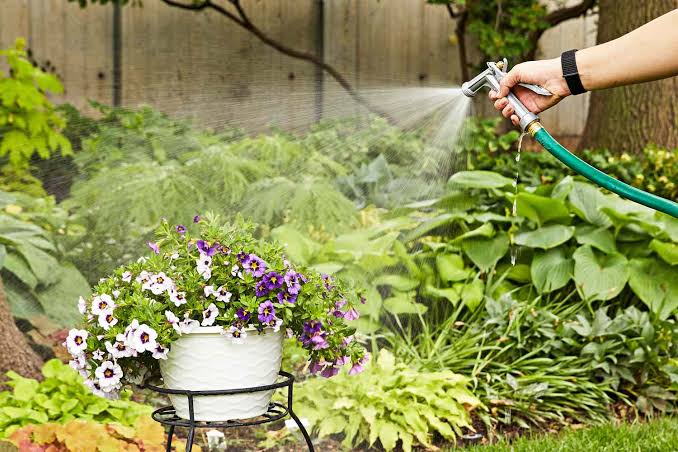

A garden sprayer nozzle is the end part or attachment of a sprayer that changes liquid (such as water or chemicals) into a spray. The nozzle controls how the liquid flows and converts it into droplets with a specific spray pattern and shape. Selecting the correct nozzle is essential because it determines how evenly plants receive coverage, the spraying distance, and the size of the droplets produced.
An Overview Of Top Quality Garden Sprayer Nozzles Types
| Product | Title | Features | Explore |
|---|---|---|---|
 | Albion Engineering Company 235-3(25 Pack) Cone Nozzle |
| Check Price |
 | Yinpecly Plastic 110 Degree Flat Fan Spray Nozzle |
| Check Price |
 | Mesto Nozzle Set 2302 Brass Hollow Cone Nozzles |
| Check Price |
 | uxcell Male Thread Stainless Full Cone Spray Nozzle |
| Check Price |
Aimela Solid Brass Cone Nozzle |
| Check Price | |
 | Melnor 65019-AMZ XT Adjustable Metal Nozzle |
| Check Price |
 | STYDDI 6″ Jet Stream Brass Garden Water Hose Nozzle |
| Check Price |
 | Dramm Fogg-It Brass Mist Spray Nozzle |
| Check Price |
 | Rocky Mountain Goods Flood Nozzle |
| Check Price |
 | FULAIERGD Drip Irrigation Misting Spray Nozzles |
| Check Price |

Nozzle selection plays an important role in improving spraying efficiency. For example, experts explain that incorrect spraying methods can waste around 10–15% of pesticide solution because of spray drift, overlapping, or unused liquid. On the other hand, selecting the correct nozzle helps place the spray exactly where it is needed, reducing waste and improving overall performance.
What Is a Garden Sprayer Nozzle?
A garden sprayer nozzle is a small component fitted at the end of a sprayer wand or hose. When liquid moves through the sprayer under pressure, it passes through the nozzle orifice. The design, shape, and size of this opening transform the flowing liquid into a controlled spray made of droplets.
For example, a pump pushes liquid with pressure through the small nozzle opening, breaking the continuous liquid stream into many tiny droplets. This process is known as atomization. Depending on the nozzle design, atomization can create different spray patterns, such as a flat spray, cone-shaped spray, or a direct stream.
The nozzle controls several important spray features, including the spray pattern (flat fan, cone, or jet), spray angle (the width of the spray area), and droplet size. Common hydraulic nozzle spray angles include 65°, 80°, and 110°. A wider angle, such as 110°, covers a larger area but usually creates smaller droplets. A narrower angle, such as 65°, produces larger droplets that can travel farther.
Simply explained, the nozzle decides how the liquid leaves the sprayer: as a narrow stream, a wide flat fan, a hollow cone, or another spray pattern. Without a nozzle, liquid would flow out without control, similar to water coming from an open hydrant.
Why Choosing the Right Garden Sprayer Nozzle Matters
Choosing the correct nozzle for your garden sprayer improves spraying accuracy, efficiency, and safety. The right nozzle provides uniform coverage on plants, ensuring that leaves receive the required amount of spray solution. If the spray coverage is too low, some weeds or pests may remain untreated. If the spray is excessive or uneven, it can damage plants and waste chemicals.
For example, flat-fan nozzles create an even spray pattern across a specific area, while cone nozzles produce a circular spray pattern. Each nozzle type is designed for different spraying requirements.
A suitable nozzle also helps reduce over-spraying and spray drift (when spray moves away from the intended target). Very small droplets can easily be carried away by wind. Experts report that normal nozzles may lose about 2% of spray volume because of airborne drift. Using drift-reducing nozzles that produce larger droplets can decrease these losses by half or even more.
Some studies estimate that 10–15% of the total spray mixture from a sprayer can be lost due to drift, overlapping applications, and wasted rinse water. However, using the correct nozzle along with proper spraying techniques can significantly reduce these losses.
The correct nozzle choice also protects sensitive plants. A nozzle producing an extremely fine mist may harm young seedlings or delicate flowers, while very large droplets may fail to properly cover small insects or pests on leaves. Some pesticide labels also recommend specific nozzle types or droplet sizes to reduce drift risks.
Overall, matching the nozzle with the spraying task provides better weed and pest control, reduces chemical usage, and keeps the spray focused on the target area.
10 Best Types of Garden Sprayer Nozzle for Efficient Spraying
Garden sprayer nozzles are available in different types, and each design serves a specific spraying purpose. Some nozzles create a wide spray pattern for covering large areas, while others produce a concentrated stream for accurate applications.
Understanding different nozzle types helps gardeners select the best option for watering plants, applying fertilizers, controlling pests, or managing weeds.
1. Cone Nozzle
A cone nozzle produces a circular cone-shaped spray pattern. These nozzles are available in two main designs: full cone and hollow cone.
A full cone nozzle produces a complete cone-shaped spray where the entire circular area is filled with liquid. This provides full coverage across the target area under the nozzle.
Full-cone nozzles usually create larger droplets and are useful when complete wetting is required. For example, gardeners can use full cone nozzles for applying fertilizers or watering soil around plants. They are also commonly used with insecticides and fungicides because they help provide even coverage on different parts of leaves.
Hollow cone nozzles produce a ring-shaped spray pattern with empty space in the center. Because they create some of the smallest droplets among hydraulic nozzles, they provide excellent coverage on plant surfaces.
However, gardeners should use caution when using hollow cone nozzles because the fine mist they produce can easily move with wind. They work best in calm weather conditions or controlled environments such as greenhouses.
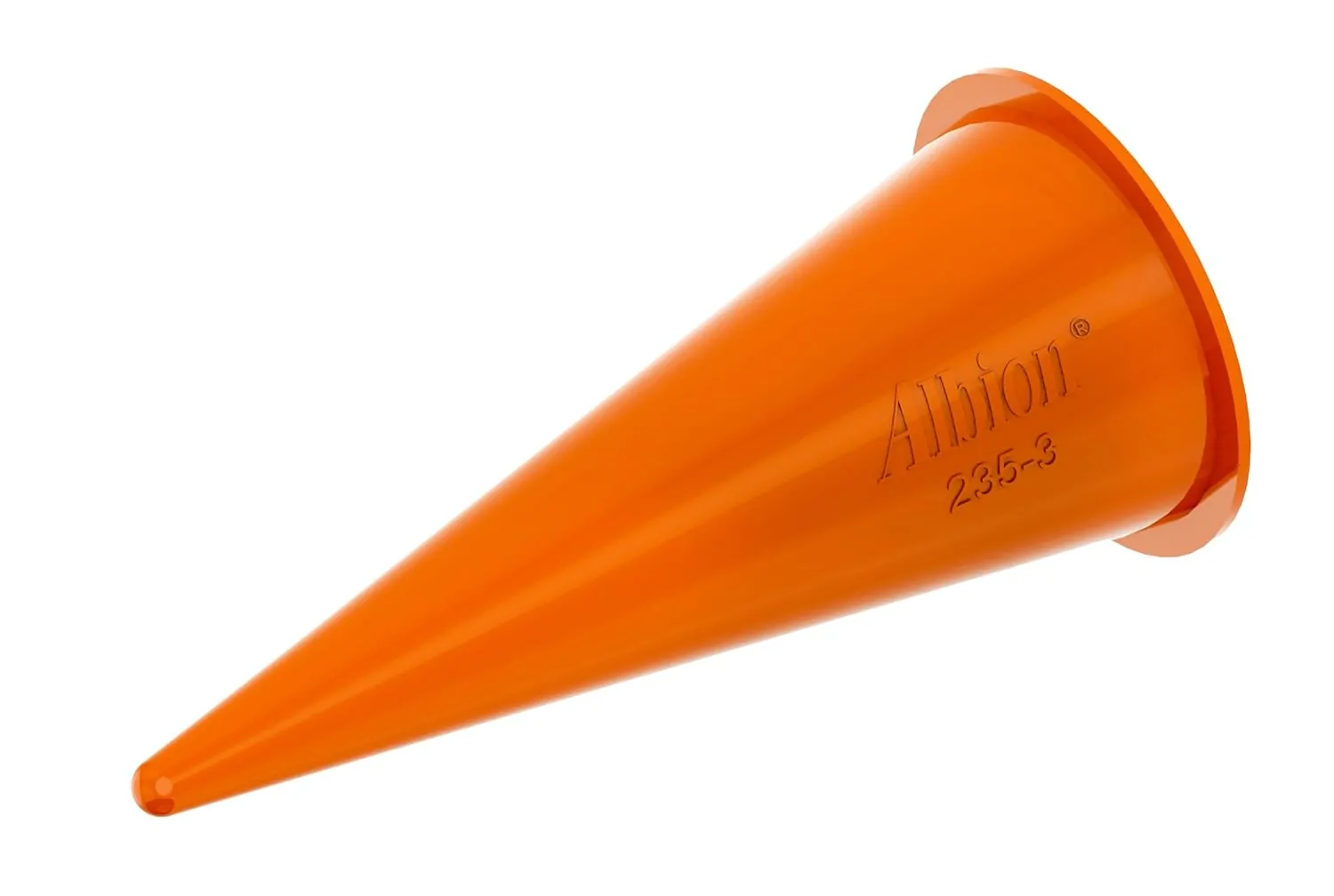
Albion Engineering Company 235-3(25 Pack) Cone Nozzle
Durable HDPE cone nozzle designed for Albion professional caulking guns, featuring an adjustable tip opening from 1/8″ to 1-3/4″ for accurate sealant application. The long angled cone shape helps reach narrow spaces easily and works with #421-G01 ring cap guns. Made from strong plastic, it is suitable for use on brick, concrete, and glass surfaces. During my garden repair work, the nozzle fitted securely without leakage and helped apply sealant neatly in small gaps around garden beds.
expert start
What Is It & its Features
The Albion Engineering Company 235-3 Cone Nozzle is a replacement nozzle made for Albion Professional Line caulking guns, especially 2-inch diameter Special Deluxe models such as DL-45 and DL-59. This package contains 25 cone nozzles manufactured from durable HDPE plastic.
These nozzles are designed to attach with Albion bulk or sausage guns that use the #421-G01 ring cap system. One of the most useful features of this nozzle is its adjustable tip design. The cone opening can be cut from approximately 1/8 inch to 1-3/4 inches, allowing users to control the size of the sealant bead according to their specific needs.
The HDPE plastic construction provides good strength and durability. It can handle contact with rough surfaces like brick and concrete while remaining safe for smoother materials such as glass and metal. The extended cone shape is another helpful feature because it allows users to apply sealant in deep, narrow, or difficult areas where regular nozzles may not work effectively.
Why It Matters
In gardening and outdoor maintenance, proper sealing of gaps and joints is an important task. Many garden structures, including raised beds, irrigation systems, greenhouses, and outdoor planters, require effective sealing to prevent water leakage, soil loss, and unwanted pest entry.
The Albion Engineering Company 235-3 Cone Nozzle helps make these repairs easier because of its long and narrow design. It allows sealant to be applied accurately in small and difficult-to-reach areas. For example, when repairing gaps between wooden boards in a raised garden bed, the narrow nozzle tip provides better control and helps create a clean seal without unnecessary mess.
The adjustable opening also makes this nozzle suitable for different repair jobs. Users can change the opening size depending on the amount of sealant required. This flexibility improves application accuracy and helps reduce sealant waste during gardening projects.
My Set-Up And My Experience
I used the Albion Engineering Company 235-3 Cone Nozzle with a standard sausage-style caulking gun for several garden maintenance and repair tasks. One of my main uses was sealing connections in wooden raised beds and filling small gaps between bricks around my garden pathway.
Setting up the nozzle was very easy. It attached firmly to the tube and stayed secure during use without any leakage. The first thing I noticed was the advantage of the extended cone design. Some parts of my garden, especially inside corners of raised beds and narrow spaces between bricks and wooden frames, are difficult to access with ordinary caulking tips.
This nozzle allowed me to direct the sealant deeper into those areas without repeatedly changing the position of the caulking gun. The plastic body also felt strong while working against rough materials such as brick surfaces.
Performance
The Albion Engineering Company 235-3 Cone Nozzle performed very well during my garden repair projects. The sealant flow remained smooth and easy to control throughout the application process.
Because the nozzle connected tightly with the tube, there were no leaks or unwanted sealant spills around the joining area. This helped maintain a cleaner working process and reduced material waste.
The precision of this nozzle was one of its strongest advantages. The narrow cone shape provided better control when applying sealant along small cracks, narrow joints, and tight spaces.
I used it to seal a small opening between a greenhouse frame and a concrete base, and the results were excellent. The tip allowed the sealant to reach deeper inside the joint, creating a more complete seal.
The HDPE plastic material also showed good durability. Even after pressing the nozzle against brick and concrete surfaces, it maintained its shape without cracking or bending.
Practical Tips
- Cut the nozzle tip carefully with a utility knife to achieve the bead size required for your project.
- Begin with a smaller opening and enlarge it gradually if more sealant flow is needed.
- Use the narrow nozzle tip for difficult areas around raised beds, planters, and greenhouse structures.
- Change the nozzle when using a different type of sealant to maintain cleaner applications.
- Keep unused nozzles stored in a dry and clean location so they remain ready for future projects.
expert end
pro start
| Pros | Cons |
|---|---|
| ✔ Adjustable tip design allows different sealant bead sizes | ❌ Costs slightly more than simple standard nozzles |
| ✔ Durable HDPE plastic construction provides good strength | ❌ Cleaning and reusing the nozzle is not very convenient |
| ✔ Secure fitting helps prevent sealant leakage | ❌ Mainly suitable for specific Albion caulking guns |
| ✔ Extended cone shape makes reaching tight areas easier | ❌ The plastic tip may block if dried sealant remains inside |
| ✔ 25-pack provides a useful long-term supply | ❌ Requires careful cutting to achieve the correct opening size |
pro end
2. Flat Fan Nozzle
A flat fan nozzle produces a flat, fan-like spray pattern. Think of it like spraying water in the shape of a wide strip. These nozzles create a narrow spray band where the liquid concentration is highest in the center and gradually becomes lighter toward the edges. The spray pattern appears like a fan shape or a straight line on the surface. Flat fan nozzles are commonly used for general spraying applications.
They provide even coverage across horizontal rows of plants, garden beds, and other flat surfaces. For example, when applying herbicides or fertilizers across a lawn or planting area, flat fan nozzles are an excellent choice. Common spray angles include 65°, 80°, and 110°, which determine the width of the spray coverage. Since the spray becomes lighter at the edges, overlapping spray patterns are usually needed to achieve complete and uniform coverage.
An 80° flat fan nozzle covers a smaller area compared to a 110° nozzle. Gardeners usually keep the nozzle wand around 1–2 feet above the plants and move it with steady, even strokes. This method helps create a consistent strip of spray. Overall, flat fan nozzles are suitable for covering wide, flat areas and plant rows where uniform liquid distribution is required.
Yinpecly Plastic 110 Degree Flat Fan Spray Nozzle
The Yinpecly flat fan spray tip provides a 110° spray angle with balanced liquid distribution, medium-sized droplets, and a pre-orifice design that helps reduce spray drift. Made from lightweight and durable plastic, these nozzles feature a 6 mm interface that allows them to work with many different sprayers. They provide dependable performance for agricultural and gardening applications. In my garden setup, these spray tips performed well for orchard strip spraying and sealer applications, giving broad coverage and a steady spray pattern.
expert start
What Is It and Its Features?
The Yinpecly 10pcs Plastic Nozzle 110 Degree Flat Fan Spray Tip is a collection of small plastic spray nozzles designed for agricultural sprayers, landscaping work, and general cleaning uses. Each nozzle has a maximum diameter of approximately 15 mm, a height of around 11 mm, and a 6 mm inner interface diameter, allowing it to fit many handheld and backpack sprayers. The nozzle creates a 110° flat fan spray pattern that spreads liquid over a wide area. This design helps provide consistent spray coverage with medium-sized droplets. The nozzles are manufactured from durable plastic that is lightweight, non-toxic, and strong enough for regular use. Another important feature is the pre-orifice design, which helps regulate the flow rate and produces slightly larger droplets to minimize spray drift.
Why It Matters
Choosing the correct spray nozzle is important in gardening and landscaping because it controls how evenly liquids reach plants and soil. The Yinpecly 10pcs Plastic Nozzle 110 Degree Flat Fan Spray Tip improves coverage by creating a wide fan-shaped spray pattern. This allows gardeners to treat a larger area with fewer passes, helping save time and reducing effort. The larger droplets produced by the pre-orifice design also help control spray drift, which is useful when applying pesticides, fertilizers, or sealers in outdoor areas. Excessive drift can waste chemicals and may affect nearby plants. For gardeners working with orchards, vegetable gardens, or landscape plants, a nozzle that provides even and reliable liquid distribution can make spraying easier and more effective. Although these nozzles are not from a premium manufacturer, they offer good performance at an affordable price.
My Set-Up And My Experience
I tested the Yinpecly 10pcs Plastic Nozzle 110 Degree Flat Fan Spray Tip with one of my garden sprayers that I regularly use for orchard strip spraying and occasional sealer applications. Initially, I was not sure if these nozzles would connect properly because they were not made by the same brand as my sprayer. However, the 6 mm interface size matched correctly, and installation was quick and easy. I first tested them with plain water and later used them with a garden spray mixture. The fan pattern expanded smoothly and covered a wide strip of ground, which was useful for orchard spraying. I also tested them with a sealer solution, and the results were better than expected. Considering the affordable price of the pack, I found the spray pattern and flow performance close to some higher-priced branded nozzles I have previously used.
Performance
The Yinpecly 10pcs Plastic Nozzle 110 Degree Flat Fan Spray Tip provided reliable performance for common gardening activities. The 110-degree spray angle created a wide coverage area, making it useful for treating plant rows and orchard strips. The spray spread evenly, and the droplets were consistent enough to provide good coverage without producing too much fine mist. I noticed that the droplets were slightly larger compared to very fine misting nozzles, which helped reduce drift during outdoor spraying. This made it easier to control where the liquid was applied, especially under slightly windy conditions. The plastic body feels lightweight but strong enough for normal gardening tasks. Although it does not have the heavy-duty construction of professional agricultural nozzles, it performed consistently during testing without problems such as clogging or uneven spray distribution.
Practical Tips
- Wash the nozzle with clean water after every use to avoid blockage.
- Use a filter inside the sprayer tank to prevent dirt and particles from reaching the nozzle.
- Check the spray pattern using plain water before applying chemicals.
- Maintain proper sprayer pressure to keep the fan pattern uniform.
- Store extra nozzles from the pack for replacement when needed.
expert end
pro start
| Pros | Cons |
|---|---|
| ✔️ Wide 110° spray angle provides excellent coverage. | ❌ Plastic material may not last as long as metal nozzles. |
| ✔️ Uniform flat fan spray pattern helps distribute liquid evenly. | ❌ Brand recognition is lower compared with major manufacturers. |
| ✔️ Lightweight plastic design makes fitting and handling simple. | ❌ Compatibility should be checked before installation. |
| ✔️ Budget-friendly 10-piece pack provides good value for gardeners. | ❌ Medium droplets are not suitable for extremely fine mist applications. |
| ✔️ Spray performance is similar to many higher-priced nozzles. | ❌ Long-term durability requires more extended use. |
pro end
3. Hollow Cone Nozzle
A hollow cone nozzle creates a circular spray pattern with an empty space in the center. The liquid comes out in a ring shape, similar to a donut. Inside the nozzle, special fins or grooves make the liquid rotate, breaking it into very small droplets. This spinning action allows hollow cone nozzles to produce some of the finest and most evenly distributed droplets among standard nozzle types. Gardeners commonly use hollow cone nozzles when detailed coverage is needed, especially for applying insecticides and fungicides on leafy plants and flowers.
Due to their fine mist-like spray, hollow cone nozzles can cover both the upper and lower surfaces of leaves effectively. This makes them useful for dense plants, shrubs, and areas where complete coverage is required. However, the small droplets can easily move away with wind, so these nozzles perform best during calm weather conditions. Spray pressure also affects droplet size. Higher pressure creates a finer mist, while lower pressure produces slightly larger droplets. For example, an 80° hollow cone nozzle can be adjusted for different spraying conditions by changing the pressure. Overall, hollow cone nozzles are preferred for precise and thorough spraying in pest and disease management.
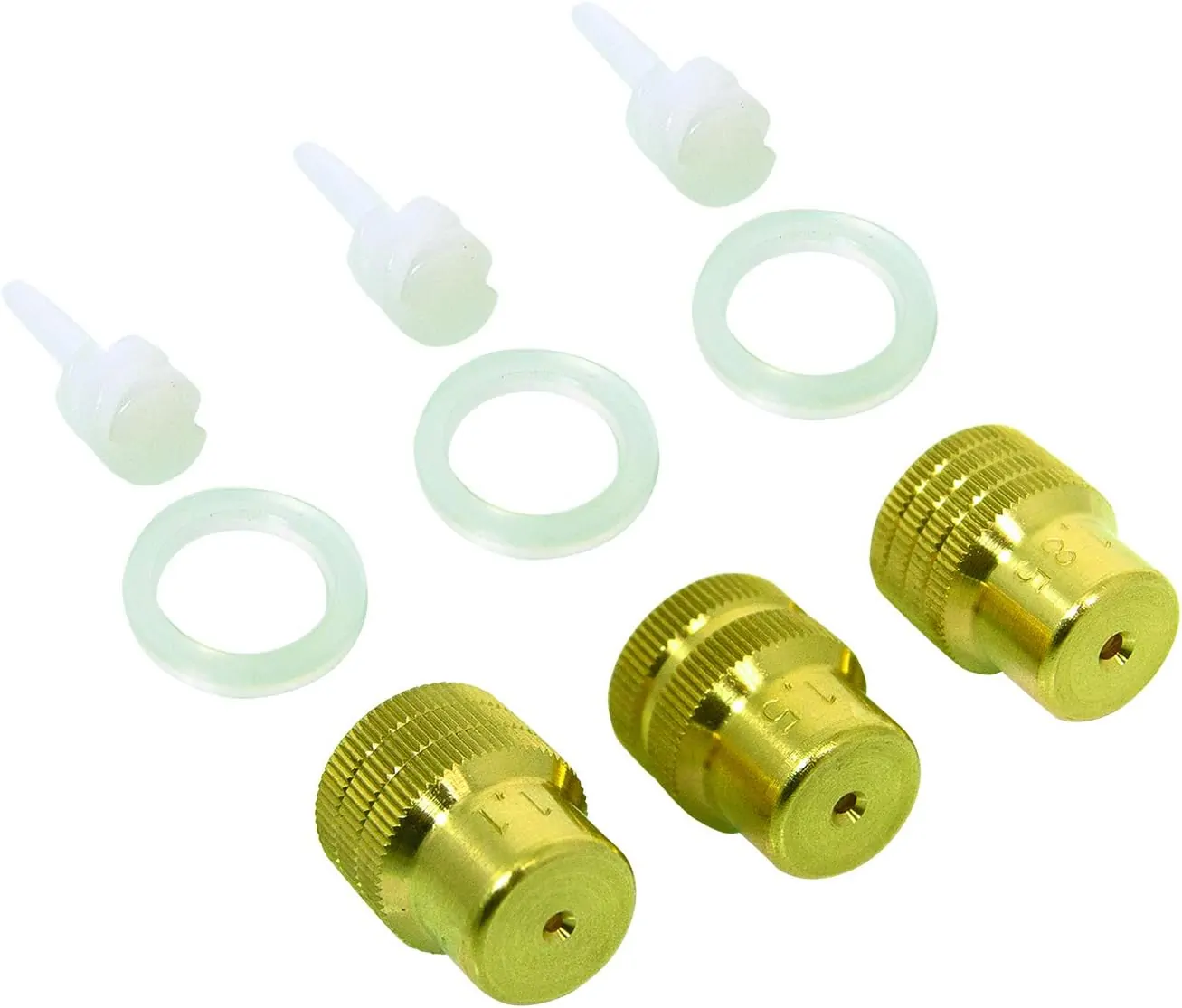
Mesto Nozzle Set 2302 Brass Hollow Cone Nozzles
The Mesto hollow cone nozzle set includes durable brass nozzles with three different bore sizes: 1 point 1, 1 point 5, and 1 point 85 mm. These nozzles provide adjustable spray patterns and reliable performance for garden spraying tasks. The hollow cone design helps distribute liquid evenly across plant surfaces, making them suitable for fertilizers, pesticides, and other garden applications. In my experience, changing between different nozzle sizes improved spray control, coverage, and efficiency when applying pest control solutions and liquid fertilizers.
expert start
What Is It and Its Features
The Mesto Nozzle Set 2302 is a group of three hollow cone spray nozzles designed for compatible garden sprayers. These nozzles are manufactured from brass and include three different bore sizes: 1.1 mm, 1.5 mm, and 1.85 mm. Each nozzle produces a hollow cone spray pattern, meaning the liquid spreads outward in a circular mist while leaving the center area open. This spray pattern is highly useful in gardening because it provides balanced coverage on plant leaves and soil surfaces. The nozzles have a compact design with approximate dimensions of 5.35 x 4.49 x 0.08 inches and a lightweight structure of around 1.34 ounces. The brass finish provides resistance against rust and wear, which is important because garden tools are regularly exposed to water and chemicals. The flange-type inlet and outlet connection also make installation easier on suitable sprayers.
Why It Matters
Selecting the correct nozzle is essential in gardening because it directly influences how effectively liquids are applied to plants. The Mesto Nozzle Set 2302 improves spraying efficiency by creating a controlled hollow cone spray pattern. This type of spray is especially useful for evenly coating plant leaves when applying pesticides, fungicides, or liquid fertilizers. Proper spray coverage helps the solution reach both the upper and lower leaf surfaces while reducing unnecessary chemical waste. Another important benefit of this nozzle set is its durability. Many low-quality plastic nozzles can wear out quickly or become damaged when exposed to chemicals. Brass nozzles, like those included in the Mesto set, provide better strength and corrosion resistance. This allows them to maintain reliable spray performance for a longer period.
My Set-Up and My Experience
I tested the Mesto Nozzle Set 2302 with my garden pressure sprayer during regular gardening activities, including pest control, leaf spraying, and light fertilizer applications. Installing the nozzles was easy because they connected smoothly with my sprayer system. I tested each bore size on different plants to compare the spray performance. The 1.1 mm nozzle produced a fine mist that worked well for sensitive plants and young seedlings. The 1.5 mm nozzle provided a balanced spray pattern that was suitable for general garden use. The largest 1.85 mm nozzle delivered a stronger liquid flow, which I preferred for applying liquid fertilizers on larger plants and garden beds. I liked the flexibility of quickly changing nozzle sizes according to different spraying needs. The brass construction also felt strong and durable, and the spray pattern remained consistent even after repeated use.
Performance
The Mesto Nozzle Set 2302 performed reliably and provided consistent spray coverage during testing. The hollow cone spray pattern helped spread liquid evenly across plant surfaces, which is especially beneficial when applying pest control products because complete coverage improves effectiveness. The brass construction also helped maintain smooth liquid flow. I found that the nozzles were less likely to clog compared with some cheaper alternatives. Cleaning was simple because rinsing them with clean water after use was enough to maintain proper operation. The durability was another strong point. After multiple spraying sessions, the nozzles showed no visible signs of rust, damage, or reduced performance. Overall, they provided dependable results for regular gardening applications.
Practical Tips
- Use the 1.1 mm nozzle when a fine mist is needed for delicate plants and seedlings.
- The 1.5 mm nozzle is suitable for everyday garden spraying tasks.
- Select the 1.85 mm nozzle when stronger liquid output is required for larger plants.
- Clean the nozzle with fresh water after applying fertilizers or chemicals.
- Store the nozzles in a dry location to protect the brass surface and extend their life.
expert end
pro start
| Pros | Cons |
|---|---|
| ✔️ Strong brass construction provides good resistance against rust and corrosion. | ❌ Only suitable for compatible Mesto sprayers. |
| ✔️ Three bore sizes allow flexible spray adjustment. | ❌ Small nozzle pieces can be easy to lose. |
| ✔️ Hollow cone spray pattern provides even leaf coverage. | ❌ Not designed for extremely high-pressure spraying systems. |
| ✔️ Lightweight design makes installation simple on suitable sprayers. | ❌ Package does not include a dedicated storage box. |
| ✔️ Easy cleaning and maintenance after spraying work. | ❌ New users may need practice to select the correct nozzle size. |
pro end
4. Full Cone Nozzles
Full cone nozzles are highly versatile because they can be used for many different gardening tasks. They can provide gentle watering similar to natural rainfall, as well as stronger applications of liquid fertilizers or pesticides across a wider area.
The droplets produced by full cone nozzles are usually larger compared with hollow cone nozzles. These larger droplets help reduce spray drift and allow the liquid to reach the desired area more effectively. This type of nozzle is especially useful when complete soaking is needed, such as deep watering, soil treatment, or applying liquid solutions around plants.
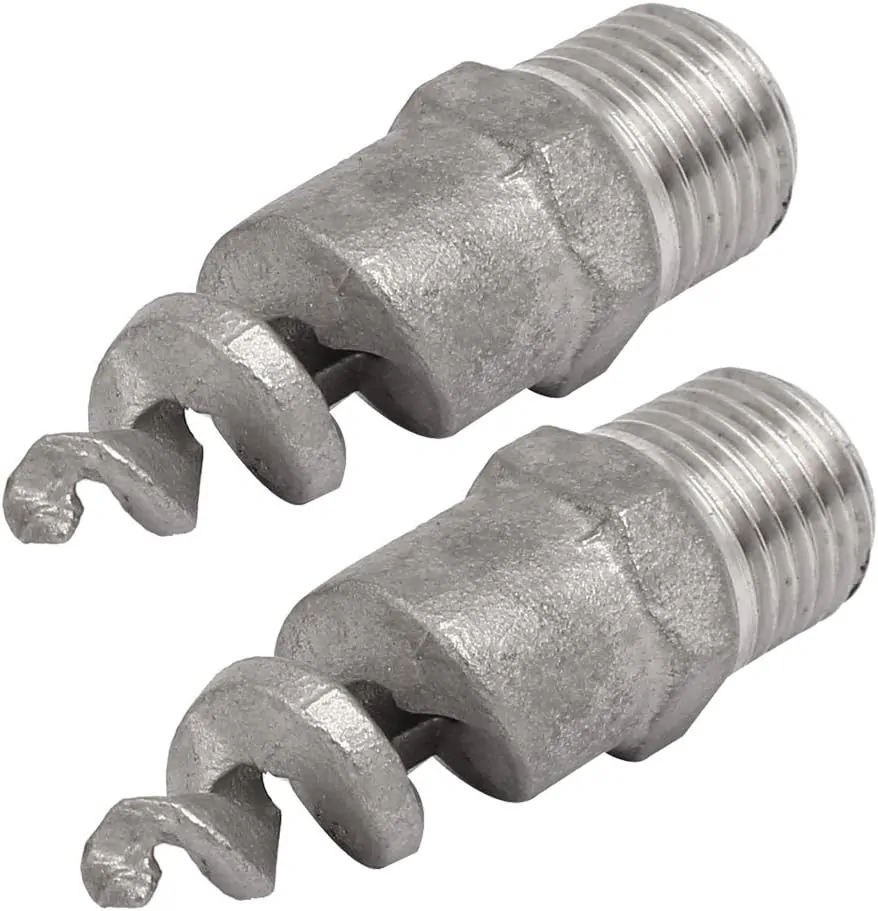
uxcell Male Thread Stainless Full Cone Spray Nozzle
This durable stainless steel spiral nozzle comes with a 1/4 BSP male thread and creates a wide 120° full cone spray pattern with fine droplet formation. The smooth spiral design inside the nozzle helps maintain better water flow, lowers the chances of blockage, and provides uniform spray coverage. It works well for watering plants, applying liquid fertilizers, and general garden maintenance. In my experience, this nozzle produced a soft and balanced spray that made seedling watering and fertilizer application easier and more effective.
expert start
What Is It And Its Features
The uxcell 1/4BSP Stainless Steel Spiral Spray Nozzle is a small but effective nozzle designed to create a full cone spray pattern. Instead of sending water in a straight line, it spreads the liquid evenly in a cone-shaped pattern. The internal spiral structure helps divide the water flow into smaller droplets, improving coverage for plant watering and liquid applications.
The nozzle is made from stainless steel, which provides better durability and resistance against corrosion. This is an important feature for outdoor gardening because nozzles are regularly exposed to water, fertilizers, and different chemicals. Stainless steel helps prevent rust and keeps the nozzle strong for long-term performance.
It comes with a 1/4 BSP male thread and has a thread size of approximately 13 mm, allowing it to connect with many standard small sprayers and pipe fittings. The nozzle has a compact design with around 14 mm hex width and 42 mm height, making it lightweight and easy to install.
Why It Matters
The uxcell Spiral Design Spray Nozzle is useful for gardeners because choosing the correct spray pattern can greatly affect plant care results. Many ordinary nozzles create a strong water stream that may harm delicate plants, disturb the soil, or remove fertilizer from the growing area.
A full cone spray nozzle provides a softer and more evenly distributed spray, making it suitable for flowers, seedlings, vegetables, and other sensitive plants. The smooth internal spiral design also improves water movement and helps reduce clogging problems.
During gardening, water may contain small particles or minerals that can block smaller nozzle openings. A better internal flow design helps maintain a steady spray and consistent performance. The stainless steel body also provides an advantage over plastic nozzles because it is less likely to crack, weaken, or lose shape after repeated use.
My Set-Up And My Experience
I tested the uxcell 1/4BSP Spiral Spray Nozzle with a small hand-pump garden sprayer and also connected it to a basic irrigation setup. Installing the nozzle was simple because the 1/4 BSP thread worked with common connectors. I used a small amount of thread tape to create a secure connection and prevent leakage.
During the first test, I noticed that the nozzle produced a wide and evenly distributed spray pattern. The spiral design helped convert the water flow into fine droplets, allowing gentle coverage without applying excessive pressure on plants.
I used it for watering young vegetable plants and applying diluted liquid fertilizer. The cone-shaped spray covered multiple plants at the same time, which improved efficiency compared with a narrow stream nozzle.
The stainless steel construction also gave a strong and premium feel. After several uses, the nozzle showed no signs of rust or damage. Cleaning was easy as well; simple rinsing with clean water removed remaining residue.
Performance
The uxcell Spiral Full Cone Spray Nozzle performs best when even coverage is more important than long spraying distance. Its wide cone pattern helps distribute water over a larger area, making it suitable for garden beds, seedlings, and plant foliage.
The fine atomization feature is also beneficial when applying fertilizers or plant protection solutions because it helps spread liquids more evenly. The nozzle works effectively with moderate water pressure.
With higher pressure, the spray becomes wider and finer, which can be useful for misting plants or increasing coverage. At lower pressure, it continues to provide a stable cone spray, although the droplets become slightly larger.
The spiral internal design helps maintain smooth water movement and lowers the risk of clogging. During my testing, I did not face blockage issues, even when using water containing some mineral content.
Practical Tips
- Use medium water pressure to achieve the best spray coverage.
- Apply thread tape during installation to avoid water leakage.
- Clean the nozzle after using fertilizers or chemical solutions.
- Use filtered water whenever possible to reduce clogging problems.
- Keep the nozzle slightly above plants for more uniform coverage.
expert end
pro start
| Pros | Cons |
|---|---|
| ✔️ Durable stainless steel body provides long-lasting performance. | ❌ Spray distance is not very long. |
| ✔️ Creates wide and consistent spray coverage. | ❌ Needs suitable pressure for maximum performance. |
| ✔️ Produces fine droplets for gentle plant watering. | ❌ Spray pattern cannot be adjusted. |
| ✔️ Small and lightweight design makes installation easy. | ❌ Thread tape may be required for a perfect seal. |
| ✔️ Package includes two nozzles for added value. | ❌ Compact size makes it easier to lose. |
pro end
5. Solid Cone Nozzle
A solid cone nozzle (also known as a full cone nozzle) produces a complete cone-shaped spray pattern where the entire cone area is filled with liquid. Unlike hollow cone nozzles, it does not leave an empty space in the center of the spray. The spray pattern appears as a fully covered circle on the target surface.
Solid cone nozzles generally create larger and heavier droplets compared with hollow cone nozzles. These bigger droplets reduce spray drift and help the liquid reach the intended surface more effectively. Gardeners often choose solid cone nozzles when they need deep and complete coverage, such as applying pesticides, fertilizers, or other liquid treatments over an area.
Because these nozzles provide full-circle coverage, they are useful for spot spraying and applying solutions directly to soil areas. However, very heavy spraying may cause liquid to run off plant surfaces, so they are better suited for stronger plants or soil wetting applications. In agricultural terminology, solid cone nozzles are considered full cone tips because they provide complete spray coverage. In gardening, they are commonly called cone nozzles or full cone nozzles. A simple way to understand them is that a solid cone spray works like a gentle shower covering plants evenly instead of a concentrated water jet.
Aimela Solid Brass Cone Nozzle
The Aimela Solid Brass Adjustable Cone Nozzle provides a strong brass construction with adjustable spray options, allowing users to switch between fine mist and direct spray. It offers corrosion resistance, threaded connections, and adapter support for better compatibility with different sprayers. The kit includes single and double nozzle options with anti-leak gaskets, helping improve spray coverage, pressure control, and atomization efficiency. In my experience, this nozzle produced smooth and even spraying, covered larger areas quickly, and performed better than a standard plastic nozzle on my backpack sprayer.
expert start
What Is It and Its Features?
The Aimela Solid Brass Adjustable Cone Nozzle Kit is a replacement nozzle set designed for backpack knapsack sprayers, electric sprayers, and different agricultural spraying equipment. The package contains one single nozzle, one double nozzle head, two adapters, and anti-leak gaskets, making it suitable for various sprayer types.
The nozzles are manufactured from solid brass, a material known for its excellent strength, durability, corrosion resistance, and ability to handle higher pressure conditions. One of the main advantages of this nozzle is its adjustable spray pattern. By rotating the nozzle tip, users can easily change the output from a fine mist spray to a more concentrated stream.
This adjustment feature makes the nozzle suitable for different gardening activities, including spraying pesticides on leaves, applying liquid fertilizers, and gently watering young plants. It supports two main spraying modes: atomized mist and direct spray, giving gardeners better control over liquid application.
Why It Matters
Selecting the correct nozzle can significantly improve spraying results in gardening. The Aimela brass nozzle helps distribute liquids more evenly, which is important when applying fertilizers, pesticides, and plant protection treatments. Uniform coverage allows plants to receive treatments more effectively and improves overall application efficiency.
Another important benefit is durability. Many garden sprayers come with plastic nozzle heads that may become damaged, cracked, or less effective after regular use. Brass construction provides better strength and improved resistance against pressure and chemical exposure, which helps increase the working life of the nozzle.
From my experience, brass nozzles maintain better spray consistency, especially when working with liquid fertilizers or stronger spraying solutions. The adjustable atomization feature is also valuable because different plants require different spray strengths. A soft mist works well for delicate leaves and seedlings, while a stronger spray is useful for larger plants and wider coverage areas.
My Set-Up and My Experience
I tested the Aimela Solid Brass Adjustable Cone Nozzle with my backpack knapsack sprayer in a small vegetable garden and several ornamental plant areas. Installation was easy because the included threaded adapter allowed the nozzle to connect properly with my sprayer.
After installation, I tested both the single nozzle and double nozzle settings. The single nozzle worked well for targeted applications, especially when applying liquid fertilizer around individual plants. The double nozzle option was more useful for covering larger areas quickly, such as spraying rows of vegetables or garden beds.
The anti-leak gaskets included in the kit were helpful because they reduced dripping and prevented unnecessary liquid loss during operation. During regular use, the brass body felt strong and reliable. The nozzle produced a smooth spray pattern and continued working without frequent clogging problems.
Performance
The Aimela brass nozzle kit provides strong performance for common gardening and agricultural spraying activities. Its adjustable design allows users to select different spray patterns, ranging from a fine mist to a stronger direct spray.
This flexibility makes it suitable for many applications, including pesticide spraying, herbicide application, liquid fertilizer distribution, and general plant care. The double-nozzle configuration is especially useful because it increases the spray width and helps complete larger spraying tasks in less time.
While testing, I noticed that the spray pressure felt stronger compared with the original plastic nozzle that came with my sprayer. The nozzle provided consistent atomization and reliable coverage, making it a useful upgrade for regular garden spraying.
Practical Tips
- Adjust the nozzle slowly until you find the correct spray pattern for your plants.
- Use the mist setting when spraying seedlings and delicate plants.
- Clean the nozzle after applying fertilizers or chemical solutions.
- Check gasket seals regularly to prevent leakage during spraying.
- Use the double nozzle setup when covering larger garden areas.
expert end
pro start
| Pros | Cons |
|---|---|
| ✔️ Strong solid brass construction provides durability and long service life. | ❌ Brass tip may develop stains after using fertilizer or iron-based solutions. |
| ✔️ Adjustable spray pattern allows switching between mist and direct spray. | ❌ Slightly heavier compared with plastic nozzle options. |
| ✔️ Includes both single and double nozzle options for flexible spraying. | ❌ Threads need proper tightening to prevent small leaks. |
| ✔️ Included adapter improves compatibility with different sprayers. | ❌ Small components can be misplaced during installation. |
| ✔️ Double nozzle setup helps cover larger areas efficiently. | ❌ Spray adjustment may take some practice for new users. |
pro end
6. Adjustable Nozzle
An adjustable nozzle is a flexible spray tip that allows you to change the water spray pattern according to your needs. These nozzles usually come with a rotating head or adjustment lever that lets you switch from a soft mist to a powerful jet stream. They are widely used with hand-pump sprayers and hose-end sprayers. The main benefit is that one nozzle can perform many different watering tasks.
For instance, you can use the mist setting for gently watering young seedlings, change to a wider spray for regular garden watering, and then adjust to a narrow jet for reaching hanging baskets or cleaning small areas. Since there is no need to replace different nozzle tips, adjustable nozzles are a convenient choice for home gardeners. However, users should pay attention while adjusting the spray because a strong jet can accidentally harm delicate plants. Overall, adjustable nozzles provide excellent versatility and allow a single sprayer to handle several gardening jobs.
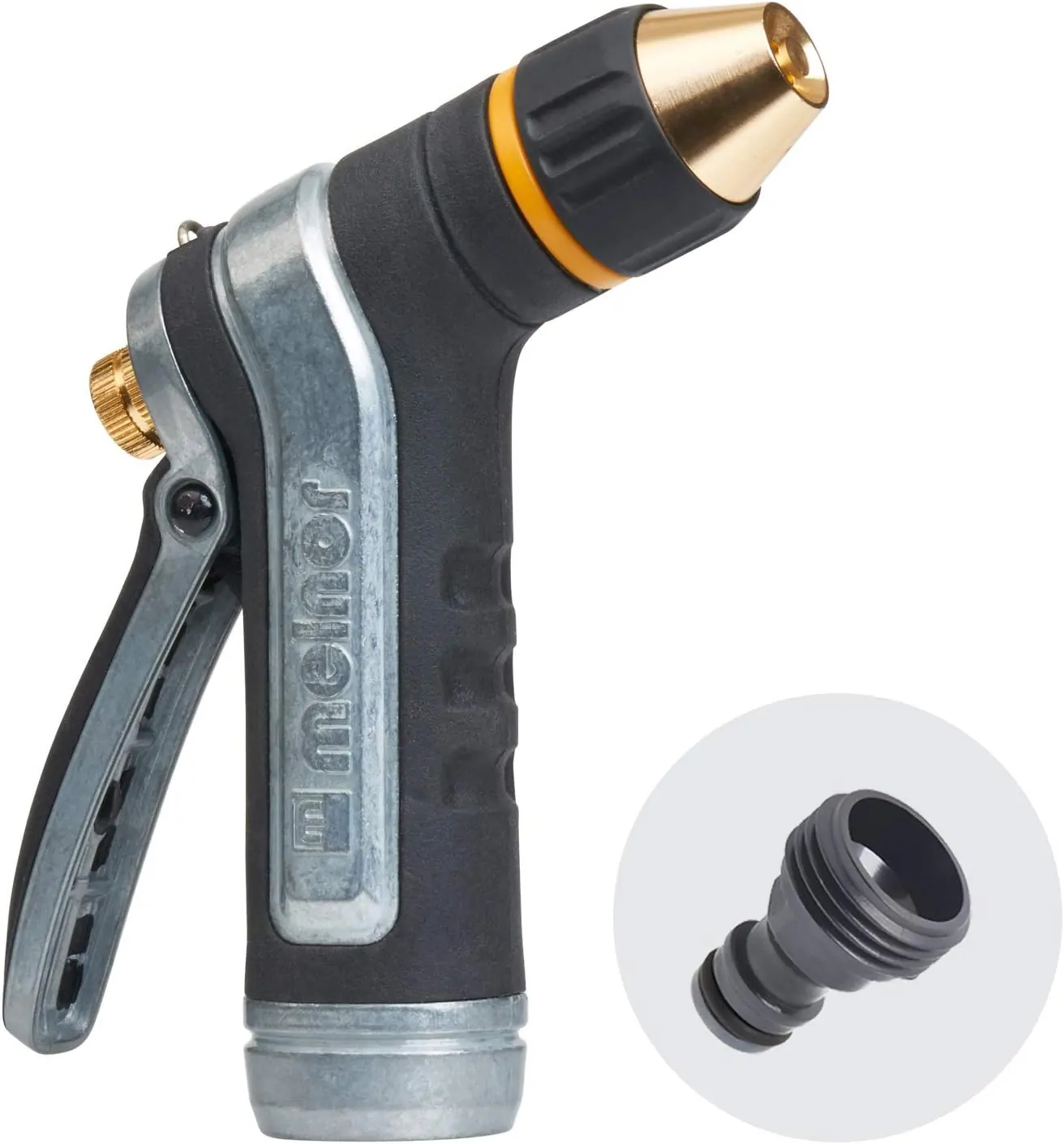
Melnor 65019-AMZ XT Adjustable Metal Nozzle
The Melnor XT Metal Nozzle is built with strong metal construction, a comfortable rubberized grip, an adjustable spray tip, multiple spray settings, and a QuickConnect adapter. Its durable build provides reliable performance, prevents leaks, and allows smooth water control from a gentle mist to a powerful jet. Based on my experience, it feels strong in hand, reduces hand tiredness, and makes everyday plant watering easier and more enjoyable.
expert start
What is it & Its Features
The Melnor XT Metal Nozzle is a high-quality hose-end nozzle designed with heavy-duty metal construction for improved durability and long-term use. It features a slip-resistant rubberized grip that provides better comfort during long watering sessions. The built-in trigger lock helps minimize hand pressure and reduces fatigue while spraying. Its adjustable tip is one of the most useful features because it allows users to easily switch between a soft mist and a strong jet based on different watering requirements. The nozzle also comes with a QuickConnect product adapter, which makes attaching and removing it from the hose quick and simple. With threaded inlet and outlet connections, it works with most standard garden hoses. Other important features include:
- Strong metal construction for extended durability
- Adjustable spray tip for controlling different water flows
- Rubberized trigger and head for improved comfort
- QuickConnect adapter for simple hose connection
- Multiple spray patterns for different gardening tasks
Why It Matters
The Melnor XT Metal Nozzle is valuable because it makes watering more convenient, efficient, and controlled. Many standard garden nozzles are made from low-quality plastic that can crack, leak, or stop working after regular use. The strong metal body of this nozzle provides better durability and handles pressure more effectively. Its adjustable tip gives gardeners better control over water flow, helping prevent excessive watering and protecting sensitive plants. The QuickConnect adapter also saves time by making hose changes easier and reducing the hassle of reconnecting equipment. For regular gardeners, this nozzle is a useful investment that turns daily watering into a smoother and more enjoyable activity.
My Set-Up and My Experience
I attached the Melnor 65019-AMZ XT Metal Nozzle to my regular garden hose and immediately noticed its strong and premium feel. Compared with plastic nozzles I have used previously, this model feels much more stable and durable. The rubberized grip provides a comfortable hold even when my hands are wet, while the trigger lock helps me continue watering for longer periods without discomfort. The adjustable tip allows me to easily change between a gentle mist for flowers and seedlings and a powerful jet for cleaning paths, patios, and garden equipment. The QuickConnect adapter is also very convenient because it allows fast hose changes without unnecessary twisting. Overall, it has provided a smooth experience and has become one of my preferred tools for everyday gardening work.
Performance
The performance of the Melnor XT Metal Nozzle is impressive and reliable. Its different spray patterns, such as shower, jet, and mist, provide excellent control over water application. The metal trigger works smoothly and maintains a secure connection without leakage. Even with frequent use, the nozzle continues to perform well without noticeable corrosion or damage. The adjustable tip allows it to handle various tasks, from watering delicate seedlings to cleaning garden tools. The QuickConnect adapter remains secure during operation, making it easy to move around different areas of the garden. Overall, this nozzle delivers consistent performance while reducing time and effort.
Practical Tips
- Use the trigger lock during extended watering sessions to reduce hand fatigue.
- Begin with the mist or shower setting when watering delicate plants.
- Use the jet or cone spray for cleaning surfaces or covering larger areas quickly.
- Install the QuickConnect adapter for faster hose switching and easier handling.
- Keep the nozzle stored indoors during cold weather to increase its lifespan.
expert end
pro start
| Pros | Cons |
|---|---|
| ✔️ Durable metal construction designed for long-term use | ❌ Heavier than lightweight plastic nozzles |
| ✔️ Adjustable tip provides mist and powerful jet options | ❌ QuickConnect adapter may require an additional purchase |
| ✔️ Comfortable rubberized grip and trigger design | ❌ Higher price compared with simple nozzles |
| ✔️ QuickConnect adapter makes hose attachment easier | ❌ Needs careful handling to prevent damage from drops |
| ✔️ Multiple spray patterns support different gardening needs | ❌ Not designed for indoor applications |
pro end
7. Jet Stream Nozzle
A jet stream nozzle (also known as a solid stream or power nozzle) produces a narrow and powerful water stream. You can imagine it as a focused needle-like flow of water. This concentrated stream has strong pressure and can travel a long distance. Gardeners often use jet stream nozzles for reaching tall plants, trees, and removing stubborn dirt from outdoor surfaces. Since the water flow is highly focused, it creates strong impact and cleaning power. For example, a jet nozzle is useful for cleaning patios, garden benches, and other hard surfaces. In gardening applications, it can help spray insecticide onto tall conifers or reach plants placed in hanging baskets.
The solid stream can also help remove weeds growing between cracks when used at lower pressure. However, careful handling is necessary because the powerful stream may damage nearby flowers or soft plants if directed incorrectly. At very high pressure, it can tear delicate plant tissues. Therefore, jet stream nozzles are best suited for precise tasks where you need to target a specific plant or area. From a technical perspective, a jet nozzle works similarly to a solid stream nozzle used in agricultural sprayers. It forces liquid through a small opening without breaking it into separate droplets, creating a continuous pencil-like stream of water.
STYDDI 6″ Jet Stream Brass Garden Water Hose Nozzle
The STYDDI 6″ Brass Garden Hose Nozzle is built from solid brass, making it rust-resistant, durable, and suitable for high-pressure cleaning jobs. It creates a strong jet stream with broad coverage, making it useful for cleaning patios, driveways, vehicles, gutters, and outdoor furniture. During use, this nozzle delivered impressive results; it removed stubborn dirt quickly, felt strong in the hand, and worked almost like a compact pressure washer.
expert start
What is It & Its Features
The STYDDI 6″ Brass Garden Hose Nozzle is a premium-quality garden tool manufactured completely from solid brass. Unlike plastic nozzles, it contains no plastic components, which improves its durability and provides excellent resistance against rust and corrosion. The nozzle produces a powerful and concentrated water stream, making it suitable for cleaning patios, driveways, sidewalks, outdoor furniture, vehicles, and gutters. It comes with a standard ¾-inch female garden hose thread, allowing easy connection with most garden hoses. The nozzle can withstand water pressure up to 150 PSI and performs best around 80 PSI, where it can deliver approximately 7 gallons per minute. Its flat and wide jet stream design helps remove dirt, moss, and tough debris quickly while saving water and reducing cleaning time. The 6-inch body length provides better balance and control during operation.
Why It Matters
This nozzle is more than a simple garden accessory; it provides homeowners with a powerful cleaning solution without requiring a professional pressure washer. Its high-pressure jet stream can remove tough dirt and buildup that ordinary spray nozzles often cannot handle. The solid brass construction increases its lifespan and allows it to perform reliably in different weather conditions. This makes it a dependable choice for cleaning hard surfaces, washing vehicles, and maintaining outdoor areas. It matters because it combines strong performance, durability, and simple operation in one tool. Its focused water stream prevents unnecessary water dispersion, allowing faster and more effective cleaning.
My Set-Up and My Experience
I connected the STYDDI 6″ Brass Garden Hose Nozzle to my regular garden hose using the ¾-inch thread connection. The installation was simple and did not require additional adapters. I maintained water pressure near 80 PSI to achieve the best jet stream performance. From the first use, I noticed the impressive strength of the water flow. It cleaned my driveway, patio, and outdoor furniture with very little effort. I also tested it for washing my car and cleaning gutters, and it handled these jobs smoothly. The solid brass construction feels strong and reliable, while the extra weight provides better control during use. Adjusting the nozzle is easy, allowing the spray to change from a softer mist to a powerful straight jet. Using it felt similar to holding a small pressure washer, making outdoor cleaning tasks quicker and more enjoyable.
Performance
The performance of this nozzle is outstanding for both demanding cleaning tasks and general gardening use. The powerful jet stream easily removes stubborn dirt, moss, and debris from patios and driveways. The wide flat spray pattern covers larger areas quickly, helping reduce overall cleaning time. Even with high pressure, the water stream remains manageable and easy to direct. The design also helps reduce water waste. With careful use, it can clean sensitive surfaces such as vehicle rims and outdoor furniture. The solid brass body prevents leakage and maintains performance even after repeated use. Overall, it provides professional-level cleaning power while remaining easy to use and maintain.
Practical Tips
- Maintain at least 80 PSI water pressure for maximum performance.
- Select the correct spray pattern based on the cleaning requirement.
- Use a brass or high-quality shut-off valve for improved control.
- Avoid pointing the strong jet stream directly at delicate surfaces.
- Clean the nozzle regularly to avoid blockage caused by debris.
expert end
pro start
| Pros | Cons |
|---|---|
| ✔️ Solid brass construction provides excellent durability and extended service life. | ❌ The heavier design may feel tiring during long periods of use. |
| ✔️ Powerful high-pressure jet removes difficult dirt and grime effectively. | ❌ Strong pressure may damage delicate surfaces if used incorrectly. |
| ✔️ Wide flat stream cleans larger areas quickly. | ❌ Costs slightly more than basic plastic nozzles. |
| ✔️ Works with most standard garden hoses. | ❌ Needs sufficient water pressure to deliver the best results. |
| ✔️ Resistant to rust, corrosion, and outdoor weather conditions. | ❌ Offers fewer spray options because it mainly focuses on jet and mist patterns. |
pro end
8. Mist Nozzle
A mist nozzle creates an extremely fine spray made up of tiny water droplets. These nozzles are designed for situations where gentle and delicate watering is required. For example, mist nozzles are commonly used in greenhouses to increase humidity and in nurseries to water young plants and seedlings without disturbing their roots or soil. They operate at low pressure and produce a soft, fog-like spray that protects fragile leaves, flowers, and new growth.
Since the droplets are very small and lightweight, mist nozzles have a shorter spraying range and work best in smaller or controlled areas. They help maintain humidity levels, reduce dust, and provide cooling effects. However, gardeners should use caution when applying pesticides with mist nozzles because the fine droplets can easily drift away with air movement. Overall, mist nozzles are ideal for sensitive plants, cooling, and humidity control, but they are not suitable for heavy-duty watering or powerful spraying applications.
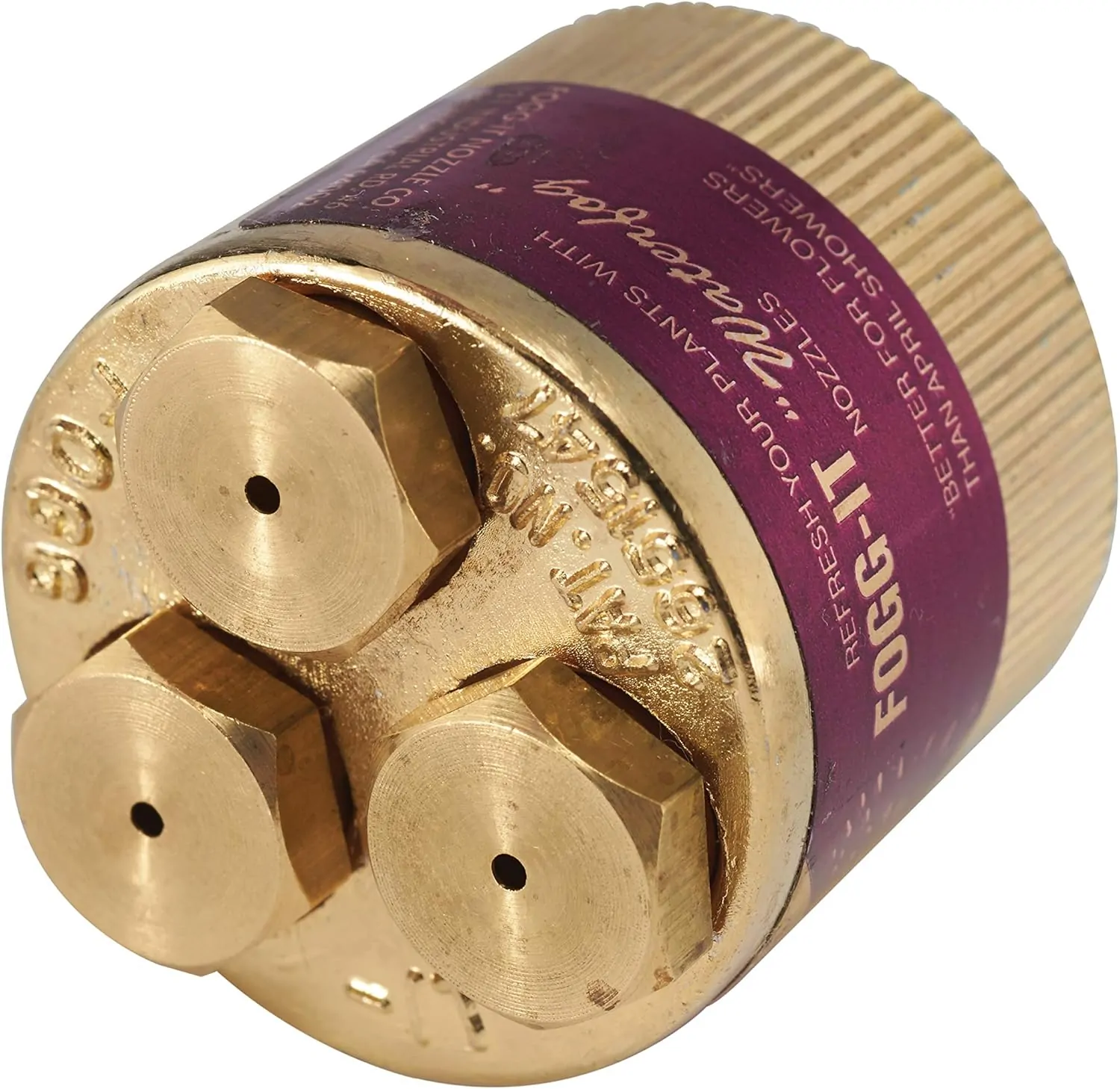
Dramm Fogg-It Brass Mist Spray Nozzle
The Dramm Fogg-It Mist Spray Nozzle features heavy-duty brass construction and three precision jets that create a gentle, fine mist for seedlings and delicate plants. It delivers one gallon per minute, improves humidity efficiently, saves water, and provides even hydration without damaging sensitive flowers or young plants. From my experience, this nozzle keeps seedlings healthier, protects delicate petals, maintains soil moisture, and makes regular plant care easier and faster.
expert start
What It Is & Its Features
The Dramm Fogg-It Mist Spray Nozzle is a specialized watering tool made from heavy-duty brass, offering excellent durability and a traditional premium finish. It includes three precisely machined brass jets that create a cone-shaped mist pattern, allowing balanced water distribution across plants. The nozzle provides a flow rate of one gallon per minute, making it water-efficient while delivering enough moisture for healthy plant development. Its standard barb fittings allow quick attachment to most garden hoses. With dimensions of 10.25 x 6.37 x 2.25 inches, it has a compact structure that is easy to handle and store. The most important feature of this nozzle is its ability to produce a soft mist similar to natural dew, making it highly suitable for delicate seedlings, young plants, and flowers that can be damaged by stronger watering methods.
Why It Matters
The Dramm Fogg-It Mist Spray Nozzle is valuable for gardeners because it provides a gentle and controlled watering method for sensitive plants. Many gardeners face problems such as overwatering, soil disturbance, or damage to young seedlings and flower petals. This nozzle solves these issues by delivering a soft mist that hydrates plants without creating excessive water pressure. Its ability to increase humidity around stressed or wilting plants is especially useful in hot and dry environments. Using this nozzle helps maintain proper moisture levels, protects seeds from being washed away, and supports healthier plant growth. For gardeners who focus on plant health and efficient watering, this nozzle saves water, reduces effort, and improves overall gardening results.
My Set-Up and Experience
I use the Dramm Fogg-It Mist Spray Nozzle in my home garden, where I grow flower plants, vegetable seedlings, and container plants. I connected it to my regular garden hose and added a brass shutoff valve for better water control. The fine mist produced by this nozzle works perfectly for young seedlings because it keeps the soil moist without creating flooding or disturbing the roots. I also use it for flowers that need extra humidity, and the results have been excellent. After several weeks of use, I noticed stronger seedlings, improved plant growth, and fewer signs of stress such as drooping leaves. The brass construction feels strong and reliable, giving confidence that the nozzle will continue working for many years.
Performance
The Dramm Fogg-It Mist Spray Nozzle delivers excellent performance for delicate watering applications. Its three mist jets create a consistent cone-shaped spray that provides even coverage while minimizing water waste. The 1 GPM flow rate offers a good balance between water efficiency and effective hydration. It provides enough moisture for seedlings and flowers while remaining gentle enough to avoid plant damage. I can water several seedlings and small flower areas within minutes, which makes daily gardening much easier compared with traditional watering methods. The fine mist resembles natural dew and does not disturb soil structure or fragile plant parts. Overall, this nozzle performs like a professional gardening tool while keeping operation simple and efficient.
Practical Tips
- Add a brass shutoff valve to improve water flow control.
- Use it for seedlings, flowers, and delicate plants requiring gentle watering.
- Water during early morning or evening hours to reduce evaporation.
- Inspect and clean the mist jets regularly to prevent clogging.
- Store the nozzle in a dry location to maintain the brass finish.
expert end
pro start
| Pros | Cons |
|---|---|
| ✔️ Heavy-duty brass construction provides long-term durability. | ❌ Slightly heavier than plastic nozzles, which may cause hand fatigue during extended use. |
| ✔️ Produces a fine mist that protects seedlings and delicate plants. | ❌ More expensive compared with basic plastic mist nozzles. |
| ✔️ Three precision jets provide even coverage and efficient watering. | ❌ Limited spray adjustment because it only produces a mist pattern. |
| ✔️ Easily connects with standard garden hoses. | ❌ Requires occasional cleaning to prevent jet blockage. |
| ✔️ Efficient water usage with a 1 gallon per minute flow rate. | ❌ Not suitable for pressure cleaning or heavy watering applications. |
pro end
9. Flood Nozzle
A flood nozzle (also known as a wide-angle nozzle) produces a very wide spray pattern with low pressure. It works similarly to a gentle shower or sprinkler, spreading water across a large area. These nozzles usually have multiple small holes or a flat, wide opening that distributes water over a broad space while creating larger water droplets.
Gardeners commonly use flood nozzles when they need to water large areas quickly. For example, they are useful for watering lawns, large flower beds, or applying coarse sprays such as manure tea. Although they do not provide a long spraying distance, their wide coverage allows users to water more ground in less time. Flood nozzles usually do not create a fine mist because they release larger droplets, making them a good choice for deep watering where water drift is not a problem.
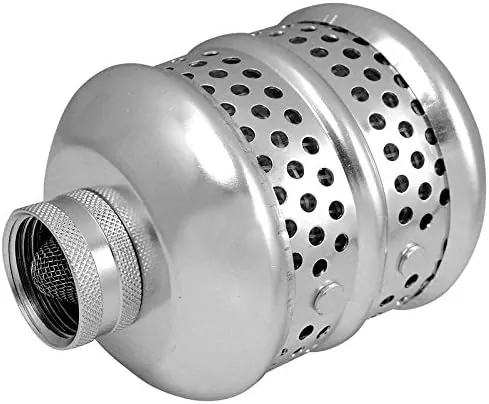
Rocky Mountain Goods Flood Nozzle
The Rocky Mountain Goods Bubbler Sprinkler is a lightweight, rust-resistant, and durable watering tool designed for reliable garden use. Its perforated holes provide fast and gentle soaking while helping prevent soil erosion. It works well for vegetable gardens, flower beds, trees, and delicate plants. I tested it on different plants and found it simple to use, effective in water distribution, and convenient to handle.
expert start
What Is It & Its Features
The Rocky Mountain Goods Bubbler Sprinkler is an impulse-style flood nozzle designed for gentle and controlled watering. Instead of creating a strong spray like traditional sprinklers, it releases water evenly through small perforated holes. This design allows deep soil soaking without disturbing mulch, seeds, or topsoil, making it especially useful for young plants and sensitive flower beds. It is suitable for vegetable gardens, container plants, flower beds, and newly planted trees. The aluminum construction makes it rustproof and capable of handling outdoor conditions for a long time. With a compact design and a weight of only 2.89 ounces, it is easy to attach to a standard garden hose and move whenever needed. Its simple but efficient design makes it a dependable choice for gardeners who want effective watering while maintaining healthy soil structure.
Why It Matters
Proper watering is one of the most important parts of successful gardening. The Rocky Mountain Goods Bubbler Sprinkler is valuable because it solves common issues found with regular sprinklers, such as uneven watering and soil erosion. Many traditional sprinklers release water with too much force, which can remove seeds, mulch, and loose soil. This sprinkler provides gentle bubbling water that slowly penetrates the soil without causing damage. It is especially beneficial for vegetable gardens, flower beds, and areas with young plants that require careful moisture management. The rustproof aluminum body also improves durability and reduces the need for frequent replacement. Its ability to deliver water directly into the soil saves both time and effort, making it a practical option for gardeners with multiple plants or larger growing spaces.
My Set-Up and My Experience
I mainly use the Rocky Mountain Goods Bubbler Sprinkler for my vegetable garden, flower beds, and a recently planted apple tree. I place it near the base of the tree and allow it to run for around 10 minutes every other day. The sprinkler provides even water distribution and deeply moistens the soil without creating runoff or removing the soil around my plants. I installed a quick-connect fitting, which makes it easier to move or remove the sprinkler whenever required. During very hot weather, I also used it for deep watering palm trees, and it worked smoothly without rusting or becoming blocked. I like that it is lightweight but still feels strong and durable. Compared with plastic sprinklers I have used previously, this aluminum bubbler provides better reliability and a longer service life.
Performance
The Rocky Mountain Goods Bubbler Sprinkler delivers excellent performance for slow and accurate watering. When operated with low hose pressure, it produces a steady water flow that gradually absorbs into the soil. At higher pressure, it releases water faster, so users should monitor it to avoid possible runoff. The sprinkler performs especially well around plant roots because it waters deeply without disturbing the soil surface. I found it highly effective for garden beds, potted plants, flowers, and small trees. After using it throughout the summer season, I noticed no rust or damage, showing the quality of its construction. The sprinkler also reminds me of similar watering tools I saw my mother use in her garden while I was growing up.
Practical Tips
- Use lower water pressure for slow soaking and improved water absorption.
- Place it close to the base of young plants and trees for deeper root watering.
- Move the sprinkler between different areas when covering a large garden.
- Install a quick-connect fitting for easier movement and adjustment.
- Use it for container plants and sensitive flower beds that need gentle watering.
expert end
pro start
| Pros | Cons |
|---|---|
| ✔️ Strong rustproof aluminum construction provides long-lasting performance. | ❌ Strong water pressure can create runoff and excess flooding. |
| ✔️ Gentle perforated holes provide efficient soaking while reducing soil erosion. | ❌ May require repositioning when watering larger garden spaces. |
| ✔️ Lightweight design makes it easy to move around. | ❌ Not ideal for extremely hard or compacted soil. |
| ✔️ Suitable for vegetable gardens, flowers, and newly planted trees. | ❌ Small holes may block when used with unfiltered water. |
| ✔️ Lifetime warranty provides extra confidence and reliability. | ❌ Performs best on flat areas rather than steep slopes. |
pro end
10. Drip Irrigation Nozzles
Drip irrigation nozzles are important parts of modern irrigation systems that deliver water slowly and directly to plant roots. They help save water by reducing evaporation and runoff while making sure plants receive the required amount of moisture. These nozzles are widely used in home gardens, greenhouses, and agricultural fields because they provide efficient watering even when water availability is limited. Their controlled water delivery helps reduce soil erosion and supports healthier plant growth by maintaining stable moisture conditions.
Another benefit of drip irrigation nozzles is their flexibility and simple installation. They are available in different designs and sizes to match different plants, soil types, and growing conditions, from small seedlings to fully grown crops. Many models allow users to adjust the water flow and pressure, making them useful even in areas with uneven land surfaces.
Many gardeners experience healthier plant growth and lower water costs because these nozzles deliver moisture exactly where plants need it. With proper care and very little maintenance, they provide an environmentally friendly and efficient solution for sustainable gardening and farming. These nozzles also help reduce leakage after turning off the system, minimizing water loss and preventing unwanted chemical application.
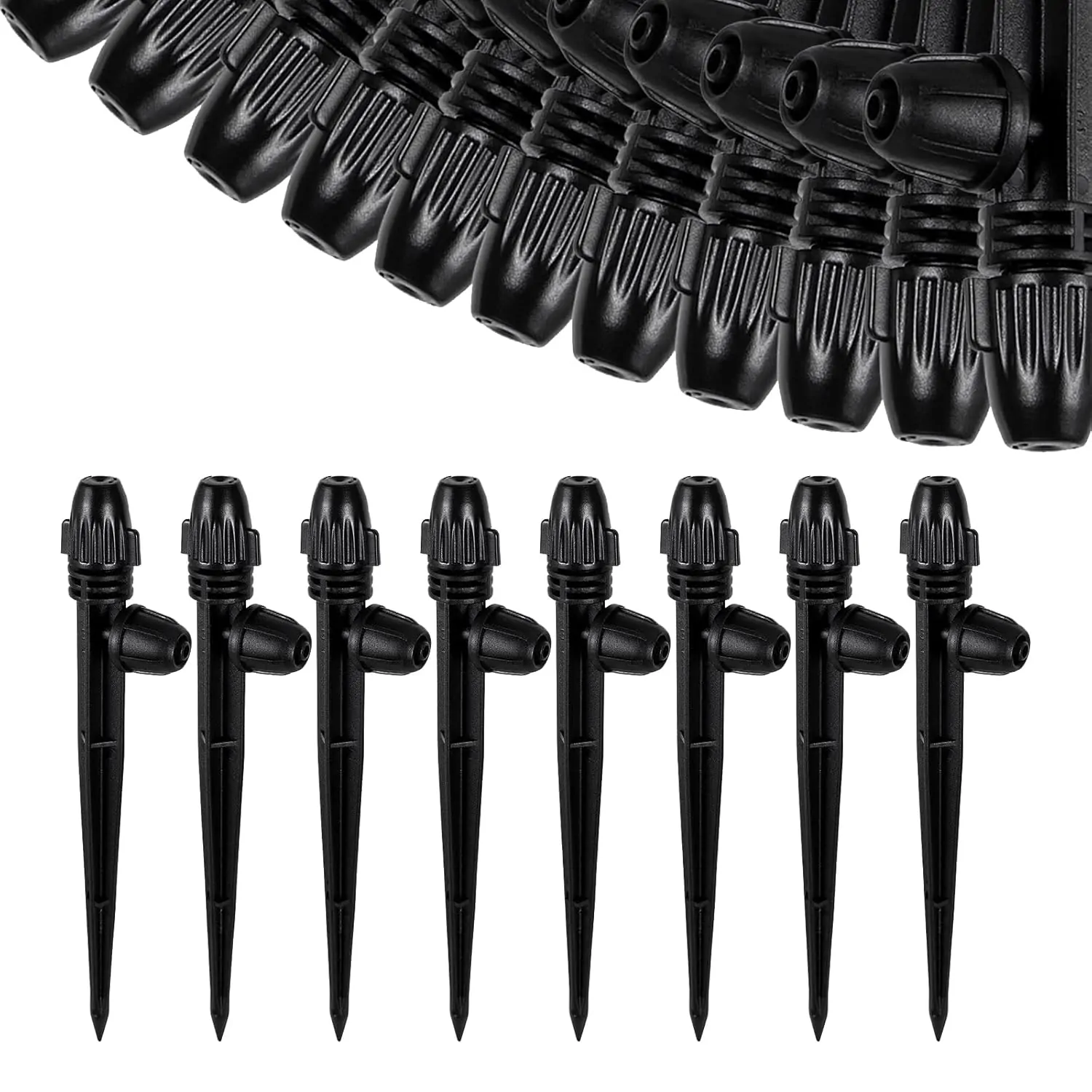
FULAIERGD Drip Irrigation Misting Spray Nozzles
The 20 Pcs Drip Irrigation Misting Spray Emitters offer 360-degree adjustable spraying, durable plastic construction, and accurate water flow control for efficient irrigation. These emitters connect easily with 1/4 inch tubing, include a lock nut system to prevent leaks, and provide a water-saving solution. Installation was fast, the emitters remained firmly attached, and the even water distribution helped my plants grow better with very little maintenance.
expert start
What Is It & Its Features?
The 20 Pcs Drip Irrigation Misting Spray Emitters are small misting nozzles designed to connect with 1/4 inch drip irrigation tubing. Each emitter comes with a 360-degree adjustable spray head that allows users to control the direction, distance, and amount of water released. The included stakes help secure the emitters in the soil, while the lock nut design keeps the connection tight and reduces the chance of leaks or accidental separation from the tubing. Made from durable plastic, these emitters can handle different weather conditions and resist clogging, providing water-saving efficiency of up to 90%. Installation is simple: attach the tubing to the barb, tighten the lock nut, and adjust the spray according to plant requirements. The removable caps make cleaning easy and help maintain consistent performance over time.
Why It Matters
Efficient irrigation plays a major role in maintaining healthy plants, and the 20 Pcs Drip Irrigation Misting Spray Emitters make garden watering easier and more effective. Unlike traditional sprinklers that may waste water through evaporation and runoff, these emitters provide controlled micro-drip irrigation directly around plants. The adjustable spray feature helps prevent both overwatering and underwatering, which supports better plant development. They are especially useful for greenhouses, raised garden beds, and container gardens where precise water distribution is important. The secure connection design also helps prevent tubing from coming loose, making them more dependable than many basic drip irrigation products. Overall, these emitters reduce water waste, save gardening time, and support healthier plant growth.
My Set-Up And My Experience
I installed the 20 Pcs Drip Irrigation Misting Spray Emitters in my backyard garden and greenhouse to create different watering zones. The setup process was quick because the 6.3-inch stakes easily entered the soil, and the lock nut system kept the tubing securely connected. I liked the adjustable spray heads because I could change the water output for different plants with a simple rotation. Even during hot weather, the emitters maintained proper moisture levels without creating excessive water buildup. I also tested the cleaning process by removing the caps, which made removing small particles and debris easy. Based on my experience, these emitters performed better than some other drip irrigation systems I have used, especially in terms of water efficiency and adjustment flexibility.
Performance
The performance of the 20 Pcs Drip Irrigation Misting Spray Emitters was impressive during regular garden use. The 360-degree spray pattern provides balanced coverage, while the adjustable heads allow precise watering for different plant needs. Water spreads evenly without creating dry areas or excessive pooling. The emitters maintain good performance under normal pressure conditions, and the plastic material remains strong in changing weather. I noticed less water waste compared with traditional sprinklers, and my plants showed improved growth and healthier leaves. The only small issue I experienced was that a few emitters needed cleaning before use because of minor manufacturing blockage, but this was easy to solve before installation.
Practical Tips
- Adjust the 360-degree spray head according to each plant’s watering requirements.
- Check every emitter before installation to identify possible blockages.
- Push the stakes firmly into the soil to keep emitters stable.
- Remove and clean emitter caps regularly to maintain proper water flow.
- Install multiple emitters in large pots or garden beds for better coverage.
expert end
pro start
| Pros | Cons |
|---|---|
| ✔️ Adjustable 360-degree spray allows accurate watering control. | ❌ Some emitters may have minor blockage during initial use. |
| ✔️ Lock nut design provides simple installation and secure connection. | ❌ Plastic parts require careful handling to prevent damage. |
| ✔️ Weather-resistant plastic construction improves durability. | ❌ Not recommended for extremely high-pressure irrigation systems. |
| ✔️ Provides water-saving efficiency of up to 90%. | ❌ Spray settings may need occasional adjustment. |
| ✔️ Detachable caps make cleaning and maintenance easier. | ❌ Compatible only with 1/4 inch tubing systems. |
pro end
How to Choose the Right Garden Sprayer Nozzle
Selecting the correct nozzle depends on the spraying task you want to perform. Different applications require different spray shapes, droplet sizes, and coverage areas. Choosing the right nozzle helps gardeners apply water or chemicals more efficiently and improves overall spraying performance.
a. Type of chemical: Different chemicals require different droplet sizes for effective results. For instance, insecticides and fungicides usually need fine to medium droplets to provide complete coverage on plant leaves. In contrast, soil fungicides and systemic herbicides may work better with larger droplets because they remain on the surface for a longer time. Always check the product label because it may provide recommendations about nozzle type or spray volume.
b. Garden area size: The size of the area you need to spray also affects nozzle selection. For small gardens or targeted spraying, an adjustable nozzle or a nozzle designed for specific tasks is usually enough. For large lawns, fields, or long planting rows, wide-angle flat fan or flood nozzles are better because they cover a larger area in less time. A wider spray pattern can make large spraying jobs faster and easier.
c. Type of plants: Different plants require different spray methods. Young plants and delicate seedlings need a soft and gentle spray to avoid damage. A fine-mist nozzle or low-pressure flat spray nozzle is suitable for these plants. Stronger plants and weeds can tolerate higher spray force. For tall trees and shrubs, hollow cone or jet nozzles can help reach higher areas effectively.
d. Desired spray pattern and droplet size: Consider the spray pattern required for your specific application. Flat fan nozzles provide uniform coverage on flat planting areas, while cone-shaped sprays are more suitable for dense, round, or bushy plants. When you need better liquid retention and less spray drift, select coarser droplets (low pressure or solid cone patterns). For complete leaf coverage, finer droplets (hollow cone at moderate pressure) are usually preferred. Experts often explain that no single nozzle works perfectly for every task, so the nozzle should always match the spraying requirement.
e. Sprayer type and pressure: The pressure capacity of your sprayer is an important factor when choosing a nozzle. Hand sprayers usually operate at lower pressure and may only support specific nozzle types, such as adjustable or flat fan nozzles. Backpack and pump sprayers can produce higher pressure and support finer spray applications. Always confirm that the nozzle fits your sprayer connection and works within its recommended pressure range.
Materials Used in Sprayer Nozzles Manufacturing
Garden sprayer nozzles are manufactured from different materials, and each material offers unique benefits. Some options are lightweight and affordable, while others provide greater durability and chemical resistance. The material of a nozzle directly affects its working life, reliability, and spraying performance.
i. Plastic (Polymer): Plastic nozzles are widely used in household and garden sprayers. They are lightweight, affordable, and naturally resistant to rust and corrosion. Plastic nozzles remain cooler under sunlight and often provide comfortable handling. Advanced polymer materials can offer good durability. However, low-quality plastic may become weak or crack over time, especially after long exposure to sunlight or strong chemicals. Plastic nozzle tips can also wear faster when used with abrasive fertilizers or mineral-rich water.
ii. Brass: Brass nozzles are commonly found in hose-end sprayers. They are resistant to rust, provide good durability, and can tolerate heat effectively. However, brass and aluminum materials can gradually wear down after continuous use. Some reports indicate that brass nozzles may perform well initially but have lower long-term wear resistance compared with harder materials. Continuous exposure to abrasive particles or high-pressure spraying can slowly damage the nozzle opening. Brass nozzles are generally considered a medium-cost option, offering better durability than basic plastic but less durability than stainless steel.
iii. Stainless Steel: Stainless steel nozzles provide excellent durability and are highly resistant to wear, corrosion, and high-pressure conditions. They maintain accurate spray performance even when used with abrasive materials such as fertilizers. The main disadvantage is their higher price compared with plastic or brass options. Many modern nozzles combine a polymer body with a stainless steel insert at the spray tip. This design provides strong durability at the most important point (the orifice) while reducing overall cost and weight. For gardeners who spray frequently or use demanding chemicals, stainless or stainless-insert nozzles are a reliable choice.
iv. Ceramic: Ceramic nozzles are uncommon in regular garden sprayers but are known for their exceptional resistance to wear. They can last for a long time even when exposed to abrasive liquids. However, ceramic materials can break easily if dropped or handled roughly, and they are usually more expensive. Some specialized agricultural sprayers use ceramic tips. For normal gardening needs, plastic, brass, or stainless steel nozzles are usually more practical choices.
Common Problems with Sprayer Nozzles
Like other gardening tools, sprayer nozzles may experience problems after regular use. Dirt, chemical deposits, and natural wear can reduce spraying efficiency and affect spray quality. Understanding these common issues helps gardeners quickly identify problems and maintain better nozzle performance.
1. Clogging: Clogging is the most common issue found in sprayer nozzles. Small particles, chemical crystals, or dirt can block nozzle openings and change the spray pattern. Materials such as sand, undissolved chemicals, insects, or algae can easily enter the nozzle and create blockages. Thick or sticky liquids may also leave deposits inside the nozzle. Even a small blockage can affect spray quality. Industry experts often identify suspended particles in spray liquids as one of the main causes of nozzle clogging. A blocked nozzle may produce an irregular spray or completely stop working.
2. Uneven Spray Pattern: A nozzle may produce an uneven spray pattern as it becomes dirty or worn. This can happen when the nozzle opening is partially blocked or when the tip has become damaged through use. For example, a partially blocked flat fan nozzle may release more spray on one side than the other. Worn brass or aluminum nozzles often create irregular spray patterns. Uneven spraying results in some plants receiving too much chemical while others receive too little.
3. Wear and Tear: Continuous use slowly reduces nozzle performance. Abrasive chemicals, high operating pressure, and hard water can damage the nozzle opening over time. Brass tips usually wear faster than stronger materials. A worn nozzle may produce larger droplets, reduce spray uniformity, and lose its original flow rate (gallons per minute).
4. Leaks: Leakage from the nozzle assembly can occur because of loose connections, damaged seals, or worn rubber components. Problems with gaskets or O-rings may cause dripping or disturb the spray pattern. Leaking nozzles waste chemicals and can result in uneven application.
5. Incorrect Spray: Using an unsuitable nozzle or incorrect pressure setting can negatively affect plants. Excessive pressure with a fine nozzle may create very small droplets that can damage leaves, while a strong jet spray can physically harm seedlings. On the other hand, using a coarse spray nozzle on small weeds may reduce chemical effectiveness. Selecting the correct nozzle and pressure is essential for safe and effective spraying.
Tips for Using Garden Sprayer Nozzles
Getting the best results from garden sprayer nozzles requires more than choosing the right nozzle at the beginning. Correct use, regular care, and following safety guidelines are important to make sure your gardening work remains effective, safe, and long-lasting.
a. Follow Manufacturer Instructions: Always follow the instructions provided by the nozzle and sprayer manufacturers. These instructions include proper installation, correct usage methods, and maintenance steps to help the equipment work efficiently and safely.
b. Regular Cleaning: Garden sprayer nozzles may become blocked by dirt, debris, or chemical residues, which can affect the spray pattern and reduce performance. Cleaning the nozzle regularly according to the manufacturer’s recommendations helps maintain proper spraying and increases the nozzle’s working life.
c. Inspection and Replacement: With regular use, nozzles may become worn, damaged, or less effective, which can result in uneven spraying. Check your nozzles frequently for damage or signs of wear and replace them when needed to maintain accurate and consistent spray application.
d. Personal Protective Equipment (PPE): Always use suitable PPE when handling and applying chemicals. Wearing protective equipment such as gloves, goggles, and masks helps reduce the risk of exposure to harmful substances.
e. Adherence to Label Instructions: Chemical product labels contain important details about safe handling, correct application rates, and environmental protection measures. Following these instructions helps protect the user, plants, the environment, and beneficial non-target organisms.
f. Proper Storage: Keep nozzles and other sprayer parts in a clean and dry location to avoid damage, contamination, and unnecessary wear. Proper storage improves equipment durability and ensures that it remains ready for future use.
Maintenance Tips for Sprayer Nozzles
Regular maintenance is necessary to keep sprayer nozzles performing correctly and to increase their service life. Cleaning and checking the nozzle after every application can prevent many common spraying issues. Proper maintenance also helps maintain a uniform and accurate spray pattern.
i. Clean after each use: After completing spraying, flush the complete sprayer system and nozzle with clean water immediately. For better cleaning, fill the sprayer with a nozzle-cleaning solution or soapy water and spray it until the liquid becomes clear. After that, remove the nozzle and separate the components, including nozzle tips, gaskets, and filters, then place them in a bucket filled with warm water. Allow them to soak for a few minutes.
Use a soft brush, such as an old toothbrush, to gently clean the nozzle parts and remove any remaining chemical deposits or dirt. Avoid using metal wires, needles, or pins because they can scratch and damage the nozzle openings. Wash all parts properly with clean water and allow them to dry completely before putting them back together. This practice prevents mold growth and avoids changes in spray performance caused by leftover chemicals.
ii. Inspect for clogs: Regularly check the nozzle for blockages. If the spray pattern changes or becomes uneven, remove the nozzle tip and inspect it for any trapped material. Filters and strainers inside the nozzle system collect debris and should be cleaned frequently. Using a fine inline filter or screen before the nozzle is highly recommended because it removes sand, dust, and small particles that may block the orifice. Make sure the strainer mesh size matches your nozzle requirements (commonly 50–200 mesh). A properly maintained filter helps prevent most clogging problems.
iii. Check O-rings and caps: Inspect rubber seals and O-rings regularly to make sure they are not damaged or cracked. Also, ensure that the nozzle cap is properly tightened. A loose cap or damaged seal can cause leakage and reduce spraying efficiency. Replace worn O-rings whenever necessary to maintain a proper seal.
iv. Proper storage: Keep your sprayer and nozzles indoors and protect them from very high temperatures, freezing conditions, and moisture. After cleaning, store the nozzle in a clean and dry place. For long-term storage during the off-season, remove the nozzle from the sprayer and place it inside a plastic bag or storage container to keep it protected until the next season. Many gardeners also keep extra nozzles available as replacements when needed.
v. Regular calibration: Although calibration is not a direct maintenance activity, checking nozzle performance regularly is a good practice. Test the nozzle output by spraying water on a white card or paper and measuring the spray pattern and flow over time. Compare the results with the expected performance. Regular cleaning, proper filtering, and routine inspection help gardeners prevent most nozzle clogging issues and maintain effective spraying results.
Advantages and Disadvantages of Different Nozzle Types
Different nozzle types provide different advantages based on the spraying job. Some nozzles are designed for wider coverage, while others are better for accurate and targeted spraying. Knowing the benefits and drawbacks of each nozzle type helps gardeners choose the most suitable option according to their requirements.
Advantages
a. Precise Application: The right nozzle allows you to apply sprays exactly where they are required. This accuracy helps reduce chemical usage and improves spray performance. For example, flat-fan nozzles provide uniform coverage across rows, while jet nozzles deliver a powerful spray to reach difficult areas.
b. Better Plant Coverage: Selecting the correct nozzle improves the distribution of spray on plants. Fine droplets from hollow cone nozzles cover leaf surfaces effectively for pest management, while coarse droplets from solid cone nozzles are useful for wetting plant roots or controlling larger weeds. Proper coverage provides better results with minimum product loss.
c. Chemical Efficiency: A properly selected nozzle delivers chemicals more effectively, which can reduce the amount of product needed. Suitable nozzles help minimize spray drift, and low-drift nozzles can reduce drift losses by 50–90%. This not only lowers costs but also supports environmental protection.
d. Versatility: Using different nozzle types or an adjustable nozzle allows a single sprayer to perform multiple spraying tasks. This reduces the need to purchase separate equipment for different applications.
e. Convenience: Many modern nozzles come with color codes and labels, making it easier to identify the correct nozzle size. Quick-change nozzle caps also allow users to replace or switch tips quickly when required.
Disadvantages
a. Clogging: Nozzles with smaller openings, such as fine-mist nozzles and small cone tips, can become blocked easily when spray mixtures contain dirt or small particles. Even filtered water may contain tiny materials that can affect the performance of fine nozzles.
b. Wrong Nozzle Issues: Choosing an unsuitable nozzle can create spraying problems and may damage plants. For example, a very fine spray used during windy conditions can drift to unwanted areas, while a powerful stream may harm sensitive leaves. Similarly, a coarse nozzle may fail to properly cover small pests. Incorrect nozzle selection can reduce pest control effectiveness and may sometimes cause crop injury.
c. Maintenance Required: Some nozzles, especially those producing finer sprays, require regular cleaning after use. This additional maintenance can be time-consuming. Moreover, replacing damaged nozzles or worn-out O-rings increases operating expenses.
d. Cost of Variety: To manage different garden spraying needs effectively, users may need several nozzle types or a costly adjustable nozzle. Having many options can become expensive and confusing, especially for occasional gardeners.
e. Limited by Pressure: Every nozzle requires a suitable pressure range to work properly. A high-pressure nozzle may not perform well with a low-power hand pump sprayer. Selecting a nozzle that does not match the sprayer’s capacity can result in poor spray quality and uneven application.
Conclusion
Garden sprayer nozzles may look like small components, but they play an important role in creating an efficient spraying system. Different nozzle types, such as flat fan, cone, and solid jet nozzles, produce different spray patterns and droplet sizes. Selecting the correct nozzle according to the task improves coverage, reduces missed areas, and minimizes product waste. Research studies and extension recommendations highlight that nozzle selection directly influences how much chemical reaches the target and how much is lost through drift. Proper nozzle selection can save 10–15% or more spray material that could otherwise be wasted.
references:
1. Gao, J., Bo, P., Lan, Y., Sun, L., Liu, H., Li, X., … & Wang, H. (2024). Study on droplet deposition characteristics and application of small and medium crown garden plants sprayed by UAV sprayer. Frontiers in Plant Science, 15, 1343793.
2. Leonas, K. K., & Yu, X. K. (1992). Deposition patterns on garments during application of lawn and garden chemicals: A comparison of six equipment types. Archives of Environmental Contamination and Toxicology, 23(2), 230-234.
3. Kerr, J. (1980). Knowledge of spray equipment contributes to applicator efficiency. Weeds Trees & Turf, 19, 28-44.
4. Mughal, W., Liu, J., Pei, J., Wang, W., Luhur, M. R., Abbasi, A., & Zhang, D. (2026). Performance Evaluation and Measurement Techniques for Agricultural Application Nozzles: A Systematic Review of Sprinkler and Pesticide Application Systems. Journal of Applied Fluid Mechanics, 19(3), 588-619.
5. Raut, L. P., Jaiswal, S. B., & Mohite, N. Y. (2013). Design, development and fabrication of agricultural pesticides sprayer with weeder. International Journal of Applied Research and Studies, 2(11), 1-8.
6. Lilhore, V. (2020). Development of Push Type Manually Operated Multi Nozzle Sprayer.
7. Rakibuzzaman, M., Islam, A., Al Amin, M., Khan, M. M. R., & Rahman, M. S. (2023). Design and Fabrication of an Agricultural Spraying Machine Using a Knapsack Sprayer. IUBAT Review, 6(1), 88-99.
8. Virk, S. S., Prostko, E. P., Kemerait, R. C., Abney, M. R., Rains, G. C., Powell, C. T., … & Tyson, W. G. (2021). On-farm evaluation of nozzle types for peanut pest management using commercial sprayers. Peanut Science, 48(2), 87-96.
9. Zürey, Z., Balcı, S., & Sabancı, K. (2020). Automatic nozzle control system with ultrasonic sensor for orchard sprayers. European Journal of Technique (EJT), 10(2), 264-273.
10. Jayabalakrishnan, D., Balasubramanian, M., Prabhu, P., Rameshkumar, C., Somasundaram, S., & Naga, D. B. (2019). Design and Fabrication of Multi Nozzle Battery Spray Pump.

