
11 Top Rated Best Garden Sprayers I Tested in 2026
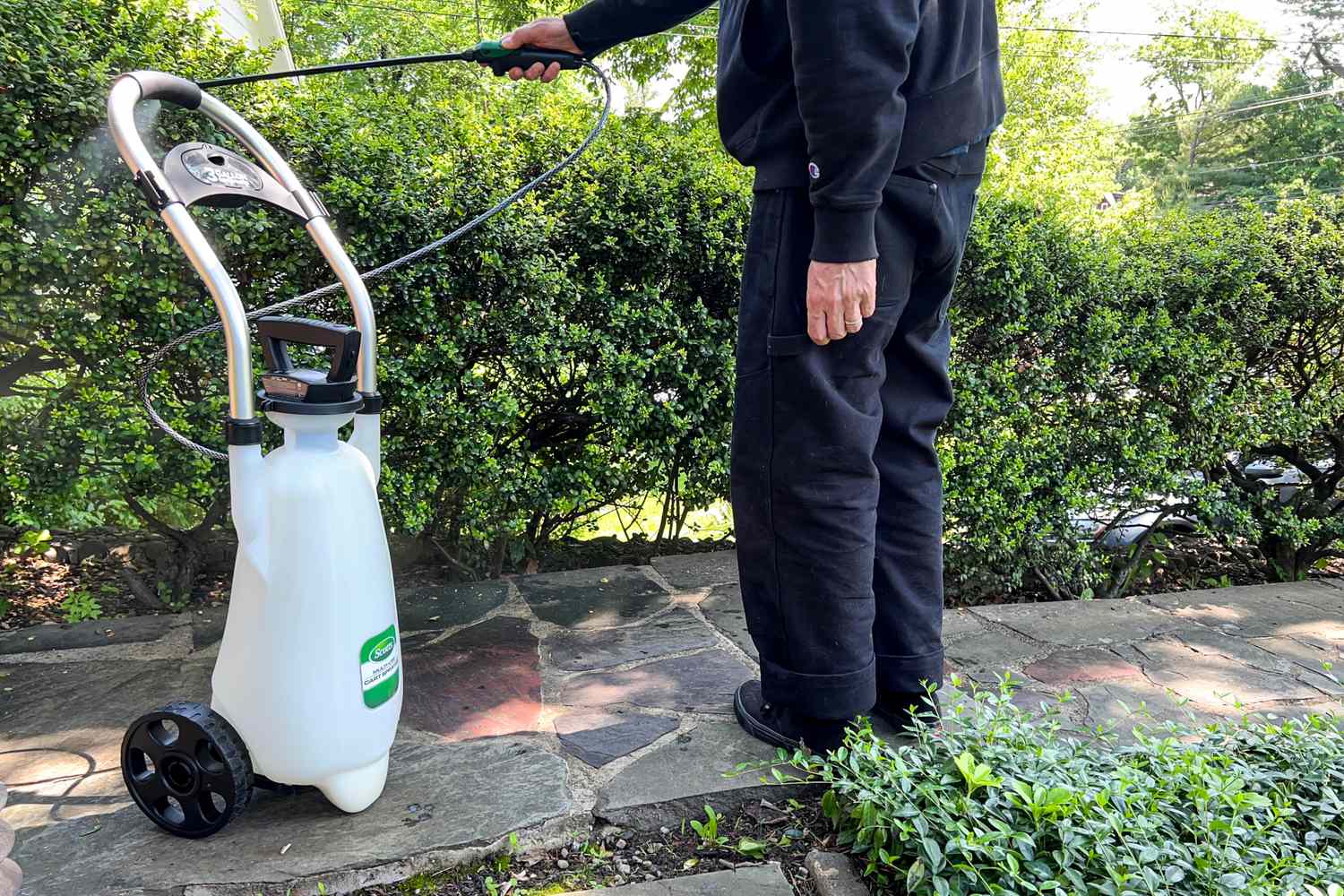

Choosing from the top rated best garden sprayers became more complicated than I initially expected. I wanted equipment that could handle my vegetable beds, flowering plants, lawn edges and reachable fruit trees without making every spraying session unnecessarily tiring. However, the more sprayers I compared, the more I realised that a high customer rating did not always mean better performance for my particular gardening activities.
My main concerns were familiar to many gardeners: inconsistent spray patterns, frequent pumping, uncomfortable tanks, leaking connections and nozzles that were difficult to adjust. A sprayer could look excellent in product photographs but still become inconvenient when used repeatedly around tomatoes, chilies, marigolds and young fruit trees.
I therefore approached the selection differently. Instead of concentrating only on star ratings, I looked at operating mechanisms, tank capacity, pressure stability, nozzle quality, chemical compatibility, durability, customer feedback and replacement parts. These details helped me understand which features genuinely mattered and which specifications deserved closer examination.
An Overview of the Best Garden Sprayers in 2026
| Product | Title & Rating | Features | Explore |
|---|---|---|---|
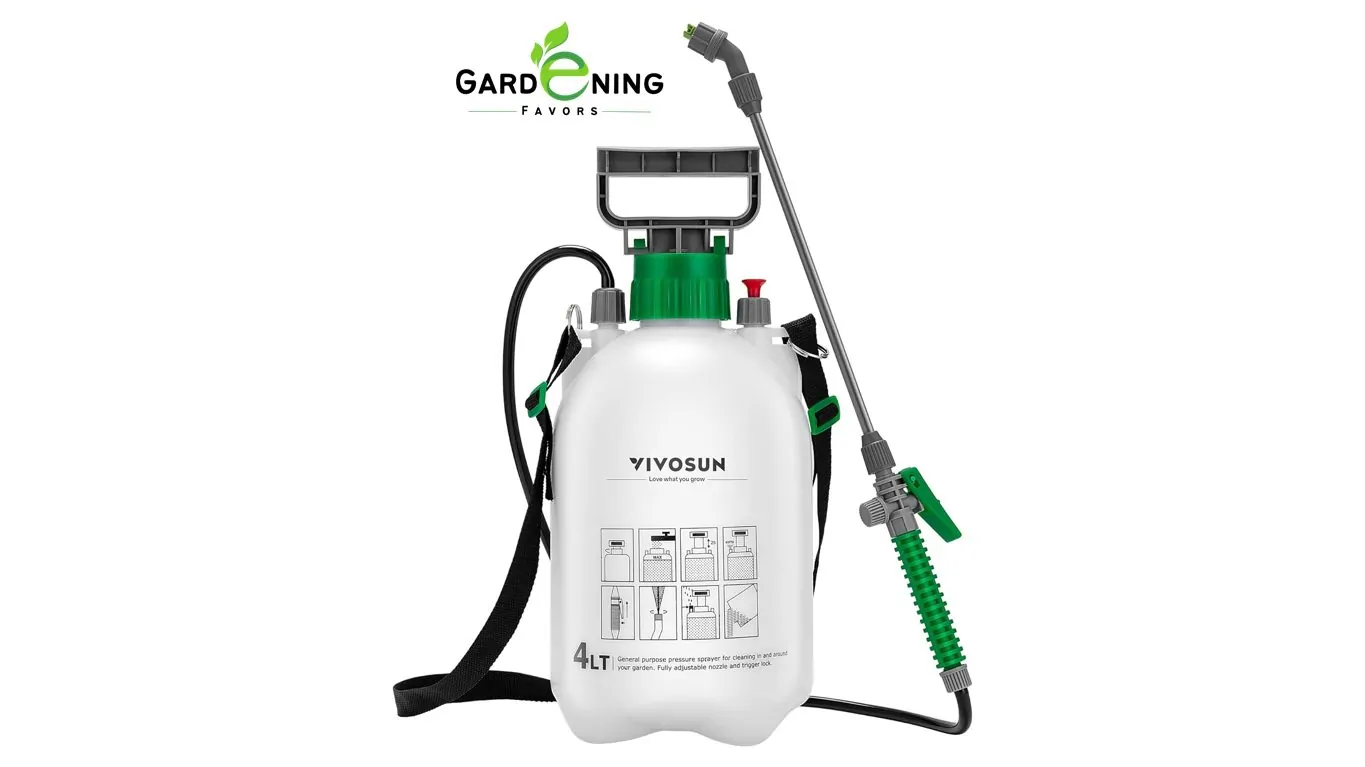 | VIVOSUN 1 Gallon Pump Sprayer ⭐ 4.9 |
| Check Price |
 | Scotts 190567 Battery Powered Sprayer ⭐ 4.7 |
| Check Price |
 | Smith Performance Sprayer 190285 ⭐ 4.8 |
| Check Price |
What Makes Garden Sprayers Top Rated?
A garden sprayer is equipment designed to distribute liquid through a nozzle as a controlled spray. Depending on its design and approved applications, it can deliver water, suitable liquid fertilizers, pesticides or other compatible garden treatments.
The purpose is not simply to release liquid but to control its distribution, droplet formation and placement. When I started comparing highly rated garden sprayers, I noticed that different gardeners valued different qualities.
Someone maintaining a few flowerpots might appreciate a lightweight handheld sprayer, while another person treating several vegetable beds could prefer a battery-powered backpack model. This difference matters because the best garden sprayer is determined by the work it performs, not by its rating alone.
Why Customer Ratings Need Investigation
Customer ratings provide a useful starting point, but I never considered the average score sufficient evidence of reliability. For example, a hypothetical sprayer rated 4.8 out of 5 from 25 reviews and another rated 4.5 from 2,000 reviews present different levels of feedback. Neither score automatically proves that one product is better.
I gave more attention to detailed ownership reports describing repeated use, leaking seals, pump performance, nozzle blockage and replacement-part availability. I also considered whether negative reviews identified an occasional delivery problem or a recurring mechanical weakness.
A review written after one afternoon of spraying cannot establish several years of durability. Similarly, hundreds of positive comments about convenient packaging do not prove consistent pressure or reliable chemical resistance.
- Rating quality: Look beyond the average score and examine detailed feedback.
- Review quantity: Consider how much evidence supports the rating.
- Ownership duration: Give attention to reports covering repeated use.
- Recurring complaints: Investigate repeated failures involving pumps, seals and nozzles.
- Practical suitability: Match reported performance to your own garden.
I also looked for signs of unreliable feedback, including repeated promotional wording, reviews discussing unrelated products and sudden rating changes. These signs deserve investigation, although they do not independently prove manipulation.
My recommendation is to use customer ratings to shortlist products, then use technical specifications and practical requirements to make the final decision. A moderately rated sprayer with suitable components and available replacement parts may serve your garden better than a highly rated model designed for a completely different task.
11 Top Garden Sprayers for Homeowners and Gardeners
Based on my personal experience, I have selected a list of 11 top rated sprayers that have consistently helped me and many other gardeners maintain healthier plants. These sprayers not only make gardening tasks simpler but also improve the overall gardening experience. They offer a great combination of convenience, performance, and effectiveness.
1. VIVOSUN 1.35-Gallon Pump Pressure Garden Sprayer

As an active gardener, I always search for tools that can simplify my daily gardening work. Recently, I tried the VIVOSUN 1,35-gallon Pump Pressure Sprayer, and it quickly became one of my favorite gardening tools. This top rated sprayer features an adjustable nozzle that allows both water column spray and shower spray options. It also includes a 22,28-inch wand and a 50-inch hose, making it suitable for a variety of gardening applications.
expert start
The feature that impressed me most was its comfortable handle with a locking trigger. It allows continuous dripping or spraying without causing discomfort or hand fatigue. The safety valve setting provides additional protection, while the large bowl and funnel design make filling the sprayer simple and convenient.
Additionally, the transparent bottle with measurement markings makes it easier to monitor liquid levels, and the thickened bottom improves strength, durability, and stability. However, some users have reported a few issues. A number of customers found the wand assembly slightly difficult, while others mentioned concerns about its overall structure.
Therefore, it is important to carefully follow the manufacturer’s instructions to prevent possible problems. From my personal use, the VIVOSUN has been a useful addition to my gardening equipment and performs well for different tasks. I would recommend it to other gardeners, but proper handling and correct usage are necessary to achieve the best performance.
expert end
pro start
| Pros | Cons |
|---|---|
| ✔️ Adjustable nozzles | ❌ Builds up pressure slowly |
| ✔️ Easy operation and safety | |
| ✔️ Large bowl and funnel design | |
| ✔️ Thickened bottom |
pro end
2. Scotts 190567 Battery Powered Sprayer
One of the tools that has improved my gardening experience is the Scotts 190567. This rechargeable lithium-ion battery-powered sprayer has completely changed the way I handle spraying tasks. Unlike traditional manual sprayers that need frequent pumping, this model can spray up to 12 full tanks on one battery charge.
expert start
The main advantage of this sprayer is its excellent combination of comfort, performance, and durability. It comes with a commercial-grade shut-off system, a comfortable handle, and an easy-to-maintain in-line filter, making it a dependable tool for regular use. The 21-inch poly wand with Viton seals provides strong chemical resistance, while the pressure release valve improves safety by allowing users to release built-up pressure before opening the tank.
In addition, the Scotts sprayer provides great flexibility with three different spray patterns – fan spray, stream spray, and cone spray. These options help cover wider areas quickly, focus on specific weeds, and apply water or fertilizers with better accuracy. Compared with many other models available, it offers impressive construction quality and reliable performance.
Although it has some limitations, such as the non-removable internal battery, it is still a powerful and efficient sprayer with durable construction and a fair price. For anyone looking for a convenient upgrade from manual sprayers, the Scotts Battery Powered Sprayer is one of the best-rated options available.
expert end
pro start
| Pros | Cons |
|---|---|
| ✔️ Long-lasting battery | ❌ Nozzle spraying angle varies |
| ✔️ Sprays up to 12 full tanks per charge | ❌ Sometimes sprayer won’t hold a charge after use |
| ✔️ Viton seals | |
| ✔️ Teardrop-shaped tank | |
| ✔️ Pressure valves | |
| ✔️ 3-In-1 nozzle |
pro end
3. VIVOSUN 1 Gallon Pump Pressure Garden Sprayer
I selected the VIVOSUN 1 Gallon Pump Pressure Sprayer because it is a highly rated option for different tasks. It is not only useful for watering plants but also works well for cleaning vehicles and bathing pets, making it a practical choice for both indoor and outdoor use.
expert start
The main feature that makes this sprayer different is its adjustable wand and quality nozzle, which allow me to control the spray strength according to my needs. It comes with a comfortable handle and a pressure release valve, helping me use it for longer periods without much effort. It also includes three different nozzles that are suitable for various applications. Overall, it is designed with user convenience in mind.
The transparent bottle allows me to easily see the remaining water level, while the clear measurement scale helps with accurate filling. Carrying this sprayer is simple because of its durable shoulder strap and lockable handle. It is built to last, and VIVOSUN also provides reliable customer support when needed.
I also find it useful for pest management on my citrus plants because its spray can cover distances of up to 3 feet. Even after one year of regular use, it continues to perform well, making it a suitable option for beginners and small-scale farmers. I recommend the VIVOSUN 1 Gallon Pump Sprayer because of its simple operation, strong build quality, and long-lasting performance.
expert end
pro start
| Pros | Cons |
|---|---|
| ✔️ High-quality nozzle | ❌ Sometimes leaks from the stream area |
| ✔️ Ergonomic locking handle | ❌ Pressure does not stay for a long time after use |
| ✔️ Translucent material | |
| ✔️ Easy-to-read calibration scale | |
| ✔️ Heavy-duty shoulder strap |
pro end
4. Field King 190515 Professionals Battery Powered Lawn Sprayer

The Field King 190515 Professional removes the hassle of manual pumping while spraying liquids and water-soluble solutions. It saves effort, improves workflow, and provides a more consistent spraying experience. Its powerful 18-volt Lithium-Ion battery delivers up to 4 hours of spray time on a single charge, while the 8002 nozzle allows you to spray up to 50 gallons of liquid efficiently.
expert start
The strong powder-coated steel frame, fully padded back harness, and triple filtration system show its excellent build quality and help increase its overall lifespan. However, it also has a few limitations. The continuous spray locking feature is useful, but filling the tank completely to the 4-gallon level may sometimes cause overflow, and the sprayer feels heavier when it is filled to capacity. However,
I found some practical ways to handle these issues, such as filling the tank on a raised surface and using the chest clip for better support. The performance was impressive, especially with the fanning spray nozzle (red tip), and I did not experience clogging problems. Also, following the recommended cleaning steps after using chemicals helped maintain its performance and reliability.
The Field King 190515 Professionals has become a dependable and effective sprayer in my collection. It is a great choice for professionals as well as gardening enthusiasts who need a high-quality battery-operated backpack sprayer for medium-sized areas.
expert end
pro start
| Pros | Cons |
|---|---|
| ✔️ Provides up to 4 hours of spray time | ❌ The final gallon of liquid may not completely spray out from the tank |
| ✔️ Can handle up to 50 gallons of liquid | |
| ✔️ Battery fully charges in 3.5 hours | |
| ✔️ Durable powder-coated steel frame | |
| ✔️ Comfortable fully padded back harness | |
| ✔️ Advanced triple filtration system |
pro end
5. SMITH PERFORMANCE SPRAYER 190285
The Smith Performance 190285 offers a very simple assembly process. Its easy setup makes filling, pressurizing, and spraying effortless, helping you save time and improve overall efficiency. Another great feature is its ability to work with strong chemicals, including bleach. Because of this, it is a suitable option for different cleaning jobs such as washing bricks, tubs, showers, and siding.
expert start
Designed with a comfortable handle and a lockable trigger, this sprayer allows continuous spraying while reducing hand fatigue during longer tasks. The high-quality shut-off valve and 36-inch reinforced hose improve its strength and flexibility, allowing you to easily access hard-to-reach areas. In addition, the clear step-by-step operating instructions make the sprayer simple to use, even for beginners.
Furthermore, if you need a lightweight, budget-friendly, and rust-resistant sprayer, the Smith 190285 is a reliable option for both household and agricultural applications. Although it may not include advanced professional features, its dependable performance for everyday jobs makes it a useful tool. However, regular maintenance is important. Simple steps such as cleaning, rinsing, and releasing pressure after every use can significantly improve its lifespan, which many users often ignore.
Based on my experience, this sprayer performs well across different applications. Overall, the Smith Performance 190285 delivers excellent value with its dependable operation, easy handling, and affordable price. While it is not designed as a commercial-grade sprayer, its strong performance and simple maintenance requirements make it a great choice for many users.
expert end
pro start
| Pros | Cons |
|---|---|
| ✔️ Shut-off has a comfortable grip | ❌ May face little trouble attaching hose during assembly |
| ✔️ Replaceable Viton seals | ❌ Does not hold pressure for long |
| ✔️ Poly adjustable nozzle | |
| ✔️ Chemical resistant wand |
pro end
6. Kaskiwaly Battery Powered Garden Sprayer

I recently got the chance to try the Kaskiwaly Battery Powered Garden Sprayer, and it has greatly improved my spraying experience. This cordless device features a self-priming water pump and a simple one-button control system that allows for easy hands-free operation.
expert start
The adjustable shoulder strap and ergonomic handle make it comfortable to use, providing a convenient and time-saving solution compared with traditional manual pump sprayers, especially during hot weather. Its 1.35-gallon tank capacity reduces the need for frequent refilling. The built-in 2400mAh lithium battery offers 2-3 hours of continuous spraying, while the retractable wand extends up to 23.66 inches, helping users easily spray difficult-to-reach areas.
The thoughtful design includes useful features such as a wand storage groove in the handle lid, a filter-headed hose that helps prevent blockages, and a wide filling opening for faster refilling. It includes three different nozzles, including a powerful six-hole nozzle, allowing users to choose from different spraying patterns according to their needs.
Although my overall experience with the Kaskiwaly has been very positive, it is important to remember that user needs and preferences can differ. Some users have mentioned concerns about the continuous spray function and whether it provides enough control for precise applications. However, considering its price, features, and performance, it offers good value for everyday gardening tasks.
expert end
pro start
| Pros | Cons |
|---|---|
| ✔️ Wireless battery handle | ❌ No magnetic hook included |
| ✔️ Self-priming water pump | ❌ Sometimes it acts clogged due to liquid mixture |
| ✔️ Wand can be extended to 23.66 inches | |
| ✔️ Equipped with 3 nozzles | |
| ✔️ 5 spraying patterns | |
| ✔️ Handle made of ABS |
pro end
7. D.B. Smith Contractor 190216 2-Gallon

The D B Smith Contractor 190216 2-Gallon has become an essential tool in my collection because of its excellent versatility. It is not limited to lawn care tasks; it also works well for commercial cleaning, sanitizing, and applying strong chemicals. This wide range of uses makes it a practical choice for different jobs. Its durable shut-off system and 21-inch poly wand with Viton seals provide long-lasting performance and comfortable operation.
expert start
Furthermore, this top-rated sprayer features a commercial-grade build with a lockable shut-off, comfortable handle, and an easy-to-clean filter. It also comes with a pressure release valve that helps protect users from accidental chemical exposure. The included 64” carry strap and seven different nozzles add more flexibility, allowing you to handle various spraying applications with ease.
I purchased this sprayer a few years ago, and it has performed well even in a demanding climate. However, I made the mistake of keeping it stored in a hot garage, which caused some damage to the pressure seals over time. I was also concerned that the pump-handle pressurization system would be difficult to manage, but it was much simpler than expected. Its strong construction and ability to hold two or three gallons make it suitable for a wide range of gardening tasks.
Overall, the D.B. Smith Contractor 190216 2-Gallon has proven to be a dependable, durable, and flexible sprayer during my gardening experiences. Its commercial-grade features, thoughtful design, and simple operation make it a valuable option for both residential and professional users. If you need a reliable sprayer that can handle different applications, this model is definitely worth considering.
expert end
pro start
| Pros | Cons |
|---|---|
| ✔️ Flexible and versatile sprayer design | ❌ Plastic wand feels less durable |
| ✔️ Commercial-grade shut-off system | ❌ Pump may leak due to a distorted gasket |
| ✔️ Viton seals used throughout the pump | |
| ✔️ Comes with a 64” carry strap | |
| ✔️ Includes 7 nozzles |
pro end
8. PetraTools 4 Gallon Battery Powered Backpack Garden Sprayer (HD4000)

I recently tested the PetraTools 4 Gallon Battery Powered Backpack Sprayer, especially the HD4000 model, and it impressed me with its overall performance. The biggest advantage is that it removes the need for continuous manual pumping. After a full battery charge, it can spray continuously for around 6–8 hours.
expert start
The powerful 70 PSI pump, adjustable pressure knob, and 8AH lead-acid battery provide smooth and efficient spraying performance. The battery can last up to four times longer than many standard batteries, making long spraying tasks much easier. In addition, the HD4000 is simple to assemble, and the comfortable backpack design allows users to carry it with less effort.
The large tank opening helps users fill solutions quickly and easily, while the lightweight design improves overall comfort during use. Although it has a few minor issues, such as the handle design on the screw cap, its strong performance, smart design, and long-lasting build quality make it a valuable choice for many gardeners and professionals.
Furthermore, PetraTools has built a strong reputation for customer satisfaction. The company provides reliable customer support and focuses on quality control and product assembly in the USA, which adds more confidence in its products.
expert end
pro start
| Pros | Cons |
|---|---|
| ✔️ 6–8 hours of spraying on a single battery charge | ❌ Requires frequent cleaning because spray heads may become clogged |
| ✔️ 70 PSI pump with adjustable pressure knob | ❌ Heavy when fully filled, so it may not suit every user |
| ✔️ Excellent customer support | |
| ✔️ Durable heavy-duty wand | |
| ✔️ Translucent tank with gallon measurement markings |
pro end
9. Solo 430-2G 2-Gallon Farm and Lawn Sprayer

My experience with the Solo 430-2G 2-Gallon Sprayer has been quite impressive. It is very simple to operate, thanks to its easy funnel-style top and wide opening that makes filling the tank quick and convenient. The 28-inch unbreakable wand provides excellent reach, allowing me to spray difficult areas without much effort. The shut-off valve is also a great feature, offering a lock-on and lock-off function for better control.
expert start
This sprayer works like a versatile gardening companion. This highly rated sprayer is suitable for many tasks, including lawn fertilizing, weed control, and protecting plants from different problems. It comes with four nozzles and a built-in storage area for extra accessories, making it feel like a complete spraying kit. The wand holder and small caddy also improve portability and make carrying the sprayer much easier.
However, my experience was not completely problem-free. During my second use, the spray-stop grip failed to function properly, which required me to disassemble the unit, pump warm water through it, and discover that the handle cap only needed proper tightening. I also noticed air leakage and a hissing sound while pumping because the tank rim was not sealing correctly and the pressure relief valve was missing an O-ring.
Fortunately, I was able to fix these issues. Even with these minor challenges, the Solo 430-2G impressed me with its useful features and practical design. Choosing the right sprayer depends on individual needs and preferences. Every gardener may have a different experience, so consider your requirements carefully before selecting the best option for your gardening work.
expert end
pro start
| Pros | Cons |
|---|---|
| ✔️ Easy-to-fill funnel top opening | ❌ On-off grip may sometimes stop working |
| ✔️ 28-Inch unbreakable wand | ❌ Tank rim may have uneven sealing |
| ✔️ Commercial shut-off valve | |
| ✔️ Chemical resistant seals | |
| ✔️ Four-nozzle assortment |
pro end
10. SideKing 1.35 Gallon/5L Battery Powered Sprayer

The SideKing 1,35 Gallon/5L Battery Powered Sprayer has greatly improved my gardening experience. This portable sprayer offers excellent convenience with its battery-powered operation, removing the need for continuous manual pumping. Its built-in 2400mAh rechargeable battery provides up to 2 hours of continuous spraying, making it a useful choice for different gardening and household tasks.
expert start
It comes with three different nozzles – fan-shaped, shower-shaped, and brass – that help control and adjust the spray pattern according to the requirement. The 3.5ft hose and telescopic wand provide extra reach, allowing easy spraying in wider areas as well as difficult-to-access places.
Moreover, adding the liquid solution is simple because of its user-friendly design. The sprayer includes a lid handle for convenient opening and closing, along with a transparent water tank scale that helps monitor the liquid level quickly. During use, I noticed a small issue with the spray head getting clogged, but it was easily fixed by changing the nozzle.
Later, with its 5L/1.35-gallon capacity and multiple uses, including plant care, garden maintenance, and home cleaning, it became a dependable tool for everyday tasks. Therefore, the SideKing 1.35 Gallon/5L Battery Powered Sprayer offers an efficient and comfortable spraying experience. Its easy operation, flexible features, and practical design make it a valuable investment for gardeners.
expert end
pro start
| Pros | Cons |
|---|---|
| ✔️ Automatic spraying | ❌ Nozzle may leak if it is not stored above the tank level |
| ✔️ Provides up to 2 hours of continuous spraying | |
| ✔️ Includes 3 different nozzles | |
| ✔️ Wand extends from 8.66in to 23.6in | |
| ✔️ Features a convenient lid handle | |
| ✔️ Offers a capacity of 5L / 1.35 gallons |
pro end
11. Chapin 60114 4-Gallon Backpack Sprayer

Last but not least, I tested the Chapin 60114 4-gallon backpack sprayer, and it turned out to be a reliable option for my regular gardening tasks. The 4-gallon translucent poly tank is strong and suitable for common lawn and garden chemicals, while its clear design helps me easily monitor the liquid level. The 4-inch wide opening with a filter cap makes filling the tank cleaner and more convenient.
expert start
Additionally, this Chapin backpack sprayer features a 3-stage filtration system placed in the shut-off, inside the tank, and within the cap. This smart design helps prevent debris from entering the system and reduces interruptions caused by clogging. It includes a 20-inch poly extension wand, comfortable adjustable shoulder straps, and a waist strap, making it suitable for professional landscapers as well as home gardeners.
The nitrile seals allow it to work with common fertilizers, pest control products, weed control solutions, and plain water. However, users should always check the manual for correct assembly and safe operation. Although there are minor drawbacks, such as poorly matched straps, the sprayer delivered good performance and showed strong reliability for its price range.
Some users have also reported issues with leaking piston cylinders. I did not experience this problem personally, but it is worth considering because it may indicate possible quality control concerns.
expert end
pro start
| Pros | Cons |
|---|---|
| ✔️ Strong and durable 4-gallon translucent poly tank | ❌ Backpack straps may feel uncomfortable; when the tank is nearly empty, pumping the handle can become more difficult |
| ✔️ Wide 4-inch opening with filter cap for easier filling | ❌ A full 4-gallon tank becomes heavy and requires proper hip support |
| ✔️ Three filtration points help capture debris | |
| ✔️ 20-inch poly extension wand for better reach | |
| ✔️ Durable nitrile seals for chemical compatibility |
pro end
Which Garden Sprayer Type Works Best?
Before comparing individual models, I needed to understand the major garden sprayer types. This was important because operating mechanisms affect working effort, pressure control, carrying comfort and the amount of liquid that can be applied before refilling.
For my vegetable beds and flower borders, precise spraying mattered more than maximum reach. Around lawn areas, however, capacity and consistent coverage became more important. These differences showed why one sprayer design could not automatically handle every task equally well.
Handheld and Compression Garden Sprayers
Small handheld trigger sprayers usually operate through a trigger-driven pump that moves liquid from the container towards the nozzle. They are convenient for limited tasks because they require little preparation and allow close control around individual plants.
A bottle holding 1 litre of water carries approximately 1 kg of liquid, excluding the container. This makes small sprayers manageable for short sessions, although repeated trigger squeezing can become tiring.
Compression sprayers work differently. Their manual pump pressurises air above the liquid inside a pressure-rated tank. When the trigger opens, that pressure pushes liquid through the hose and nozzle. As pressure decreases, additional pumping may become necessary.
For a few pots, seedlings or small flower beds, I would generally favour a compact handheld or compression sprayer. However, for repeated applications across larger areas, its limited capacity and changing pressure could become inconvenient.
Backpack and Battery-Powered Garden Sprayers
Backpack sprayers distribute their weight across the shoulders and back. Manual backpack models use a hand-operated pumping mechanism, while battery-powered models use an electric pump to maintain liquid flow.
A common capacity in this category is 4 US gallons, equivalent to approximately 15.14 litres. Water alone at that volume weighs about 15.14 kg, before adding the tank, battery, pump, hose and other components.
This calculation immediately influenced how I evaluated comfort. A large tank might reduce refill stops, but it also increases the load carried through narrow vegetable rows or around trees.
Battery-powered sprayers reduce repetitive manual pumping, although they introduce additional considerations such as battery charging, electrical protection, replacement batteries and pump maintenance.
I considered these models particularly suitable for gardeners who frequently spray several beds or maintain a mixture of vegetables, flowers and young fruit trees. Nevertheless, a battery-powered sprayer is not automatically better than a manual model. For occasional work, the additional purchase and maintenance costs may offer little benefit.
Hose-End and Wheeled Garden Sprayers
Hose-end sprayers connect to a garden hose and use water flow through a mixing mechanism to draw or meter liquid concentrate. Their main attraction is convenience when treating suitable lawn or ornamental areas without carrying a separate tank of finished spray.
However, dilution performance depends on the equipment design, water supply conditions and product compatibility. I would not assume that every hose-end attachment delivers an exact concentration under all conditions.
Wheeled garden sprayers provide another option. Their tanks rest on wheels rather than being carried, making them attractive where larger volumes are required on reasonably level ground.
They can become less convenient around steps, narrow paths, raised beds and uneven surfaces. For a garden containing many closely spaced plants, a backpack sprayer may offer better movement despite its carrying weight.
| Sprayer Type | Best Garden Use | Main Advantage | Main Limitation |
|---|---|---|---|
| Handheld Trigger | Individual plants and small pots | Precise and lightweight | Limited capacity |
| Compression | Flower beds and small vegetable areas | Simple manual operation | Requires repressurising |
| Manual Backpack | Medium gardens and repeated spraying | Larger capacity | Manual pumping effort |
| Battery Backpack | Frequent spraying across multiple beds | Reduced pumping effort | Battery and electrical maintenance |
| Hose-End | Compatible lawn and ornamental treatments | No separate finished-spray tank | Water supply and dilution limitations |
| Wheeled | Larger accessible garden areas | Less carried weight | Restricted movement on uneven ground |
My practical advice is to begin with the area you regularly treat, the weight you can comfortably manage and the precision your plants require. These three factors often narrow the selection more effectively than customer ratings.
How Do Garden Sprayers Actually Work?
Understanding the working principle helped me recognise why two sprayers with similar capacities could behave differently. Every conventional tank sprayer depends on several connected components: a liquid reservoir, a pumping or pressurising mechanism, a flow path, a control valve and a nozzle.
The tank stores the liquid, the pump creates the pressure difference required for movement, and the nozzle shapes the resulting spray. Filters or strainers help prevent particles from reaching narrow openings.
In a manually pressurised sprayer, pressure gradually changes as the stored compressed air expands. In a battery-powered system, an electric motor drives the pump, sometimes with a pressure switch or regulator controlling operation. Actual performance depends on the pump design, hose restrictions, nozzle size, liquid properties and operating pressure.
Pressure, Flow Rate and Spray Patterns
I paid particular attention to the difference between pressure and flow rate. Pressure is commonly expressed in pounds per square inch (PSI), while flow rate describes the liquid volume discharged over time, such as litres per minute.
Higher pressure does not necessarily produce better spraying. Depending on nozzle design, increasing pressure may create smaller droplets, increasing drift risk. It can also increase liquid consumption.
For example, if a nozzle delivers 0.5 litres per minute, a 10-litre tank theoretically provides 20 minutes of continuous discharge. This calculation assumes constant flow and excludes interruptions, pressure changes and unusable residual liquid.
At 1 litre per minute, the same tank would empty in approximately 10 minutes. Neither output is automatically better because the appropriate volume depends on the application and required coverage.
For tomatoes and chilies, I considered adjustable or suitable cone-pattern nozzles useful where leaf coverage was required by the treatment instructions. For defined lawn strips, an appropriate flat-fan nozzle could provide more predictable coverage.
- Cone patterns: Useful for certain foliage applications when specified.
- Flat-fan patterns: Often suited to controlled band or surface coverage.
- Adjustable nozzles: Convenient, but their settings still require calibration.
- Pressure regulation: Helps maintain suitable operating conditions.
I would avoid selecting a sprayer solely because its advertisement displayed a high maximum PSI. Instead, I would check whether it could operate consistently at the pressure required by my intended nozzle and treatment.
Essential Features Worth Paying For
Once I understood the main operating types, I moved towards construction details. This was where the differences between ordinary and better-built garden sprayers became more meaningful.
A good sprayer needs more than a strong pump. Its tank, seals, hose, wand, trigger and nozzle must work together without creating avoidable leaks, restrictions or maintenance problems.
Tank Construction and Carrying Comfort
Many garden sprayer tanks are manufactured from plastics such as polyethylene or polypropylene, although the exact material varies between products. I looked for a tank with suitable chemical resistance, sound moulding, readable capacity markings and a filling opening large enough for convenient cleaning.
A translucent tank can make the remaining liquid easier to judge. A wide opening can also reduce spilling during filling, although the cap and gasket must still provide a reliable seal.
Capacity was another important consideration. A 2-gallon tank holds approximately 7.57 litres, while a 4-gallon tank holds approximately 15.14 litres. The difference is about 7.57 kg of water before accounting for the equipment itself.
For frequent movement around raised beds, this difference can be significant. I would therefore choose a comfortable working fill rather than automatically filling a large tank to its maximum capacity.
For backpack designs, I looked for padded straps, secure adjustment points and a tank shape that distributed weight sensibly. However, comfort cannot be established from padding thickness alone; strap placement, total weight and the wearer’s body shape also matter.
Pumps, Hoses, Wands and Trigger Quality
The pump is central to sprayer performance. I compared whether manufacturers identified the pump type, working pressure, flow capability and replacement components.
For manual systems, smooth pumping and accessible service parts mattered. For battery-powered models, I examined the pump’s stated duty limits, battery specifications, charging requirements and protection against liquid entering electrical components.
Battery capacity expressed in ampere-hours does not establish runtime by itself. For example, a 12-volt, 4-ampere-hour battery has a nominal energy capacity of 48 watt-hours. Actual operating time depends on pump power consumption, pressure demand, battery condition and control behaviour.
I also considered the hose material, connection quality, trigger design and wand construction. Stainless steel, brass and suitable reinforced plastics can all perform well when correctly matched to the liquid and operating conditions.
A metal wand is not automatically superior to a plastic wand. Corrosion resistance, weight, mechanical strength and compatibility matter more than appearance alone.
- Tank: Check moulding quality, markings and filling access.
- Pump: Verify operating pressure and serviceability.
- Hose: Inspect flexibility, fittings and pressure suitability.
- Wand: Consider reach, weight and material compatibility.
- Trigger: Look for smooth operation and reliable shutoff.
- Filters: Confirm that strainers are accessible for cleaning.
My preference was always for a balanced design. A powerful pump offers limited benefit if the nozzle blocks repeatedly, while an excellent nozzle cannot compensate for a leaking hose or failing seal.
Compatibility Matters More Than Appearance
Chemical compatibility became one of my most important selection criteria because garden sprayers may be exposed to very different liquid formulations.
Water, soluble fertilizers, oil-based formulations and approved pesticides do not necessarily interact with equipment materials in the same way. A tank that tolerates one formulation may not be suitable for another, particularly when seals, hoses and pump components use different materials.
I examined the manufacturer’s compatibility guidance rather than assuming that a product described as a chemical sprayer could handle every garden treatment.
Seals, Metals and Chemical Resistance
Sprayer seals may use materials such as EPDM, nitrile rubber or fluoroelastomers. Each has different resistance characteristics, and suitability depends on the complete formulation, concentration, temperature and exposure duration.
Fluoroelastomer seals, sometimes described using the Viton trademark, can offer useful resistance to certain chemicals, but they are not universally compatible with every liquid.
Likewise, brass and stainless-steel components have different corrosion characteristics. The correct choice depends on the chemical environment, not simply whether the component is metallic.
When selecting equipment for foliar feeding of tomatoes, chilies or flowering plants, I would first confirm that the intended fertilizer was suitable for foliar use and compatible with the sprayer. For insecticide or fungicide applications, both the product label and equipment instructions must permit the intended use.
I would also avoid transferring a sprayer previously used for herbicides to sensitive vegetable or ornamental plants unless the manufacturer and chemical label provide a validated cleaning procedure that addresses residue risk. Keeping separate, clearly labelled sprayers for incompatible tasks is often the safer decision.
- Check the complete formulation: The active ingredient alone does not establish compatibility.
- Verify seals and hoses: These components may be more vulnerable than the tank.
- Follow label restrictions: Never assume a general-purpose sprayer suits every pesticide.
- Separate incompatible uses: Reduce the risk of accidental crop contamination.
My recommendation is to make chemical compatibility a purchase requirement rather than something investigated after the first application.
How I Evaluated Sprayer Durability
Durability is difficult to judge during a brief inspection. A sprayer can operate correctly when new and still develop problems after repeated filling, pumping, cleaning and storage.
For this reason, I separated initial build quality from long-term reliability. Initial inspection can reveal poor fittings, damaged threads or loose components, but it cannot prove years of dependable operation.
I paid attention to how easily important parts could be inspected and replaced. A sprayer with available seals, nozzles and pump components may remain economical to maintain even if individual parts eventually wear out.
Testing Every Important Component
A useful post-purchase assessment begins with clean water. I would inspect the tank, fill it within the manufacturer’s permitted limit, check the cap seal and operate the pump at its approved pressure.
For example, a controlled 10-minute clean-water check could reveal visible leaks, unstable spray patterns or trigger problems. It would not establish chemical resistance or long-term durability.
A longer assessment should examine performance over multiple sessions. I would record the date, operating time, approximate volume sprayed, nozzle used and any maintenance required. To make comparisons meaningful, the same nozzle, liquid, pressure setting and working method should be used wherever possible.
For corrosion assessment, I would inspect metal fittings after appropriate cleaning and drying, looking for discolouration, pitting or damage. However, the absence of visible corrosion after several uses would not guarantee resistance over several seasons.
Similarly, seals should be checked for swelling, cracking, deformation and leakage. Any chemical compatibility evaluation must remain within manufacturer-approved use and cleaning procedures rather than relying on improvised exposure experiments.
- After each use: Check leaks, nozzle condition and visible damage.
- During repeated use: Record pressure stability and maintenance needs.
- Before storage: Inspect seals, fittings and residual liquid.
- Over time: Compare replacement-part costs with the sprayer’s remaining value.
I also considered repairability. A product with accessible components and clearly identified replacement parts may offer better ownership value than a sealed unit that becomes unusable after a minor failure.
Testing Garden Sprayers Before Regular Use
After purchase, calibration is one of the most useful steps for understanding actual sprayer performance. Even a highly rated model cannot deliver reliable coverage if its nozzle output and working method are unsuitable.
I prefer beginning with clean water because it allows the spray pattern, flow rate and handling to be examined without introducing treatment chemicals.
Measuring Flow Rate and Coverage
For a basic nozzle output check, I would operate the sprayer at the intended pressure and collect discharged water in a graduated container for a measured period.
Suppose a nozzle discharged 600 millilitres in one minute. Its calculated flow rate would be 0.6 litres per minute. A 12-litre tank would therefore provide approximately 20 minutes of continuous discharge at that unchanged flow rate.
This is a calculation, not a recorded result from a particular product. Real performance must be measured because nozzle wear, pressure variation and pump behaviour can change the output.
For an area-based application, I would also mark a representative section, maintain a consistent walking speed and measure how much clean water was used. The resulting volume per unit area could then be compared with the treatment label’s required application volume.
For example, if a clean-water trial used 2 litres over 100 square metres, the calculated application volume would be 200 litres per hectare. This number describes the sprayer’s delivery under those test conditions; it is not a recommended chemical application rate. Calibration must be repeated when changing important variables such as the nozzle, pressure, walking speed or spray width.
Matching Spray Performance to Garden Tasks
For chilies and tomatoes, I would evaluate whether the selected nozzle could direct liquid towards the intended foliage without unnecessary runoff or contact with neighbouring plants. Any actual treatment must be approved for the crop and applied according to its label.
For marigolds and petunias, I would pay particular attention to delicate flowers and the risk of physical damage from an unsuitable spray stream. On lawns, I would focus on consistent walking speed and spray overlap. Uneven movement can create areas receiving different volumes even when the sprayer itself is operating correctly.
For reachable young mango, guava or lemon trees, wand reach and controlled nozzle direction become important. However, a garden sprayer should not be treated as a substitute for specialist equipment when the canopy cannot be reached safely.
- Vegetables: Prioritise controlled placement and crop-approved applications.
- Flowers: Avoid unnecessarily forceful spray patterns.
- Lawns: Maintain calibrated output and consistent movement.
- Young fruit trees: Consider safe reach and appropriate canopy coverage.
I would judge performance by the ability to deliver the required spray consistently and safely, not by the distance the liquid could travel or the speed at which the tank emptied.
Safety and Maintenance Protect Your Investment
Safety was another area where I refused to let customer ratings replace practical judgement. A comfortable, powerful sprayer still requires correct handling, suitable protective equipment and careful cleaning.
Before any treatment, I would read the product label and sprayer instructions, checking the approved crop, application method, required protective equipment, weather restrictions and re-entry instructions.
For pesticide applications, I would avoid spraying during conditions that increase drift towards people, animals, neighbouring plants or water sources. Wind, temperature and droplet size all affect application behaviour. I would also avoid eating, drinking or handling personal items while working with pesticide mixtures.
Cleaning, Storage and Battery Care
Cleaning should follow both the sprayer manufacturer’s instructions and the chemical label. The correct procedure can vary considerably between formulations.
I would never assume that a simple water rinse completely removes every pesticide residue. Where a specific cleaning agent or procedure is required, it should be followed exactly.
Nozzle openings should be cleaned using the approved method and suitable soft tools. Sharp metal objects can damage precision openings, while attempting to clear a blockage by blowing through the nozzle creates an unnecessary exposure risk.
For battery-powered models, I would follow the manufacturer’s charging and storage instructions, protect electrical connections from moisture and avoid using damaged batteries or chargers.
Storage should also account for freezing temperatures, excessive heat and prolonged sunlight, depending on the equipment materials and manufacturer guidance.
- Before spraying: Inspect the equipment and confirm the treatment instructions.
- During spraying: Maintain control of the nozzle and avoid drift.
- After spraying: Depressurise and clean according to instructions.
- Before storage: Drain or prepare the system as directed.
- For battery models: Follow approved charging and storage procedures.
These habits protect more than the sprayer. They help reduce unnecessary exposure, accidental contamination and avoidable equipment damage.
Where Should You Buy Garden Sprayers?
After comparing the technical features, I considered where to purchase the equipment. A good garden sprayer can still become a disappointing purchase if the seller supplies the wrong model, excludes important accessories or cannot support warranty claims.
Local garden suppliers and equipment shops can be useful because they may allow inspection of the tank, straps, fittings and controls before payment. Where demonstrations are permitted, I would request a brief clean-water demonstration rather than assuming that the equipment can be operated with chemicals inside the shop.
Manufacturer websites can help establish exact model numbers, technical specifications and authorised sales channels. Reputable online sellers offer convenience and broader selection, but product listings should be checked carefully.
I would compare the complete delivered cost rather than the displayed product price alone. Delivery charges, taxes, included accessories and replacement-part costs can affect the final value.
Check These Details Before Paying
Before making a purchase, I would confirm the exact model and its included components. A photograph showing several nozzles does not necessarily mean every nozzle is included in the package. I would also check whether the warranty applies in the purchasing region, who handles repairs and whether proof of purchase is required.
| Buying Factor | What to Verify | Why It Matters |
|---|---|---|
| Customer Ratings | Review quality, quantity and recurring complaints | Helps assess reported ownership experience |
| Specifications | Capacity, pressure, flow and power requirements | Confirms suitability for intended tasks |
| Package Contents | Nozzles, wand, charger and accessories | Prevents unexpected additional purchases |
| Compatibility | Approved liquids and component materials | Reduces damage and misuse risks |
| Warranty | Coverage, exclusions and regional support | Clarifies repair responsibilities |
| Spare Parts | Availability and replacement costs | Supports long-term maintenance |
| Delivered Cost | Price, shipping, taxes and returns | Shows the actual purchase expense |
Once the sprayer arrived, I would compare the delivered model against the order, inspect the packaging for damage, verify the accessories and keep the purchase record. Only then would I begin the clean-water checks and calibration.
My recommendation is to buy from a seller who can clearly identify the equipment and explain after-sales support. A slightly cheaper listing may become expensive if an essential part is missing or warranty assistance is unavailable.
Understanding Total Garden Sprayer Ownership Cost
Purchase price is only one part of a sprayer’s cost. Over time, replacement nozzles, seals, hoses, batteries and maintenance supplies can affect its value.
For example, suppose one sprayer costs $60 and requires $30 in replacement parts over three years, while another costs $90 and requires $10 in parts over the same period. Their calculated three-year equipment costs would be $90 and $100 respectively, excluding labour, energy, consumables and other expenses.
This comparison demonstrates why the lowest initial price does not always mean the lowest ownership cost, but it also shows that a more expensive model does not automatically become economical.
I would also consider how frequently the equipment is used. A gardener spraying a few pots twice a month has different requirements from someone maintaining several vegetable beds every week during the growing season.
Battery replacement deserves particular attention because a battery-powered sprayer may remain mechanically sound even after its battery loses useful capacity. If the battery is proprietary or difficult to obtain, future replacement costs can become important.
- Initial investment: Equipment and necessary accessories.
- Routine maintenance: Cleaning supplies and replacement wear parts.
- Major repairs: Pumps, batteries, switches and damaged components.
- Working efficiency: Refilling, pumping and cleaning time.
For occasional work, I would generally prioritise simplicity and reasonable repairability. For frequent spraying, I would place greater value on consistent performance, comfortable handling and reduced repetitive effort, provided the additional cost was justified.
Final Thoughts on Top Rated Garden Sprayers
My search for the top rated best garden sprayers began with a simple concern: I wanted equipment that could make repeated gardening tasks easier without sacrificing spray control, safety or reliability.
As I examined different designs, I realised that choosing well required more than comparing customer ratings. Tank weight, nozzle performance, pressure stability, material compatibility, maintenance requirements and spare-part availability all influenced whether a sprayer would remain useful over time.
The most important lesson was that a highly rated garden sprayer is not necessarily the best garden sprayer for every gardener. A lightweight manual model may be excellent for small flower beds, while a battery-powered backpack design may offer meaningful advantages for frequent work across larger areas.

