
The best garden sprayers, tested until one of them quit.
Choosing the best garden sprayer isn’t just about tank size or price — it’s about matching pressure, weight, and nozzle type to the job in front of you. We test every model the way you’d actually use it: full tank, real pressure, real chemical solution, out in an actual yard.
Whether you’re spot-treating dandelions in a flower bed, fogging a fence line with fungicide, or fertilizing a half-acre lawn, this page is where we sort the sprayers worth buying from the ones that leak by August.
Every review, buying guide, and comparison on this site comes from hands-on testing — not spec sheets. That’s what makes our “best garden sprayer” picks different from a re-typed Amazon listing.


We buy every sprayer ourselves, then try to break it.
No manufacturer samples, no sponsored placements, no affiliate-driven rankings dressed up as reviews. Every pick on this site sat under full pressure for at least 15 minutes, got refilled with a real fertilizer or herbicide solution (not just water), and was scored on a 0–10 scale across leak resistance, pressure hold, comfort, and cleanup — before it ever made a “best garden sprayers” list.
We also track long-term durability. Several sprayers on this site have been in rotation for more than two seasons, which is how we know which seals actually hold up to glyphosate and which ones swell and crack by year two. If a sprayer failed during testing, we say so — you’ll find “quit after” notes throughout our reviews instead of only star ratings.
Every Best Garden sprayer type, matched to a job.
Not every garden sprayer is built for the same job. Spraying pesticide across 200 tomato plants calls for a completely different tool than knocking out a crack of weeds in a patio. Use the categories below to find the best sprayer type for your specific task, yard size, and budget — then dig into the individual reviews for our top picks in each class.
Pump Sprayers
Manual pressure, no batteries, the reliable default for beds under an acre.
Pump sprayers use a hand-pump mechanism to build pressure in a sealed tank, typically holding 1 to 4 gallons. They’re the most affordable and lowest-maintenance option, making them the best garden sprayer choice for homeowners treating flower beds, small vegetable gardens, or spot-weeding a patio or driveway.
Look for models with a Viton seal if you’ll be spraying concentrated herbicide or pesticide regularly.
Backpack Sprayers
Big tanks, worn on your shoulders, built for orchards and long fence lines.
Backpack sprayers hold 3 to 5 gallons and use a continuous-pump lever so you can walk and spray without stopping to re-pressurize. They’re the better pick over a standard pump sprayer once you’re covering more than a quarter-acre, treating fruit trees, or working fence lines and property borders.
Expect a full 4-gallon tank to weigh 30+ pounds — padded straps and a hip belt make a real difference on long sessions.
Hose-End Sprayers
Attach and go. Fastest way to cover a whole lawn with fertilizer.
These sprayers connect directly to a garden hose and use water pressure to mix and dispense a concentrate, which makes them the fastest option for covering large lawn areas with fertilizer, weed-and-feed, or insecticide.
They’re not ideal for precision spot-treatment, but for whole-yard applications they beat pump and backpack sprayers on speed every time.
Battery Sprayers
Consistent pressure with zero pumping. Worth it above 3 gallons.
Battery-powered sprayers use a small electric pump to maintain constant PSI, so you never lose pressure mid-spray or need to stop and re-pump.
They cost more upfront and add a battery to keep charged, but for tanks above 3 gallons — or for anyone with wrist or shoulder issues from manual pumping — they’re consistently our top recommendation among the top quality sprayers for regular, repeated use.
Best Garden Sprayers Reviews & Buying Guides
Sprayers From the Test Garden
New results get added as we finish testing, so check back for the latest picks on the best garden sprayers.
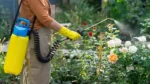
10 Best Insecticide Garden Sprayer for Effective Pest Control


![5 Best Garden Sprayers On Wheels In 2026 [Expert Reviews & Top Picks]](https://gardensprayers.net/wp-content/webp-express/webp-images/uploads/2025/02/5-Best-Garden-Sprayers-On-Wheels-In-2026-Expert-Reviews-Top-Picks.jpg.webp)


Most sprayers fail quietly, long before the seal actually splits.
Pressure loss and nozzle drift are hard to notice mid-spray — so we measure them directly instead of asking you to feel the difference. A seal that’s starting to swell from chemical exposure, or a nozzle that’s drifting a few degrees off-target, rarely shows up as an obvious leak. It shows up as wasted product, uneven coverage, and a sprayer that quietly performs worse every season until the day it fails outright. That’s why every unit on this site is tested under real load instead of judged by a spec sheet.
92%
Held full PSI past 15 min
The pressure-hold threshold where most budget pump sprayers start to fade, forcing you to stop mid-row and re-pump just to keep coverage even.
4.2
Avg. years before failure
Based on sprayers we’ve kept in active testing rotation, tracking exactly when seals, gaskets, or pump mechanisms give out under normal use.

How Best Garden sprayers earns a spot on this site.
We don’t rank sprayers on paper specs or star ratings pulled from a manufacturer’s page. Every model on this site goes through the same hands-on process, from first fill to final score, so you can trust that a 9/10 in one review means the same thing as a 9/10 in any other. Here’s exactly how we test.

01 — Fill
Load to capacity
Before any chemical goes near the tank, we fill every sprayer with water and dye to full capacity and check every seal, gasket, and connection point for leaks. This catches manufacturing defects and weak points early — a sprayer that leaks at the fill line never makes it onto a “top rated garden sprayers” list, no matter how good its nozzle is.
02 — Pressurize
Pump to rated PSI
We pump or power each unit to its rated PSI and time two things: how long it holds pressure under normal use, and how many pump strokes (or how long a battery unit takes) to recover mid-spray. This is the number that determines whether you’re spraying in smooth passes or stopping every 30 seconds to re-pressurize.
03 — Spray
Run a full tank
We run a complete tank through cone, fan, and stream nozzle patterns on the same 40 ft. test row every time, so results are directly comparable across every sprayer we’ve ever tested — not just within one review.
04 — Score
Rate and rinse
Each sprayer is scored on comfort (weight, strap design, trigger feel), leak resistance, and how easily it flushes clean between different chemicals — an underrated factor if you switch between fertilizer, fungicide, and herbicide in the same tank.


Briefly, here’s what actually matters when you buy A Garden Sprayer.
Six things separate a sprayer that lasts a season from one that lasts five years — we check every one of them before a product earns a spot on this site.

1. Seal material
Viton or EPDM gaskets resist chemical swelling far longer than standard rubber seals. If you’re spraying concentrated herbicide or pesticide regularly, a sprayer with generic rubber seals may start leaking within a single season — Viton costs more but holds up over years, not months.
2. Tank capacity vs. yard size
Match gallons to square footage instead of buying the biggest tank available. A 1-2 gallon pump sprayer is plenty for garden beds and spot-treating; a 4-gallon backpack sprayer makes sense for a quarter-acre or more. Oversized tanks just mean carrying dead weight you don’t need.
3. Nozzle adjustability
Mist vs. stream settings matter for foliar feeding versus spot weed treatment. A fine mist is better for even coverage on leaves (foliar feeding, fungicide), while a directed stream or narrow fan pattern is better for precision weed-killing where you don’t want overspray hitting nearby plants.
4. Weight when full
A 4-gallon backpack sprayer weighs over 30 lbs full — worth trying on if you can, especially if you’ll be wearing it for more than 15–20 minutes at a stretch. Padded straps and a supportive hip belt matter more than most buyers expect until they’re carrying real weight.
5. Pressure hold time
How long spray stays consistent before you’re pumping the handle again — this is the single biggest factor separating a smooth spraying session from a stop-and-start chore. It’s also the stat we test directly for every sprayer, rather than relying on the manufacturer’s claimed PSI.
6. Warranty terms
Pump seals are the most common failure point on any garden sprayer — check what’s actually covered before you buy. Some brands cover the pump mechanism for 1–2 years but exclude seals and gaskets entirely, which is exactly the part most likely to fail first.
Frequently Asked Questions (FAQs)
What is the best type of garden sprayer overall? There’s no single best garden sprayer for every yard — the right type depends on your area size and how often you spray. For most home gardeners treating beds, borders, and small vegetable patches, a 1-2 gallon pump sprayer offers the best balance of cost, weight, and control. For larger properties, orchards, or frequent applications, a backpack or battery-powered sprayer holds up better over time and covers more ground per fill.
How many gallons should a garden sprayer hold? For a yard under 500 sq ft, a 1-gallon sprayer is enough. For a typical residential yard (500–3,000 sq ft), a 2-gallon sprayer is the sweet spot most homeowners land on. For anything over a quarter-acre, orchards, or long fence lines, a 3-4 gallon backpack sprayer saves you from constant refills. Buying more capacity than you need just adds unnecessary weight to carry.
Are battery-powered garden sprayers worth the extra cost vs manual pump sprayers? Yes, for tanks above 3 gallons — a battery sprayer maintains constant pressure without manual pumping, which saves real effort on larger jobs and reduces wrist and shoulder strain over a long session. Below 3 gallons, a quality manual pump sprayer performs just as well for a lower price, with no battery to keep charged.
How far can a garden sprayer spray? Most pump sprayers reach up to 20 feet on a narrow stream setting, and some higher-pressure models can reach 30 feet. Range drops significantly on a wide fan or mist setting, since that pattern trades distance for coverage width.
What do I do if my garden sprayer nozzle is clogged? First, release pressure and remove the nozzle tip, then rinse it under running water while working a soft brush or toothpick through the opening to clear dried residue. If it’s still blocked, soak the nozzle in warm water for 10-15 minutes to dissolve buildup, then flush the tank and inline filter/strainer too — a clogged nozzle is often a sign the strainer let debris through upstream.
What’s the difference between a pump sprayer, backpack sprayer, and hose-end sprayer? A pump sprayer uses a hand-pump to pressurize a small handheld tank (1-3 gallons), making it the standard choice for spot-treating beds and small areas. A backpack sprayer is a larger tank (3-6 gallons) worn on the shoulders with a side-mounted pump lever, built for orchards, fence lines, and larger properties. A hose-end sprayer attaches directly to your garden hose and uses water pressure to mix and apply a concentrate, making it the fastest option for covering an entire lawn but the least precise for spot treatment.
Can I use the same sprayer for weed killer and fertilizer? It’s not recommended — residue from herbicide is hard to fully rinse out of a tank, and even trace amounts left behind can damage or kill the next plants you fertilize or treat with a different product. Most experienced gardeners keep a dedicated sprayer for herbicides, a separate one for fertilizer/pesticide, and label each one clearly to avoid mix-ups.
How do I clean and store a garden sprayer after use? Release all pressure before storage — many people put a sprayer away still pressurized, and that constant force on the seals is one of the most common causes of leaks over time. Rinse the tank, wand, and nozzle with clean water after every use, and run a full tank of plain water through the system to flush out any remaining chemical before long-term storage.
What size sprayer do I need for a small yard vs a large lawn? For a small yard or garden bed under 500 sq ft, a 1-gallon handheld pump sprayer is sufficient. For a standard residential lawn (roughly 1,000-3,000 sq ft), a 2-gallon sprayer typically covers the whole area with one or two fills. For a large lawn over a quarter-acre, a 3-4 gallon backpack sprayer or a hose-end sprayer will cover the ground far faster than repeatedly refilling a smaller handheld unit.
Is a hose-end sprayer better than a pump sprayer for lawns? For covering an entire lawn quickly with fertilizer or weed-and-feed, yes — a hose-end sprayer uses your home’s water pressure to mix and apply product over a wide area much faster than pumping and walking a tank sprayer. For precision spot-treatment of individual weeds or small patches, a pump sprayer gives you more control and less risk of overspray hitting nearby plants.
What safety gear should I wear when spraying pesticide or herbicide? Wear chemical-resistant gloves and eye protection at minimum, along with long sleeves and pants to keep product off your skin. Avoid spraying on windy days to prevent drift, don’t eat, drink, or smoke while spraying, and wash up thoroughly once you’re done.
One sprayer tip, every Tuesday.
Every Tuesday, we post a short, practical tip right here — the latest addition to top rated best garden sprayers, a heads-up on when it’s the right week to start spot-treating weeds or laying down fertilizer, and the occasional call-out on a model worth watching. No inbox clutter, no spam — just check back each week for the best garden sprayer advice, straight from testing.