
5 Best Garden Sprayers for Vinegar in 2026 (Tested & Reviewed)


Gardening lovers and homeowners are always searching for practical ways to care for their outdoor spaces. Vinegar has become a popular choice as a natural herbicide and cleaning solution. To get the best results when spraying vinegar, using the right garden sprayer is important. In this article, we’ll explore the top 5 garden sprayers for vinegar in 2026, helping you choose the best option to make your gardening tasks easier and more effective.
| Product | Title | Features | Explore |
|---|---|---|---|
 | Rainmaker Pump Sprayer 1 Gallon |
| Check Price |
 | D.B. Smith Field King Professional 190328 Backpack Sprayer |
| Check Price |
 | Oregon 518771 5 Gallon Multi-Purpose Sprayer |
| Check Price |
 | Roundup 190474 Multi-Purpose Sprayer |
| Check Price |
 | Solo 418 One-Hand Pressure Sprayer |
| Check Price |
Top 5 Best Garden Sprayers for Vinegar in 2026
Choosing the right garden sprayer for vinegar is important because not every sprayer is built to handle acidic liquids safely and efficiently. Vinegar is widely used as a natural weed killer and cleaning solution, but its acidic nature can damage certain materials and may clog or wear out pumps and nozzles that are not designed for it. The best garden sprayers for vinegar are made with durable, chemical-resistant seals and parts that help prevent leaks, resist corrosion, and provide a smooth, even spray pattern.
1. Rainmaker Pump Sprayer 1 Gallon
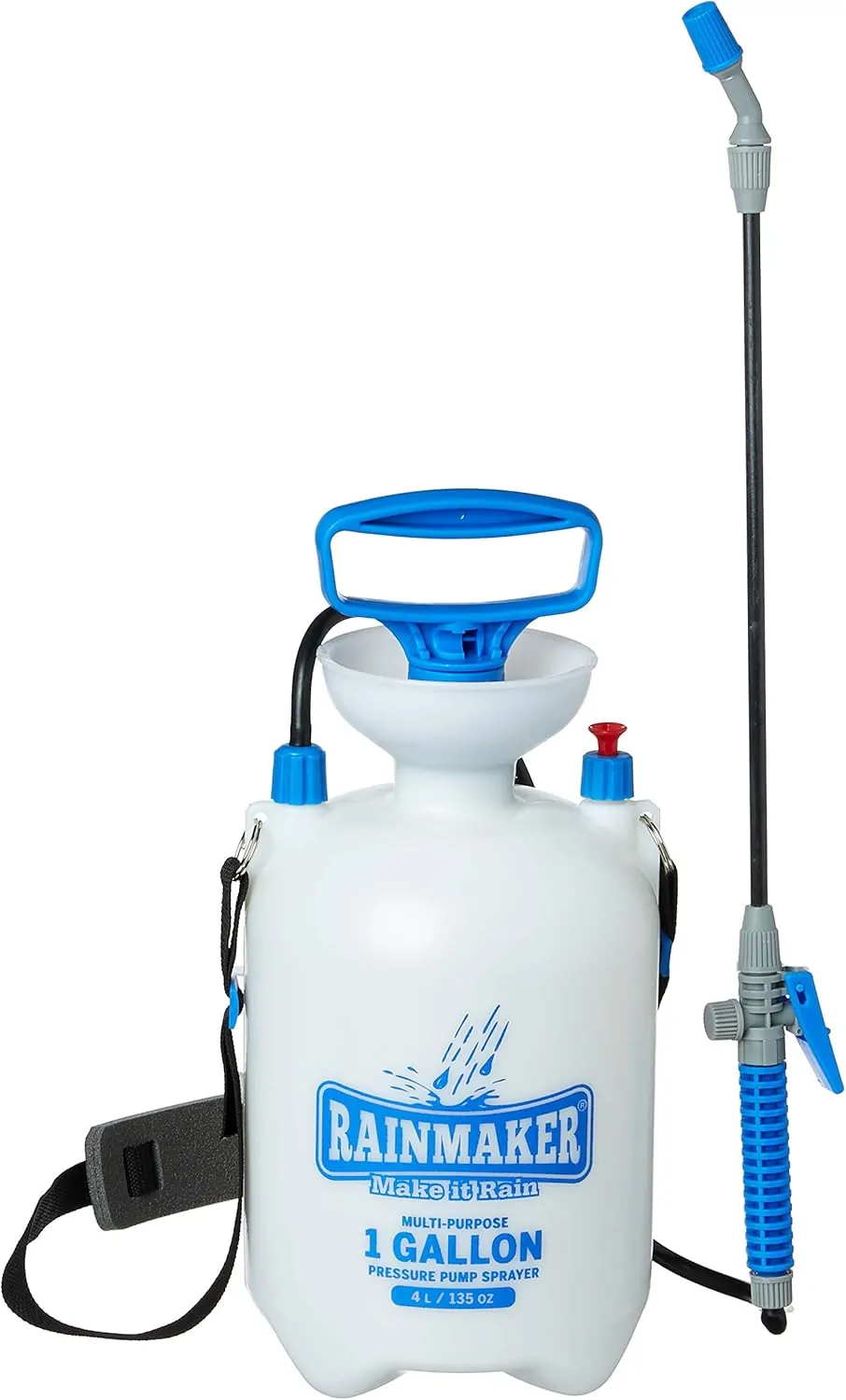
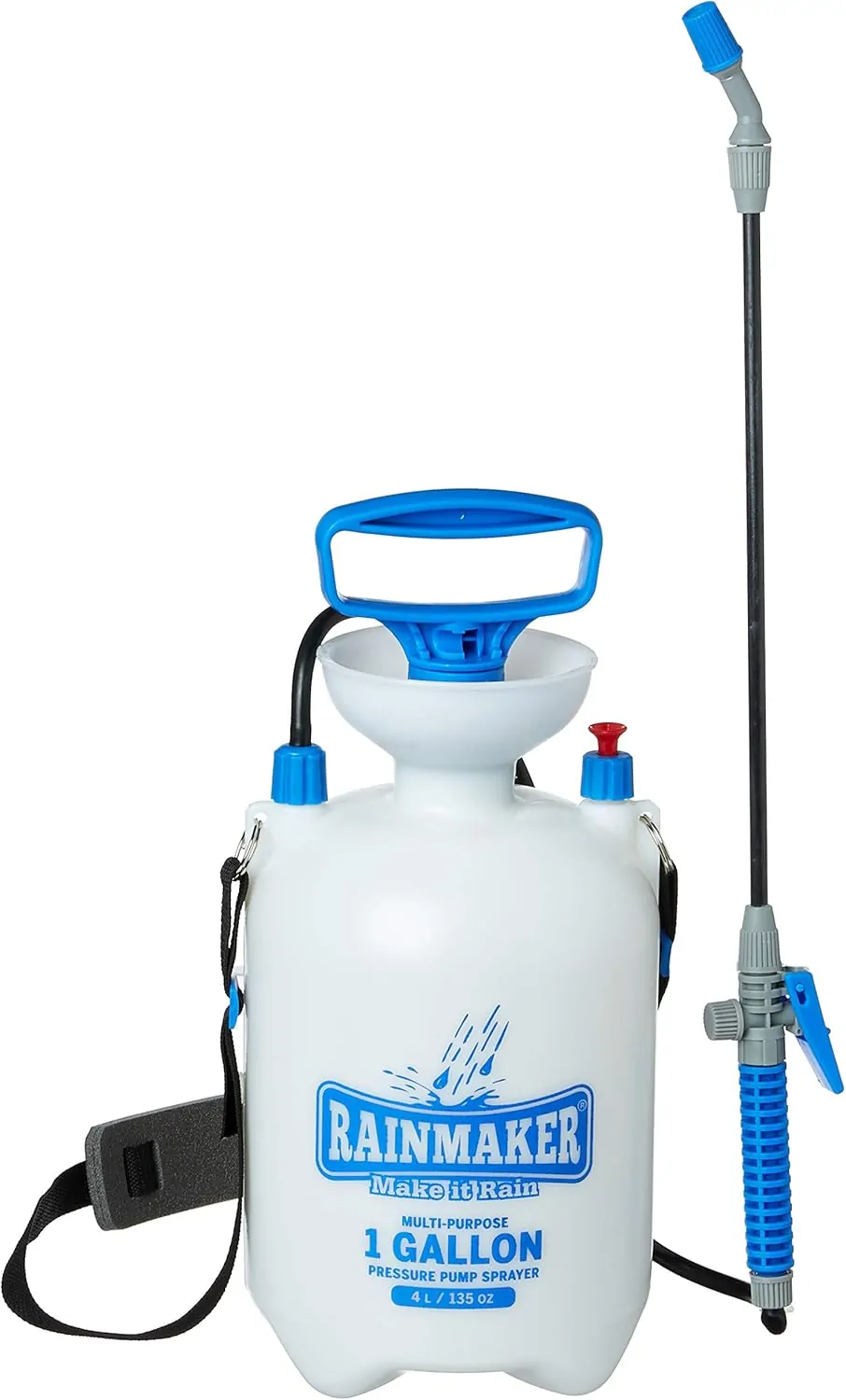
The Rainmaker Pump Sprayer is a manual pressure sprayer with a 1-gallon translucent polyethylene (PE) tank. The tank is lightweight, durable, and lets you easily check the liquid level without opening the sprayer.
expert start
What Is It and Its Features
One useful feature of this sprayer is its wide funnel-style opening, which makes filling the tank quick and easy. It also helps reduce spills when adding fertilizers or other garden chemicals. This makes the filling process cleaner and more convenient. The sprayer also comes with a built-in pressure release valve, allowing you to safely release pressure before opening the tank.
Why It Matters
The pressure release valve improves safety by preventing sudden bursts of pressure when opening the tank. A 4-foot hose provides enough reach for spraying plants, corners, and other hard-to-access areas. The trigger includes a lock-on feature, so you can keep spraying without constantly squeezing the handle. This helps reduce hand fatigue during longer jobs. You can carry the sprayer using either the top handle or the included shoulder strap, depending on what feels more comfortable.
My Set-Up and My Experience
Building pressure in the tank required only a few pumps, and the handle operated smoothly. Pressure increased quickly without much effort. I used the shoulder strap while spraying around my garden, and it made the sprayer feel comfortable and well balanced. It also reduced the need to bend down repeatedly compared to using regular spray bottles. I tested it on delicate plants such as orchids, and adjusting the nozzle was easy. I could quickly change from a gentle mist to a longer spray stream whenever needed.
Performance
During regular use, the Rainmaker sprayer maintained pressure for a long time before requiring additional pumping. The adjustable nozzle delivered both a fine mist and a stronger stream with consistent performance. The pressure release valve worked smoothly and released air safely without causing liquid to splash. The polyethylene tank feels durable enough for repeated use. Although the spray wand is a little lighter than some heavy-duty models, it performs well for normal gardening tasks when handled with reasonable care.
Practical Tips for Using This Sprayer
- Rinse the tank thoroughly after using chemicals to help extend its lifespan
- Pour thicker liquids slowly through the funnel opening
- Avoid over-pumping; stop when you feel firm resistance
- Clean the nozzle often to prevent blockages
- Use the shoulder strap to reduce strain on your hands and back
expert end
pro start
| Pros | Cons |
|---|---|
| ✔️ Wide funnel opening helps reduce spills | ❌ Spray wand feels slightly light-duty |
| ✔️ Adjustable nozzle provides mist or stream options | ❌ Hose could be slightly longer |
| ✔️ Maintains pressure well during spraying | ❌ Requires manual pumping |
| ✔️ Lightweight design with a comfortable shoulder strap | ❌ Not the best choice for very large gardens |
| ✔️ Translucent tank makes it easy to monitor liquid level | ❌ Plastic surface may show scratches over time |
pro end
2. D.B. Smith Field King Professional 190328 Backpack Sprayer
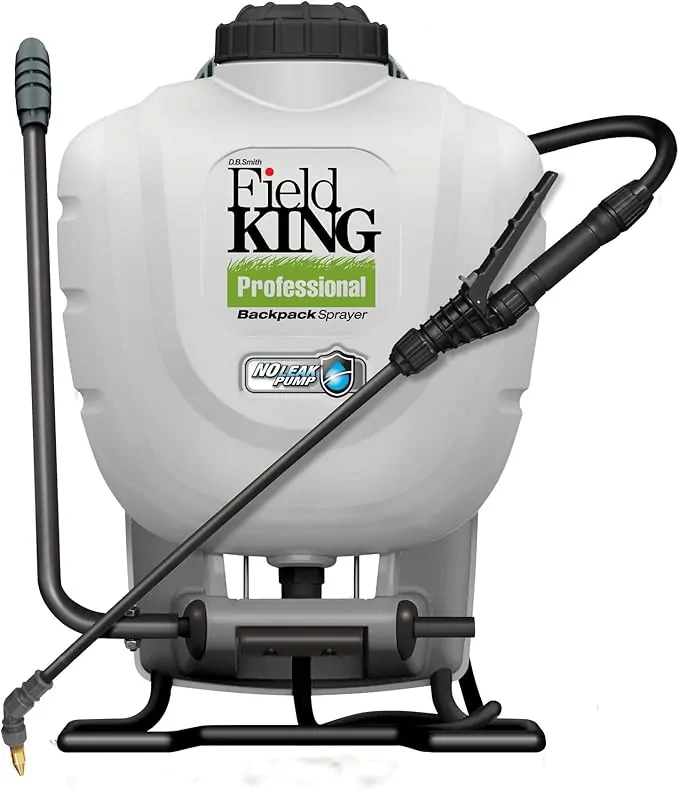
The FIELD KING 190328 is a manual backpack sprayer with a durable 4-gallon polyethylene tank. It combines the advantages of both piston and diaphragm sprayers into one unit. Its key feature is the internal piston pump, which is completely enclosed inside the tank for better protection and reliability.
expert start
What Is It and Its Features
Another standout feature is its maximum pressure of 150 PSI, which is around 65% higher than many standard backpack sprayers. This higher pressure helps you spray farther, reach higher areas, and apply chemicals with better accuracy. It makes it much easier to treat weeds, climbing vines, and invasive plants that are several feet away or above the ground.
Why It Matters
The sprayer uses Viton seals and gaskets that provide excellent resistance to chemicals. This is especially useful when working with strong herbicides, wettable powders, or liquid concentrates. Standard seals can wear out quickly, but Viton seals are more durable and help reduce maintenance. They also lower the risk of chemical leaks, which is a common issue with sprayers that use external pumps.
It also includes six different nozzles, including adjustable brass, wide fan, narrow fan, jet stream, and foaming nozzles. These options let you choose the right spray pattern for different tasks, whether you need a light mist, broad coverage, or a concentrated spray stream.
My Set-Up and My Experience
Over the years, I have used many sprayers with 1-gallon, 2-gallon, and 3-gallon tanks. The FIELD KING was ready to use as soon as I unpacked it. The wide tank opening and built-in filter basket made filling quick and clean. I was able to pour chemicals without making a mess, while the filter prevented dirt and debris from entering the tank. I carried the water, chemicals, and sprayer on a trailer to the back of the property, mixed everything on-site, and began spraying without any problems. The sprayer built pressure after only 5–6 pumps and maintained it well throughout the job.
Performance
The 21-inch poly wand, together with the high pressure, allowed me to spray up to 10 feet high with extra spray reach beyond that. This made it simple to treat vines, thick brush, and invasive plants. During use, I did not notice any leaks. The shut-off valve with brass components felt durable and comfortable to hold, while the lockable trigger reduced hand strain during longer spraying sessions. Cleaning was also easy because the in-line filter and nozzles can be removed and rinsed quickly, and the internal pump design makes maintenance simple without requiring tools.
Practical Tips
- Do not fill the tank completely if carrying heavy weight is difficult
- Use the pressure regulator when applying herbicides to avoid over-spraying
- Clean the tank, wand, and nozzles after each use
- Apply a small amount of petroleum jelly to the O-rings to extend seal life
- Select the correct nozzle for each task to save both chemicals and time
- Place the sprayer on a bench or raised platform before lifting it onto your back
- Store the sprayer empty and completely dry to help protect the seals
expert end
pro start
| Pros | Cons |
|---|---|
| ✔️ Internal pump design prevents chemical leaks onto your back | ❌ Heavy when the tank is completely full |
| ✔️ High operating pressure up to 150 PSI | ❌ Less convenient in narrow or densely covered areas |
| ✔️ Long spray reach with excellent coverage | ❌ Can be challenging to lift onto your shoulders |
| ✔️ Durable Viton seals provide excellent chemical resistance | ❌ Requires manual pumping during use |
| ✔️ Includes multiple nozzles for different spraying jobs | ❌ Large capacity may not suit small home gardens |
pro end
3. Oregon 518771 5 Gallon Multi-Purpose Sprayer
The Oregon 518771 5 Gallon Multi-Purpose Leak-Proof Backpack Pump Sprayer is built for spraying large areas with fewer interruptions. It is suitable not only for lawns and gardens but also for disinfecting homes, farms, parks, and other public spaces. Its main highlights are the large 5-gallon tank, leak-proof construction, and comfortable ergonomic backpack design.
expert start
Oregon designed this sprayer with safety, comfort, and efficiency in mind, making it a good choice for both home gardeners and semi-professional users.
What Is It and Its Features
This backpack pump sprayer is carried on your back while you work. It holds up to 5 gallons (about 20 liters) of liquid, making it suitable for large gardens, farms, and other spacious outdoor areas. The package includes a 6-foot flexible hose, a strong spray lance, and two spray nozzles—a flat fan nozzle and an adjustable cone nozzle. These nozzle choices allow you to select the most suitable spray pattern for different applications.
Why It Matters
The semi-translucent tank allows you to check the liquid level without opening the lid. Another useful safety feature is the tank safety lid valve, which lets air enter during pumping while helping prevent leaks. This helps maintain proper pressure and reduces the chance of chemicals spilling onto your clothing or back. The leak-proof design also makes the sprayer safer when using stronger chemicals.
My Set-Up and My Experience
I first tested the sprayer by filling it with water. The pump operated smoothly and required only moderate effort. Once the tank was filled with the full 5 gallons, the extra weight was noticeable. The backpack design spreads the weight reasonably well, although the shoulder straps felt fairly basic. After adding extra padding, carrying the sprayer became much more comfortable. The T-shaped tank design also improves airflow between your back and the tank, helping reduce sweating during long spraying jobs in warm weather.
Performance
The performance of this sprayer is impressive. It builds pressure quickly and keeps it steady while spraying. I covered a large area much faster than I could with smaller hand sprayers. The 5-gallon capacity also reduced the number of refills, saving both time and effort. The sprayer handled herbicides and disinfectant solutions without leaking or clogging. The flexible hose and spray lance provided enough reach to spray beneath plants, along fences, and around garden edges with ease.
Practical Tips
- Watch an assembly video before putting the sprayer together
- Add extra padding to the shoulder straps for improved comfort
- Do not fill the tank above the maximum level mark
- Clean the hose and nozzles after every use
- Inspect the seals regularly and replace them using the spare seal kit when needed
expert end
pro start
| Pros | Cons |
|---|---|
| ✔️ Large 5-gallon tank covers bigger areas with fewer refills | ❌ Assembly instructions can be confusing |
| ✔️ Leak-proof design improves user safety | ❌ Shoulder straps could use more padding |
| ✔️ Semi-translucent tank makes liquid level easy to see | ❌ Becomes heavy when fully filled |
| ✔️ Includes two nozzles for different spraying tasks | ❌ Information about spare parts is limited |
| ✔️ Smooth pumping with consistent spray pressure | ❌ Initial setup may be difficult for beginners |
pro end
4. Roundup 190474 Multi-Purpose Sprayer
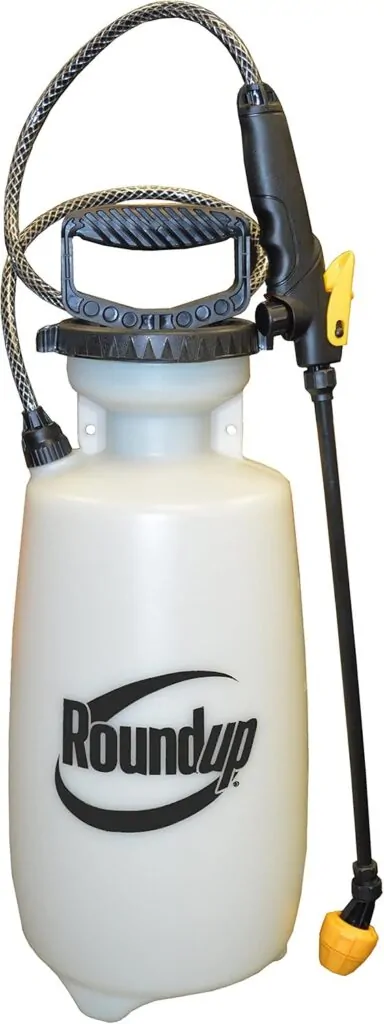
The Roundup 190474 is a versatile multi-purpose sprayer built for easy operation and long-lasting use. Its 2-gallon tank is suitable for bigger gardening jobs. The sprayer comes with a comfortable grip, a lockable shut-off, and an adjustable nozzle, making it a dependable option for spraying vinegar solutions of different strengths.
expert start
What Is It and Its Features
The Roundup 190474 is a plastic pump sprayer designed for home and garden use. It features a strong aluminum wand that is more durable than standard plastic wands. The shut-off handle has a comfortable grip and a lock-on feature that helps during long spraying sessions. A useful safety feature is the pressure release cap. Before you open the tank, the cap safely releases built-up pressure downward and away from your face and hands. This is especially useful when working with concentrated chemicals for weed or insect control.
The sprayer also includes a high-efficiency pump that needs about 25% fewer pumping strokes than many similar models. This saves time and reduces arm fatigue. It comes with an adjustable all-in-one nozzle that offers three spray patterns: fan, stream, and cone. You can switch between the spray patterns with a quick twist.
Why These Features Matter
These features improve safety, comfort, and overall spraying performance. The pressure release cap helps reduce the chance of chemical splashes when opening the tank. The efficient pump makes spraying easier, especially for older users or anyone who sprays regularly. The aluminum wand provides better durability and more precise control. Since the nozzle offers three spray patterns, there is no need to carry extra nozzles or replace attachments. Together, these features make everyday gardening jobs easier and more comfortable.
My Set-Up and My Experience
Getting this sprayer ready was simple and quick. The one-step assembly took only a few minutes. Before adding any chemicals, I filled the tank with water to test the spray settings. The sprayer built pressure quickly, and about 25 to 30 pump strokes produced a strong spray. I mostly used it for controlling weeds along garden borders, spraying insects around plants, and cleaning outdoor areas such as patios and walkways. The comfort grip made it easier to use for longer periods, and the lock-on feature allowed continuous spraying without holding the trigger the entire time.
Performance
The Roundup 190474 delivers reliable performance for regular home and garden work. It keeps pressure steady, and the spray patterns stay even and well-controlled. The fan spray covers large areas such as lawns and driveways efficiently, while the stream spray is useful for treating individual weeds and spraying into narrow cracks where insects may hide.
The pump works efficiently and maintains pressure well between pumping. The aluminum wand feels solid and resists bending during use. Compared to previous versions, the updated nozzle is less likely to clog, helping extend the sprayer’s service life. Although manual pumping may still become tiring during long jobs, it requires less effort than many similar sprayers.
Practical Tips
- Avoid tightening the lid too much to protect the rubber O-ring.
- Release all pressure before opening the tank.
- Rinse the nozzle and hose after every chemical application.
- Soak the spray parts in water if the spray pattern becomes weak.
- Test the spray settings with clean water before adding chemicals.
expert end
pro start
| Pros | Cons |
|---|---|
| ✔️ Simple one-step assembly | ❌ Manual pumping may tire some older users |
| ✔️ Pump requires fewer strokes | ❌ Plastic tank feels less premium |
| ✔️ Safe pressure release cap | ❌ No compressed air valve included |
| ✔️ Durable aluminum wand | ❌ Hose may clog if not cleaned properly |
| ✔️ Three spray patterns in one nozzle | ❌ Not the best choice for very large properties |
pro end
5. Solo 418 One-Hand Pressure Sprayer
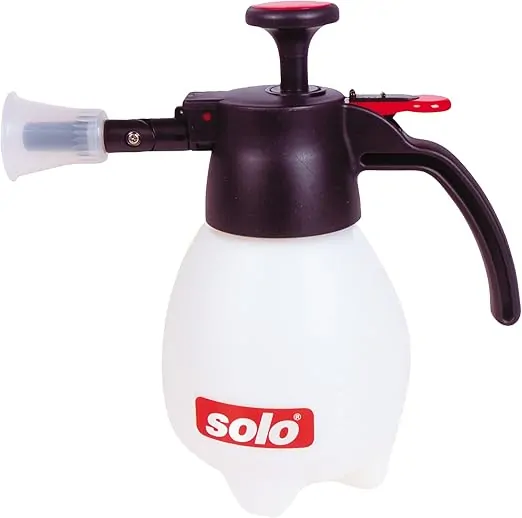
The Solo 418 One-Hand Pressure Sprayer is a lightweight and compact 1-liter sprayer made for small gardening, cleaning, and household jobs. It is suitable for gardeners, homeowners, and professionals who need accurate spraying for plants, fertilizers, pesticides, cleaning products, and sanitizing solutions.
expert start
One of its biggest advantages is the one-hand operation, ergonomic handle, and lock-on trigger, which help reduce hand fatigue during longer spraying tasks.
What Is It and Its Features
The Solo 418 is a manual pressure sprayer with a durable 1-liter (0.26-gallon) HDPE plastic tank. It is fitted with Viton gaskets and O-rings, which can withstand strong chemicals such as herbicides, pesticides, bleach solutions, and degreasers without wearing out quickly. This makes it more dependable than many basic plastic sprayers.
Why It Matters
The lock-on trigger is one of its most practical features because it allows continuous spraying without keeping constant pressure on the trigger. This helps reduce hand and thumb fatigue when misting plants, spraying compost bins, or cleaning larger areas. The adjustable multi-directional nozzle lets you switch from a gentle mist to a stronger stream while also allowing spraying from different angles, including underneath leaves.
Another useful feature is the drift and drip guard, which helps improve spray accuracy. This is especially helpful when applying fertilizers or chemicals where precise spraying is important. Its lightweight design also makes it comfortable to carry and use both indoors and outdoors.
My Set-Up and My Experience
I mainly use this sprayer for watering herbs, misting tomato plants, lemon and lime trees, hibiscus plants, and handling small cleaning jobs. Preparing it for use was very simple. I filled the tank with water, pumped the handle about 30 times, and it reached full pressure quickly. It started spraying smoothly right away. The fine mist worked well for delicate herbs and young plants, and one full tank covered all my plants without needing another refill.
The adjustable nozzle made it easy to spray upward, downward, and sideways, which was useful for reaching the undersides of leaves. I also found the red lock-on trigger very convenient during longer spraying sessions.
Performance
For a compact sprayer, the Solo 418 performs very well. It builds pressure quickly and keeps it for a long time, so frequent pumping is not necessary. The spray pattern remains even and can be adjusted from a fine mist to a concentrated stream.
I have used it with water, fertilizer mixtures, pesticides, bleach solutions, orange degreasers, and general cleaning products. The Viton seals handled each of these liquids without any issues. With regular cleaning and occasional lubrication of the pump rod, the sprayer continues to perform reliably.
Practical Tips
- Release the pressure after every use.
- Do not store the sprayer while it is still pressurized.
- Clean it thoroughly after using strong chemicals.
- Use distilled water to help prevent nozzle clogging.
- Lubricate the pump from time to time for smooth operation.
- Dry the pump area if water gets inside.
- Adjust the nozzle based on whether you need a fine mist or a stronger stream.
expert end
pro start
| Pros | Cons |
|---|---|
| ✔️ Lightweight and comfortable to carry | ❌ Small 1-liter tank is not ideal for large gardens |
| ✔️ Lock-on trigger helps reduce hand fatigue | ❌ Requires regular cleaning if using hard water |
| ✔️ Adjustable multi-angle spray nozzle | ❌ Should not be stored under pressure |
| ✔️ Viton seals resist harsh chemicals well | ❌ Does not include a pressure release valve |
| ✔️ Drift and drip guard improves spray accuracy | ❌ Small size may not suit frequent heavy-duty use |
pro end
Complete Buying Guide For Vinegar Garden Sprayer
More people are enjoying gardening every year. Across the world, many homeowners are growing vegetables, flowers, herbs, and healthy lawns in their gardens. To keep these gardens clean and productive, many gardeners use natural solutions like vinegar to control weeds or manage certain pests. However, applying vinegar safely and evenly requires the right garden sprayer. A suitable sprayer can handle acidic liquids without damage and provide consistent spray coverage every time.
In this blog post, we will explain what a garden sprayer for vinegar is, why it is useful, the different types available, how it works, its advantages and disadvantages, and helpful tips for using it properly. We also share the latest market trends and statistics about garden sprayers to help you choose the best option.
Why Use a Garden Sprayer for Vinegar?
Many gardeners use vinegar as a natural solution for weed control and various gardening tasks. Because vinegar is acidic, it can destroy unwanted weeds without relying on strong chemical herbicides. It is affordable, easy to find, and naturally breaks down without leaving harmful residues in the soil or nearby water sources. Gardeners who prefer organic gardening or want safer options for children and pets often choose vinegar.
However, vinegar should not be sprayed using just any spray bottle or standard garden sprayer. Many low-cost sprayers are not designed to handle acidic liquids. Their seals, hoses, and gaskets may wear out quickly, develop leaks, or stop working after repeated use.
Some sprayers may also become blocked when spraying vinegar or vinegar mixtures, such as vinegar combined with salt. Many gardeners have reported on gardening forums that acidic solutions can damage plastic seals and reduce the life of the pump system.
How Does a Garden Sprayer for Vinegar Work?
A garden sprayer is designed to distribute liquid solutions evenly over a specific area. The basic process works as follows:
Fill the Tank: Pour the prepared vinegar solution into the sprayer tank. For weed control, some gardeners add salt or soap to increase effectiveness, although these mixtures may be more corrosive.
Create Pressure: Manual pump sprayers build pressure by pumping air into the tank. Battery-powered sprayers use an electric motor to pressurize the liquid automatically.
Spray Through Nozzle: When the trigger or release valve is pressed, the pressurized liquid moves through the wand and nozzle, producing a mist, stream, or fan-shaped spray.
Every part that comes into contact with vinegar—including the seals, pump, hose, wand, and nozzle—should be made from acid-resistant materials. Otherwise, these parts may wear out, leak, or become clogged. Materials such as polyethylene, vinyl, and other acid-rated components usually last much longer than inexpensive plastics.
Pros and Cons of Garden Sprayers for Vinegar
Using a garden sprayer designed for vinegar offers several important benefits. These sprayers apply the solution evenly, helping improve weed control. They also save time and reduce physical effort, especially when treating large areas. Acid-resistant models protect both the equipment and your garden, making them a reliable choice for regular use.
Some advantages include:
- Effective Weed Control: A quality sprayer helps apply vinegar evenly and accurately to the targeted weeds.
- Safer & Eco-Friendly: Vinegar is a natural herbicide. Using a suitable sprayer helps reduce or replace chemical herbicides that may affect beneficial insects and soil organisms.
- Cost-Effective: A well-built sprayer can last for several gardening seasons, reducing the need for frequent replacements.
- Versatility: Most high-quality sprayers are suitable for vinegar, fertilizers, pesticides, and water, making them useful throughout the year.
Disadvantages of Sprayers for Vinegar
- Material Wear: Even acid-resistant sprayers will eventually wear over time. Vinegar can slowly damage seals, especially in lower-quality models.
- Pumping Effort (Manual Models): Manual sprayers require pumping to build pressure, which can become tiring when treating larger gardens.
- Price of Quality Electric Models: Durable battery-powered or electric sprayers usually cost more, while inexpensive models may wear out much sooner.
- Clogging Problems: Mixing vinegar with salt, soap, or fertilizers may clog spray nozzles, particularly in smaller sprayers. Cleaning the sprayer thoroughly after each use is important.
How to Use a Garden Sprayer for Vinegar Safely
Using and maintaining your sprayer correctly helps improve its performance and extends its lifespan. Always rinse the tank, hose, wand, and nozzle after every use to reduce corrosion and prevent blockages. Choose a sprayer made from acid-resistant materials for safe vinegar application. Select the appropriate spray pattern based on the job, such as a fine mist for sensitive plants or a stronger stream for weeds. Follow these simple tips to keep your sprayer working efficiently for years:
- Rinse After Every Use: After applying vinegar, rinse the tank, hose, wand, and nozzle thoroughly with clean water to help prevent corrosion and clogging.
- Choose Acid-Resistant Models: Select sprayers that clearly state they are suitable for acid, chemicals, or vinegar. Acid-rated models generally provide better durability.
- Adjust Spray Pattern: Use an adjustable nozzle to switch between mist, stream, or fan spray. A gentle spray is ideal when working near delicate plants.
- Wear Protective Gear: Although vinegar is a natural product, concentrated solutions may irritate your skin or eyes. Wear gloves and eye protection while spraying.
- Store Properly: Keep your sprayer in a cool, dry place. Release all pressure before storing it and separate removable parts to reduce gasket wear.
- Check Seals Often: Regularly inspect O-rings and pump seals for signs of wear. Replace damaged parts when needed, as many sprayers support easy replacement.
- Don’t Over-Mix Salt: Adding too much salt makes the vinegar solution more corrosive and may increase wear on the sprayer. If using salt, choose finely ground salt and clean the sprayer more frequently.
Conclusion
Choosing the right garden sprayer for vinegar is important for effective and successful gardening. The sprayers discussed above are designed to meet different gardening needs, making it easier to find the right option based on your garden size and intended use. Before buying, consider the sprayer’s material, tank capacity, and useful features so you can enjoy reliable vinegar application and maintain a healthy, thriving garden.
Frequently Asked Questions (FAQs)
1. Can I use any garden sprayer for vinegar application?
Although many garden sprayers can handle different liquids, you should always confirm that the sprayer is compatible with vinegar. Acidic solutions may damage certain materials over time. Choose sprayers made with durable, chemical-resistant components, such as the models recommended above.
2. How can I clean my garden sprayer after using vinegar?
Cleaning your garden sprayer after applying vinegar is essential to remove any remaining residue. Rinse the tank, nozzle, hose, wand, and all other parts thoroughly with clean water. Pump and spray fresh water through the system until all vinegar has been flushed out. Regular cleaning helps extend the life and performance of the sprayer.

