
6 Best 1 Gallon Garden Sprayers In 2026 (Tested & Reviewed)
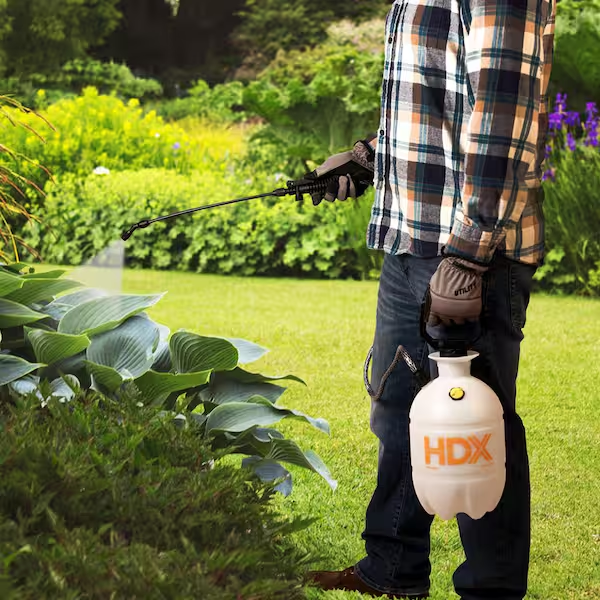

When I started comparing garden spraying equipment, I wanted something more convenient than an ordinary trigger spray bottle but less demanding than carrying a large backpack sprayer. My vegetable beds, seasonal flowers and young fruit trees needed different spraying approaches, and I did not want to prepare several gallons of liquid for every small gardening task. That was when I began looking more closely at 1 gallon garden sprayers.
A 1 gallon garden sprayer seemed like a sensible middle option. It offered enough capacity for many small spraying jobs while remaining relatively easy to carry, clean and store. However, I soon realised that tank capacity alone could not tell me whether a sprayer would perform well. The pump, pressure control, nozzle, seals, wand and overall construction mattered just as much.
My main advice is to choose a 1 gallon garden sprayer according to your actual spraying workload, not simply its advertised capacity. A suitable model should deliver controlled spraying, handle the intended liquid safely and remain comfortable throughout the job. I approached the buying decision by examining these requirements before comparing prices or attractive features.
Overview of Best 1-Gallon Garden Sprayer In 2026
| Product | Title & Rating | Features | Check More |
|---|---|---|---|
 | HDX Control 1 Gallon Sprayer⭐ 4.9 |
| Check Price |
 | Smith Contractor 190504 1 Gallon Garden Sprayer⭐ 4.9 |
| Check Price |
 | SMITH PERFORMANCE SPRAYERS 190285 1-Gallon⭐ 4.9 |
| Check Price |
What Is a 1 Gallon Garden Sprayer?
A 1 gallon garden sprayer is a portable spraying device designed to hold approximately 3.785 litres of liquid when the stated capacity is one US gallon. It uses manual pressure, a powered pump or another suitable mechanism to deliver liquid through a nozzle. Depending on the model and product label, it may be used for applying water, compatible foliar fertilisers, insecticides, fungicides or other approved garden treatments.
The important distinction is that a sprayer’s nominal capacity does not always equal its usable liquid capacity. A compression sprayer needs air space above the liquid to build pressure. Some models have a marked maximum filling line below the total tank volume, while others specify a working capacity of one gallon with additional tank space for pressurisation.
Before buying, I considered how much liquid my gardening tasks actually required. A small group of tomato plants or a flower bed could need considerably less than one gallon, while treating a larger lawn area could require several refills. The difference depended on plant size, foliage density, spray coverage and the application rate.
For a useful weight estimate, one US gallon of water weighs approximately 3.79 kg. If an empty sprayer weighs 1.2 kg, its total weight with one gallon of water would be about 5 kg, excluding accessories and differences in liquid density. That calculation helped me understand why handle design and carrying comfort deserved attention.
6 Top-Rated 1 Gallon Garden Sprayers For Effortless Lawn Maintenance
Selecting the right sprayer is not only about convenience; it is also an important decision for maintaining a healthy lawn. The 6 best 1-gallon garden sprayers listed below can help keep lawns attractive while supporting plant health and protecting pollinators. Choosing the right sprayer is a simple but valuable step toward practical and environmentally friendly gardening.
1. Chapin 20075 Translucent White 1 Gallon Garden Sprayer

My experience using the Chapin 20075 sprayer has been very satisfying. Its 1-gallon poly tank is chemical resistant and translucent, which makes filling and cleaning much easier. The ergonomic pump handle and wide mouth opening help reduce spills during use. Made in the USA and supported by Chapin’s 1-year limited warranty, this sprayer can handle bleach solutions, fungicides, and other applications, making it a versatile option for different cleaning and gardening needs.
Expert Start
The adjustable poly spray nozzle, lockable poly shut-off handle, and anti-clog in-tank filter improve the overall performance of this sprayer. The 40-inch PVC hose and 12-inch poly wand provide enough length to reach difficult areas and corners. However, users should be careful while locking and unlocking the handle because pressure can build up inside the tank.
After switching from a larger garden sprayer, I found the Chapin 20075 1-gallon bleach sprayer to be a more convenient option. It works well for different tasks, including gutter cleaning and weed management. Although it does not include a pressure release feature, users can release pressure by running the sprayer briefly and carefully removing the cap.
Expert end
Pro start
| Pros | Cons |
|---|---|
| ✔️ Wide mouth opening | ❌ No pressure release feature |
| ✔️ Poly shut-off handle | |
| ✔️ Ergonomic pump handle | |
| ✔️ Chemical-resistant tank | |
| ✔️ 1 year international warranty |
Pro end
2. SMITH PERFORMANCE SPRAYERS 190285 1-Gallon
I recently added the Smith Performance Sprayers 190285 1-Gallon to my gardening tools, and it has been a useful choice. The simple one-step assembly makes the sprayer easy to prepare, fill, pressurize, and use. Its ability to work with bleach and strong chemicals increases its versatility, allowing it to handle different cleaning tasks such as bricks, tubs, showers, siding, and locker rooms.
Expert start
The shut-off system provides a comfortable grip and includes a lock-on feature for continuous spraying. Replaceable Viton seals and gaskets improve chemical resistance and help extend the sprayer’s lifespan. The poly adjustable nozzle allows users to control different spray patterns according to their needs. From my experience, the Smith 190285 sprayer performs better than expected, especially considering its affordable price.
When the tank is almost full, pumping may require slightly more effort, but this is a small drawback for a 1-gallon sprayer. Its lightweight design and affordable cost make it suitable for home gardens, farms, and general cleaning work. With proper rinsing after each use, this sprayer can continue working efficiently for a long time.
Expert end
Pro start
| Pros | Cons |
|---|---|
| ✔️ Simple 1-step assembly | ❌ Pumping can require extra effort when the tank is nearly full |
| ✔️ Replaceable Viton seals | |
| ✔️ Poly adjustable nozzle | |
| ✔️ Comfortable shut-off grip | |
| ✔️ Compatible with bleach and other harsh chemicals |
Pro end
3. 30 SECONDS Outdoor Cleaner 1 Gallon Sprayer

After testing the 30 SECONDS Outdoor Cleaner Sprayer, I found it more impressive than expected. Its 1-gallon tank is made from translucent polyethylene, which makes checking the fluid level quick and easy. The Viton Seals and Gaskets help maintain pressure between 40-60 PSI, while the ergonomic design, adjustable spray nozzle, and anti-clog filter improve performance for different home cleaning tasks.
Expert start
This sprayer is specially designed to work with 30 SECONDS Cleaners, providing excellent durability, chemical compatibility, and bleach resistance. I first used it on a boat canopy and was so satisfied with the results that I purchased another one for home projects. It removed mildew effectively and also performed well on outdoor chairs, gutters, and concrete surfaces.
Although the handle design could be improved, the sprayer is still lightweight and easy to operate. One thing I missed was that the cleaner solution is not included with the sprayer, which created some initial confusion. However, 30 SECONDS later clarified this by offering a product bottle option.
Expert end
Pro start
| Pros | Cons |
|---|---|
| ✔️ Tank constructed with translucent polyethylene material | ❌ Included nozzle adjustment was not ideal, being either too wide or too narrow |
| ✔️ Provides 40-60 PSI operating pressure | ❌ Wand may require shaking before spraying starts |
| ✔️ Lightweight design with strong construction | |
| ✔️ Includes SureSpray anti-clog filter |
Pro end
4. HDX Control 1 Gallon Sprayer – Multi-Purpose With Funnel TOP Tank
My experience with the HDX Control 1 Gallon Sprayer was quite positive. The 1-gallon semi-translucent tank is made from high-density Polyethylene, allowing easy filling without spills and providing a clear view of the liquid level. The automatic pressure-relief valve improves safety, while the comfortable pump handle makes creating pressure and carrying the sprayer much easier.
Expert start
The 32 in. braided hose and poly flow control system with a lock-on feature allow continuous spraying, which is helpful when covering larger areas. I initially had concerns about making a mess while applying weed killer, but following the instructions carefully gave excellent results, and the sprayer performed better than expected.
I was also impressed by its overall build quality, complete parts, strong construction, and leak-resistant design. It delivered enough pressure for both spray and stream functions and worked well for my 50 sq ft green area. Adding a particle filter to the siphon tube would be a useful improvement to help prevent spray tip blockage. However, the sprayer still performed effectively for regular gardening and cleaning needs.
Expert end
Pro start
| Pros | Cons |
|---|---|
| ✔️ Semi-translucent tank design for easy liquid visibility | ❌ No particle filter on the siphon tube to help reduce spray tip clogging |
| ✔️ Features an automatic pressure relief valve | |
| ✔️ Includes a 32 in. L braided hose | |
| ✔️ Corrosion-resistant poly wand | |
| ✔️ Poly flow control system with lock-on function |
Pro end
5. Smith Contractor 190504 1 Gallon Garden Sprayer
As someone who enjoys gardening, I found the Smith Contractor 190504 to be a reliable and useful tool. It is not only effective for lawn care but also works well for commercial cleaning, sanitizing tasks, and applying strong chemicals. The commercial-grade shut-off system, comfortable handle, and multiple nozzle options, including brass adjustable and foaming nozzles, make it convenient to use.
Expert start
With features such as a 21-inch poly wand and a pressure release valve designed for safety, this sprayer offers excellent durability and performance. After having a poor experience with another portable pump sprayer, I decided to try the Smith Contractor model. Its strong build quality, easy assembly, and reliable operation showed the value of choosing a well-designed sprayer.
Although it does not include a “fine mist” nozzle, this small limitation does not reduce its overall value. The strong construction, stable design, and dependable performance make it a trusted choice for different gardening needs. It clearly shows that investing in quality equipment can be better than choosing cheaper options.
Expert end
Pro start
| Pros | Cons |
|---|---|
| ✔️ Flexible and versatile sprayer design | ❌ Does not include a fine mist nozzle |
| ✔️ Commercial grade shut-off | |
| ✔️ 21-inch poly wand | |
| ✔️ Comes with 7 different nozzles |
Pro end
6. Flo-Master by Hudson 50001 Illu-Mist White 1 Gallon Sprayer

I recently started using the Flo-Master By Hudson 50001 Illu-Mist White 1G Sprayer, and my first impression was quite good. This battery-powered sprayer includes a simple on/off button, a lock-on feature for continuous spraying, an adjustable stream-to-mist nozzle, and a comfortable ergonomic grip handle.
Expert start
However, after around one year of use, its performance declined. It either stopped working completely or released only a small amount of liquid, which was frustrating. In the beginning, it worked efficiently in my greenhouse, but the issue appeared despite limited use. The company provided a replacement after charging shipping costs. The replacement units performed better, although putting them together was somewhat difficult.
Even with these problems, I liked how it reduced effort when applying bug spray, weed spray, and Roundup. The company’s quick response to my complaint also improved my overall experience and confidence in their customer support.
Expert end
Pro start
| Pros | Cons |
|---|---|
| ✔️ Simple on/off button operation | ❌ May stop working or release very little fluid |
| ✔️ Adjustable stream-to-mist nozzle | |
| ✔️ Allows easy one-handed spraying | |
| ✔️ Removable and rechargeable lithium ion battery |
Pro end
Choosing the Right Sprayer Type
Before comparing individual products, I investigated the operating types available in the 1 gallon category. Although their tanks may hold similar amounts of liquid, their pumping mechanisms and handling characteristics can be quite different.
Manual Compression Sprayers
A manual compression sprayer normally has a tank, hand-operated pump, pressure chamber, hose, wand and nozzle. Pumping forces air into the tank, increasing pressure above the liquid. When the trigger opens, the compressed air pushes liquid through the hose and nozzle.
I considered this design particularly suitable for routine vegetable and flower spraying because it did not require batteries or electrical charging. However, pressure gradually decreases as liquid leaves the tank, so additional pumping becomes necessary. The main features I wanted to inspect included:
- Pressure relief valve: A suitable way to release pressure safely before opening the tank.
- Lockable trigger: Less continuous finger pressure during longer spraying passes.
- Adjustable nozzle: Control over spray pattern where the design permits.
- Stable tank base: Better stability while filling and preparing the sprayer.
For occasional work on tomatoes, chilies and marigolds, a well-built manual compression sprayer was a practical starting point. I would prioritise reliable pressure retention and replacement seals over unnecessary accessories.
Handheld and Battery-Powered Sprayers
Some 1 gallon sprayers are compact handheld models, while others use a small electric pump powered by rechargeable batteries. The terms overlap because handheld describes how the equipment is carried, whereas manual or battery-powered describes how pressure is generated.
A battery-powered model reduces the need for repeated manual pumping and may provide steadier output if its pump and control system are designed appropriately. However, its advantages depend on battery capacity, pump performance, nozzle selection and the manufacturer’s stated operating limits.
I considered battery operation useful for repeated spraying sessions, particularly when hand pumping became tiring. Nevertheless, I also had to account for charging, electrical protection, battery replacement and the possibility of pump failure.
For a small garden requiring only occasional treatment, a manual model can remain the simpler choice. For frequent spraying, a battery-powered version may justify its additional cost if the manufacturer provides reliable specifications, service support and replacement components.
How One Gallon Sprayers Actually Work
Understanding the working principle helped me judge equipment beyond its appearance. A sprayer is a connected system, and weakness in one component can affect the entire spraying operation.
In a typical compression sprayer, the pump increases air pressure inside the tank. The liquid moves through the outlet and hose when the trigger valve opens. It then passes through the wand and nozzle, where the opening and internal design influence the spray pattern, droplet formation and flow rate.
For example, a nozzle delivering 0.5 litres per minute would theoretically discharge 3 litres in six minutes of continuous spraying. That is a calculation rather than a guaranteed operating time. Actual flow can change with pressure, nozzle condition and liquid properties, while walking, repositioning and intermittent trigger operation increase the total working time. During my comparison, I focused on three operating relationships:
- Pressure and flow: Higher pressure can increase flow and change droplet size, depending on the nozzle.
- Nozzle and coverage: Spray angle and droplet distribution influence where the liquid lands.
- Tank and workload: Available liquid determines how much spraying can be completed before refilling.
I also paid attention to the suction tube and internal filter. A poorly positioned tube may leave unnecessary liquid behind, while a blocked filter can restrict flow. A good sprayer should allow these parts to be inspected and cleaned without damaging the equipment.
My recommendation is to examine the complete liquid path, from tank to nozzle, rather than judging pump pressure in isolation. Consistent delivery and suitable droplet control are generally more useful than an impressive pressure figure alone.
Is One Gallon Enough Capacity?
One of my biggest buying questions was whether a 1 gallon tank would be sufficient for my regular gardening activities. I compared the expected workload against the weight, refill frequency and handling requirements of different capacities.
For example, I considered foliar feeding a limited number of tomato plants, spraying ornamental flowers and applying an approved treatment to reachable foliage on young fruit trees. These jobs often require more control than volume, although the actual liquid requirement must be determined by calibration and the relevant product label.
| Sprayer Capacity | Approximate Water Weight | Practical Consideration |
|---|---|---|
| 0.5 US gallon | 1.89 kg | Small spot treatments and limited plants |
| 1 US gallon | 3.79 kg | Small beds and controlled garden spraying |
| 2 US gallons | 7.57 kg | More liquid with additional carrying weight |
| 3 US gallons | 11.36 kg | Longer tasks where portability matters less |
| 4 US gallons | 15.14 kg | Larger workloads, commonly with backpack support |
These weights represent water only and exclude the sprayer itself. They helped me recognise that a 1 gallon model could reduce the weight carried during small tasks, even if it required more refilling during extensive spraying.
For narrow vegetable beds and small flower borders, I preferred the idea of preparing only the required amount of liquid. For an entire lawn or several established fruit trees, I recognised that a larger sprayer could reduce interruptions.
My capacity recommendation: Choose one gallon when portability, smaller liquid batches and precise application are more important than covering a large area without refilling. Select a larger capacity when calibrated liquid requirements consistently exceed one gallon per session.
Which Features Deserve Your Money?
Once I understood the capacity and operating mechanism, I started comparing construction quality. I found it more useful to examine the individual components than to assume that a particular brand, colour or price indicated better performance.
Tank, Pump and Pressure Components
The tank is the main structural component, so I looked for suitable chemical-resistant materials, clear filling markings and a stable base. Polyethylene and polypropylene are commonly used in garden equipment, although their suitability depends on the particular formulation, concentration and operating conditions.
I paid attention to moulded joints, wall consistency and the threaded opening. A tank with poor finishing around its neck may make sealing difficult, while an uncomfortable pump handle can make repeated pressurisation tiring.
For a manual compression model, I wanted the pump to operate smoothly and the pressure relief mechanism to function according to the manufacturer’s instructions. A model rated for a particular maximum pressure must never be operated beyond that limit. I also considered the following inspection points:
- Tank markings: Clearly readable and appropriate for measuring liquid.
- Pump assembly: Smooth movement without excessive looseness.
- Sealing surfaces: Clean, even contact without visible defects.
- Pressure relief: Accessible and designed for safe depressurisation.
I would not automatically reject an affordable sprayer with a simple plastic pump. Instead, I would examine its construction, available replacement parts and intended workload. Similarly, an expensive model would still need to demonstrate appropriate material quality and serviceability.
Nozzles, Wands and Trigger Quality
The nozzle was one of the most important components in my selection process because it determines much of the sprayer’s practical behaviour. An adjustable nozzle can be convenient for changing spray patterns, but its adjustment range does not necessarily provide accurate application rates.
For vegetables and flowers, I looked for controlled coverage without unnecessary runoff. For reachable young fruit trees, I considered wand length and directional control more important than simply producing a long-distance jet.
A brass nozzle may offer good mechanical durability, but brass is not universally compatible with every chemical. Plastic nozzles can also perform well when their material and design suit the intended application. I therefore treated chemical compatibility and spray performance as separate requirements from appearance.
The wand needed sufficient rigidity for accurate placement without becoming uncomfortable. I also examined hose flexibility, trigger movement and whether the trigger could be serviced if its internal seal wore out.
My buying preference was a controllable nozzle, comfortable trigger and replaceable sealing components rather than a large collection of poorly documented attachments.
Checking Chemical and Material Compatibility
Before buying, I considered the different liquids that might pass through the sprayer. Water, foliar fertilisers, insecticides and fungicides can have different chemical properties, and a sprayer suitable for one formulation may not be suitable for another.
For my vegetable and ornamental gardening plans, I needed to verify that the intended formulation was approved for the crop and application method and that the equipment manufacturer permitted its use. I also considered whether the sprayer would be dedicated to a particular category of treatment. The most important compatibility checks included:
- Tank material: Resistance to the intended formulation under the stated conditions.
- Seals and O-rings: Compatibility with the liquid and its solvent system.
- Hose and wand: Suitability for the formulation and operating pressure.
- Nozzle: Appropriate material, pattern and application rate.
- Manufacturer restrictions: Any prohibited chemicals or operating conditions.
Viton, commonly associated with certain fluoroelastomer seals, may resist many chemicals, but the name alone does not guarantee compatibility with every formulation. Similarly, nitrile, EPDM and other sealing materials have different strengths and limitations.
I would never assume that a sprayer labelled chemical-resistant could safely handle every pesticide, fertiliser, solvent or cleaning agent. The exact formulation and manufacturer compatibility guidance must be checked.
For crop protection, I would also keep herbicide equipment separate from sprayers used for sensitive vegetables or flowers. Residues can remain in hoses, seals and other internal components even after cleaning. Dedicated equipment reduces the risk of unintended plant injury.
My recommendation: Decide what liquids the sprayer must handle before choosing the tank, seals and nozzle. If the manufacturer cannot confirm compatibility with the intended formulation, select another suitable model.
How I Evaluated Sprayer Durability
Durability was not simply about whether a sprayer felt strong in my hand. I wanted to understand which components were likely to experience wear, how they could fail and whether the equipment could be repaired economically.
The pump piston, seals, trigger valve, hose connections and nozzle are all exposed to repeated operation. A tank may remain structurally sound while a small O-ring begins leaking, so spare-part availability can determine whether the sprayer remains useful.
For a clean-water practice evaluation, I considered a sequence of ten pressurisation and discharge cycles, with inspection after each cycle. I would record visible leakage, pumping effort, trigger operation and whether the spray pattern changed. Such a test can reveal immediate faults but cannot establish years of service life.
Corrosion resistance also deserved attention. Metal components exposed to moisture or incompatible formulations may deteriorate, while plastic components can suffer from chemical exposure, sunlight, mechanical stress or ageing. I compared durability through practical questions:
- Can the pump assembly be removed without damaging the tank?
- Are replacement seals, nozzles and hoses available?
- Does the manufacturer provide clear maintenance instructions?
- Are the pressure-bearing components rated for the intended operation?
- Can the sprayer be stored safely without exposing components to unnecessary stress?
For occasional use, a simpler model with available spare seals could provide satisfactory value. For frequent spraying, I would give greater importance to a serviceable pump, robust hose connections and reliable manufacturer support.
However, I would not describe any sprayer as proven durable after a few days of operation. Long-term durability requires repeated use, appropriate maintenance and observations over a much longer period.
Where Should You Buy Your Sprayer?
After narrowing down the required features, I considered where to purchase a 1 gallon garden sprayer. Local garden suppliers, agricultural equipment shops, manufacturer websites and established online retailers each offered different advantages.
At a physical shop, I could inspect the tank, handle, pump movement, nozzle attachment and general finishing. Where permitted, I could request a brief demonstration using clean water. I would not pressurise an unfamiliar sprayer without the seller’s permission or operate equipment beyond its instructions.
Online purchasing required a different approach. I focused on the exact model number, documented specifications, seller identity, package contents and return conditions rather than relying on product photographs.
| Buying Check | Physical Store | Online Seller |
|---|---|---|
| Tank and handle quality | Inspect directly | Check specifications and detailed photographs |
| Pressure operation | Request a permitted demonstration | Review manufacturer instructions |
| Package contents | Confirm before payment | Match the exact model listing |
| Warranty and returns | Obtain written terms | Check regional coverage and return policy |
| Final cost | Confirm complete purchase price | Include delivery and additional charges |
I also considered total ownership cost. A lower initial price may become less attractive if replacement nozzles, seals or batteries are unavailable. On the other hand, an expensive model is not automatically economical if its extra features are unnecessary for the intended workload.
Before paying, I would confirm the exact model, intended liquid compatibility, warranty provider and availability of common replacement parts. I would also retain the receipt and manufacturer documentation.
Once the sprayer arrived, the next stage would be checking for shipping damage, missing components, damaged threads and incorrect accessories before beginning any operational test.
Calibrating Before the First Garden Spray
After purchase, calibration becomes the connection between equipment specifications and practical garden performance. A sprayer that produces a visible mist is not necessarily applying the correct amount of liquid.
I planned to begin with clean water, a measuring container, a stopwatch and a suitable test surface. This allowed me to examine output without introducing pesticide exposure or unnecessary chemical waste.
For example, if a sprayer discharged 400 millilitres in one minute, its measured flow would be 0.4 litres per minute under those specific operating conditions. A second measurement after pressure decreased could show whether output remained consistent or required additional pumping.
I would repeat the measurement several times, using the same nozzle setting and operating method, then calculate the average. This would help distinguish ordinary variation from a significant change in performance. My clean-water calibration sequence included:
- Measure output: Collect discharged water for a fixed period.
- Check spray pattern: Observe coverage on a suitable test surface.
- Record pressure behaviour: Note when additional pumping becomes necessary.
- Measure application area: Relate liquid output to the actual treated area.
- Repeat consistently: Compare results using the same settings.
For area-based spraying, the application rate can be calculated by dividing the measured liquid volume by the treated area and converting the result into litres per hectare or another suitable unit. For individual plants, I would instead focus on the relevant label directions, target coverage and avoiding runoff.
Calibration must be repeated when the nozzle, pressure, walking speed or application method changes. I would never determine pesticide concentration simply from the amount of liquid that fits inside the tank. The product label governs the permitted dose, dilution and application conditions.
Using One Gallon Sprayers Around Plants
Once calibration was complete, I could assess whether the sprayer suited different gardening tasks. My main interest was controlled application around vegetables, seasonal flowers and reachable young fruit trees rather than covering the largest possible area.
Vegetable Beds and Flower Borders
For chilies and tomatoes, I considered how easily the nozzle could be directed around foliage without unnecessarily wetting neighbouring plants. During flowering and fruit development, accurate placement becomes especially important because treatments must follow the relevant crop label and avoid unnecessary exposure to flowers, beneficial insects and surrounding vegetation.
For a sample clean-water trial, I considered a small vegetable bed measuring 2 metres by 3 metres. That provided a defined 6 square metre area for comparing spray distribution and measuring liquid use. The purpose was to examine coverage, not to establish a universal application rate.
Marigolds, petunias and zinnias presented a different challenge because their foliage and flowers could be damaged by excessive spray force or unsuitable treatment. I preferred a controllable pattern and careful application rather than a concentrated jet. When selecting a sprayer for these tasks, I would prioritise:
- Fine control: Accurate placement without excessive overspray.
- Comfortable handling: Easier movement between closely spaced plants.
- Suitable nozzle: A pattern appropriate for the treatment and crop.
- Simple cleaning: Reduced risk of residue remaining between jobs.
I would also consider seasonal conditions. Hot weather, strong wind and sensitive new growth can make spraying unsuitable, depending on the formulation. Early morning or late afternoon may offer calmer conditions, but the product label, weather and pollinator activity must determine the actual application time.
Lawns and Young Fruit Trees
A 1 gallon garden sprayer can be useful for limited lawn treatments, but I would not choose it as my main equipment for extensive lawn coverage without first calculating the required liquid volume.
For example, a 20 square metre lawn section could be used for a clean-water calibration exercise. If the selected nozzle and walking speed required 2 litres to cover that area uniformly, a working fill of 3.5 litres would cover approximately 35 square metres under the same conditions. This calculation is only useful when the measured application rate is appropriate for the intended treatment.
Young mango, lemon, guava and pomegranate trees also require attention to canopy size and reachable height. A longer wand may improve positioning, but a 1 gallon sprayer should not be expected to provide safe or uniform coverage of tall trees simply because its nozzle produces a distant stream.
For reachable young trees, I would choose a wand that allows controlled application without stretching or standing beneath drifting spray. If the canopy cannot be treated safely and according to the label, different equipment or a professional service is more appropriate.
My practical conclusion was that one gallon capacity suits selected small-scale tasks better than extensive coverage. It provides flexibility, but it cannot replace calibration, suitable nozzle selection or safe application technique.
Sprayer Safety Requires Careful Preparation
Safety was one of my main selection priorities because garden spraying involves both pressurised equipment and potentially hazardous liquids. Even a small sprayer can cause injury or plant damage if used incorrectly.
Before applying any crop protection product, I would read the entire label, confirm the approved crop and treatment, check the required protective equipment and inspect the sprayer for leaks. I would also consider wind direction, nearby people, animals, water sources and sensitive plants.
The sprayer should never be pressurised beyond its rated limit. Before removing the pump assembly or opening a compression tank, pressure must be released using the manufacturer’s specified procedure. My essential safety priorities included:
- Personal protection: Wear the protective equipment required by the product label.
- Pressure control: Never bypass or modify pressure relief components.
- Chemical preparation: Follow the approved formulation, rate and mixing instructions.
- Drift prevention: Avoid unsuitable wind and weather conditions.
- Equipment separation: Keep incompatible treatment categories in dedicated sprayers.
- Safe handling: Never clear a blocked nozzle by blowing through it with the mouth.
I also avoided the idea that applying more liquid automatically improves pest control. Excessive application can increase runoff, waste treatment and expose surrounding plants or soil unnecessarily.
For foliar feeding, the same principle applies. Fertiliser concentration, crop tolerance and application timing matter more than the amount of spray produced. A 1 gallon sprayer should help deliver an appropriate treatment, not encourage unnecessary application.
Cleaning and Storage Protect Sprayer Performance
Maintenance was another reason I examined the equipment before buying. A sprayer with inaccessible filters or unavailable replacement seals could become difficult to maintain even if its initial performance was satisfactory.
After a spraying session, cleaning must follow both the sprayer manufacturer’s instructions and the formulation label. Depending on the chemical, ordinary water rinsing may not be sufficient, and the required cleaning procedure may involve specific approved cleaning agents.
I would first handle remaining spray mixture according to the label and applicable disposal requirements. I would not pour chemical residues into drains, watercourses or ordinary garden soil.
For a clean-water practice session, I could inspect the filter, nozzle and hose after a short operating period and check whether any debris affected flow. This would provide useful information about accessibility and routine cleaning, although it would not establish long-term resistance to chemical deposits. My maintenance priorities included:
- Filter inspection: Remove trapped debris using the approved procedure.
- Nozzle cleaning: Use a soft brush or manufacturer-recommended method.
- Seal inspection: Check for cracking, swelling, flattening or leakage.
- Hose inspection: Look for damage around bends and connections.
- Dry storage: Follow instructions for draining, drying and protecting components.
For storage, I preferred a sheltered location away from direct sunlight, extreme temperatures and unauthorised access. I would release pressure as instructed and avoid leaving unnecessary liquid inside the tank.
Battery-powered models require additional care. The battery and electrical components must be handled according to the manufacturer’s charging and storage instructions, particularly where moisture exposure or temperature extremes are possible.
Over time, I would monitor pumping effort, leakage, nozzle condition and the availability of replacement parts. These observations provide a more meaningful picture of durability than a single successful spraying session.
Making the Right One Gallon Choice
After considering capacity, operating mechanism, component quality and garden workload, I reached a clearer understanding of what makes a 1 gallon garden sprayer worth buying.
My original concern was finding equipment that offered better control and capacity than a small trigger bottle without the additional weight and preparation associated with a large sprayer. A 1 gallon model addressed that requirement on paper, but its practical value depended on the quality of the pump, nozzle, seals and overall construction.
I would not choose a sprayer simply because it claimed higher pressure, included more nozzles or appeared more expensive. Instead, I would verify whether its output, materials and handling matched the work I needed to complete.
The best 1 gallon garden sprayer is the one that delivers the required liquid accurately, safely and comfortably while remaining practical to maintain. Before purchasing, confirm the intended workload, compatible formulations, usable capacity, replacement parts and warranty. After purchase, calibrate with clean water, inspect the equipment and evaluate its performance under suitable garden conditions.
For small vegetable beds, flower borders and reachable young fruit trees, one gallon can be a useful capacity. For larger lawns, extensive orchards or repeated high-volume spraying, the same capacity may become a limitation. Understanding that difference before paying is the most important part of making a sensible buying decision.
references:
1. Bartok Jr, J. W. (2021). Sprayers and spray application techniques. Center for Agriculture, Food, and the Environment.
2. Derscheid, L. A. (1952). Sprayers for use on experimental plots. Weeds, 1(4), 329-337.
3. Bode, L. E., & Butler, B. J. (1981). Equipment and calibration: low-pressure sprayers. Circular (University of Illinois at Urbana-Champaign. Cooperative Extension Service) 1192.
4. Giles, D. K., Klassen, P., Niederholzer, F. J., & Downey, D. (2011). “Smart” sprayer technology provides environmental and economic benefits in California orchards. California Agriculture, 65(2).
5. Ozkan, E. (2018). How Much Chemical Product Do I Need to Add to My Sprayer Tank?. FABE-530). Ohioline, The Ohio State University. ohioline. osu. edu/factsheet/fabe-530.
6. Ries, S. K., & Terry, C. W. (1952). The design and evaluation of a small-plot sprayer. Weeds, 1(2), 160-173.
7. Vanella, G., Salyani, M., & Balsari, P. (2011). Effect of the nozzle adaptor of sprayer calibrator on flow rate measurements. Crop Protection, 30(8), 1043-1047.

