
Wet Boom vs Dry Boom Garden Sprayer: Which Is Worth Buying in 2026?
- The global sprayer boom market was valued at USD 3.5 billion in 2024 and is projected to reach USD 5.2 billion by 2033, growing at a CAGR of 4.5%, reflecting how central boom sprayer design decisions have become for modern crop management.
- In a wet boom vs dry boom garden sprayer comparison, the two designs differ not in what they spray but in how they deliver liquid to the nozzles, and that single structural difference shapes everything from daily cleaning to decade-long maintenance costs.
- Wet booms use the pipe itself as the liquid highway; dry booms route liquid through hoses clamped alongside a structural frame.
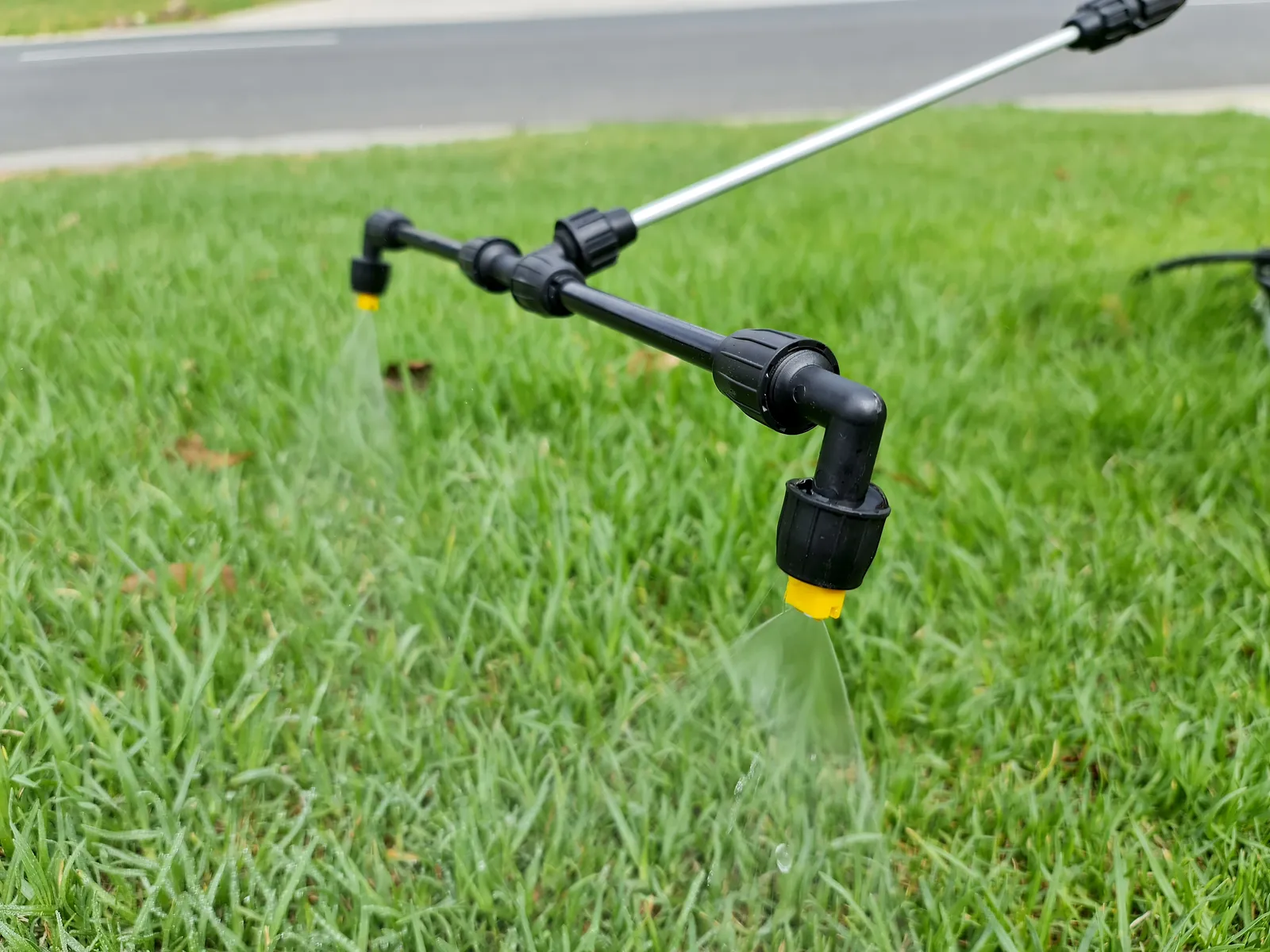

Boom sprayer buyers almost always compare tank size, pump output, and nozzle count. The one comparison that quietly determines whether a sprayer is easy to own for the next ten years is the boom design itself. Wet boom and dry boom sprayers both deliver liquid to the field, but they do it through fundamentally different plumbing layouts, and that layout shapes cleaning effort, leak frequency, part replacement cost, and chemical compatibility every single time the machine runs.
Both designs can produce accurate, uniform spray coverage when calibrated and maintained correctly. The difference is not about which one sprays better under ideal conditions. It is about which one fits how you spray, how often you spray, what chemicals you use, and how much time you can spend on maintenance.
The short answer in a wet boom vs dry boom garden sprayer debate: a wet boom is generally the better choice for operators who prioritize clean plumbing and easy flushing, while a dry boom suits those who need flexible nozzle placement or want to replace individual hose segments without modifying the boom structure.
Wet Boom vs Dry Boom Garden Sprayer: Quick Comparison
Before stepping into the technical detail, this table gives you the head-to-head picture at a glance. Readers who need a quick answer can stop here; everyone else can use it as a navigation anchor throughout the article.
| Feature | Wet Boom | Dry Boom |
|---|---|---|
| Liquid delivery system | Boom pipe carries liquid | Hoses carry liquid alongside structural boom |
| Boom construction | Hollow pipe (steel or poly) | Solid structural frame + separate hose lines |
| Number of hoses/fittings | Fewer (one feed hose per section) | More (individual hose per nozzle body) |
| Cleaning | Easier; end-cap flush clears the whole pipe | Harder; hose sags trap residue |
| Maintenance | Lower routine workload | Higher; more components to inspect |
| Leak points | Fewer connections = fewer potential leaks | Every hose barb and clamp is a leak point |
| Clogging / residue | Less prone; pipe drains cleanly | Hose low points can trap and dry residue |
| Durability | Pipe is rigid; impact damage affects liquid path | Hoses flex on impact; frame absorbs hits |
| Repairability | Replacing a cracked boom section disrupts plumbing | Individual hose or fitting replaced in minutes |
| Nozzle-spacing flexibility | Limited; holes are pre-drilled at fixed centers | High; hose routing allows any spacing |
| Initial cost | Often lower for small sprayers | Often higher due to more fittings and hose |
| Long-term maintenance cost | Lower overall if boom is undamaged | Ongoing hose and fitting replacement adds up |
| Best use | Consistent nozzle spacing, clean chemical programs | Custom spacing, mixed-use, easy-swap systems |
| Overall recommendation | Simpler, cleaner plumbing for most users | Better when nozzle flexibility is the priority |
What Is a Wet Boom Garden Sprayer?
A wet boom (a boom design where the structural pipe is also the liquid-carrying pipe) eliminates the need for individual supply hoses running nozzle-to-nozzle down the boom length. The pipe does double duty: it holds the boom rigid and carries spray solution from the feed inlet to every nozzle body along its length.
How Does a Wet Boom Sprayer Work?
Liquid travels from the tank through the pump, through the section control valve, and into the hollow boom pipe via a single feed hose per boom section. From inside the pipe, solution passes through a pre-drilled hole or port into each nozzle body that is clamped directly onto the pipe. The nozzle tip then atomizes the liquid into the spray pattern.
Because the boom pipe itself is the plumbing, there are no inter-nozzle hose runs. Each section receives one supply hose from the main plumbing, and that single hose feeds every nozzle body on that section through the pipe wall. This architecture is what Nebraska Extension (NebGuide G2091, Klein and Kruger) identifies as the defining characteristic of a wet boom.
Main Parts of a Wet Boom
- Boom pipe: The hollow tube that forms the boom structure and simultaneously acts as the liquid supply conduit from inlet to end cap.
- Nozzle bodies: Clamp-on housings that receive liquid directly from a port in the boom pipe wall and hold the nozzle tip in position.
- Nozzle tips: The spray orifices that determine droplet size, spray angle, and application rate at a given pressure.
- End caps: Sealed or removable caps at the far end of each boom section that allow flushing and prevent dead-end residue buildup.
- Feed hose: One hose per boom section running from the main plumbing to the pipe inlet.
- Boom sections: Folding or fixed segments that together make up the total working width of the sprayer.
Advantages of a Wet Boom
The structural simplicity of a wet boom creates real operational benefits that are most obvious when it is time to clean the sprayer or diagnose a flow problem.
Fewer hoses and fittings: Only one feed hose per section enters the boom pipe, which means far fewer connections overall compared to a dry boom of the same width.
Fewer potential leak points: Every hose barb, clamp, and fitting is a potential drip point. Wet booms have fewer of these by design, which reduces the chance of mid-field leaks and chemical drips.
Easier flushing: Nebraska Extension (NebGuide G2091) specifically identifies ease of flushing as a wet boom advantage. Opening the end caps and running water through the pipe flushes the entire boom section in one pass.
Less nozzle plugging from residue: Because liquid moves through a smooth-bore pipe rather than flexible hose, there are fewer surfaces where particles can settle and dry. Nebraska Extension notes less nozzle-tip plugging as a direct result of this design.
Cleaner chemical transitions: When switching between herbicides or from herbicide to fertilizer, a wet boom system is faster to decontaminate because there are no hose low-points where old chemical can sit and concentrate.
Disadvantages of a Wet Boom
The same rigidity that makes a wet boom easy to flush can create problems when the boom meets a fence post, terrace edge, or field obstruction.
Impact damage affects the liquid pathway: A bent or cracked wet boom section disrupts both the structural frame and the plumbing simultaneously, potentially causing a field-stopping leak rather than a minor cosmetic dent.
Fixed nozzle spacing: Holes in the pipe are drilled at specific intervals during manufacture. Moving a nozzle to a different spacing requires drilling new holes, plugging old ones, and re-fitting nozzle bodies, which is more labor-intensive than repositioning a hose clamp.
Section replacement cost: If a boom pipe section must be replaced, the entire plumbing of that segment is replaced with it, which can cost more than replacing a single hose on a dry boom.
Less forgiving on uneven terrain: Rigid pipe sections resist flexing, which can stress connections and boom mounts when the sprayer moves across rough or undulating ground.
What Is a Dry Boom Garden Sprayer?
A dry boom (a boom design where the structural frame carries no liquid) separates the functions of support and liquid delivery. The boom frame is solid or hollow-but-sealed, and a separate set of hoses runs along the boom to supply each nozzle body individually. The boom’s job is mechanical support only.
How Does a Dry Boom Sprayer Work?
Liquid travels from the tank through the pump and into the section plumbing. From there, individual hoses branch off to each nozzle body clamped onto the structural boom. Each hose connects to a barbed fitting on the nozzle body, delivering liquid directly to that one nozzle. The structural boom simply holds each nozzle at the right height and spacing.
This is the defining difference that separates a dry boom from a wet boom: the boom pipe itself stays dry. Every nozzle gets its own dedicated supply hose run. That arrangement gives maximum plumbing flexibility but multiplies the number of connections in the system.
Main Parts of a Dry Boom
- Structural boom: The solid or sealed frame that provides rigidity and positions nozzle bodies at the correct spacing and height.
- Supply hoses: Individual hose runs connecting the section plumbing to each nozzle body; EPDM rubber and braided nylon are the most common materials used.
- Hose fittings and barbs: The connection points where each hose attaches to the nozzle body and to the section supply line.
- Clamps: Secure both nozzle bodies to the structural boom and hold hoses in position to minimize rubbing and movement-related wear.
- Nozzle bodies: Individual housings for each nozzle tip, clamped to the structural boom and supplied by their own hose run.
- Nozzles and tips: The spray orifices, same function as in a wet boom system.
- Section plumbing: The manifold or header that distributes liquid from the pump to the individual nozzle hoses for each boom section.
Advantages of a Dry Boom
A dry boom’s extra plumbing complexity is offset by the flexibility that comes with running individual hoses to each nozzle. For operators who frequently change nozzle configurations or work with multiple row spacings, that flexibility is a real operational gain.
Easy nozzle repositioning: Moving a nozzle body to a new spacing only requires repositioning the clamp and rerouting its supply hose, with no drilling or plugging required.
Individual component replacement: A cracked hose or leaking fitting affects only that one nozzle run. Replacing it takes minutes and does not require touching any other part of the boom plumbing.
Structural boom survives impact better: Because the frame carries no liquid, a dent or bend in the structural boom does not immediately cause a spray leak. The hoses flex and absorb some impact energy that would crack a liquid-filled pipe.
Easier to expand or customize: Adding a nozzle body, changing spacing from 30 inches to 15 inches, or fitting a different nozzle style only requires new clamps and a hose run rather than boom modification.
Disadvantages of a Dry Boom
Every individual hose run on a dry boom is a maintenance item. The more nozzles a boom carries, the more hoses, clamps, and barbed fittings are in the system, and each one is a potential failure point.
More potential leak points: A 40-nozzle dry boom may have 80 or more hose connections in total. Each barbed fitting and clamp can loosen, crack, or separate over time, especially with repeated thermal cycling from hot summer days to cold winter storage.
Hose deterioration: UV exposure, agrochemical exposure, and abrasion from rubbing against the structural frame degrade hose material over time. EPDM hose typically needs inspection and partial replacement every few seasons.
Residue accumulates in hose low points: Hoses that sag between support clamps create low points where spray solution collects after the sprayer shuts off. That residue dries and concentrates in the hose, making flushing more difficult and creating a contamination risk when switching chemicals.
More components to inspect before each season: A pre-season check on a dry boom involves inspecting every individual hose run, every barb fitting, and every clamp, which takes considerably more time than inspecting the simpler plumbing of a wet boom.
“The structural design of a boom is not just an engineering detail. It is a daily decision about how much time you spend cleaning, how fast you can switch chemicals, and how confident you are that every nozzle is receiving clean, uncontaminated liquid.”
Wet Boom vs Dry Boom: 8 Key Differences
Understanding how the two designs differ on each of these eight dimensions will let you match a boom type to your specific field conditions, chemical program, and maintenance capacity.
1. Plumbing and Liquid Flow
In a wet boom, the boom pipe is the plumbing. Liquid enters at one end and travels through the pipe to reach every nozzle body along the way. There are no inter-nozzle hose connections because the pipe itself bridges the gap between nozzle positions.
In a dry boom, the structural frame carries no liquid. A dedicated hose runs from a central supply point to each nozzle body individually. The boom provides nothing more than a mounting platform. This fundamental difference in how liquid reaches the nozzles drives every other operational distinction between the two designs.
2. Spray Performance and Uniformity
Boom type by itself does not determine spray performance. A properly built, calibrated, and maintained wet or dry boom of the same working width can deliver equivalent nozzle output, pressure distribution, and spray uniformity. What matters most for application accuracy is nozzle selection, operating pressure, pump flow consistency, boom height above the canopy, and forward speed.
Research published in Agronomy (2025) on variable-rate boom sprayers demonstrated that a coefficient of variation for droplet deposition below 12% across different nozzle and pressure combinations indicates good uniformity, achievable with either boom design. The boom type influences how reliably that performance is maintained over time through its effect on residue management and maintenance, not through any inherent spray physics advantage.
3. Cleaning and Chemical Residue
This is where the wet boom holds its clearest operational advantage. Nebraska Extension (NebGuide G2091, Klein and Kruger) states directly that stainless steel wet booms with end caps are easier to clean and flush than dry booms, and that dry boom hose and nozzle assemblies are more subject to contamination with residues than stainless steel tubing or pipe.
The reason is physical. A wet boom pipe drains completely when flushed because there are no hose low points to trap liquid. Opening the end caps and running clean water pushes all residue straight through. Dry boom hoses, by contrast, sag between clamp points, creating pockets where spray solution pools after shutdown. That pooled liquid dries into concentrated residue and can re-enter the spray stream when the sprayer restarts on a different chemical.
Cross-contamination from inadequate boom cleaning is a documented problem with sensitive herbicides. Nebraska CropWatch (2018) reported that herbicide residue visible at wet boom end caps was the product of insufficient cleaning across multiple uses, and that dry boom systems, with more residue-trapping surfaces, face a greater contamination risk when switching between products.
[Nebraska Extension, NebGuide G2091, Klein and Kruger] found that stainless steel wet booms with end caps were easier to clean and flush than dry booms, and that dry boom hose assemblies were more subject to residue contamination than steel tubing or pipe.
For operators switching between herbicides, particularly residual-activity or PGR products, this difference in flushing efficiency directly reduces the risk of damaging carry-over to the next crop or chemical program.
4. Clogging and Leak Risk
Nozzle plugging is less common in wet boom systems because spray liquid moving through a smooth-bore steel pipe has fewer surface irregularities and dead corners where particles can settle and aggregate. Dry boom systems introduce many more internal surfaces through their barb fittings and hose bends where particulate matter can catch.
Leak risk runs in the opposite direction. A wet boom has fewer connections overall, so there are fewer joints to develop drips. A dry boom has one hose-to-nozzle connection and one hose-to-supply connection per nozzle body, meaning a 30-nozzle boom has at least 60 connection points. Each clamp, barb, and fitting is a potential leak site, particularly as UV exposure and chemical exposure degrade the rubber components over multiple seasons.
5. Durability
Durability depends on materials and operating conditions more than boom type alone. Stainless steel wet booms are highly resistant to chemical corrosion and UV degradation. Polyethylene wet boom pipes also offer good chemical resistance but can crack under impact or repeated freeze-thaw cycles if solution is left in the pipe during storage.
Dry boom hoses, particularly EPDM rubber (ethylene propylene diene monomer rubber, a material chosen for good agrochemical resistance), degrade from UV exposure over time regardless of care. Braided nylon hose resists UV better but is less flexible in cold temperatures. A dry boom structural frame is typically galvanized steel or aluminum, which is durable, but the hoses attached to it are the limiting factor for system lifespan.
6. Repair and Replacement
When a single hose fails on a dry boom, repair is fast: clip the old hose, cut a new length, push onto the barb fittings, and tighten the clamps. The rest of the boom keeps operating. That modularity is a real advantage for mid-season breakdowns.
When a wet boom section is cracked or bent, the repair is more disruptive. The damaged section must be removed from the plumbing circuit, which affects the entire liquid path for that boom section until the repair is complete. Depending on the pipe material and connection type, a replacement section may require re-sealing all fitting joints to restore pressure integrity.
“A boom that is easier to repair in the field keeps downtime short and chemical application on schedule. Choosing between boom designs means choosing between plumbing simplicity and repair modularity.”
7. Customization and Nozzle Spacing
Nebraska Extension (NebGuide G2091) notes that the most common nozzle spacings for boom sprayers are 20 and 30 inches, and that many sprayers are converted from 30-inch to 15-inch spacings for higher application rates. Wet booms typically have holes drilled at specific fixed centers during manufacture, so changing spacing means drilling new holes and plugging the old ones, which is a structural modification to the boom pipe.
Dry booms make this change much easier. Because each nozzle body is clamped to the structural frame and supplied by its own hose, repositioning a nozzle requires only moving the clamp to the new location and rerouting the hose. No holes are drilled or plugged. For operations that spray multiple row spacings or frequently adjust nozzle configuration, this flexibility is a meaningful time saver.
8. Initial Cost vs Long-Term Cost
For smaller boom widths, a wet boom is often less expensive to purchase because its simpler plumbing uses fewer components. A basic ATV wet boom with six to eight nozzles has only six to eight nozzle bodies, a single feed hose per section, and end caps. A comparable dry boom adds individual supply hoses, additional fittings, and more clamps to the parts list.
Over time, dry boom ownership includes recurring hose replacement costs as EPDM and nylon lines age. Wet boom ownership costs are lower in routine maintenance but can spike sharply if a boom section needs structural replacement, because the section repair involves plumbing work rather than a simple hose swap. The operator’s field conditions and impact risk should factor heavily into this long-term cost calculation.
Which Is Easier to Clean: Wet Boom or Dry Boom?
A wet boom is easier to clean. The evidence for this comes not from marketing material but from field-level extension research. Nebraska Extension and Nebraska CropWatch both document that wet booms, particularly stainless steel designs with removable end caps, flush more completely and leave less residue than dry boom systems.
Routine flushing on a wet boom follows a simple path: open the end caps, run clean water through the feed hose, and the entire pipe volume clears in one pass. Dead-end residue can accumulate near the far end cap between flushings, which is why removable end caps matter. Opening the cap before flushing releases any concentrated material that settled at the pipe terminus.
Dry boom cleaning involves running water through each hose run. The challenge is the low points where hoses sag between clamp attachment points. Those sags act as small reservoirs where spray solution concentrates after the pump shuts off. Flushing under pressure helps, but fine particles and dried surfactant residue can still adhere to the hose interior, particularly in older hoses with rough or degraded inner surfaces.
[Nebraska CropWatch, University of Nebraska, 2018] documented that dry boom hose and nozzle assemblies are more subject to chemical contamination than stainless steel tubing, with residue visible in improperly cleaned dry boom systems even after tank rinsing.
For operators using residual herbicides, growth regulators, or any product with a narrow replanting interval, dry boom residue retention can translate directly into crop injury on the next application.
When switching herbicides, especially with products that have sensitive carry-over restrictions, the cleaning advantage of a wet boom is not a minor convenience. It is a chemical stewardship issue with agronomic consequences. For winter storage, draining a wet boom is also more complete because the pipe gravity-drains without hose low points retaining liquid that could freeze and split connections.
Which Is Easier to Repair and Maintain?
Dry booms win on ease of individual component repair. A failing hose on a dry boom is a five-minute field fix. A failing nozzle body clamps off and swaps in a standard replacement. No other part of the boom plumbing is disturbed.
Common failures on a wet boom include cracked or bent pipe sections, damaged nozzle body clamps, blocked nozzle tips, and leaking end-cap seals. Of these, a cracked pipe section is the most disruptive because it takes down the entire liquid path for that boom section. Nozzle body swaps are actually fast on a wet boom; the clamp releases without tools in many designs, and a new body drops onto the pipe in the same operation.
On a dry boom, common failures include cracked hoses from UV or mechanical abrasion, loose clamps from vibration, leaking barb fittings from over-tightening or material fatigue, damaged nozzle bodies from field contact, and deteriorated hose material from chemical exposure. These failures tend to be more numerous than wet boom failures, but each one is cheaper and faster to fix individually.
Pre-season maintenance on a wet boom focuses on inspecting the pipe, checking end-cap seal condition, and pressure-testing each section. Pre-season maintenance on a dry boom requires the same tasks plus inspecting every individual hose run for cracking, UV chalking, or kinking, checking every clamp, and pressure-testing every individual barb fitting. The total inspection time is significantly longer on a dry boom of the same working width.
Which Lasts Longer: Wet Boom or Dry Boom?
Lifespan is not determined by boom type alone. It depends on the materials selected, the aggressiveness of the chemical program, UV exposure during outdoor storage, physical impact frequency, and winter storage practices. Assigning a fixed number of years to either design without knowing those variables would be misleading.
Stainless steel wet booms maintained properly and stored drained in a covered space routinely outlast the vehicle they are mounted on. Polyethylene wet booms are durable against most agrochemicals but can become brittle in prolonged UV exposure and crack more easily under impact than steel at cold temperatures.
Dry boom structural frames are highly durable in galvanized steel or aluminum. The limiting factor is the hose. EPDM rubber hose degrades from UV even when the chemical resistance is excellent. In high-UV environments or where sprayers are stored outdoors year-round, hose replacement every three to five years is realistic for dry boom systems. Replacing hoses on a 40-nozzle boom is a material and labor cost that adds to total dry boom ownership expense over time, even though each individual replacement is inexpensive.
Wet Boom vs Dry Boom for Different Spraying Jobs
The right boom design for one job is not automatically the right choice for another. Spraying conditions, chemical types, and operator priorities all shift the balance between wet and dry boom advantages.
Large Lawns and Properties
For turf and property spraying where nozzle spacing is consistent and chemical programs involve fertilizer, weed control, or fungicide applications, a wet boom makes strong sense. The cleaner plumbing simplifies transitions between products, and the lower leak risk prevents unwanted drip patterns on visible turf areas.
Farms and Agricultural Fields
Large-acreage row crop operations typically use wet booms on professional self-propelled sprayers. The cleaner residue management is critical when rotating between herbicide-sensitive crops, and the lower total hose count on a wide wet boom reduces the maintenance workload across a full spraying season. Nebraska Extension guidance on field sprayers (NebGuide G2091) is oriented primarily toward large-boom applications where cleaning and residue management are particularly important.
ATV and UTV Sprayers
ATV and UTV sprayers encounter rough terrain, low branches, and fence corners more frequently than mounted field sprayers. A dry boom’s impact tolerance is an advantage here; a bent structural frame does not immediately cause a spray leak. Small ATV wet booms are also common and work well on pastures and food plots where terrain is relatively open. Sprayer Guru notes that on smaller sprayers, a wet boom is a simpler apparatus with less hose routing to manage.
Small Gardens and Hobby Farms
For small-scale applications with only four to eight nozzles, a wet boom is almost always the better choice. The added complexity and cost of dry boom hose routing offers little practical benefit at small working widths. Simple wet boom designs for garden use are self-supporting, easy to store, and easy to flush after each use without any specialized procedure.
Herbicides and Weed Control
Herbicide applications, particularly with residual or PGR-type products, place the highest demand on cleaning thoroughness. The wet boom’s flushing advantage is at its most valuable here. Nebraska Extension’s documentation of dicamba-related contamination risk specifically highlights wet booms as the cleaner system for operators who need to thoroughly decontaminate before switching crops or products.
Liquid Fertilizer Application
Liquid fertilizers introduce corrosion risk that depends on material compatibility. Stainless steel wet booms handle most liquid fertilizer formulations well. Polyethylene wet booms are also compatible with most fertilizers. Dry boom rubber hoses must be verified for chemical compatibility with specific fertilizer formulations, as some high-concentration products can swell or degrade certain hose materials. Post-application flushing is equally important for fertilizer to prevent crystallization in nozzle bodies and hose low points.
[Research in Agronomy journal, 2025] found that herbicide input could be reduced by 15 to 30% while maintaining weed control efficacy above 90% when application timing matched the 3 to 4 leaf stage of dominant weeds, and that spray volume of 225 L/ha significantly improved deposition uniformity.
For boom operators targeting precision application to reduce chemical inputs, consistent nozzle delivery enabled by well-maintained plumbing is the mechanical foundation for these efficiency gains.
Wet Boom vs Dry Boom: Which Is Better for Beginners?
A wet boom is the better starting point for beginners. The reason is not that it performs better in the field; it is that it demands less background knowledge to set up, troubleshoot, and maintain correctly.
A beginning sprayer operator needs to learn nozzle selection, pressure calibration, travel speed, and chemical label requirements. Adding a dry boom’s hose inspection routine, leak-point management, and residue accumulation monitoring to that learning load increases the chance of missed maintenance steps. A wet boom reduces the number of variables by simplifying the plumbing.
Flushing a wet boom after each use is a clear, repeatable procedure: open end caps, run water, close end caps. Flushing a dry boom requires more attention to hose routing and low points, which is harder to communicate and remember for someone new to boom sprayer ownership. Replacement parts for wet booms are also fewer in type, which makes ordering correct components less confusing early in the learning curve.
Wet Boom vs Dry Boom: Which Is Better for Professionals?
Professional operators need both designs available to them because high-volume operations often use different sprayers for different jobs. For a primary row crop sprayer covering thousands of acres per season with frequent chemical transitions, a wet boom’s cleaning advantage and lower residue risk justify the fixed nozzle spacing limitation. Most modern large-frame self-propelled sprayers come equipped with wet boom designs for exactly this reason.
For a secondary utility sprayer that handles pasture work, roadside spraying, or spot treatments with frequent nozzle configuration changes, a dry boom’s flexibility and impact tolerance are more valuable. The ability to quickly change from 20-inch to 30-inch spacing or add a third nozzle body per row position is a practical benefit that justifies the additional maintenance workload for a professional who understands what that maintenance involves.
Professionals with multiple sprayers in their fleet often end up running both boom types across different machines without thinking of it as a choice at all. The question “wet boom or dry boom?” becomes “which design goes on which machine for which job?”
Which Boom Type Is Worth Buying in 2026?
The global boom sprayer market is growing at a CAGR of 4.5% (Verified Market Reports, 2025), and that growth is being driven in part by stricter pesticide application accountability requirements. In this environment, selecting the right boom design matters more than it did when chemical residue management received less regulatory attention.
Buy a Wet Boom If…
- You apply herbicides with residual activity or PGR characteristics and need fast, thorough decontamination between uses.
- You spray consistent nozzle spacings and do not plan to change nozzle positions frequently.
- You are new to boom sprayers and want a simpler system to learn and maintain.
- You spray large lawns, turf areas, or row crops where plumbing cleanliness and leak-free operation matter most.
- You use a stainless steel boom in a corrosive chemical program and need a material that resists long-term degradation.
- You want lower total maintenance time across an entire spraying season, even if individual repair events require more work.
Buy a Dry Boom If…
- You regularly change nozzle spacing between different crops or application types and need that flexibility without structural boom modification.
- You spray in rough terrain where boom contact with obstacles is likely, and you want impact damage to stay cosmetic rather than immediately creating a spray leak.
- You run multiple nozzle configurations on the same machine and need quick-swap plumbing to support that flexibility.
- You want to expand the number of nozzles on an existing boom without modifying the structural pipe.
- You have a mid-season hose failure risk and want the ability to make field repairs in minutes rather than requiring a replacement boom section.
- You are operating an older machine where dry boom conversion is more practical than installing entirely new wet boom plumbing.
What to Check Before Buying Either Boom Sprayer
Regardless of which boom type you choose, these are the specifications and features that determine whether the sprayer will actually match your operation’s needs.
Boom width and nozzle spacing: Confirm that the working width and nozzle centers match your row spacing or target coverage area before any other evaluation.
Boom material: Stainless steel, polyethylene, and aluminum each offer different chemical compatibility and durability profiles. Match the material to your most aggressive chemical.
Hose material (dry booms): Verify EPDM or braided nylon compatibility with every chemical product you plan to run through the system.
Pump flow rate and operating pressure: Confirm that the pump delivers adequate flow for your total nozzle count and target application rate at the operating pressure your chosen nozzle tips require.
Section control: Sprayers with individual boom section shutoff reduce overlap and chemical waste. Check how many sections the sprayer has and whether section control is manual, electric, or automated.
Nozzle compatibility: Confirm the nozzle body size is compatible with your preferred nozzle brand and tip style so you are not locked into proprietary tips.
Replacement part availability: Before buying, confirm that nozzle bodies, end caps, hoses, and fittings are available locally or from a reliable online source. A boom sprayer whose parts require long lead times will cost you field days during peak spray windows.
Foldable or breakaway boom design: A breakaway feature protects the boom from full-force impact damage and is especially important for ATV and orchard sprayer applications.
Tank size and ATV/UTV/tractor compatibility: Ensure the mounting system, hitch type, and tank capacity match your carrier vehicle and intended application volume per acre.
Common Mistakes When Choosing Between Wet and Dry Booms
These are the errors that cost buyers money, field time, and in some cases, crop damage from inadequate cleaning or incompatible equipment.
Choosing by price alone: The cheaper boom at purchase may carry a higher total ownership cost over five years if it requires more frequent hose replacement, more downtime for repairs, or more time per cleaning cycle.
Ignoring replacement-part availability: A boom whose fittings or nozzle bodies are proprietary and difficult to source will strand you at the worst possible time, which is during peak application windows.
Assuming wet automatically means better spray accuracy: Spray accuracy depends on nozzle selection, calibration, pressure, height, and speed. A wet boom does not inherently produce better droplet distribution than a dry boom of equal quality. Both can achieve good uniformity when set up correctly.
Ignoring chemical compatibility: Dry boom hoses must be chemically compatible with every product in your program. Incompatible hose material can swell, soften, or leach plasticizers into the spray solution, affecting both the hose lifespan and potentially the chemical performance.
Not considering cleaning requirements: If you will be switching between herbicides with different modes of action or sensitive replanting restrictions, underestimating the cleaning difference between wet and dry boom designs is a mistake with real agronomic consequences.
Buying a boom that is too wide for the application: A wider boom is not always better. Booms wider than the machine’s stability envelope or wider than the operator can safely manage in tight field conditions create more risk than they eliminate.
Confusing a dry boom with a boomless sprayer: These are not the same thing. A dry boom is a conventional boom with individual hose-fed nozzles in a fixed array. A boomless sprayer has no horizontal boom structure at all; it uses one or two high-output nozzles to throw a wide, overlapping spray pattern. Boomless sprayers are used on rough terrain where a boom would be impractical, but they produce less uniform coverage than a properly calibrated boom sprayer of either type.
[University of Nebraska, NebGuide G2091, Klein and Kruger] identified that additional nozzle assemblies on a wet boom to accommodate various row spacings do not restrict the flow rate through the boom pipe, allowing multiple nozzle positions without pressure loss at adjacent bodies.
This is an important operational point: adding dual or triple nozzle bodies to a wet boom for flexibility does not require replumbing the boom pipe, only adding the nozzle body clamp at the existing port location.
Final Verdict: Wet Boom or Dry Boom?
The wet boom vs dry boom garden sprayer decision comes down to two competing priorities: plumbing simplicity versus plumbing flexibility. Choose the one that matches the way your operation actually runs, not the one that sounds better in a product description. For the majority of crop farmers, home property owners, hobby farm operators, and anyone who uses herbicides and needs confident cleaning between applications, a wet boom is the better investment. Fewer hoses, fewer leak points, easier flushing, and less nozzle plugging reduce daily operational friction and lower the risk of chemical carry-over damage.
Frequently Asked Questions (FAQs)
Is a wet boom better than a dry boom? For most operators, a wet boom is the simpler and easier-to-maintain design. It has fewer hoses, fewer leak points, and flushes more cleanly after chemical applications. A dry boom is better specifically when nozzle spacing flexibility or individual hose replacement modularity is a priority for your operation.
Are wet booms easier to clean? Yes. Nebraska Extension research and Nebraska CropWatch documentation both confirm that wet booms with end caps flush more completely than dry booms. The absence of hose low points where residue can accumulate and concentrate makes wet boom cleaning faster and more thorough.
Are dry booms cheaper? Not necessarily. Dry booms often have a higher initial cost at comparable working widths because they require more individual components. Hose, fittings, and clamps add up. Over time, recurring hose replacement makes dry boom ownership cost higher than a wet boom that remains undamaged.
Which boom is easier to repair? Dry booms are easier to repair at the individual component level. Replacing a single hose or fitting is a quick field task that does not require stopping the rest of the boom. Wet boom repairs are more disruptive when a boom section itself is damaged, though nozzle body swaps are equally fast on both designs.
Which boom is less likely to clog? Wet booms are less likely to experience nozzle plugging from residue buildup inside the plumbing. Nebraska Extension notes that fewer particle build-up surfaces in a wet boom system translates to less nozzle tip plugging compared to dry boom hose and fitting assemblies.
Can you convert a dry boom to a wet boom? Yes, in principle, but it involves replacing the structural boom with a hollow pipe and re-plumbing all nozzle bodies to receive liquid from the pipe wall rather than individual hoses. For most operators, the cost and labor of this conversion makes buying a purpose-built wet boom more practical than converting an existing dry boom.
Which boom is better for an ATV sprayer? Both designs work on ATV sprayers. A dry boom is slightly better suited to rough terrain use because structural frame damage from contact does not immediately produce a spray leak. A wet boom is better for ATV operators who prioritize easy cleaning and do not frequently encounter obstacles that could bend the boom.

