
6 Best Garden Sprayer Spray Guns of 2026: Top Picks & Buying Guide
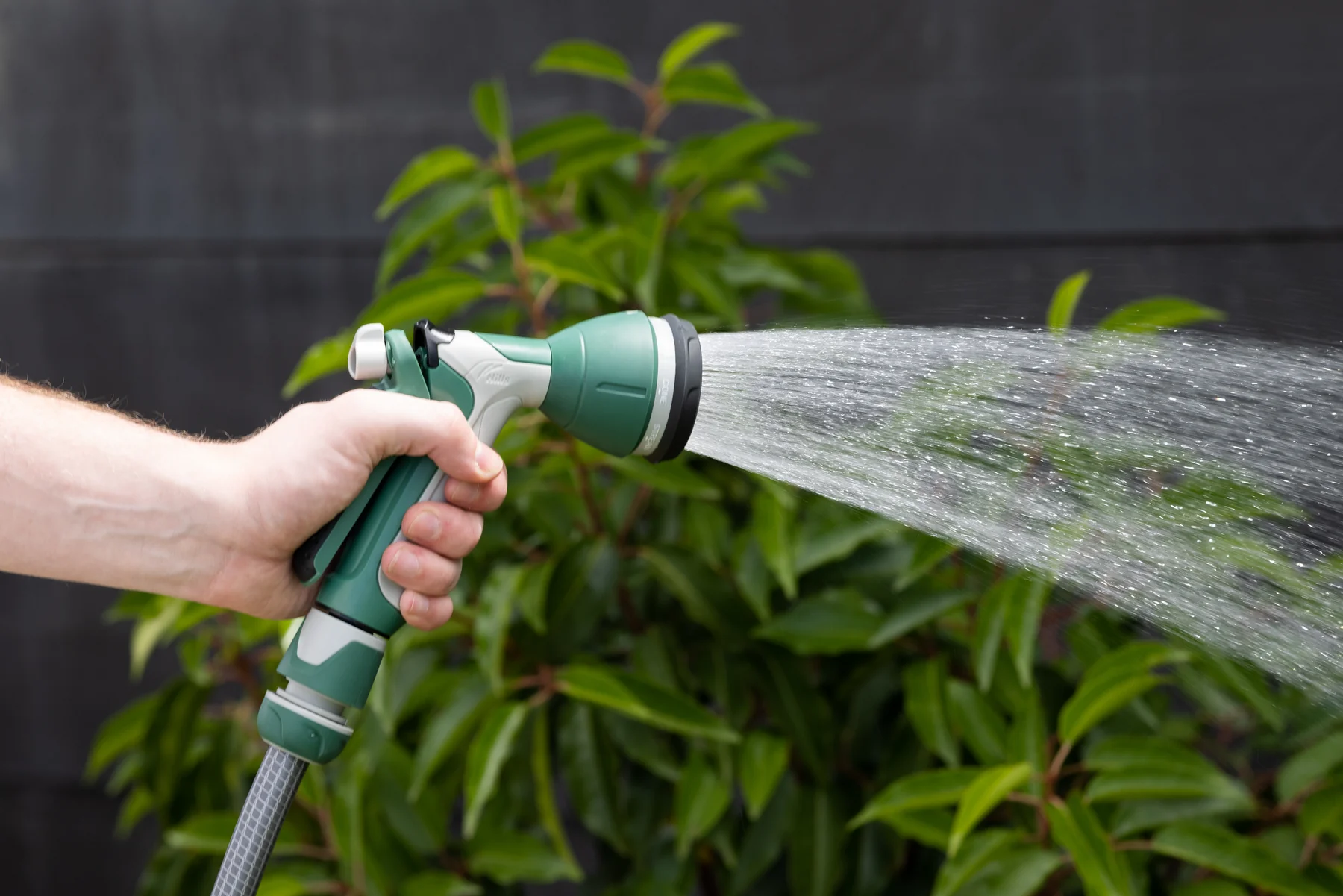

When I started looking more carefully at garden spraying equipment, I realised that choosing a suitable spray gun was just as important as choosing the sprayer itself. A good tank and pump could supply the liquid, but the spray gun controlled how comfortably, accurately and safely I could direct it towards my plants. If the trigger leaked, the nozzle produced an uneven pattern or the connection did not fit properly, even an otherwise reliable sprayer could become frustrating to use.
For vegetables such as chilies and tomatoes, I wanted controlled application around closely spaced plants. My flowers required careful handling to avoid unnecessary wetting of neighbouring blooms, while lawn work demanded reasonably consistent coverage. Reachable young fruit trees presented another challenge because I needed sufficient reach without depending on excessive pressure or creating unnecessary spray drift.
Rather than searching for the most expensive model, I approached the choice through sprayer compatibility, spray quality, trigger comfort, material durability and maintenance requirements. These five priorities helped me distinguish a useful upgrade from an attractive accessory that might not suit my equipment.
An Overview Of Top Lawn Sprayer Gun
| Product | Title | Features | Explore |
|---|---|---|---|
 | ESOW Garden Hose Nozzle Spray Gun |
| Check Price |
 | IRRIGLAD Hose Nozzle Sprayer Gun |
| Check Price |
 | Brezze Letter Garden Spray Gun |
| Check Price |
 | Foam King Cannon Gun for Hose Lawn |
| Check Price |
 | Chemical Guys TORQ Foam Garden Spray Gun |
| Check Price |
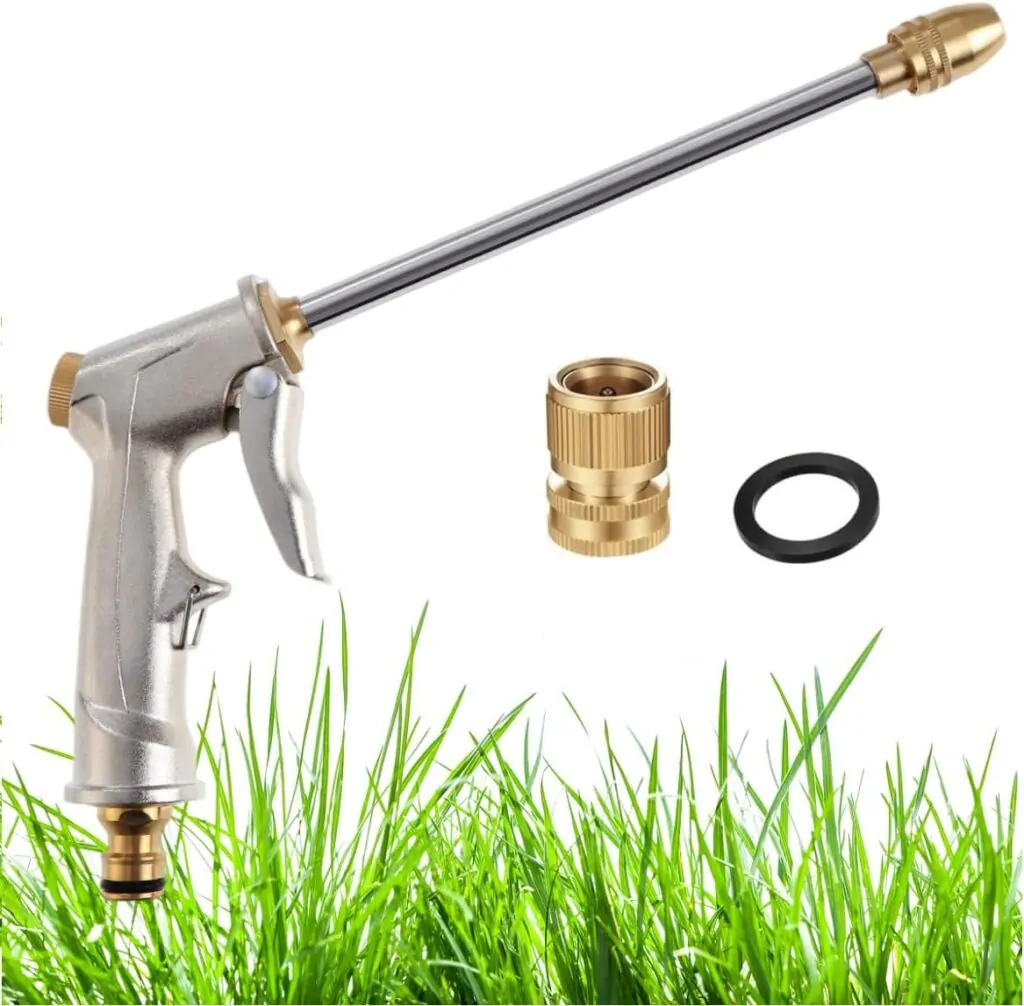 | HLWQ Water Hose Nozzle Sprayer Gun |
| Check Price |
What Makes a Spray Gun Worth Buying?
A garden sprayer spray gun is a handheld control assembly fitted to a compatible spraying system. It allows the operator to start and stop liquid flow, direct the spray and, depending on the design, adjust the discharge pattern or flow. Some guns attach directly to a hose, while others connect to a wand or lance carrying the nozzle.
The gun itself normally does not generate pressure. A manual pump, electric pump or another approved supply system provides the pressure needed to move liquid through the hose and nozzle.
This distinction matters because replacing a spray gun cannot automatically correct a weak pump, blocked filter or inadequate hose supply. Before comparing products, I organised my buying priorities around the jobs I expected the equipment to perform.
- Vegetable beds: Controlled spray placement, comfortable trigger operation and suitable nozzle selection.
- Flower beds: Adjustable application with minimal unnecessary drift onto neighbouring plants.
- Lawns: Consistent flow and a suitable spray pattern for the treatment being applied.
- Young fruit trees: Adequate lance reach and manageable handling without unsafe pressure increases.
- Regular maintenance: Accessible filters, replaceable seals and fittings that can be inspected and cleaned.
For example, a spray gun weighing 250 g instead of 450 g would reduce the equipment weight held in one hand by 200 g. That difference does not establish comfort by itself, because grip shape, hose resistance and balance also matter. Nevertheless, it shows why I treated weight as a useful comparison rather than an isolated selling point.
My first recommendation is to identify the existing sprayer and the actual spraying tasks before choosing the gun. Otherwise, even a well-built product may deliver the wrong flow, spray pattern or connection.
Top 6 Best Garden Sprayer Spray Guns
The garden sprayer market has grown quickly in recent years. During 2025, sales of battery-powered sprayers increased by 32% across North America, while traditional manual sprayers continued to be a popular choice for home gardeners and small gardening projects. Below are five popular garden sprayer spray guns, ranging from basic handheld options to advanced battery-powered models.
ESOW Garden Hose Nozzle Spray Gun
The ESOW Garden Hose Nozzle features a solid brass nozzle combined with a zinc alloy body for excellent durability and corrosion resistance. It provides adjustable spray settings, including a gentle mist, medium spray, and powerful jet stream. During use, the nozzle felt comfortable to hold and delivered accurate, efficient performance for watering plants, cleaning outdoor areas, and even bathing pets.
expert start
What Is It and Its Features
The ESOW Garden Hose Nozzle is a high-pressure watering nozzle designed for a wide range of gardening and cleaning tasks. Built with a 100% metal construction, including a brass nozzle and zinc alloy body, it offers greater durability than most plastic alternatives. It supports several adjustable spray patterns, such as fine mist, medium spray, and powerful jet streams, making it suitable for watering plants, cleaning outdoor surfaces, and washing pets.
Its ergonomic pistol-style handle includes a labor-saving locking buckle that keeps water flowing without requiring continuous pressure on the trigger. This feature helps reduce hand fatigue during longer watering sessions. The nozzle connects easily to any standard 3/4-inch garden hose. Additional features include a rubber washer to help prevent leaks, a rotating nozzle head for accurate water flow adjustment, and extra sealing gaskets that extend its service life.
Why It Matters
The ESOW Garden Hose Nozzle addresses many of the problems found with lower-quality spray guns. Plastic nozzles often develop leaks, wear out quickly, or break after limited use, resulting in unnecessary replacement costs. Its all-metal construction provides better durability, dependable performance, and improved water pressure, making everyday watering more efficient.
It also gives users precise control over the spray pattern. You can easily change from a soft mist for delicate seedlings to a strong jet stream for cleaning patios, driveways, or reaching distant areas. By reducing water waste and minimizing hand fatigue, this nozzle makes routine gardening tasks easier and more comfortable. For gardeners who regularly care for plants or lawns, it offers noticeable improvements in both convenience and performance.
My Set-Up and My Experience
I connected the ESOW Garden Hose Nozzle directly to my standard 3/4-inch garden hose, and installation took only a few moments. The nozzle feels sturdy, balanced, and comfortable to hold, giving confidence during use. I have used it for watering flower beds, washing my car, and cleaning outdoor surfaces, and it has consistently delivered reliable performance.
Changing between different spray modes is smooth, while the adjustable control knob allows quick and precise water flow adjustment. The locking handle clip is especially useful during long watering sessions because it maintains continuous water flow without requiring constant pressure on the trigger.
Even after frequent use, the nozzle has shown no signs of leaking or damage, demonstrating the quality of its metal construction. Its ergonomic design remains comfortable during extended use, and the strong jet stream easily reaches distant areas. Overall, it has proven to be a dependable and versatile garden nozzle that performs beyond expectations.
Performance
The ESOW Garden Hose Nozzle performs very well across different gardening and cleaning tasks. It produces strong water pressure, while the adjustable spray patterns provide excellent control for both watering and washing. The mist setting is gentle enough for young seedlings, whereas the jet stream is powerful enough for cleaning driveways and removing stubborn dirt.
Unlike many lower-cost nozzles that often leak or drip, this model delivers consistent performance because of its brass nozzle and high-quality rubber washers. Its solid metal construction also provides excellent durability, making it a worthwhile long-term investment for gardeners. Even during demanding cleaning jobs, it offers reliable control, strength, and dependable performance.
Practical Tips
- Adjust the spray pattern to switch between mist, shower, and jet modes for different gardening tasks.
- Use the locking handle to maintain continuous water flow without constantly squeezing the trigger.
- Turn the nozzle head to adjust both water pressure and spray coverage.
- Store the nozzle indoors during freezing weather to help prevent cracking.
- Inspect and replace the rubber gaskets regularly to avoid leaks.
expert end
pro start
| Pros | Cons |
|---|---|
| ✔️ Strong all-metal construction provides better durability than most plastic options. | ❌ A bit heavier than plastic spray nozzles. |
| ✔️ Multiple adjustable spray patterns work well for gardening and outdoor cleaning. | ❌ The squeeze handle may feel small for users with larger hands. |
| ✔️ Comfortable ergonomic handle helps reduce hand strain during extended use. | ❌ Water pressure adjustment is limited and mostly works as on or off. |
| ✔️ Built-in labor-saving buckle keeps water flowing without constant squeezing. | ❌ The package does not include detailed usage instructions. |
| ✔️ Powerful jet spray easily reaches distant areas and removes stubborn dirt. | ❌ May develop cracks if left outdoors in freezing temperatures. |
pro end
IRRIGLAD Hose Nozzle Sprayer Gun
Made from solid SS304 stainless steel for excellent durability, rust resistance, and a long service life. The strong internal mechanism is built to withstand more than 100,000 trigger pulls. It offers adjustable water flow from a gentle mist to a powerful jet using the pistol-style trigger, while the trigger lock helps reduce hand fatigue during longer watering jobs. In my experience, it feels solid, is comfortable for everyday use, delivers steady water pressure, although I noticed a small leak after several months of regular use.
expert start
What Is It & Its Features
The IRRIGLAD Hose Nozzle 2 Pack is a heavy-duty metal garden hose sprayer made from SS304 stainless steel and zinc alloy components. It features a standard 3/4-inch threaded connector, making it compatible with most outdoor hoses and faucets. The nozzle lets you adjust the water flow from a fine mist to a strong jet by changing the pressure on the trigger. It also has a front threaded design that allows you to attach additional cleaning accessories if required. One feature that stood out to me is its durable internal design, which is made to handle more than 100,000 trigger pulls. The triangle support lock is also useful because it keeps the water flowing without needing to keep the trigger pressed.
Why It Matters
The IRRIGLAD Hose Nozzle 2 Pack is important because a good garden nozzle should be durable, dependable, and easy to use. Many plastic nozzles crack, leak, or wear out after only a few months, especially when used often in hot outdoor conditions. Its all-metal construction provides better strength and rust resistance, making it a practical choice for people who water their gardens regularly. From my experience, smooth and controlled water flow makes watering plants easier and helps when cleaning dirt from pots and garden tools. Although it does not include several spray patterns like some advanced models, its simple design performs well because there are fewer parts that can break.
My Set-Up And My Experience
I tested the IRRIGLAD Hose Nozzle 2 Pack in my home garden for watering plants, cleaning flower pots, and other outdoor tasks. Setting it up was simple—just screw it onto the garden hose, and it is ready to use. The first thing I noticed was its solid metal construction. It is heavier than most plastic nozzles, but it feels durable and well-built. During everyday use, the trigger operated smoothly, and adjusting the water pressure was easy. I especially appreciated the trigger lock because it made long watering sessions much more comfortable. After using it for several months, one nozzle developed a slight leak while not in use, but the overall performance stayed reliable. Compared to other nozzles I have owned, this one lasted longer and needed very little maintenance.
Performance
The IRRIGLAD Hose Nozzle 2 Pack provides dependable and consistent performance for everyday gardening. The adjustable water flow works well for different jobs around the garden. A light squeeze creates a soft spray for young plants, while pressing the trigger fully produces a strong jet that is useful for removing soil, mud, and debris. The sturdy metal body helps maintain steady water pressure without bending or cracking. I also found that it performs well even with higher water pressure. However, because it does not include multiple preset spray patterns, it may not be the best option for users who like many spray settings. Even so, for normal gardening tasks, it performs better than many plastic multi-pattern nozzles I have tested.
Practical Tips
- Use gentle water pressure when watering delicate plants to protect the leaves
- Use the trigger lock during long watering sessions to reduce hand fatigue
- Do not leave the nozzle under continuous water pressure when it is not being used
- Clean the nozzle tip regularly to keep dirt from blocking the water flow
- Store it in a shaded place to help extend its lifespan, even though it is rust-resistant
expert end
pro start
| Pros | Cons |
|---|---|
| ✔️ Durable stainless steel construction | ❌ Limited spray pattern choices |
| ✔️ Comfortable pistol-style grip | ❌ Small leaks may appear after extended use |
| ✔️ Smooth and adjustable water flow | ❌ Heavier than most plastic nozzles |
| ✔️ Connects easily to standard garden hoses | ❌ No rubber grip for added comfort |
| ✔️ Good value with two nozzles included | ❌ Not the best choice for very fine misting |
pro end
Brezze Letter Garden Spray Gun
Comes with 8 spray patterns, adjustable water pressure, a durable ABS plastic body, leak-resistant connectors, and fits all standard garden hoses with ease. It also features a soft rubber grip, a trigger lock for continuous spraying, supports up to 3,5 bar pressure, and uses water efficiently for many gardening jobs. In my experience, it offers smooth spray control, feels comfortable to hold, prevents leaks, and performs well for watering plants and cleaning outdoor spaces.
expert start
What Is It & Its Features
The Brezze Letter Garden Hose Nozzle 2 Pack Heavy Duty 8-Way Spray Gun is a versatile hose sprayer that connects easily to standard 3/4-inch garden hoses. It is built from durable ABS plastic and has a soft rubber-coated handle that provides a secure and comfortable grip. The nozzle includes 8 spray patterns: jet, mist, shower, cone, flat, rinse, soaker, and center. These settings let you change the water flow and pressure for different gardening and cleaning tasks. It also has a trigger lock that keeps the water flowing without holding the handle all the time, helping reduce hand strain. Rubber sealing rings are included to create a tight, leak-resistant connection with most standard hoses.
Why It Matters
The Brezze Letter Garden Hose Nozzle 2 Pack Heavy Duty 8-Way Spray Gun is useful because it makes watering and outdoor cleaning faster while helping reduce water waste. Its 8 spray modes allow you to handle different jobs with one nozzle, from gently watering flowers with the mist setting to washing dirty paths with the powerful jet spray. I found it easy to control the water flow, which helped avoid unnecessary water use. The soft grip and trigger lock also made longer watering sessions much more comfortable. If you want a simple, affordable, and practical garden nozzle, this is a solid option.
My Set-Up And My Experience
I tested the Brezze Letter Garden Hose Nozzle 2 Pack Heavy Duty 8-Way Spray Gun in my home garden, where I water lawn grass, potted plants, and flower beds. Installing it was quick because it attached directly to my standard garden hose without any leaks, thanks to the rubber washers. During use, I changed between mist mode for delicate plants and jet mode for cleaning muddy spots around the garden. The handle remained comfortable even after using it continuously for about 20–30 minutes. The trigger lock was especially helpful because it allowed continuous spraying without squeezing the handle. Since the package includes two nozzles, I used one for watering plants and kept the second one for outdoor cleaning.
Performance
The Brezze Letter Garden Hose Nozzle 2 Pack Heavy Duty 8-Way Spray Gun delivers dependable performance for daily gardening work. The jet and rinse settings provide strong, steady water pressure, while the mist and shower modes are gentle enough for delicate plants. Changing between spray patterns is quick, and each mode works smoothly. I also noticed that it helped me use water more efficiently than my previous nozzle. Although the body is made of plastic, it feels durable for regular use, but it should still be handled carefully. Overall, it performs reliably for watering plants as well as cleaning outdoor areas.
Practical Tips
- Use the mist setting on the Brezze Letter Garden Hose Nozzle for seedlings and delicate flowers to protect them from damage.
- Select the jet mode when cleaning garden tools, walkways, or other hard surfaces.
- Check the rubber sealing rings regularly to prevent leaks and maintain steady water pressure.
- Use the trigger lock during long watering sessions to reduce hand fatigue.
- Keep the nozzle in a shaded place after use to help extend the life of the plastic parts.
expert end
pro start
| Pros | Cons |
|---|---|
| ✔️ Eight spray patterns for a wide range of gardening tasks | ❌ Plastic construction is less durable than metal |
| ✔️ Soft rubber grip provides comfortable handling | ❌ May become damaged if dropped repeatedly |
| ✔️ Trigger lock helps reduce hand strain | ❌ Grip may feel large for users with small hands |
| ✔️ Connects easily to standard hoses with a leak-resistant fit | ❌ Water pressure depends on your hose and water supply |
| ✔️ Includes two nozzles for excellent value | ❌ Spray selector may become loose after extended use |
pro end
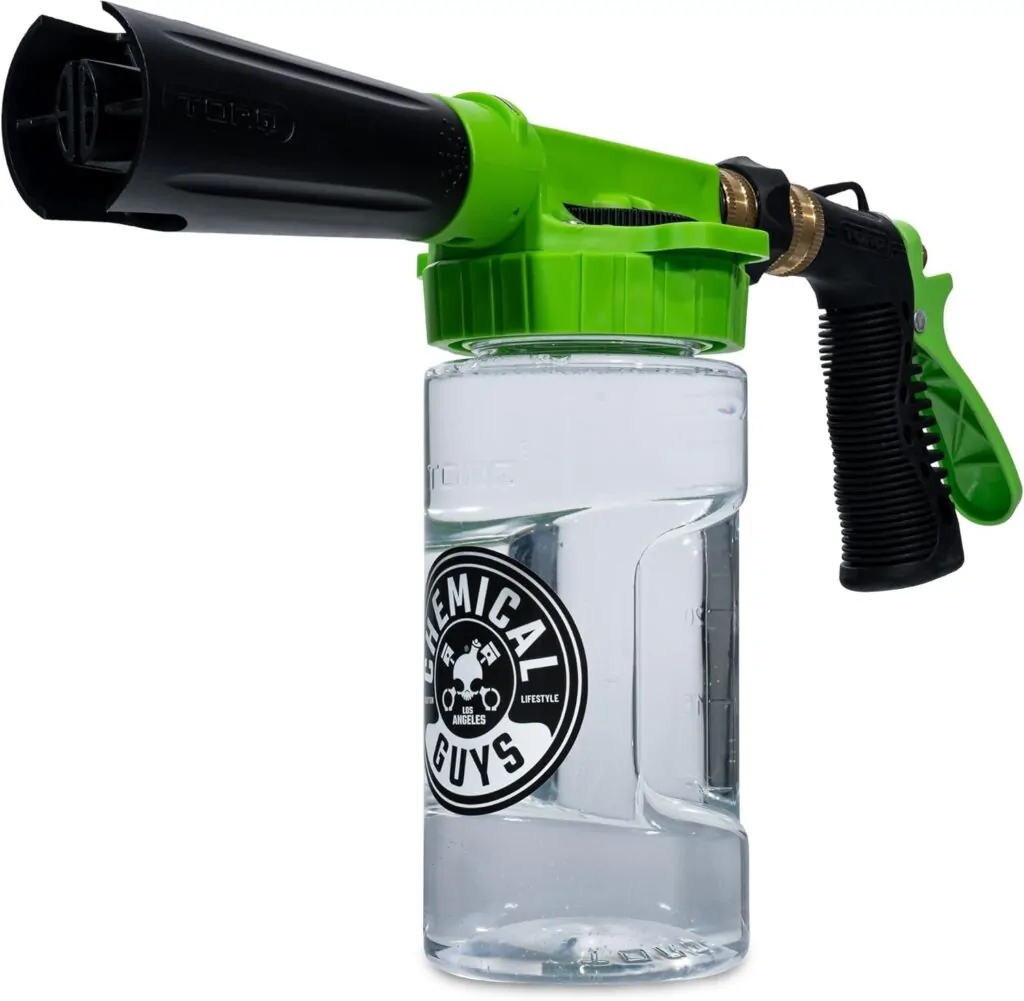
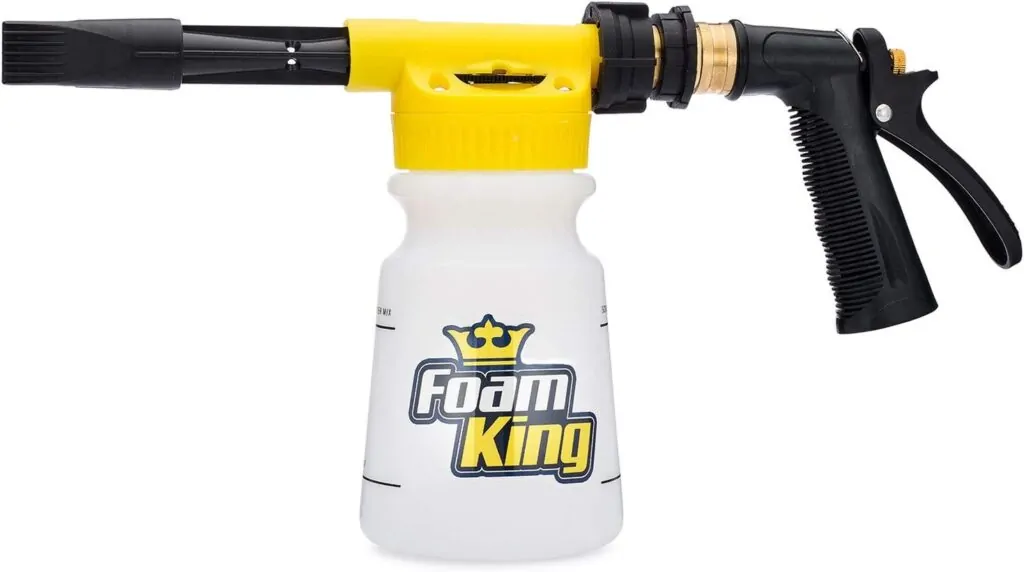
Foam King Cannon Gun for Hose Garden
Connects directly to standard garden hoses and includes six adjustable foam settings with strong brass fittings to create steady foam for effective cleaning. Its lightweight polycarbonate and metal body, leak-resistant design, adjustable spray patterns, and simple soap mixing system provide better control while cleaning. During my use, it was easy to set up, produced good foam coverage, stayed leak-free, reduced cleaning time, and worked well for washing cars and garden tools.
expert start
What Is It & Its Features
The Foam King Gun is a foam sprayer that connects to a regular garden hose to create soapy foam for cleaning cars, bikes, boats, and garden tools. It does not require a pressure washer, making it a practical choice for everyday use. It comes with six adjustable foam settings, so you can choose thicker or lighter foam depending on the cleaning job. A simple control dial lets you mix soap and water easily. While using it, I found that it produced a good layer of foam that helped loosen dirt before scrubbing. It attached to my standard garden hose without any trouble, and I did not notice any leaks while using it. Its lightweight design also made it comfortable to hold during longer cleaning sessions.
Why It Matters
This Foam Gun is helpful because it makes cleaning faster, easier, and safer, especially if you do not have a pressure washer. In my experience, the foam lifts dirt away from the surface, which can help reduce the chance of scratches during washing. It works well for cars as well as gardening items such as sprayers, flower pots, and outdoor furniture. It can also save both time and water compared to washing everything by hand. I found it useful for reaching corners, edges, and hard-to-clean areas with less effort. Gardeners can also use it to clean muddy tools, equipment, and outdoor work areas quickly.
My Set-Up And My Experience
The first time I used the Foam King Car Wash Foam Gun, I connected it directly to my garden hose without needing any extra equipment. The setup took only a few minutes and was very simple. I poured in my regular cleaning soap, adjusted the foam control, and started spraying. The foam spread evenly across the surface, and changing the spray pattern was easy. I tested it on my car as well as several gardening tools, and it made cleaning much quicker. I learned that the best results come from adjusting the foam setting correctly, so you may need to test a few settings at first. The overall build feels solid, although some plastic parts should be handled with care. Overall, the experience was smooth, and it reduced the effort needed compared to washing by hand.
Performance
The Foam King Car Wash Foam Gun performs well for a foam sprayer that runs from a garden hose. It creates a good amount of foam, although it is not as thick as the foam produced by a pressure washer cannon. Even so, it provides enough foam for normal cleaning tasks. The adjustable spray settings make it easy to switch between wide coverage and more focused spraying. I found it effective for removing dust, dirt, and light mud from different surfaces. It also cleaned garden tools well after they had been used in soil. The spray pressure stayed steady during use, and I did not experience any leaking. Although a pressure washer offers stronger cleaning power, this foam gun is an affordable and convenient option for everyday cleaning.
Practical Tips
- Use warm water with the Foam King Car Wash Foam Gun to create better foam and remove dirt more easily
- Begin with the medium foam setting, then adjust it based on the surface and how dirty it is
- Rinse away loose dirt before applying foam for improved cleaning results
- Use a soft brush after applying foam when cleaning gardening tools thoroughly
- Wash the nozzle after each use to prevent soap buildup and clogging
- Handle the foam gun carefully because the plastic parts can be damaged if dropped
expert end
pro start
| Pros | Cons |
|---|---|
| ✔️ Connects easily to standard garden hoses | ❌ Foam is thinner than pressure washer foam systems |
| ✔️ Six adjustable foam settings for different cleaning jobs | ❌ Plastic components should be handled carefully |
| ✔️ Makes cleaning faster than washing by hand | ❌ Finding the best soap mixture may take a few attempts |
| ✔️ Helps reduce scratches by lifting dirt with foam | ❌ Cleaning performance depends on your garden hose water pressure |
| ✔️ Suitable for cleaning both vehicles and gardening equipment | ❌ Not designed for heavy-duty cleaning work |
pro end
Chemical Guys TORQ Foam Garden Spray Gun
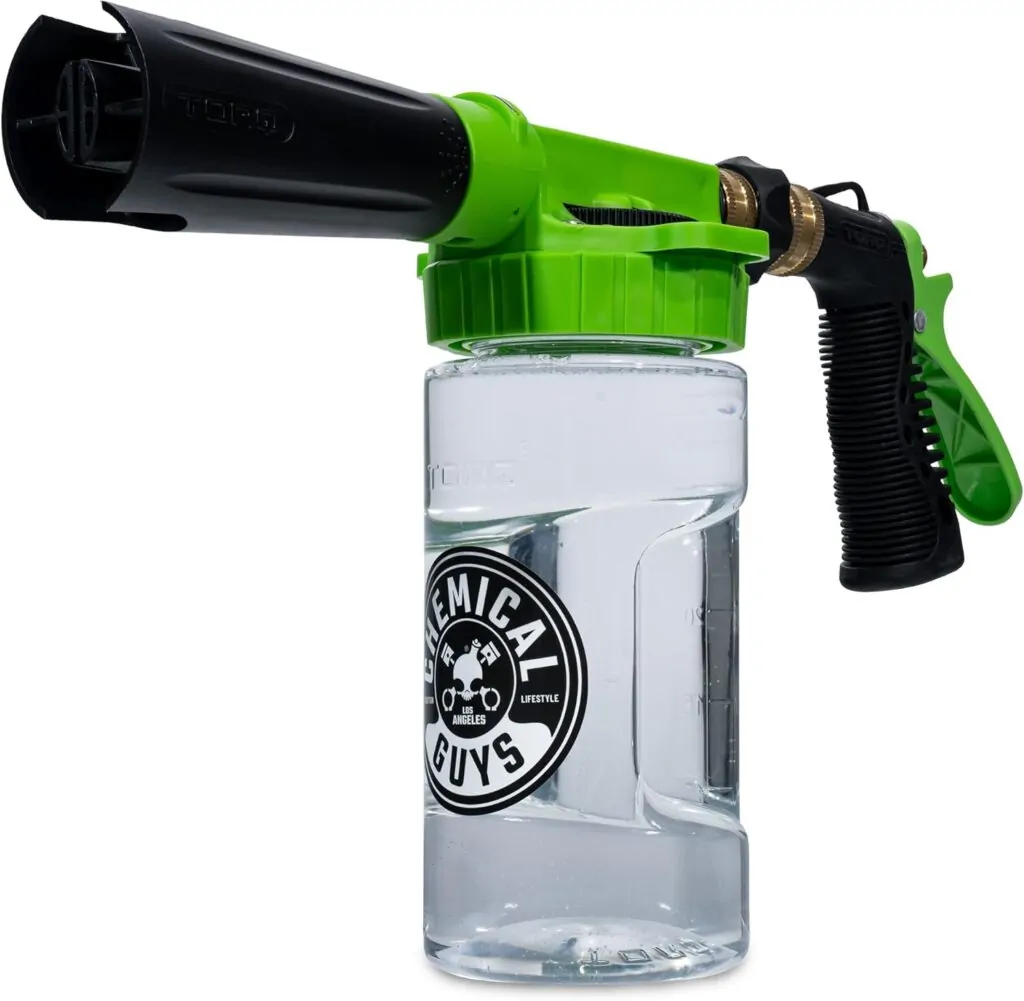
The TORQ Foam Blaster 6 creates rich, adjustable foam for safe and effective cleaning of vehicles and outdoor equipment. It connects directly to any standard garden hose, uses only a small amount of soap, and has a durable quick-connect design for simple operation. While using the Foam Blaster 6, I noticed it saved both time and soap while making it easy to clean vehicles, tools, and outdoor surfaces.
expert start
What Is It and Its Features
The Chemical Guys TORQ Foam Blaster 6 Foam Cannon Garden Hose Attachment is a foam spray gun that connects to a regular garden hose. It mixes water with car wash soap to produce thick foam for cleaning. The adjustable foam ratio dial lets you choose between light foam and thick foam based on the cleaning job. Its nozzle provides an even spray pattern, making both foaming and rinsing easier.
The unit is built with durable plastic and brass components, giving it a good balance of strength and lightweight handling. It also includes a quick-connect system, so attaching and removing it takes only a few seconds. The transparent canister lets you monitor the remaining soap solution, which is useful during longer cleaning sessions.
Why It Matters
The Chemical Guys TORQ Foam Blaster 6 Foam Cannon Garden Hose Attachment helps make cleaning both safer and more effective for gardening tools, outdoor equipment, and vehicles. The thick foam lifts dirt and grime away from surfaces instead of forcing you to scrub immediately, helping reduce scratches and surface damage. In my experience, this is especially useful for painted tools and plastic outdoor items.
It also helps reduce soap use because the foam spreads evenly across large areas. Since it works with a regular garden hose, there is no need to buy an expensive pressure washer. This makes it a practical option for beginners as well as people who clean regularly.
My Set-Up And My Experience
I connected the Chemical Guys TORQ Foam Blaster 6 Foam Cannon Garden Hose Attachment directly to my garden hose, and the installation only took a few minutes without any extra tools. I filled the container with warm water and a small amount of car wash soap before setting the dial to a medium foam level. Even with a small amount of soap, it produced plenty of foam, helping me use less product than traditional bucket washing.
I used it on my vehicle, gardening tools, flower pots, and outdoor furniture. The foam quickly loosened dirt and dried mud, making cleaning much easier. I also appreciated how simple it was to switch between foam and rinse modes. The canister feels fairly lightweight, so I handled it with care. Overall, I had a very good experience and found myself reaching for it more often because it was fast and convenient.
Performance
The Chemical Guys TORQ Foam Blaster 6 Foam Cannon Garden Hose Attachment performs well for a foam sprayer designed for garden hoses. It does not create the extremely thick “shaving cream” foam that pressure washer foam cannons produce, but it generates enough foam to loosen dirt and provide good lubrication during cleaning. This helps lower the chance of scratching surfaces while washing. The adjustable dial responds well and allows you to match the foam level to the amount of dirt.
I found it especially helpful for soaking muddy gardening tools and outdoor equipment before scrubbing because the foam softened dried dirt quickly. It also reduced cleaning time by covering large surfaces in less time. The quick-connect system worked smoothly whenever I switched between foaming and rinsing. Overall, it delivers dependable performance for everyday cleaning, especially if you want to avoid buying larger cleaning equipment.
Practical Tips
- Fill the canister with warm water to create better foam and remove dirt more easily
- Begin with the medium foam setting and adjust it as needed
- Choose a high-quality soap to produce thicker and longer-lasting foam
- Rinse the surface before applying foam for improved cleaning results
- Handle the canister carefully to help prevent cracks or damage
- Apply more foam when needed to keep surfaces well lubricated during washing
- Wash the nozzle after each use to keep it working properly
expert end
pro start
| Pros | Cons |
|---|---|
| ✔️ Connects easily to any standard garden hose | ❌ Foam is not as thick as foam from pressure washer cannons |
| ✔️ Adjustable foam dial for different cleaning tasks | ❌ The plastic canister feels somewhat lightweight |
| ✔️ Uses less soap than traditional bucket washing | ❌ Can leak if it is not attached correctly |
| ✔️ Works well for gardening tools and outdoor equipment | ❌ Needs a quality soap to achieve the best foam |
| ✔️ Makes switching between foam and rinse quick and easy | ❌ Not designed for extremely heavy-duty cleaning jobs |
pro end
HLWQ Water Hose Nozzle Sprayer Gun
This garden hose nozzle is built with strong metal and a brass head. It offers an adjustable spray, a leak-free connection, and fits all standard 3/4” garden hoses. You can switch between different spray patterns, from a soft mist to a powerful jet, making it suitable for watering plants, washing cars, cleaning patios, and many other outdoor jobs. The ergonomic handle, trigger lock, and accurate spray pattern make watering and cleaning simple, comfortable, and efficient for everyday use.
expert start
What Is It and Its Features
The Garden Hose Nozzle, High Pressure Water Hose Nozzle Sprayer Gun is a heavy-duty nozzle designed to connect to any standard 3/4” garden hose. Its durable metal body and brass head help resist rust while reducing the chance of leaks. It provides multiple spray patterns, allowing you to select a gentle mist for flowers or a powerful jet for cleaning cars, patios, decks, and other outdoor surfaces.
It also includes a comfortable ergonomic handle and a trigger lock that keeps the water flowing without holding the trigger continuously. The brass threaded connector and rubber gasket create a tight, leak-free seal. With its strong construction, accurate spray control, and flexible performance, this nozzle works well for gardening as well as general outdoor cleaning.
Why It Matters
The Garden Hose Nozzle, High Pressure Water Hose Nozzle Sprayer Gun helps make watering and cleaning faster while reducing the effort needed for everyday tasks. Many garden nozzles leak or fail to produce enough water pressure, but this model is built to avoid those common problems. Its durable metal body is made for long-lasting use, and the adjustable spray lets you control the water flow for different applications.
Whether you need a gentle spray for plants or a powerful stream for cleaning outdoor surfaces, this nozzle is designed to handle both. The trigger lock makes extended watering more comfortable, and the quick-connect design allows quick attachment to a standard hose. Its combination of durability, convenience, and reliable performance makes it a useful tool for both gardening and outdoor cleaning.
My Set-Up and My Experience
I connected the Garden Hose Nozzle, High Pressure Water Hose Nozzle Sprayer Gun to a standard 3/4” garden hose in my backyard. Right after installation, I noticed the connection was secure and completely leak-free because of the rubber gasket. I used it to water flower beds, wash my car, and clean the patio. Changing the spray pattern was quick and simple, allowing me to switch from a gentle mist for delicate plants to a strong jet for removing stubborn dirt.
One feature I appreciated was the ergonomic handle with the trigger lock, which made long watering sessions much more comfortable by reducing hand fatigue. The solid metal construction gave the nozzle a strong, reliable feel, unlike the plastic nozzles I had used before. Overall, it helped me complete outdoor tasks more quickly and with less effort.
Performance
The Garden Hose Nozzle, High Pressure Water Hose Nozzle Sprayer Gun delivered dependable performance throughout my testing. It produced a strong stream of water, even when the garden hose had moderate water pressure. The adjustable spray settings stayed consistent, making both careful watering and heavy-duty cleaning much easier. I especially found it useful for cleaning solar panels because the focused spray removed dirt efficiently without using unnecessary water.
During use, I experienced no leaks, and the trigger lock function worked well during longer cleaning and watering sessions. The smooth flow control and sturdy brass nozzle gave it the feel of a high-quality tool. If you need a durable and dependable garden hose nozzle for different outdoor tasks, this product performs very well.
Practical Tips
- Attach the nozzle firmly to the hose before turning on the water.
- Select the proper spray pattern for delicate plants or hard surfaces.
- Use the trigger lock during long watering sessions to reduce hand fatigue.
- Clean the nozzle from time to time to prevent mineral deposits and clogging.
- Keep it in a dry place after use to protect the metal and brass parts.
expert end
pro start
| Pros | Cons |
|---|---|
| ✔️ Strong metal construction helps resist rust and daily wear. | ❌ Slightly heavier than plastic nozzles, which may be harder for children to use. |
| ✔️ Adjustable spray changes from a gentle mist to a powerful jet. | ❌ The high-pressure setting may cause splashing if used carelessly. |
| ✔️ Ergonomic handle and trigger lock improve comfort during long use. | ❌ Designed for 3/4” hoses, while smaller hoses may require an adapter. |
| ✔️ Brass threaded connection fits standard 3/4” garden hoses securely. | ❌ Regular cleaning is recommended to keep the spray pattern smooth. |
| ✔️ Durable yet lightweight enough for everyday gardening and cleaning. | ❌ The trigger lock may feel slightly stiff when first used. |
pro end
Understanding Different Garden Spray Gun Types
Garden spray guns are available in several designs, and their names sometimes overlap. A pistol-grip gun may also have an adjustable nozzle, while a lance-mounted trigger assembly may be used on either a manual or battery-powered backpack sprayer. I therefore compared the physical design and intended operating system instead of relying on product names alone.
Manual Trigger and Pistol-Grip Spray Guns
Manual trigger guns use a lever or trigger to open an internal valve and release liquid supplied by the sprayer. Pistol-grip designs position the trigger close to the fingers, allowing one-handed control. These are useful where spraying starts and stops frequently, such as between tomato plants or around individual flower beds.
For intermittent work, I preferred the idea of a trigger that moved smoothly without requiring excessive finger pressure. However, a soft trigger was not enough to prove quality. The valve also needed to close properly, and the trigger mechanism had to remain secure after repeated operation.
A useful pre-purchase inspection involves checking the trigger movement, grip dimensions and whether the seller permits a clean-water demonstration. During such a demonstration, I would look for prompt shutoff and unwanted dripping, while recognising that a brief inspection cannot establish long-term reliability.
Adjustable Nozzle and Lance-Mounted Guns
Adjustable spray guns allow the operator to change the discharge pattern, commonly between a more concentrated stream and a wider spray. Some use rotating nozzle heads, while others require interchangeable nozzles. The actual available patterns depend on the design.
A lance-mounted assembly places the nozzle away from the operator’s hand. This can help direct liquid towards the underside of leaves or into reachable sections of young fruit trees without forcing the operator to bend excessively or bring the hand close to the treated area.
However, a concentrated stream is not automatically suitable for crop spraying. Higher local impact, poor distribution or increased drift can make a narrow pattern inappropriate for some treatments. I would choose a nozzle based on the product label, required coverage and sprayer operating pressure.
Hose-End and Specialised Spray Guns
Ordinary hose-end watering guns usually connect to a garden water hose and offer settings such as shower, mist or jet. They are convenient for watering and washing garden surfaces, but they are not automatically suitable for pesticide or fertiliser applications.
Some hose-end chemical applicators incorporate a reservoir and mixing mechanism. Their dilution behaviour and approved uses must be checked against the manufacturer instructions and chemical label.
Pressure-washer guns belong to another equipment category. Their operating pressures, connectors and spray characteristics can differ greatly from agricultural spraying equipment. I would never substitute one simply because the connector looked similar.
| Spray Gun Type | Suitable Application | Main Buying Check |
|---|---|---|
| Manual trigger gun | Controlled intermittent spraying | Valve shutoff and trigger comfort |
| Pistol-grip gun | Frequent start-stop work | Grip, balance and compatibility |
| Adjustable nozzle gun | Tasks needing approved pattern changes | Nozzle performance at working pressure |
| Lance-mounted gun | Targeted spraying with added reach | Lance length, weight and fittings |
| Hose-end watering gun | General garden watering | Water supply and hose connection |
| Specialised chemical gun | Manufacturer-approved treatments | Chemical, seal and pressure compatibility |
For my type of garden work, a compatible trigger gun with a suitable lance and replaceable nozzle offered a practical starting point. I would only select a more specialised design when its advantages clearly matched a particular spraying requirement.
How Garden Sprayer Spray Guns Work
Understanding the working mechanism helped me avoid confusing nozzle problems with pump problems. Liquid normally travels from the tank through a suction filter, pump, hose, control valve and nozzle, although the arrangement differs between sprayer models.
When the trigger is pressed, the internal valve opens and allows liquid to move towards the nozzle. Releasing the trigger closes the valve. A spring commonly helps return the mechanism, while seals limit unwanted leakage around the valve and moving components.
The nozzle then converts the supplied flow into a particular discharge pattern. Pressure, nozzle geometry, liquid properties and nozzle condition influence the resulting droplets and distribution.
Pressure, Flow Rate and Spray Performance
Pressure is commonly expressed in bar or pounds per square inch (PSI). One bar equals approximately 14.5 PSI. A hypothetical sprayer operating at 3 bar therefore supplies approximately 43.5 PSI at the measurement point.
However, pressure measured at the pump is not necessarily identical to pressure at the nozzle. Hose friction, filters, fittings and flow restrictions can cause losses. I considered this particularly important when comparing long hoses or narrow connectors.
Flow rate is generally expressed in litres per minute (L/min). For a fixed nozzle and liquid, flow tends to increase with pressure, approximately in proportion to the square root of the pressure ratio under suitable conditions. Doubling pressure therefore does not simply double the flow.
- Pressure: Influences nozzle discharge and must remain within approved equipment limits.
- Flow rate: Determines liquid delivery over time and affects calibration.
- Spray angle: Influences the width of the spray pattern at a given distance.
- Droplet size: Affects coverage, drift risk and application suitability.
- Shutoff response: Determines how effectively flow stops when the trigger is released.
As a calculation example, a nozzle delivering 0.6 L/min would discharge approximately 3 litres during five minutes of continuous spraying. Actual garden use often includes pauses, so the total elapsed working time would be longer. I would measure output using clean water and a suitable container rather than assume that a catalogue figure represented my complete spraying session.
For precise applications, stable flow and the correct nozzle mattered more than maximum advertised pressure. Excessive pressure can increase fine droplet production with some nozzle types, potentially increasing drift rather than improving useful coverage.
Which Features Deserve Your Money?
Once I understood the main designs, I concentrated on features that could solve genuine spraying difficulties. Product descriptions often highlight adjustable patterns, comfortable grips and premium materials, but I wanted to know how each feature would behave during ordinary garden work.
Trigger Comfort and Reliable Shutoff
Trigger comfort becomes important when spraying involves frequent stops. A large grip may suit one hand but feel awkward in another, and a strong return spring may improve closure while requiring more finger effort.
During a permitted shop demonstration, I would operate the trigger repeatedly with clean water and check whether the spray stopped consistently. I would also examine the joint between the trigger assembly and hose connection for visible leakage.
A lockable trigger can reduce continuous gripping effort, but it introduces a safety responsibility. I would use it only where the equipment and treatment instructions permit, and I would release it before repositioning, approaching other people or stopping work.
Nozzle Patterns and Spray Control
I gave particular attention to nozzle quality because the nozzle influences the liquid distribution reaching the plants. Flat-fan nozzles can provide a defined spray pattern useful for certain broadcast applications, while cone nozzles may suit other coverage requirements. The correct choice depends on the treatment and application method.
For chilies and tomatoes, I wanted to avoid both unnecessary overspray and incomplete treatment of the intended target. For flowers, I wanted controlled application that would not damage delicate growth through excessive liquid impact.
A clean-water comparison could involve collecting discharge from two compatible nozzles for 60 seconds at the same measured operating pressure. The measured volumes would show differences in flow, while a suitable pattern test could reveal uneven distribution.
I would not conclude that the nozzle producing the widest or finest spray was automatically better. The best nozzle is the one that delivers the required application correctly at the equipment’s approved pressure.
Filters, Connections and Useful Accessories
A filter helps prevent debris from reaching small nozzle openings, but its mesh must suit the nozzle and formulation. An excessively fine or neglected filter can restrict flow, while an unsuitable coarse filter may allow particles that cause blockage.
I also looked for accessible nozzle caps, properly seated seals, secure hose fittings and a practical way to dismantle the gun for cleaning. A spray gun that requires replacement of the complete assembly for a damaged inexpensive seal may cost more over time than a repairable model.
- Replaceable nozzle: Allows appropriate pattern selection and replacement of worn parts.
- Serviceable valve: Makes internal maintenance more practical.
- Accessible filter: Reduces cleaning difficulty.
- Secure hose fitting: Helps prevent leaks and accidental disconnection.
- Comfortable grip: Supports controlled operation during repeated use.
My preference was for a straightforward design with useful replaceable parts rather than a complicated spray gun offering many patterns that I would rarely need.
Sprayer and Hose Compatibility Explained
Compatibility became one of my most important buying checks because a spray gun can look suitable in a photograph yet fail to connect securely to the existing equipment. I therefore treated the sprayer model, hose, gun inlet and nozzle as one connected system.
For manual pump sprayers, I considered whether the gun would operate properly across the changing pressure produced during pumping. For battery-powered backpack sprayers, I checked whether the gun and its flow demand suited the pump’s regulated or cycling operation.
Some battery sprayers automatically respond when the trigger closes, while others use different pressure-control arrangements. I would not assume that every replacement gun worked with every automatic pump.
Thread Sizes and Hose Fittings
Thread size is particularly easy to misunderstand. Common connection descriptions include 1/4-inch, 3/8-inch and 1/2-inch, but these numbers do not establish the exact thread standard, sealing method or physical compatibility.
A fitting may use NPT, BSP or another connection standard. Some connections seal through tapered threads, while others depend on a gasket or O-ring. Matching the nominal diameter without matching the thread form and sealing design can result in leakage or damaged fittings.
Before paying, I would record the sprayer’s exact model, hose internal diameter, connector type and operating pressure. I would then compare those details with the spray gun manufacturer’s compatibility information.
Using an adapter can sometimes solve a connection problem, but the adapter must also be suitable for the operating pressure, liquid and sealing arrangement. I would never force a mismatched fitting or depend on excessive thread tape to compensate for incompatible threads.
Matching Pressure and Pump Capacity
A spray gun must be rated for the maximum pressure it may experience, including relevant pressure fluctuations. The nozzle must also have a flow requirement that the pump can support.
For example, if a pump can reliably supply 1.0 L/min under its specified operating conditions, selecting a nozzle requiring 1.5 L/min at the desired pressure may result in poor performance. Conversely, a very restrictive nozzle may interact poorly with a pump system that lacks appropriate pressure control.
| Compatibility Check | What to Verify | Possible Problem |
|---|---|---|
| Sprayer model | Manufacturer-approved gun or replacement | Unsuitable operation |
| Pressure rating | Maximum system pressure | Leakage or component failure |
| Hose diameter | Internal diameter and hose rating | Flow restriction or poor fit |
| Thread connection | Size, standard and seal type | Damaged threads or leaks |
| Nozzle flow | Required flow at operating pressure | Incorrect spray performance |
| Chemical resistance | All wetted materials and seals | Swelling, corrosion or degradation |
My recommendation is to confirm the complete connection and operating system before considering spray patterns or appearance. Compatibility problems can make every other feature irrelevant.
Which Spray Gun Materials Last Longer?
Durability was another major part of my comparison. I wanted a spray gun that could tolerate regular handling, cleaning and the specific liquids approved for my garden work. However, I did not treat a metal body as automatically superior to a polymer body.
Good engineering depends on the material, component thickness, manufacturing quality, chemical exposure and working conditions. A properly designed polymer gun can resist certain corrosive liquids better than an unsuitable metal component, while a well-made metal assembly may offer advantages in particular mechanical applications.
Plastic, Brass and Stainless Steel Components
Polypropylene and other engineered polymers are used in some sprayer components because they can provide useful chemical resistance and reduced weight. Their suitability still depends on the exact polymer grade, formulation, temperature and operating pressure.
Brass fittings can provide strong threaded connections and useful wear resistance, but brass is not universally resistant to every chemical. Stainless steel components may resist corrosion well in many environments, although the grade and exposure conditions remain important.
For a spray gun weighing 300 g, replacing a component with a heavier alternative could improve one aspect of construction while making prolonged handling less comfortable. I therefore considered the complete assembly rather than selecting materials by reputation alone.
Seals, Springs and Internal Valves
Small internal parts often determine whether a spray gun remains usable. O-rings and valve seals must resist the liquids they contact and retain their shape under the expected pressure and temperature.
EPDM, nitrile rubber and fluoroelastomers such as FKM are common sealing materials, but none is universally suitable for every chemical. Compatibility must be established using the exact formulation and material guidance, not simply the general chemical category.
Springs also deserve attention because corrosion or mechanical damage can affect trigger return. Internal valves must seat properly to prevent continued dripping after the trigger is released.
- Body: Inspect for cracks, poor moulding, damage and loose assembly.
- Trigger: Check smooth movement and secure pivot construction.
- Valve: Confirm reliable shutoff during an approved demonstration.
- Seals: Look for specified materials and replacement availability.
- Fittings: Check thread quality and correct sealing surfaces.
- Nozzle: Prefer replaceable components with clear specifications.
Long-term durability cannot be established from a five-minute demonstration. A short test can reveal immediate defects, but resistance to repeated chemical exposure, UV, wear and storage conditions requires longer observation or dependable manufacturer test information. For that reason, I valued spare-part availability and clear material specifications alongside the initial build quality.
Where Should You Buy Spray Guns?
After narrowing down the specifications, the next challenge was deciding where to buy. Local garden suppliers and agricultural equipment shops can be useful because they may allow direct inspection of the trigger, fittings and construction. They may also help identify a replacement compatible with an existing sprayer.
However, physical inspection is only valuable when the seller can confirm the exact product model and relevant specifications. I would not rely solely on a verbal claim that a spray gun fits every backpack sprayer.
Manufacturer websites and reputable online sellers can provide detailed product descriptions, manuals and replacement-part information. Online purchasing is convenient, but photographs may not clearly show the inlet connection, nozzle inclusion or actual dimensions.
Before placing an order, I would compare the complete delivered cost rather than only the displayed price. A lower-priced gun that requires separate adapters, replacement nozzles and additional delivery charges may not be the cheaper option.
- Model identity: Confirm the exact manufacturer and part number.
- Package contents: Check whether nozzles, fittings, seals and lance are included.
- Seller details: Verify business identity and return conditions.
- Warranty: Confirm regional coverage and exclusions.
- Replacement parts: Check whether common wear items can be purchased.
- Delivered cost: Include shipping, adapters and necessary accessories.
For example, a gun costing $20 plus $8 in required fittings has an effective equipment cost of $28 before any delivery charges. This is only a purchasing calculation, not a current market quotation.
My recommendation is to buy from a supplier who can identify the exact compatible assembly and explain the return process. A slightly higher initial cost may be reasonable when it provides dependable support and easier access to replacement parts.
Installing and Testing Your Spray Gun
After purchase, the first priority should be checking the delivered equipment rather than immediately filling the sprayer with a treatment solution. I would compare the received gun, nozzle and fittings against the order description, inspect for transport damage and verify that the connections matched the approved sprayer arrangement.
Installation should begin with the sprayer switched off, isolated from its power source where applicable, and completely depressurised. Existing equipment should be cleaned according to its instructions before components are removed.
I would fit the correct seals and connectors without overtightening them, then perform an initial clean-water test. Any leakage at the gun inlet, trigger housing or nozzle connection would need correction before chemical use.
Measuring Flow and Spray Consistency
A clean-water calibration helps determine the actual output of the assembled sprayer. The gun, nozzle, hose and operating pressure must be the same as those intended for the later application.
For a sample calculation, suppose a nozzle discharged 750 mL in 60 seconds. Its measured flow would be 0.75 L/min. Repeating the collection three times would help identify obvious inconsistency, although the readings would still depend on stable pressure and accurate measurement.
For broadcast applications, flow must be considered together with travel speed and effective spray width. A common calculation is:
Application rate (L/ha) = 600 × flow (L/min) ÷ [speed (km/h) × spray width (m)]
If flow were 0.75 L/min, walking speed 3 km/h and effective spray width 0.5 m, the calculated application rate would be 300 L/ha. These figures are a mathematical scenario, not a recommended treatment rate. Actual application must follow the product label and suitable calibration procedure.
Testing Coverage Across Garden Plants
For vegetable work, I would begin with clean water and a suitable spray-pattern assessment before any labelled treatment. A short trial around tomato supports and chili foliage could help identify whether the lance reached the intended target comfortably and whether the spray pattern was controllable.
Water-sensitive paper, where appropriate, can help examine droplet deposition. However, a visible pattern alone does not establish treatment effectiveness or safe chemical application.
For flowers, I would pay attention to the spray direction and potential movement towards nearby plants. For lawns, I would examine consistency across the intended width. For young fruit trees, I would check whether the target could be reached safely from the ground rather than increasing pressure to compensate for insufficient reach.
Each trial should record the actual nozzle, measured pressure, flow, duration and observed pattern. Without these details, comparing two spray guns becomes much less reliable. The main benefit of this process is that clean-water testing exposes equipment and technique problems before treatment begins.
Safe Spraying Requires More Than Equipment
Safety influenced my buying decision because a reliable spray gun should help maintain control, but it cannot replace correct chemical selection, personal protection and careful application.
Before using any pesticide or fertiliser solution, I would confirm that the product was approved for the crop and intended application, and that its label permitted the chosen equipment and method. The label determines important requirements such as dilution, protective equipment, application conditions and re-entry precautions.
I would also inspect the hose and trigger before every session. A leaking gun can expose the operator or surrounding plants to unwanted liquid, while a damaged connection may separate under pressure.
- Protective equipment: Follow the product label and equipment instructions.
- Wind and drift: Avoid conditions that could carry spray beyond the intended target.
- Pressure: Never exceed the lowest rated component in the assembled system.
- Trigger control: Keep the nozzle directed away from people and animals.
- Blockages: Depressurise before inspection; never clear a nozzle with the mouth.
- Cleaning: Follow the chemical and sprayer manufacturers’ procedures.
For example, when spraying near marigolds growing beside vegetables, I would first consider whether the neighbouring plants could be exposed to a product not approved for them. Nozzle adjustment alone cannot make an unsuitable chemical application safe.
I would also avoid using a garden spray gun for drinking water or food-contact purposes after it had been used with agricultural chemicals. Equipment intended for chemical application should remain dedicated to that use.
Where a treatment requires protective clothing, gloves, eye protection or respiratory protection, the exact requirements must come from the label and relevant safety guidance rather than assumptions based on the appearance of the spray.
Cleaning and Maintenance Protect Your Investment
Maintenance was one of the main reasons I preferred a spray gun with accessible parts. A good nozzle and valve can still perform poorly if residue accumulates inside the equipment or if seals are damaged during careless cleaning.
After spraying, I would follow the product label and equipment instructions for handling leftover mixture, cleaning the tank and flushing the system. Some products require specific cleaning procedures, and simply rinsing with water may not be sufficient.
Once the system was safely depressurised, I would inspect the nozzle, filter and accessible seals for deposits or damage. Soft cleaning tools and manufacturer-approved methods are preferable to forcing metal wire through a nozzle opening, which can damage the orifice and change its flow characteristics.
Recognising Wear Before Performance Declines
Nozzle wear can gradually change output and spray distribution. In some agricultural spraying practices, a nozzle delivering more than 10% above the manufacturer’s specified output under matching test conditions is considered a replacement candidate. The correct criterion should still follow the nozzle manufacturer’s guidance.
For example, if the specified output were 0.80 L/min and a correctly conducted test measured 0.90 L/min, the increase would be 12.5%. That result would justify investigating wear, pressure accuracy and measurement conditions before continuing application.
Trigger leakage, stiff movement, damaged O-rings and cracked fittings are also reasons to stop and inspect the assembly. Replacing a suitable seal may restore operation, but damaged pressure-bearing parts should not be repaired using improvised materials.
Storage and Chemical Compatibility
Storage conditions affect durability. I would keep cleaned equipment protected from unnecessary sunlight, excessive heat, freezing and physical damage, following the manufacturer’s recommendations.
Where the gun contains metal springs, brass fittings or other corrosion-sensitive parts, moisture and chemical residues can contribute to deterioration. Polymer components and elastomer seals may also be affected by UV exposure, unsuitable solvents or prolonged contact with incompatible formulations.
A short clean-water test cannot establish resistance to a particular herbicide, fungicide or fertiliser mixture. Chemical compatibility must be checked using the exact formulation and manufacturer information, and equipment should not be used when compatibility remains uncertain.
- After each treatment: Complete the required cleaning procedure and inspect for leaks.
- Periodically: Check trigger movement, fittings, seals and nozzle output.
- Before storage: Remove residues and follow draining or winterisation instructions.
- Before reuse: Inspect the complete assembly and confirm correct operation with clean water.
My main recommendation is to treat maintenance as part of the purchase decision. A spray gun with affordable replacement seals and nozzles may provide better long-term value than one that must be discarded after a small component fails.
Choosing the Best Spray Gun Overall
When choosing between a low-cost and more expensive spray gun, I would compare the actual construction, approved operating range, available spare parts and warranty rather than assume price alone indicated quality. A simple model with a reliable valve and replaceable nozzle could be entirely suitable for occasional work, while frequent spraying might justify spending more on serviceability and comfort.
Before making the final payment, I would want clear answers to four questions: Will it fit my sprayer correctly? Can it deliver the required spray pattern at the approved pressure? Are its wetted materials compatible with my intended treatments? Can I maintain and repair it economically?
These questions brought my original spraying concerns into a practical decision. Poor trigger control, unwanted dripping and inconsistent spray patterns are problems worth addressing, but replacing the gun only makes sense when the existing pump, hose and nozzle system are also considered.
My final advice is to choose compatibility first, spray performance second, and durability and serviceability alongside comfort. Once those requirements are satisfied, selecting the best garden sprayer spray gun becomes a much more confident and practical decision.

