
5 Best Battery Powered Garden Sprayers in 2026 (Reviews & Guide)
- Choose a versatile garden sprayer that can handle different chemicals and provide reliable performance for various gardening tasks.
- Always follow proper safety precautions when spraying pesticides and weedicides to protect yourself, family, and pets.
- A high-quality battery powered sprayer makes garden maintenance easier, faster, and more effective.


When I started comparing the best battery powered garden sprayers, my main concern was not finding the machine with the biggest tank or highest advertised pressure. I wanted equipment that could make regular spraying easier while giving me proper control over the liquid reaching my plants. A battery-powered sprayer appeared to solve one of the most tiring parts of my previous routine: repeatedly pumping a manual sprayer while trying to maintain an even spray.
My gardening activities included foliar feeding on chilies and tomatoes, maintaining marigold and petunia beds, treating weeds where permitted, and caring for reachable branches of young fruit trees. These jobs required different spray patterns, operating times and levels of control. I realised that the best battery-powered garden sprayer was not necessarily the most powerful one, but the one that matched my actual workload.
However, replacing manual pumping with an electric motor introduced new questions. I needed to understand battery capacity, pump construction, pressure regulation, nozzle performance, chemical compatibility, charging safety and the cost of replacing worn parts. A sprayer that looked convenient in a product photograph could become frustrating if its battery was difficult to replace or its seals failed after chemical exposure.
| Product | Title & Rating | Features | Explore |
|---|---|---|---|
 | Scotts 190567 Lithium-Ion Sprayer |
| Check Price |
 | Field King 190571 Sprayer |
| Check Price |
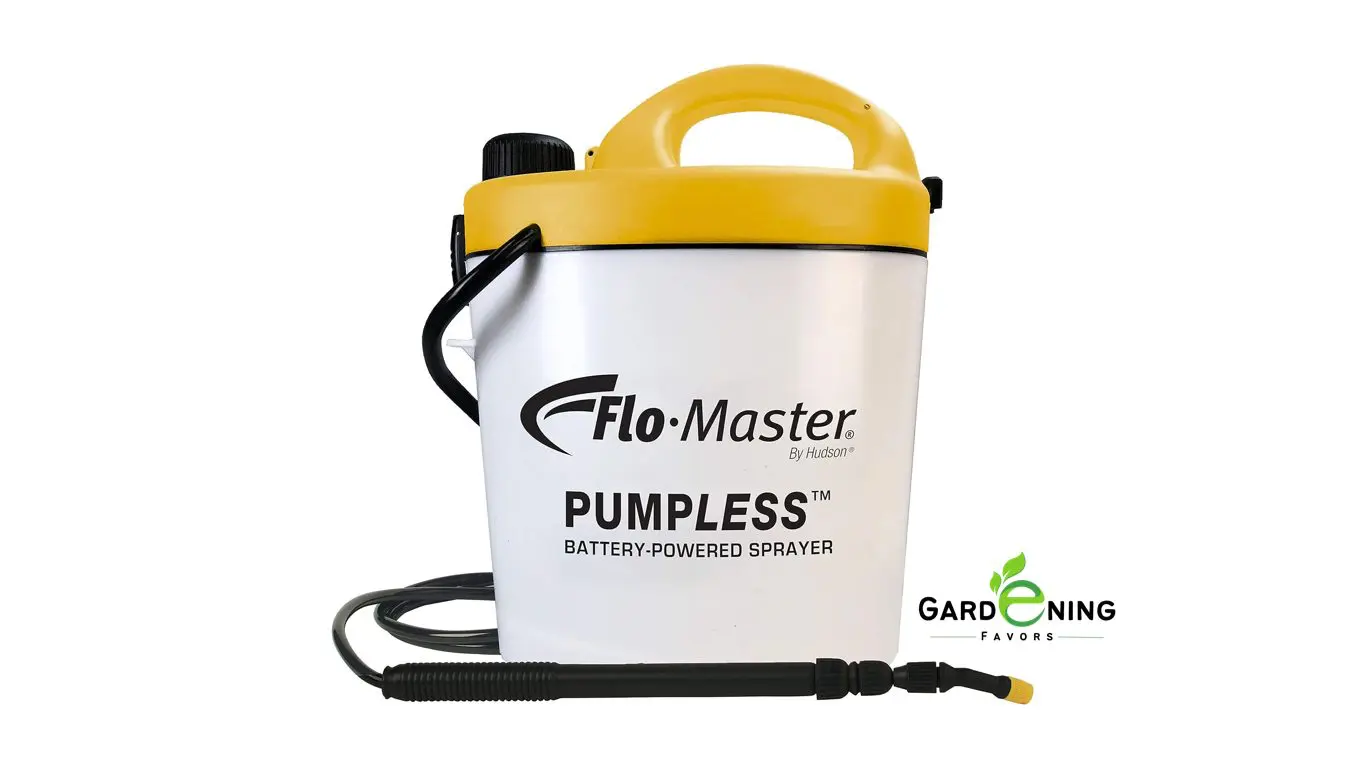 | Flo-Master by Hudson Sprayer |
| Check Price |
Why I Considered Battery Powered Sprayers
My interest in upgrading began with the limitations of manual pump sprayers. When working around vegetable beds, I had to stop periodically to restore pressure. This interrupted my movement between plants and sometimes changed the spray pattern as pressure dropped. Although a well-maintained manual sprayer remained useful for small jobs, I wanted a more consistent delivery system for longer spraying sessions.
For example, I could plan a 20-minute foliar feeding session covering several vegetable beds. With a manual sprayer, part of that time might involve pumping rather than applying liquid. A battery-powered sprayer could reduce that interruption because its electric pump generated pressure without repeated manual strokes.
Nevertheless, automatic pumping does not guarantee uniform application. Nozzle selection, operating pressure, walking speed, wand movement and equipment calibration still determine how much liquid reaches the target. Before comparing models, I identified three important requirements:
- Reduced physical effort: I wanted to avoid repeated manual pumping during longer jobs.
- Controlled application: I needed suitable pressure and spray patterns for vegetables, flowers and small trees.
- Practical maintenance: I preferred equipment with accessible filters, replaceable seals and available spare parts.
These requirements helped me avoid paying for features that looked impressive but offered little benefit in my garden.
5 Best Battery Powered Garden Sprayers for Faster Care
During my gardening experience, I tested different battery powered sprayers to find the models that truly perform well. After using several options, I am excited to share the top choices that made my gardening tasks easier and more efficient.
1. Scotts 190567 Lithium-Ion Sprayer Battery Powered Sprayer

After using the Scotts 190567, I found it to be one of the most effective electric garden sprayers available. Its advanced pump zero technology makes it stand apart because it removes the need for manual pumping or creating pressure inside the tank. This allows the solution to flow smoothly and makes spraying much faster and easier.
expert start
The Scotts 190567 comes with a rechargeable lithium-ion battery that can handle up to 12 complete tanks on a single charge. This powerful battery improves productivity while reducing the need for gasoline, making it a cleaner and more convenient option. From my gardening experience, features like the comfortable grip, dependable locking system, and simple cleaning process make this sprayer a practical choice for both beginners and experienced gardeners.
Another useful feature is the in-line filter system, which helps prevent blockages in the wand during spraying and cleaning. The 21-inch poly-wand with a Viton seal offers strong resistance against corrosive chemicals, improving durability and extending the overall life of the sprayer.
The teardrop-shaped tank provides a 2-gallon capacity with a lower center of gravity, which improves stability and makes handling easier. Its 3-in-1 sprayer nozzle allows users to quickly change between fan spray, cone spray, and stream spray settings, giving more control for different gardening applications.
In addition, the Scotts 190567 is manufactured in the USA and includes a three-year international warranty with free parts replacement. This shows the company’s focus on customer support. The easy availability of replacement parts worldwide also provides extra confidence for gardeners using this sprayer.
expert end
pro start
| Pros | Cons |
|---|---|
| ✔️ Long-lasting battery | ❌ Stock nozzle was either too wide or too narrow |
| ✔️ Easy Cleaning | ❌ Need to shake the wand to start spraying |
| ✔️ Locking system to avoid wastage | |
| ✔️ In-line filters | |
| ✔️ Pressure valves | |
| ✔️ Stable tank shape | |
| ✔️ 3 years international warranty |
pro end
2. Flo-Master by Hudson Electric Sprayer

I discovered Hudson sprayers while exploring reliable gardening equipment, and this well-known brand has earned recognition among gardeners worldwide. Their pumpless electric garden sprayer caught my attention because of its simple operation and efficient performance. It is a suitable option for both experienced gardeners and people who are just starting their gardening journey.
expert start
The main advantage of this battery-powered sprayer is its easy operation. Users do not need any special training or technical skills to use it. It includes a rechargeable lithium-ion battery that can spray around 18 gallons of solution with one full charge. The ability to spray without manually pumping the tank makes gardening tasks much more convenient.
The 1.3-gallon transparent tank allows users to easily check the remaining liquid level, helping maintain accurate water and chemical mixtures for better plant care. Additionally, the built-in adjustable nozzle provides control over spray patterns and mist levels. The comfortable shoulder strap improves portability, allowing smooth movement throughout the garden.
The thumb-operated power switch makes controlling the sprayer simple by allowing quick ON and OFF operation whenever needed. This improves working speed, especially when covering larger garden spaces. Another useful feature is the double telescopic wand, which extends up to 35 inches. This extra length helps reach areas under leaves and difficult spaces where traditional sprayers may not work effectively.
expert end
pro start
| Pros | Cons |
|---|---|
| ✔️ Single charge – sprays up to 18-gallons of solution | ❌ Sometime leaks near battery |
| ✔️ Transparent tank | |
| ✔️ Adjustable nozzle | |
| ✔️ Comfortable shoulder strap | |
| ✔️ Thumb operated power-switch | |
| ✔️ Double telescopic wand |
pro end
3. Petra HD4000 4-Gallon Battery Powered Backpack Sprayer

I recently came across Petra Tool, a well-known US manufacturer that produces commercial garden equipment. Their Petra HD4000 electric garden sprayer is designed to provide excellent performance while remaining affordable. With a commercial-grade battery system, this sprayer improves working efficiency and makes gardening tasks easier for home gardeners and professionals.
expert start
The sprayer includes several useful features, including a powerful 8-Ah lead-acid battery, an HD wand, and adjustable nozzles that allow users to handle different plant spraying requirements. Although one full charge may not be enough for very large garden areas, it works extremely well for small to medium gardens and provides 6-8 hours of continuous spraying without the need for manual pumping.
During use, the practical design of the Petra HD4000 also stood out. Its large tank opening makes filling easier, while the built-in filter helps prevent dirt and debris from entering the system and improves overall performance.
The translucent white tank allows users to quickly check the remaining liquid level, and the locking trigger feature supports continuous spraying without holding the trigger all the time. The lead-acid battery requires around 8 hours for a complete charge but offers a longer service life compared with a 2.0 lithium-ion battery. These features make the Petra HD4000 a reliable and convenient option for regular gardening applications.
expert end
pro start
| Pros | Cons |
|---|---|
| ✔️ Powerful 8-Ah lead-acid battery | ❌ Shoulder straps are comparatively less comfortable |
| ✔️ Long-lasting and durable construction | ❌ Due to its strong resistance against corrosive solutions, minor leakages may occur. The company provides Teflon tape inside the package for this purpose |
| ✔️ HD wand provides durability against corrosive solutions | |
| ✔️ Simple and easy cleaning process | |
| ✔️ Includes a wheeled cart for easy movement | |
| ✔️ Comes with a 1-year international warranty | |
| ✔️ Reliable after-sale customer support |
pro end
4. Field King 190571 Lithium-Ion
I recently tested an advanced battery-powered sprayer that completely improved my gardening experience through its modern features. This electric sprayer comes with a built-in compressor that maintains a consistent 20 PSI internal pressure, removing the need for manual pumping and making spraying much easier.
expert start
The in-line filters included with this sprayer help maintain cleanliness and reduce contamination problems. Its 21-inch wand with Viton seals provides excellent durability and makes it suitable for different spraying applications.
The most impressive feature of this tool is its convenient operation. Since there is no manual pumping required, it saves effort and time. The comfortable handgrip, easy-to-reach shut-off button, and wand locking system improve user control. The teardrop-shaped tank design and low center of gravity increase stability and provide a more comfortable spraying experience.
It also comes with adjustable nozzles, including Brass, Flat Fans, Foaming, and Tee Jet options, allowing users to select the right spray pattern for different tasks. With a 1-year free parts replacement warranty from the US manufacturer Field King, this battery-powered sprayer offers dependable performance along with long-term customer support.
expert end
pro start
| Pros | Cons |
|---|---|
| ✔️ Good battery performance | ❌ Pressure may decrease during extended use |
| ✔️ Strong resistance against corrosive chemicals | |
| ✔️ Includes 4 adjustable nozzle types | |
| ✔️ Easy maintenance and cleaning | |
| ✔️ Comes with pre-installed in-line filters | |
| ✔️ Maintains constant pressure at 20 psi |
pro end
5. M4 MY4SONS 4-Gallon Electric Backpack Sprayer

After using the MY4SONS M4 for a long period, I can confidently say that its battery performance is one of its strongest features. It provides an excellent 6-8 hours of continuous working time and can easily spray around 200 gallons of liquid. This makes it one of the most powerful electric garden sprayers available on the market.
expert start
The sprayer comes with an 8Ah lead-acid battery, which significantly increases its operating time. Its highly efficient charger can fully recharge the battery within 8 hours. A simple indicator light also helps users check the remaining battery percentage quickly.
Another impressive feature is the stainless-steel wand, which provides excellent resistance against corrosive chemicals. The adjustable nozzle allows me to spray solutions at a pressure of 60psi and cover a distance of up to 30 feet. It also includes four adjustable nozzles, giving different spray patterns according to various garden requirements.
The large opening at the top makes filling and cleaning much easier. It also allows convenient access for washing the in-line filters. In addition, the padded shoulder straps make the MY4SONS a comfortable backpack sprayer option. The extra-soft straps reduce discomfort and allow me to work for longer periods compared to many other sprayers.
expert end
pro start
| Pros | Cons |
|---|---|
| ✔️ Extra thick XXL shoulder pads for better comfort | ❌ The claim of spraying up to 30ft may vary depending on conditions |
| ✔️ Easy and quick battery replacement | ❌ Slightly heavier compared to other battery-powered backpack garden sprayers |
| ✔️ Durable stainless-steel wand | |
| ✔️ 60psi pressure for effective spraying | |
| ✔️ Strain relief hose design |
pro end
How Battery Powered Garden Sprayers Work
A battery-powered garden sprayer uses electrical energy to operate a pump that moves liquid from the tank through the delivery system. Unlike a conventional manual sprayer, the operator normally does not need to build pressure by hand throughout the spraying session.
The working process begins when the battery supplies power through the electrical controls to the motor. The motor drives the pump, which draws liquid through the intake system and pushes it towards the hose, spray wand and nozzle.
Many garden models use diaphragm pumps. Their flexible diaphragms move repeatedly to create suction and discharge pressure. Other pump designs are also available, depending on the sprayer’s intended application.
Some sprayers use pressure switches that stop or restart the motor as system pressure changes. Others provide adjustable pressure controls or different operating modes. The actual arrangement depends on the model.
Every major component affects the final spray. A powerful pump cannot compensate for a blocked filter, unsuitable nozzle or leaking connection. I found it useful to understand these components individually:
- Battery: Supplies electrical energy for pump operation.
- Motor and pump: Move liquid and develop operating pressure.
- Tank and intake filter: Store liquid and help prevent debris entering the pump.
- Hose, trigger and wand: Carry and control liquid during application.
- Nozzle: Determines spray shape, droplet characteristics and flow at a given pressure.
For example, if a sprayer delivered 1.0 litre per minute during a clean-water test, a 10-litre tank could theoretically be discharged in approximately 10 minutes of continuous spraying. Actual time would change with pressure, nozzle selection and trigger use. This simple calculation showed why tank capacity alone could not tell me how long a spraying job would take.
Choosing the Right Battery Sprayer Type
Before examining battery specifications, I compared the main designs available. I found that the physical arrangement of the sprayer often mattered more than small differences in advertised electrical performance.
Handheld Battery Powered Garden Sprayers
Handheld models generally suit smaller gardens, flower beds, potted plants and short spraying sessions. Their compact construction makes them convenient for working around delicate plants and narrow spaces.
For example, a 2-litre handheld sprayer containing water carries approximately 2 kg of liquid before adding the weight of the equipment. This can be manageable for brief work, but repeatedly holding the complete unit becomes tiring during longer sessions.
I considered handheld equipment useful for targeted applications around petunias, marigolds and a few vegetable plants. However, I would not choose a small handheld unit as my primary machine for extensive vegetable beds requiring frequent refilling.
Battery Powered Backpack Garden Sprayers
Backpack sprayers carry the tank on the operator’s back, allowing the wand to be controlled separately. They are particularly relevant when spraying multiple vegetable beds, garden borders and reachable young fruit trees.
A 16-litre tank contains approximately 16 kg of water when full, excluding the sprayer, battery and accessories. This calculation made me examine shoulder straps, back padding, weight distribution and filling levels carefully.
A larger tank reduces refill frequency but increases carrying weight. For regular vegetable gardening, I preferred to compare comfortable working fills rather than assuming that maximum capacity should always be used.
Wheeled and Cart Battery Sprayers
Wheeled models carry the tank on a frame or cart, reducing the need to support the liquid weight on my shoulders. These designs can suit larger lawns, long garden paths and accessible growing areas.
However, wheels become less convenient on uneven soil, narrow paths, raised bed edges and muddy ground. Hose length also becomes important because the cart may remain stationary while the operator moves around plants. I treated wheeled sprayers as a useful alternative when carrying weight was the main concern and the garden provided reasonably smooth access.
| Sprayer Type | Suitable Work | Main Advantage | Main Limitation |
|---|---|---|---|
| Handheld | Small beds and pots | Compact handling | Frequent refilling |
| Backpack | Vegetables and mixed gardens | Mobile operation | Carrying weight |
| Wheeled | Lawns and accessible areas | Reduced carrying load | Limited uneven-ground access |
| Cart or trolley system | Longer spraying routes | Larger liquid supply | Storage and manoeuvring requirements |
After comparing these designs, I considered a backpack model the most flexible option for a mixed vegetable and flower garden, provided its filled weight remained comfortable. For someone maintaining only a small patio garden, a handheld unit could be the more sensible purchase.
Understanding Batteries Before Buying
Battery specifications were among the most confusing details during my comparison. Manufacturers commonly advertise voltage, ampere-hours, battery chemistry and estimated runtime, but these figures do not describe the same thing.
Voltage describes electrical potential, while ampere-hours (Ah) describe charge capacity. Multiplying nominal voltage by ampere-hours gives an approximate battery energy capacity in watt-hours (Wh).
For example, a battery rated at 18 volts and 4 Ah has a nominal energy capacity of approximately 72 Wh. A 12-volt, 6 Ah battery also has approximately 72 Wh. Neither figure alone establishes which sprayer will operate longer because pump power consumption and efficiency also matter.
If a pump consumed an average of 36 watts continuously, a 72 Wh battery would provide a theoretical two hours before accounting for electrical losses, usable battery capacity, operating conditions and battery protection limits. Actual runtime must be established through reliable model-specific information or testing.
Lithium-Ion and Lead-Acid Battery Differences
Many modern battery-powered garden sprayers use lithium-ion batteries, while some designs use sealed lead-acid batteries. Both can operate electric pumps, but their weight, charging behaviour and maintenance requirements differ.
Lithium-ion batteries generally provide higher energy density, which can reduce weight for a comparable amount of stored energy. Removable battery packs can also make replacement and charging more convenient.
Sealed lead-acid batteries are used in some equipment because of their established technology and potentially lower initial cost. However, they are generally heavier for comparable usable energy and can be sensitive to prolonged storage in a discharged condition. When comparing battery systems, I focused on:
- Battery energy: Compare watt-hours where specifications allow.
- Charging time: Check the stated charging period and charger requirements.
- Replacement availability: Confirm whether a compatible battery can be purchased separately.
- Battery protection: Look for appropriate charging and electrical safeguards.
- Long-term cost: Consider the likely expense of battery replacement.
I also checked whether a battery and charger were included in the package. Some equipment platforms sell tools separately from batteries, so a lower advertised price does not always mean a lower complete purchase cost.
Battery Runtime and Charging Performance
Runtime should be considered alongside the spraying task. A manufacturer might describe several hours of operation, but this may involve intermittent trigger use rather than continuous pumping.
For example, a 30-minute garden session might contain only 18 minutes of actual spraying if the remaining time involved walking, repositioning the wand and checking plants. A sprayer with an automatic pressure switch may consume energy differently during those periods than a continuously running pump.
I therefore preferred manufacturers that explained their runtime test conditions, including battery size, operating pressure and nozzle arrangement. For charging, I checked the correct charger model, ventilation requirements, temperature limits and whether the battery needed removal. I avoided assuming that a charger with a similar connector or voltage was automatically compatible.
A replaceable battery with reliable local availability can be more valuable than an impressive advertised runtime. It gives the owner a practical way to maintain the sprayer when the original battery eventually loses capacity.
Pressure, Flow and Nozzle Performance
After understanding the battery, I examined the pump’s actual spraying performance. This required separating pressure from flow rate because both affect application but measure different properties.
Pressure describes the force acting on the liquid, commonly expressed in psi or bar. Flow rate describes the quantity of liquid delivered over time, often in litres per minute.
Higher pressure does not automatically improve spraying. Excessive pressure can create smaller droplets with greater drift potential, depending on nozzle design, while inadequate pressure may produce an unsuitable spray pattern.
For delicate vegetables and flower beds, I wanted a controlled application rather than unnecessary pressure. For reachable young fruit trees, I considered wand length, nozzle choice and whether the spray could reach the intended foliage without excessive drift. Different nozzle designs serve different purposes:
- Flat-fan nozzles: Useful for uniform coverage across suitable target areas.
- Adjustable nozzles: Allow pattern changes, although their calibration characteristics must be checked.
- Cone-pattern nozzles: May suit particular foliage applications when the product label and nozzle specifications permit.
- Specialised low-drift nozzles: Can reduce drift potential under appropriate operating conditions.
For a clean-water comparison, consider two nozzles delivering 0.5 and 1.0 litre per minute at their specified pressures. The second nozzle uses twice as much liquid during the same continuous spraying time. However, this does not mean it provides twice the useful coverage or better treatment.
I preferred sprayers with clearly stated pressure ranges, compatible nozzle specifications and accessible flow controls. A pressure gauge or reliable adjustment mechanism could also help reproduce calibrated settings. The most important decision was matching the spray system to the job, not selecting the highest pressure figure on the product listing.
Checking Materials, Quality and Durability
A battery-powered sprayer combines liquid handling equipment with electrical components. This makes construction quality particularly important because a leaking connection can damage surrounding components, interrupt spraying and create safety problems.
I started by examining the tank. Many garden sprayers use moulded plastic tanks, commonly based on polyethylene or other suitable polymers. The exact material and chemical resistance depend on the manufacturer and formulation. I looked for a stable tank base, smooth internal surfaces, a properly fitting lid, clear capacity markings and a filling opening wide enough for safe mixing and cleaning.
For a backpack sprayer, I also considered how the tank fitted against the operator’s back. A comfortable harness should distribute weight without creating unnecessary pressure points. Strap attachment points needed sufficient strength for the equipment’s rated working load.
Pump, Seals and Hose Construction
The pump was another major consideration because its reliability affects the entire machine. I checked whether the manufacturer identified the pump type, operating limits and available replacement components. Diaphragms, valves and seals are wear components. Their suitability depends on material selection, operating conditions and the liquids used.
Some sprayers use EPDM, nitrile or fluorocarbon-based sealing materials. However, no single seal material is universally compatible with every pesticide, fertiliser, solvent or cleaning product. Compatibility must be confirmed against the exact chemical formulation and the equipment manufacturer’s guidance.
I also examined the hose for flexibility, secure connections, suitable pressure rating and resistance to kinking. A hose that twists easily can make spraying around tomato supports and trellises unnecessarily difficult. Other quality details deserved attention:
- Wand: Suitable length, rigidity, joint quality and chemical resistance.
- Trigger valve: Smooth operation and dependable shut-off.
- Filters: Accessible placement and replaceable filter elements.
- Electrical enclosure: Protection appropriate to the manufacturer’s operating instructions.
- Fasteners: Corrosion-resistant construction suited to expected exposure.
For example, a stainless-steel wand may resist corrosion well in many applications, but its performance still depends on the steel grade and chemical environment. Likewise, a brass nozzle can be durable but is not suitable for every chemical formulation.
I did not treat a brief leak-free inspection as proof of long-term durability. Repeated use, chemical exposure, cleaning practices and storage conditions determine how components perform over time.
Checking Chemical and Equipment Compatibility
Chemical compatibility was one of the most important areas of my buying research. A sprayer may be suitable for certain water-based garden treatments but unsuitable for particular solvents, concentrated chemicals or aggressive formulations.
I needed to check both sides of the compatibility question: whether the treatment label permitted the intended application equipment and whether the sprayer manufacturer approved the formulation for its tank, pump, seals, hose and nozzle system.
For example, when planning foliar feeding on tomatoes or chilies, I first needed a fertiliser product specifically suitable for foliar application. Its label would determine the permitted concentration, crop stage and application conditions. The sprayer then needed compatible wetted components and a nozzle arrangement capable of delivering the required volume accurately.
Similarly, when considering a crop-approved insecticide for a pest problem, I could not assume that every battery-powered sprayer was suitable merely because it generated pressure. Before filling the tank, I checked:
- Crop approval: Whether the product label permitted the intended crop and treatment.
- Equipment approval: Whether the formulation was suitable for the sprayer’s materials and operating system.
- Application rate: The label-specified concentration and treatment volume.
- Cleaning requirements: The correct method for preventing residue and cross-contamination.
I also avoided treating a single sprayer as automatically suitable for every chemical category. Herbicide residues, for example, can damage sensitive garden plants if equipment is not properly managed.
Where reliable cleaning cannot be assured, dedicated equipment for different treatment categories may be the safer decision. This was particularly relevant when maintaining vegetables and ornamental flowers near areas where weed-control products might be used.
How I Compared Sprayers Before Buying
Once I understood the major components, I could compare potential purchases more systematically. Instead of collecting long lists of advertised features, I organised my decision around practical garden requirements.
My selection targets included comfortable filled weight, adequate battery energy, adjustable application control, replaceable wear components and dependable warranty support. I used a simple comparison table to avoid giving too much importance to any single specification.
| Buying Factor | What to Verify | Why It Matters |
|---|---|---|
| Tank capacity | Rated litres and empty weight | Refilling and carrying comfort |
| Battery | Voltage, Ah, Wh and replacement options | Runtime and future ownership cost |
| Pump | Pressure, flow and duty limits | Application suitability |
| Nozzles | Included types and compatible replacements | Spray control and calibration |
| Materials | Tank, seals, hose and wand specifications | Durability and chemical resistance |
| Support | Warranty, parts and repair arrangements | Long-term serviceability |
I also considered the difference between inexpensive and better-built equipment. A lower-priced sprayer could be perfectly suitable for occasional clean-water applications if its construction and performance matched the task. Conversely, a costly model did not automatically provide better chemical resistance or easier maintenance.
My preferred approach was to identify the limitations that would affect my garden directly. If I expected frequent spraying, poor harness construction and unavailable replacement batteries would matter more than decorative features or a large accessory count.
Before paying, I also wanted confirmation of the complete package contents. A product photograph showing several nozzles, a battery and a charger did not establish that all those items were included with every sales configuration.
Where to Buy Battery Powered Sprayers
After narrowing my requirements, I compared buying from local garden suppliers, equipment shops, manufacturer websites and established online retailers. Each option had advantages, but none removed the need to verify the exact model and seller conditions.
A physical equipment shop could allow me to inspect tank construction, straps, trigger operation, hose flexibility and battery mounting. Where the seller permitted a demonstration, I could examine basic controls and possibly observe clean-water operation.
However, a brief demonstration could not establish full battery runtime, long-term pump reliability or chemical durability. Those questions required proper specifications, warranty information and subsequent ownership experience.
Online shopping offered wider model comparisons, but I paid particular attention to exact model numbers and differences between tool-only packages and complete kits. Before making a purchase, I considered these checks essential:
- Seller identity: Confirm the business and its contact information.
- Package contents: Verify battery, charger, wand, nozzles and accessories.
- Delivered cost: Include shipping, applicable charges and necessary accessories.
- Return conditions: Understand the procedure for damaged or incorrect products.
- Warranty: Confirm regional coverage and whether the battery is included.
- Spare parts: Check availability of batteries, pumps, seals and nozzles.
For example, a sprayer offered without a battery might appear cheaper initially, but purchasing a compatible battery and charger separately could change the overall comparison considerably. I preferred a seller who could confirm technical details and provide proper documentation over one who relied entirely on broad performance promises.
Preparing and Calibrating a New Sprayer
After purchase, the first task should be inspecting the delivered equipment rather than immediately filling it with garden chemicals. I considered the tank, hose connections, battery compartment, charger, trigger, wand and included nozzles important inspection points. Any visible damage, missing component or electrical fault should be resolved before operation.
The battery should then be charged according to the manufacturer’s instructions using the specified charger. Charging should take place in a suitable dry, ventilated location away from chemical mixing and storage areas.
Before spraying plants, clean-water calibration establishes how much liquid the equipment actually delivers. This is necessary because the manufacturer’s maximum pump output may differ from the flow through a particular nozzle at the selected pressure.
Measuring Flow and Application Volume
A practical clean-water test begins by filling the tank with a measured amount of water, selecting the intended nozzle and operating pressure, and collecting the nozzle output for a known period.
For example, if a nozzle delivered 750 millilitres in one minute, its measured flow would be 0.75 litres per minute under those test conditions. For a walking application, consider a sprayer delivering 0.75 litres per minute, an effective spray width of 0.5 metres and a walking speed of 30 metres per minute. The approximate application volume would be:
Application volume = (600 × flow rate) ÷ (walking speed × spray width)
Using those example values gives 30 litres per 1,000 square metres, equivalent to 300 litres per hectare. This calculation helps determine whether the selected nozzle, pressure and walking speed match the treatment label’s required application volume. It does not determine the chemical mixing rate by itself. During calibration, I focused on:
- Measured flow: Collect output for a timed interval.
- Pressure consistency: Observe whether the spray pattern changes during operation.
- Walking speed: Maintain a repeatable pace.
- Coverage: Check the intended spray width and overlap.
- Leaks: Inspect connections while operating with clean water.
For foliage applications, I also considered using water-sensitive paper where appropriate to assess deposition and coverage without applying unnecessary chemicals. Calibration should be repeated when changing nozzles, pressure settings or application methods, and whenever equipment wear may have affected output.
Using Battery Sprayers Around Garden Plants
Once a sprayer has been checked and calibrated, its practical value becomes clearer during actual gardening tasks. Different crops and growing conditions require different approaches, so I did not treat one nozzle setting as suitable for everything.
For vegetable beds containing chilies and tomatoes, I focused on controlled wand movement and reaching the intended foliage without unnecessary overspray. Where a foliar fertiliser was approved for the crop, I followed its label and avoided spraying during unsuitable weather or plant stress conditions.
A clean-water practice session lasting 15 minutes could help establish how comfortably the operator handled the wand, whether the hose reached around tomato supports and how consistently the nozzle maintained its pattern. Such a short session would not establish long-term performance or treatment effectiveness.
In flower beds containing marigolds, zinnias and petunias, I considered drift and spray force particularly important. Delicate flowers can be damaged by unsuitable application methods, so a controlled nozzle and appropriate pressure are preferable to simply increasing pump output.
For reachable young mango, lemon or pomegranate trees, the main challenge was directing liquid towards the intended foliage. A suitable wand could improve positioning, but I avoided relying on a powerful narrow jet to reach excessive heights because drift and uneven coverage could increase.
Lawn applications introduced another consideration: maintaining consistent overlap while walking. If the nozzle pattern and walking speed varied significantly, application volume could become uneven even when pump pressure remained stable. Across these activities, I treated three factors as especially important:
- Correct nozzle selection: Match the pattern and droplet characteristics to the approved application.
- Consistent movement: Maintain suitable wand distance, speed and overlap.
- Weather awareness: Avoid conditions that increase drift, evaporation or unintended exposure.
A battery-powered pump can make spraying less tiring, but careful technique remains essential. I considered the equipment an aid to accurate application rather than a replacement for good gardening judgement.
Battery Sprayer Safety and Maintenance
Safety involved more than wearing gloves or keeping the spray away from my face. Battery-powered equipment combines electrical components, pressurised liquid and potentially hazardous garden treatments, so each risk needs separate attention.
Before handling pesticides or other treatment products, the label determines the required personal protective equipment, application conditions, re-entry restrictions and disposal procedures. Depending on the product, protection may include chemical-resistant gloves, suitable clothing, eye protection and additional equipment.
I also checked that people, pets and neighbouring plants were protected from unintended exposure. Spraying should stop when wind or other conditions make accurate application difficult.
Electrical safety is equally important. Batteries and chargers should be kept away from liquid spills and used only within the manufacturer’s stated environmental limits. A damaged, swollen, leaking or overheating battery should not be charged or operated.
After spraying, the equipment must be cleaned according to both the chemical label and sprayer manufacturer’s instructions. The tank, filter, hose, trigger and nozzle may retain residues even after the visible liquid has been discharged. My maintenance priorities included:
- Cleaning: Follow approved rinsing and decontamination procedures.
- Filter inspection: Remove debris without damaging the filter element.
- Seal inspection: Check for swelling, cracking, leakage or wear.
- Battery care: Follow the specified charging and storage conditions.
- Pressure release: Depressurise the liquid system before servicing.
- Storage: Keep equipment clean, dry, secure and protected from unsuitable temperatures.
For example, a five-minute visual inspection after cleaning could identify a loose hose connection or damaged trigger seal before the next job. However, a clean appearance alone would not prove that chemical residues had been completely removed.
Battery storage also required attention. Lithium-ion batteries should not be exposed to excessive heat or stored contrary to manufacturer instructions. Lead-acid batteries have different charging and storage requirements, so I avoided applying one universal battery-care routine to every sprayer. Long-term reliability depends on consistent maintenance, correct chemical use and timely replacement of worn parts rather than on initial build quality alone.
Understanding Long-Term Sprayer Ownership Costs
The purchase price was only one part of my decision. A battery-powered sprayer may also require replacement batteries, chargers, nozzles, seals, hoses, filters and occasional pump repairs.
For example, if two sprayers had similar initial prices but one used a readily available replaceable battery while the other required a difficult-to-source proprietary component, their long-term ownership costs could be quite different. I also considered whether replacement parts could be installed without specialist tools and whether opening the equipment would affect warranty coverage.
Battery degradation is another ownership factor. Rechargeable batteries gradually lose capacity through use and ageing, although the rate depends on chemistry, temperature, charging conditions and operating patterns. Before selecting a sprayer, I therefore considered:
- Battery replacement cost: Availability and compatibility over time.
- Wear components: Price and availability of seals, filters and nozzles.
- Repairability: Whether pumps, switches and hoses can be serviced.
- Warranty support: Practical access to repairs and replacement components.
I did not assume that expensive equipment would automatically last longer. Instead, I looked for documented component quality, sensible construction, suitable chemical resistance and dependable after-sales support.
A well-maintained mid-range sprayer with accessible spare parts could be a better long-term purchase than a more expensive model with limited service options.
Choosing Your Best Battery Powered Sprayer
After considering the complete buying process, I came back to the problem that originally encouraged me to explore battery-powered equipment: manual pumping interrupted my work and made longer spraying sessions more tiring.
Battery-powered sprayers addressed that problem by using an electric pump to generate pressure, but they also introduced battery charging, electrical maintenance and replacement costs. The upgrade therefore needed to provide a genuine practical benefit rather than simply adding another powered tool to my garden.
My main buying priorities were suitable capacity, comfortable handling, dependable battery support, controllable pressure, compatible materials and available replacement parts. These factors mattered more than maximum pressure, oversized tanks or unusually long runtime claims.
I also regarded clean-water calibration, correct nozzle selection and safe chemical handling as essential parts of ownership. Even a well-built sprayer cannot deliver reliable application results when it is poorly calibrated or used outside its intended limits.
Ultimately, the best battery powered garden sprayer is the one that matches the work you actually perform. Before buying, identify your typical spraying area, estimate comfortable tank weight, compare battery energy and replacement options, verify chemical compatibility, and confirm that the seller can support the equipment after purchase.
